Table of Contents >> Show >> Hide
- Why the Forecast Matters
- What Is Driving Longer Global Life Expectancy?
- The Catch: Life Expectancy Is Not the Same as Healthy Life Expectancy
- What Could Slow the Gains Between Now and 2050?
- What Could Help the World Beat the Forecast?
- What Longer Life Could Mean for Everyday People
- Experiences Related to “Global Life Expectancy May Increase 4 to 5 Years by 2050”
- Conclusion
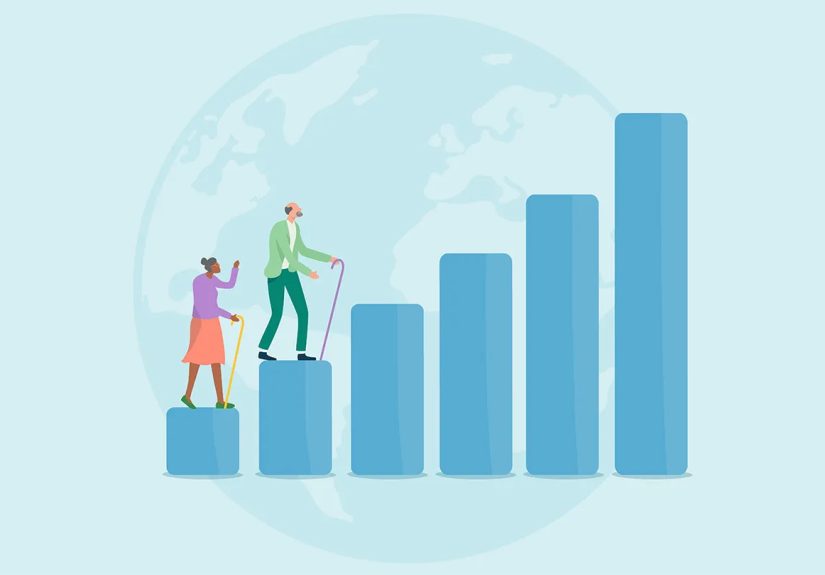
Here is the good news: humanity may be getting a little more time. According to major global health forecasting, average life expectancy worldwide could rise by roughly 4 to 5 years by 2050. That is a big deal. In public-health terms, a gain like that is not a rounding error. It is the difference between millions more grandparents meeting their grandchildren, more adults making it through their highest-risk years, and more countries shifting from survival mode to longevity planning.
But before we throw a global birthday party, there is an important catch. Longer life does not automatically mean healthier life. A bigger number on the lifespan scoreboard can still come with more years spent managing diabetes, heart disease, arthritis, dementia, depression, or plain old exhaustion. In other words, the future may offer more candles on the cake, but not always more energy to blow them out.
That is why the headline matters. “Global life expectancy may increase 4 to 5 years by 2050” sounds optimistic, and it is. Still, the deeper story is about what is driving those extra years, what could put them at risk, and why healthspan may matter just as much as lifespan.
Why the Forecast Matters
The projection comes from large-scale global disease forecasting that looked across more than 200 countries and territories. The basic takeaway is striking: the world is still expected to keep moving toward longer average lives, even in the face of climate stress, political instability, aging populations, and rising chronic disease.
That tells us two things at once. First, public health still works. Vaccination, cleaner water, better maternal care, improved treatment for infections, safer childbirth, stronger emergency care, and better management of heart disease and stroke have all helped move the needle over time. Second, the gains are becoming more complicated. The world is no longer fighting only the diseases of scarcity. It is also battling the diseases of modern living: obesity, high blood pressure, high blood sugar, inactivity, poor sleep, air pollution, and substance use.
So yes, the world may live longer by 2050. But it is likely to do so with a much messier medical chart.
What Is Driving Longer Global Life Expectancy?
1. Fewer people are dying early from many traditional killers
For decades, the biggest jumps in life expectancy came from reducing deaths in infancy, childhood, pregnancy, and early adulthood. Better sanitation, vaccination, antibiotics, improved nutrition, and broader access to care helped millions survive what used to be common causes of early death.
That progress still matters. In many lower-income countries, improvements in maternal and child health continue to save lives. In places where average life expectancy is still relatively low, even modest gains in basic care can create dramatic improvements. That is one reason forecasters expect some of the biggest jumps to happen in countries that are starting from lower baselines. In a hopeful twist, the global map may become a bit less uneven.
2. Chronic diseases are more survivable than they used to be
Heart attacks, strokes, and many cancers are still major threats, but medicine has gotten better at keeping people alive after diagnosis. Blood pressure drugs, cholesterol-lowering medications, insulin and glucose control, better imaging, faster emergency response, and improved long-term disease management have all helped extend lives.
This is one of the odd realities of modern longevity: medicine can keep people alive longer even when it cannot always keep them perfectly healthy. That is a victory, but it also creates a new challenge. Health systems must support people for more years, not just rescue them once.
3. Public-health habits still deliver boring but powerful results
There is nothing especially glamorous about walking more, smoking less, sleeping well, or getting blood pressure under control. No one makes an action movie about fiber intake. Yet these are exactly the kinds of factors that repeatedly show up in longevity research. Physical activity, healthier eating, tobacco avoidance, weight management, better sleep, and cardiovascular health are still among the most reliable ways to add years and reduce the burden of chronic disease.
That may sound almost annoyingly sensible, but public health has always had a frustrating habit of being right about the boring stuff.
The Catch: Life Expectancy Is Not the Same as Healthy Life Expectancy
This is where the conversation gets more interesting. A person can live longer without living better. Forecasts suggest that healthy life expectancy, often called HALE, will rise more slowly than total life expectancy. That means a meaningful share of those extra years may be lived with disease, disability, pain, or reduced independence.
Think of lifespan as the total number of chapters in the book. Think of healthspan as how many of those chapters are actually fun to read.
That distinction matters for families, employers, and governments. If people live longer but spend more time with multiple chronic conditions, healthcare costs rise, caregiving needs expand, retirement planning gets more complicated, and labor markets feel the pressure. Longevity without health can become a social and economic stress test.
The United States is a useful cautionary example. It spends heavily on healthcare but has struggled with chronic disease, obesity, inequality, and lower life expectancy than many peer nations. The lesson is not that longer life is a bad goal. The lesson is that treating disease after it appears is not enough. Prevention has to do more of the heavy lifting.
What Could Slow the Gains Between Now and 2050?
Metabolic risks are rising fast
Obesity, elevated blood sugar, and high blood pressure are increasingly central to the global disease burden. These are not tiny side quests in the longevity story. They are major plot points. Left unchecked, they raise the risk of diabetes, heart disease, stroke, kidney disease, and other conditions that eat away at both lifespan and healthspan.
This is especially concerning because these risks are spreading across age groups, including younger adults. When poor metabolic health begins earlier in life, the cumulative damage can stretch over decades. A longer life is less impressive when the body has been fighting uphill since age 35.
Air pollution and environmental stress still matter
Even as the world progresses against some older threats, environmental risks remain stubborn. Air pollution continues to contribute to heart and lung disease. Climate change adds new pressure through heat exposure, food insecurity, disrupted health services, infectious disease shifts, and disaster-related injuries.
In plain English: you cannot optimize population health while the air is bad, the heat is extreme, and the infrastructure keeps getting punched in the face.
Addiction, mental health, and social instability are part of the story too
Longevity is not shaped only in clinics. It is shaped in neighborhoods, schools, housing, transportation systems, workplaces, and food environments. Substance use, loneliness, unstable housing, conflict, and weak social safety nets can quietly shorten lives or worsen the years people have left. Medical technology can do a lot, but it cannot fully out-prescribe social breakdown.
What Could Help the World Beat the Forecast?
The 2050 projection is not destiny carved in stone. It is a forecast shaped by current patterns. Change the patterns, and you can change the outcome.
Invest in prevention earlier
Countries that reduce tobacco use, improve diet quality, encourage physical activity, and detect metabolic disease earlier will likely see better results. Prevention is less flashy than surgery and usually gets worse marketing, but it is one of the strongest tools for expanding healthy years.
Strengthen primary care and chronic disease management
Longer lives require systems that can manage blood pressure, diabetes, heart risk, cancer screening, mental health, and mobility issues over time. That means regular access to care, affordable medications, follow-up, and support that works outside hospital walls.
Protect the basics of public health
Clean water, vaccination, maternal care, safer roads, cleaner air, and decent nutrition are still foundational. They may not sound futuristic, but they remain some of the most effective longevity tools ever invented.
Design societies for aging, not just adulthood
By 2050, the world will have many more older adults. That changes everything from housing and transportation to caregiving, pensions, and workplace design. Societies that adapt early will be better positioned to turn extra years into productive, connected, meaningful life rather than isolated survival.
What Longer Life Could Mean for Everyday People
For individuals, this forecast should not be read as a magic promise that everyone gets five bonus years wrapped in shiny paper. It is an average shaped by policy, behavior, income, geography, and access to care. Some people will benefit more than others. Some places will improve quickly. Others may stall.
Still, the message is encouraging. The future is not only about miracle drugs or expensive biohacking. A meaningful part of longer life still comes from familiar things: safer communities, earlier treatment, stronger public-health systems, better cardiovascular health, less smoking, more movement, better sleep, cleaner environments, and fewer preventable deaths.
That may not be as exciting as a billionaire trying to age backward in a cryotherapy chamber, but it is a lot more useful for the rest of us.
Experiences Related to “Global Life Expectancy May Increase 4 to 5 Years by 2050”
What does a 4- to 5-year increase in global life expectancy actually feel like in real life? It probably does not feel dramatic on a Tuesday afternoon. Most people will not wake up in 2049, stretch, and announce, “Ah yes, civilization has added several years.” Instead, it will show up in quieter ways.
It may look like a woman in her early 60s who once assumed her retirement would be short and fragile, but now expects to remain active long enough to help with grandchildren, travel, or even start a second career. It may look like a man with high blood pressure who, because of earlier diagnosis and better medication, avoids the stroke that might have ended his life 20 years sooner in another era. It may look like a child born in a country with improving maternal care and vaccination access who simply reaches adulthood with possibilities that were never guaranteed for earlier generations.
Longer life also changes family dynamics. Adult children may spend more years with parents, which can be a gift, a responsibility, or both at once. More families may find themselves navigating the “sandwich generation” squeeze, supporting children and older parents at the same time. A longer average lifespan can create more birthdays, more weddings, and more shared history, but it can also mean more years coordinating medications, appointments, housing, and caregiving schedules.
Work life changes too. If people live longer, many will not follow the old model of education, career, retirement, and fade-out. They may re-skill in midlife, work longer in some form, or leave and reenter the workforce more than once. The old finish line starts to look less like a finish line and more like a roundabout.
There is also an emotional side to longevity that statistics do not fully capture. Living longer can mean more time to recover from mistakes, more time to build financial stability, more time to repair relationships, and more time to become the person you thought you would have become by age 30 but absolutely did not because, frankly, age 30 is usually chaos in nicer clothing.
But the experience of longer life depends heavily on health. An extra five years full of mobility, purpose, and connection is very different from an extra five years dominated by pain, isolation, or unmanaged illness. That is why the real goal is not just a longer life. It is a more functional one. People want years they can use.
In that sense, the 2050 forecast is less a victory lap than a challenge. If humanity is going to gain more time, it needs to decide what to do with it. Will those years be marked by stronger communities, healthier aging, and better prevention? Or will they be crowded with chronic disease and unequal access to care? The answer will shape whether this longevity story becomes inspiring or merely longer.
Conclusion
Global life expectancy may increase 4 to 5 years by 2050, and that is real progress worth taking seriously. It suggests that medicine, public health, and social development are still capable of improving human survival on a massive scale. But the best reading of this trend is not blind optimism. It is strategic optimism.
The world is gaining time, but it must now get better at protecting the quality of that time. The next chapter of longevity will not be written only by hospitals or laboratories. It will be written by food systems, housing, transportation, prevention, cleaner air, stronger primary care, and daily habits that seem ordinary until they are measured across millions of lives.
So yes, people may live longer by 2050. The real question is whether those extra years will feel like a gift or a medical group project nobody wanted. That part is still up to us.