Table of Contents >> Show >> Hide
- What Makes This the “Best” Baked Pork Chop Method?
- Ingredients
- Equipment That Makes This Easy
- Step-by-Step: Best Baked Pork Chops
- Quick Pan Sauce (Optional, but Highly Encouraged)
- How Long to Bake Pork Chops (Timing Chart)
- The Correct Pork Chop Internal Temperature (and Why It Matters)
- Flavor Variations (Same Method, Different Personalities)
- What to Serve with Baked Pork Chops
- Troubleshooting: Fix the Usual Pork Chop Problems
- FAQ
- Kitchen Notes & Real-World Experiences (The Extra You Asked For)
- Conclusion
Pork chops have a reputation for being either life-changingly juicy or
oddly reminiscent of a pencil eraser. The good news: the oven can absolutely be your friend here.
The secret isn’t a mysterious marinade whispered about in a cabin somewhereit’s a small stack of smart choices:
buy the right chops, season early, use high heat wisely, and cook to the right temperature (not “until it feels done,”
which is how we end up chewing for cardio).
This guide gives you a “best of all worlds” method: a quick stovetop sear for flavor + a short bake for even cooking.
It also includes a no-sear option, a timing chart, and fixes for the most common baked pork chop problems.
By the end, you’ll have pork chops that are browned, juicy, and dramatically less stressful than they used to be.
What Makes This the “Best” Baked Pork Chop Method?
Let’s define “best” like grown-ups: reliable, repeatable, and delicious on a random Tuesdaynot only when the kitchen
gods are in a good mood. This method works because it focuses on:
- Thickness: Thicker chops stay juicier and are harder to overcook.
- Dry-brining (optional but powerful): Salting ahead seasons deeper and improves texture.
- A quick sear: Builds a flavorful crust so the oven doesn’t have to do all the heavy lifting.
- A thermometer finish: You cook to doneness, not to vibes.
- A proper rest: So the juices don’t sprint out the second you cut in.
Ingredients
This recipe is written for 4 chops. Scale up easilyjust don’t crowd the pan or baking sheet.
The Pork
- 4 pork chops, 1 to 1 1/2 inches thick (bone-in or boneless)
- 1 1/2 teaspoons kosher salt (plus more if your chops are huge)
- 1 teaspoon brown sugar (optional, for better browning and balance)
The “Best Baked Pork Chop” Seasoning Rub
- 1 1/2 teaspoons smoked paprika (or regular paprika)
- 1 teaspoon garlic powder
- 1 teaspoon onion powder
- 1/2 teaspoon dried thyme (or Italian seasoning)
- 1/2 teaspoon black pepper
- Pinch of cayenne (optional, for a gentle warm kick)
For Cooking + Optional Pan Sauce
- 1 tablespoon neutral oil (avocado, canola, or grapeseed)
- 1 tablespoon butter (optional, for basting flavor)
- 1/2 cup chicken broth (optional, for quick pan sauce)
- 1 teaspoon Dijon mustard or 1 teaspoon apple cider vinegar (optional, for brightness)
- 1–2 teaspoons honey (optional, if you like a sweet-savory finish)
Equipment That Makes This Easy
- Instant-read thermometer: the single best tool for juicy pork chops
- Cast-iron or oven-safe skillet (or any heavy skillet + a baking sheet)
- Wire rack (optional, but helps heat circulate for even cooking)
Step-by-Step: Best Baked Pork Chops
Step 1: Dry-brine (optional, but strongly recommended)
If you can spare time, this step pays rent. Sprinkle the chops with kosher salt (and the optional brown sugar),
then place them on a plate or a wire rack set over a sheet pan. Refrigerate uncovered for:
- Minimum: 30–45 minutes
- Ideal: 4–12 hours
- Max: about 24 hours
Why uncovered? It helps the surface dry a bit, which improves browning later. If you’re short on time, skip it
but if you’ve ever thought “my pork chops taste fine, I just wish they were juicier,” this is your move.
Step 2: Preheat the oven
Preheat to 400°F. If you’re using a wire rack, set it on a rimmed baking sheet.
(If you don’t have a rack, no problemjust use parchment on the sheet.)
Step 3: Season like you mean it
Pat the chops dry with paper towels (especially if you dry-brinedthere may be a little surface moisture).
Mix the rub ingredients, then coat the chops on all sides.
Step 4: Sear for a golden crust
Heat a skillet over medium-high heat. Add the oil. When it shimmers, sear the chops:
- Sear the first side for 1 1/2 to 2 minutes.
- Flip and sear the second side for 1 to 2 minutes.
- If your chop has a fat edge, stand it up with tongs for 30–45 seconds to crisp it.
Optional (but delicious): add butter for the last 30 seconds and spoon it over the chops like you’re auditioning
for a cooking show. This adds flavor fast.
Step 5: Bake until perfectly done
Transfer chops to the rack or baking sheet. Bake until the thickest part reads:
140–145°F on an instant-read thermometer.
- 1-inch chops: usually 6–10 minutes after searing
- 1 1/2-inch chops: usually 10–14 minutes after searing
Timing varies by thickness, bone-in vs boneless, and your oven’s personality. Trust the thermometer more than the clock.
Step 6: Rest (this is not optional)
Rest the chops for 5 minutes. The juices redistribute, and carryover heat finishes the job.
Slice too soon and the juices will leave like they forgot to feed the cat.
Quick Pan Sauce (Optional, but Highly Encouraged)
If there are browned bits in your skillet, you’re holding flavor gold. While the chops rest:
- Reduce heat to medium. Carefully pour off excess fat if needed.
- Add 1/2 cup broth and scrape up the browned bits.
- Stir in Dijon or a splash of apple cider vinegar.
- Optional: a drizzle of honey for a sweet-savory balance.
- Simmer 2–3 minutes until lightly reduced. Spoon over chops.
How Long to Bake Pork Chops (Timing Chart)
These are general guidelines for chops baked at 400°F. Always verify doneness with a thermometer.
| Chop Thickness | Boneless (Approx.) | Bone-In (Approx.) | Best Tip |
|---|---|---|---|
| 1/2 inch | 7–10 min | 8–12 min | Consider high-heat + breading, or quick sear only |
| 3/4 inch | 10–15 min | 12–18 min | Pull early; thin chops overcook fast |
| 1 inch | 15–20 min | 18–22 min | Sweet spot for oven baking |
| 1 1/2 inches | 20–28 min | 22–30 min | Sear first for best flavor and control |
The Correct Pork Chop Internal Temperature (and Why It Matters)
The modern goal is juicy pork, not “cooked into a new building material.”
For whole cuts like chops, the safe endpoint is 145°F with a short rest.
If you pull the chops around 140–142°F and rest them, carryover heat often finishes the last few degrees.
Also: color is not a reliable doneness test. Pork can look slightly pink and still be safe and properly cooked.
Temperature is the truth-teller here.
Flavor Variations (Same Method, Different Personalities)
1) Crispy Parmesan-Panko “Oven Fried” Vibe
Mix panko + grated Parmesan + Italian seasoning + black pepper. Lightly coat chops with a thin layer of mayo or Dijon,
press into crumbs, then bake at 425–450°F until the center hits the target temperature.
It’s crunchy, dramatic, and deeply snackable.
2) Maple-Dijon Sheet Pan Style
Whisk Dijon + maple syrup (or honey) + a splash of vinegar + garlic powder. Brush on chops before baking.
Add Brussels sprouts or sweet potatoes to the sheet pan for a one-pan dinner that looks like you tried harder than you did.
3) Garlic-Herb “Steakhouse” Chops
Swap paprika for rosemary, thyme, and a little crushed fennel seed. Finish with butter + lemon zest.
Serve with mashed potatoes and a smug sense of accomplishment.
What to Serve with Baked Pork Chops
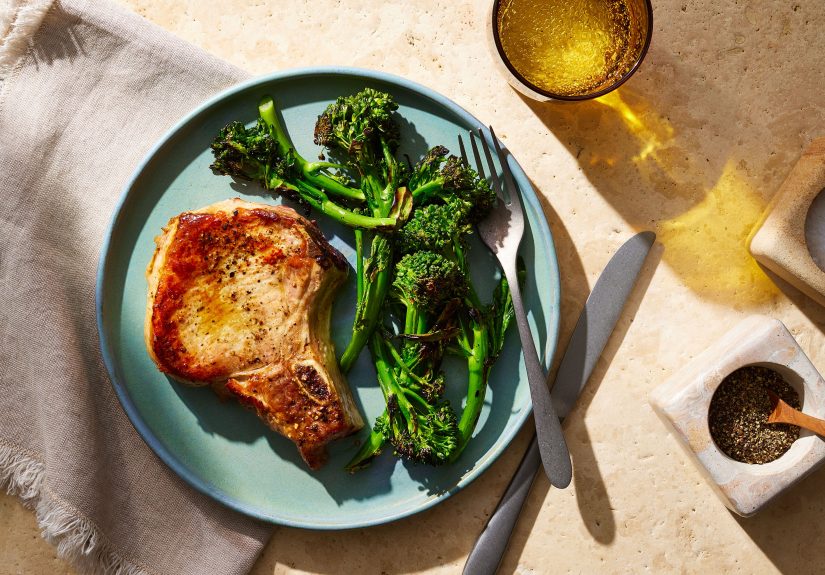
- Roasted vegetables: broccoli, green beans, carrots, or asparagus
- Something cozy: mashed potatoes, mac and cheese, or rice pilaf
- Something bright: apple slaw, lemony salad, or quick-pickled onions
- Something saucy: applesauce (classic for a reason) or a mustard pan sauce
Troubleshooting: Fix the Usual Pork Chop Problems
“My pork chops are dry.”
- They were likely cooked past the target temperature. Use a thermometer next time.
- Choose thicker chops (1 inch or more) for baking.
- Try dry-brining 4–12 hours for better moisture retention and seasoning.
“They’re tough, not just dry.”
- Overcooking is the most common cause.
- Let chops restcutting too soon can make texture feel tighter.
- Don’t skip fat: a small fat cap helps flavor and juiciness.
“They’re bland.”
- Salt earlier (dry brine) or salt more confidently right before cooking.
- Use a rub with paprika + garlic + onion + herbs for built-in flavor.
- Finish with acid: lemon, vinegar, or mustard in a quick sauce.
“No browningjust pale sadness.”
- Pat dry before seasoning and searing.
- Use a hot pan and don’t move the chops constantly.
- A pinch of sugar in the rub can help browning without making it sweet.
FAQ
Can I make baked pork chops without searing?
Yes. Bake at 400°F on a rack, flip halfway through, and cook to temperature. You’ll lose some crusty flavor,
but it will still be tender if you don’t overcook it. If you want more browning without searing, finish with
1–2 minutes under the broilerwatch closely.
Bone-in or boneless: which is better?
Bone-in chops are often more forgiving and flavorful. Boneless chops cook a bit faster and are easier to slice.
Either can be excellentthickness and temperature control matter more than the bone.
Should I brine pork chops?
If your chops are lean or average supermarket chops, brining (wet or dry) can noticeably improve juiciness and seasoning.
If you’re working with thick, well-marbled chops and you’re careful with temperature, you can skip it and still win dinner.
Kitchen Notes & Real-World Experiences (The Extra You Asked For)
In a lot of home kitchens, pork chops become “that meal” people approach with equal parts hope and suspicion.
The classic experience goes like this: you buy chops because they’re affordable and quick, you bake them until they look
cooked (which feels responsible), and then everyone quietly drinks more water while chewing. If that sounds familiar,
you’re not aloneit’s practically a shared cultural memory from the era when pork was treated like it needed to be cooked
to “extra done” for safety. The modern experience is better, but it does require one emotional upgrade:
trusting the thermometer instead of your instincts.
Another very common moment: you pull the chops out of the oven, they look perfect, you cut one open immediately to “check,”
and suddenly the cutting board turns into a small lake. People often interpret that as “the chops were too juicy to hold it in,”
which is a charming optimism. In reality, the meat just needed a few minutes to rest. Resting isn’t culinary superstition;
it’s the difference between juicy bites and juice on your counter. Once you start resting chops consistently,
you’ll notice the texture improves even when you change nothing else.
Then there’s the thickness lesson. Thin chops (think 1/2-inch) bake fast, which sounds convenientuntil you realize they also
overcook fast. Many cooks end up keeping thin chops in the oven “just a little longer” to be safe, and that’s when tenderness
disappears. A lot of people report their first “wow” pork chop moment when they switch to 1-inch or thicker chops, because the
larger cut buys you time. You can sear, you can bake, you can even answer a text message without dinner turning into a cautionary tale.
Thicker chops are basically training wheels for juiciness.
Seasoning is another experience-based upgrade. When you salt right before baking, the outside tastes seasoned but the inside can feel
oddly plainespecially with thick chops. Dry-brining changes that because it seasons deeper and helps the surface dry for browning.
People who try it often describe the improvement as “restaurant-like,” not because it becomes fancy, but because the flavor feels
evenly distributed instead of sitting on top. It’s also a surprisingly calm prep step: salt the chops, put them in the fridge, and
move on with your life. Your future self will feel like a genius.
Finally, the best “baked pork chop” experiences usually include a saucesometimes on purpose, sometimes by accident. A quick pan sauce
made from the browned bits in the skillet can turn a simple chop into a plate you’d happily serve to guests. Even a basic deglaze with
broth and a spoon of Dijon makes the whole dinner taste more intentional. And if you’ve ever dealt with someone in your house who claims
pork chops are “boring,” sauce is your friendly rebuttal. Juicy meat + a tangy, buttery drizzle = suddenly pork chops have fans.
Not bad for a weeknight.
Conclusion
The best baked pork chops aren’t complicatedthey’re managed. Choose thicker chops, season with confidence,
use a quick sear for flavor, bake just until the thermometer says you’re there, and rest before slicing.
Do that, and your oven will stop being the place pork chops go to dry out. It’ll be the place they go to become dinner heroes.