Table of Contents >> Show >> Hide
- What Is the SLUMS Test?
- How the SLUMS Test Is Used in Real Life
- SLUMS Scoring: What the Numbers Mean
- Can the SLUMS Test Diagnose Dementia?
- How Reliable Is the SLUMS Test?
- Strengths of the SLUMS Test
- Limitations of the SLUMS Test
- What Happens After a Low SLUMS Score?
- Real-World Experiences With the SLUMS Test
- Final Takeaway
- SEO Tags
If memory has been acting a little slippery lately, a doctor may reach for a brief cognitive screening tool before jumping into a full diagnostic workup. One of the better-known options is the SLUMS test, short for the Saint Louis University Mental Status exam. The name sounds like a sleepy jazz club, but the test itself is serious business: it helps clinicians screen for mild cognitive impairment and dementia in older adults.
The SLUMS test has become popular because it is quick, free, and designed to catch changes that more basic screens can sometimes miss. It is not a crystal ball, and it is definitely not a diagnosis by itself. Still, it can be a useful first checkpoint when a patient, family member, or clinician notices changes in memory, attention, problem-solving, or day-to-day thinking skills.
Here is what the SLUMS test measures, how scoring works, what the results can and cannot tell you, and how reliable it appears to be based on current evidence.
What Is the SLUMS Test?
The SLUMS exam is a 30-point cognitive screening test made up of 11 items. It was developed through Saint Louis University in partnership with the St. Louis Veterans Affairs system. In plain English, it is a short paper-and-pencil assessment used to flag possible cognitive impairment in adults age 60 and older.
Unlike a super-short screen that mostly checks orientation, the SLUMS test samples several brain functions at once. It looks at areas such as:
- Orientation, such as knowing the day, year, and state
- Short-term memory, including learning and recalling words
- Attention and calculation, such as mental arithmetic
- Language and verbal fluency, like naming animals quickly
- Working memory, such as repeating numbers backward
- Executive function and visuospatial skills, including clock drawing and figure recognition
That broad mix is one reason many clinicians like it. Dementia does not always wave a giant flag that says “memory problem here.” Sometimes the earliest clues show up in planning, organization, speed of thought, or mental flexibility. The SLUMS tries to catch more of that wider picture.
How the SLUMS Test Is Used in Real Life
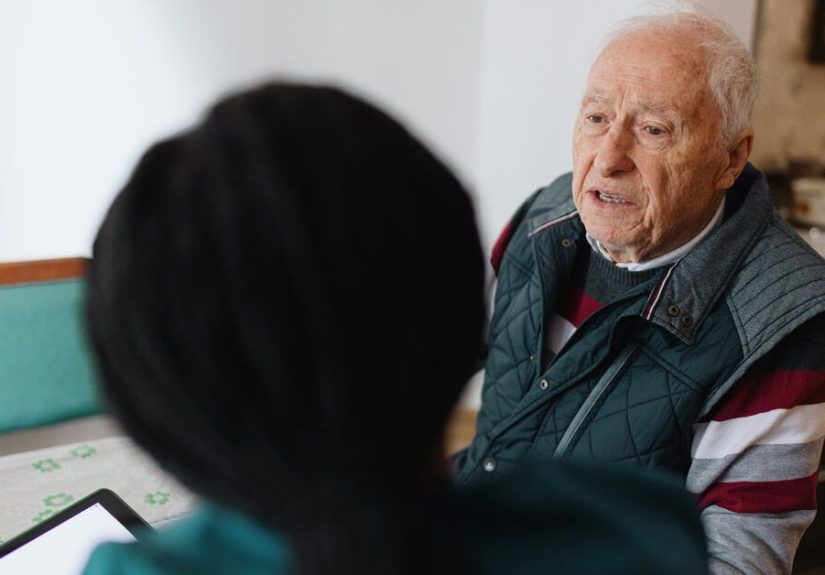
In practice, the SLUMS exam is usually given in primary care, geriatrics, neurology, rehabilitation, or memory clinics when there is concern about cognition. A patient might report forgetfulness. A spouse may say bills are being paid twice. An adult child may notice repeated questions at dinner. Or a clinician may see subtle warning signs during a routine visit.
The test typically takes about 7 minutes, though timing varies a bit depending on the patient and setting. It is usually administered face to face by a trained healthcare professional, not tossed across the room like a pop quiz from a cranky high school teacher.
Common situations where clinicians may use the SLUMS include:
- New memory complaints
- Behavior or personality changes
- Concerns raised by family or caregivers
- Follow-up after noticing decline in medication management, finances, or daily tasks
- Annual monitoring when cognitive changes are already on the radar
Importantly, the official guidance around SLUMS says it was validated for older adults age 60 and above. It is also meant to be given in a standardized way. You are not supposed to swap questions, skip items, let someone peek at a calendar, or let a smartphone become their emotional support device. The result only makes sense if the test is given as designed.
What’s Actually on the Test?
The questions are simple on the surface, but they challenge several mental systems at once. A patient may be asked to remember five objects, solve a money problem, name as many animals as possible in one minute, repeat strings of numbers backward, draw a clock set to a specific time, identify the largest shape in a figure set, and answer questions about a short story.
That combination matters. A person with early cognitive impairment may do fairly well on basic orientation questions but struggle when the task shifts to recall, clock drawing, mental flexibility, or keeping information in working memory.
SLUMS Scoring: What the Numbers Mean
The SLUMS score ranges from 0 to 30. Higher scores suggest better cognitive performance. But here is the key detail many people miss: the interpretation depends on education level.
For people with a high school education or equivalent, the general scoring ranges are:
- 27–30: Normal range
- 21–26: Mild neurocognitive disorder
- 1–20: Dementia range
For people with less than a high school education, the ranges are:
- 25–30: Normal range
- 20–24: Mild neurocognitive disorder
- 1–19: Dementia range
This education adjustment is one of the test’s biggest practical strengths. Years of schooling can influence performance on cognitive screening, so using the same cutoff for everyone would be like grading a spelling bee and a calculus exam with the same rubric. Technically possible, but not very smart.
What “Mild Neurocognitive Disorder” Means
In many clinical conversations, mild neurocognitive disorder is used in a way that overlaps with mild cognitive impairment (MCI). It generally describes measurable cognitive decline that does not yet cause the level of day-to-day loss of independence seen in dementia. Someone might still live alone, drive, and manage most routines, but things may be taking more effort, more notes, and more double-checking.
A score in that middle SLUMS range does not mean dementia is inevitable. Some people remain stable for years. Some improve when reversible issues are treated. Others do progress. The score is a clue, not a verdict.
Can the SLUMS Test Diagnose Dementia?
No. And this is worth putting in bold in your brain: the SLUMS test is a screening tool, not a stand-alone diagnostic test.
If a score is concerning, a qualified clinician still needs to look at the whole picture. That may include:
- Medical history and medication review
- Input from family or caregivers
- Functional changes in everyday life
- Depression screening
- Neurologic exam
- Blood work for reversible causes such as thyroid problems or vitamin deficiencies
- Brain imaging in selected cases
- Specialist evaluation or formal neuropsychological testing
This matters because many conditions can look like dementia at first glance. Depression, delirium, untreated sleep apnea, medication side effects, alcohol misuse, hearing loss, vision loss, thyroid disease, and vitamin deficiencies can all muddy the waters. A low SLUMS score can be a warning bell, but someone still has to figure out why the bell is ringing.
How Reliable Is the SLUMS Test?
This is where the answer gets interesting. The short version is: SLUMS appears useful and reasonably reliable, but it is not flawless, and the evidence is not identical across every population or use case.
What the Research Gets Right About SLUMS
The original pilot research found that SLUMS and the Mini-Mental State Examination, or MMSE, had comparable performance for detecting dementia. The authors also suggested that SLUMS may be better at identifying milder impairment, which helped build its reputation as a stronger early-warning screen.
Later studies helped support that idea. Research comparing SLUMS with the Montreal Cognitive Assessment (MoCA) and the Short Test of Mental Status (STMS) found that SLUMS had similar validity for detecting mild cognitive impairment, dementia, or either one.
Large evidence reviews have also reported generally favorable test characteristics. In a U.S. preventive services evidence update, SLUMS showed high sensitivity for detecting dementia across the limited studies available, with specificity that ranged more modestly. For broader cognitive impairment, the numbers were more mixed, which is common for screening tools trying to sort normal aging from very early decline.
In other words, SLUMS often does a solid job of catching people who truly have meaningful impairment, especially dementia. That is valuable in busy clinical settings where missing a case can delay help, planning, and treatment.
Where Reliability Gets More Complicated
Now for the fine print that keeps medical writers humble. A more recent psychometric study found that the SLUMS had adequate reliability and a clear factor structure in a medically complex older adult sample, which is encouraging. But researchers also noted that more work is needed in diverse populations.
That caution comes up repeatedly in the literature. Compared with some older tools, the SLUMS has less validation across varied languages, cultures, and demographic groups. It also may be affected by educational background, anxiety during testing, sensory limitations, and test conditions.
Another wrinkle: while SLUMS is useful for screening, one longitudinal comparison suggested that the MMSE may be more sensitive than SLUMS to one-year cognitive change tied to functional abilities. So if the question is not “Does this person need more evaluation?” but rather “Which brief screen is best for tracking small changes over time?” the answer may depend on the setting and the goal.
That is why the fairest summary is this: SLUMS is reliable enough to be clinically useful, especially as a first-pass screen, but it should not be treated as the final word on diagnosis or progression.
Strengths of the SLUMS Test
- Free to use: A practical plus in clinics that do not want licensing barriers.
- Brief: Usually done in under 10 minutes.
- Education-adjusted scoring: Helps interpretation fit the patient more fairly.
- Broader cognitive sampling: Goes beyond simple orientation.
- Good sensitivity for dementia: Helpful when the goal is to flag cases that need more workup.
Limitations of the SLUMS Test
- Not diagnostic: A low score does not prove dementia.
- Limited validation in some populations: Evidence is still growing across diverse groups.
- Language and cultural issues: English proficiency and translation quality can affect results.
- Sensory barriers matter: Vision and hearing problems can distort performance.
- Practice effects: Repeating it too often can make scores look better just because the test feels familiar.
Official guidance also notes that SLUMS should not simply be improvised for phone use, and it should not be modified by skipping items and creating a homemade score. That may be tempting in rushed settings, but once the standard test changes, the meaning of the score changes too.
What Happens After a Low SLUMS Score?
If someone scores in the mild impairment or dementia range, the next step is follow-up evaluation, not panic. That evaluation may be simple or extensive depending on symptoms, age, medical history, safety concerns, and how much daily functioning has changed.
For example, a clinician may ask whether the person is still managing medications correctly, handling money, cooking safely, or getting lost in familiar places. Family observations are often incredibly helpful here. Someone may ace small talk in the exam room yet still be forgetting bills, appointments, or how to use appliances at home.
The point is to connect the test score to real life. Dementia is not defined by one bad moment on a worksheet. It is defined by a broader pattern of decline that interferes with independence.
Real-World Experiences With the SLUMS Test
On paper, the SLUMS exam looks neat and tidy: 30 points, 11 tasks, a few cutoffs, done. Real life is messier. People bring fear, pride, fatigue, humor, denial, and sometimes a very strong desire to prove that they are absolutely fine, thank you very much.
The Patient Experience: “I Thought I Was Just Tired”
Many people who take the SLUMS are not expecting a dramatic moment. They may think they are just stressed, sleep-deprived, or getting older. During the test, some questions feel easy at first. Then the clock drawing appears, the delayed recall shows up, and suddenly confidence starts wobbling. A person who has always been sharp may feel embarrassed by mistakes that seem small to the clinician but enormous to them. That emotional reaction is common. Cognitive screening can feel personal in a way a cholesterol test never does.
Just as often, patients are relieved. They have known something felt off and finally have a reason to talk about it. Even when the result is concerning, there can be comfort in realizing the issue is being taken seriously rather than dismissed as “normal aging.”
The Family Experience: “We Needed a Starting Point”
Family members often arrive carrying weeks, months, or years of tiny observations. Mom repeats stories. Dad misses medication doses. A spouse notices confusion during travel. Adult children may feel guilty for bringing it up, especially if the person being tested becomes defensive. For them, the SLUMS can serve as a neutral starting point. It does not settle every argument, but it turns vague concern into something concrete enough to discuss with a clinician.
That said, families sometimes misunderstand the result. A score in the dementia range can sound final, while a normal score can sound like total reassurance. Neither interpretation is quite right. Families usually need help understanding that screening is one piece of the puzzle, not the entire picture framed and hung on the wall.
The Clinician Experience: “Useful, but Never the Whole Story”
Clinicians tend to value the SLUMS because it is practical. It is short, free, and structured. In a busy clinic, that matters. But experienced providers also know the score cannot be read in isolation. A nervous patient may underperform. A highly educated patient may compensate for longer than expected. A person with depression, hearing loss, or poor sleep may look more impaired than they really are. Good clinicians use the SLUMS as a conversation starter, not a courtroom verdict.
In many cases, the most helpful part of the test is not the total score but how the person approaches the tasks. Do they self-correct? Lose focus? Become overwhelmed by multi-step directions? Joke to cover confusion? Those small details can reveal a lot.
The Follow-Up Experience: “Now We Know What to Do Next”
Perhaps the most meaningful experience comes after the test. A low score may lead to lab work, medication adjustments, specialist referral, caregiver planning, driving conversations, or more formal cognitive testing. A borderline score may lead to repeat assessment in the future. A normal score with persistent symptoms may push the clinician to keep looking rather than shrug and move on.
That is the real value of the SLUMS. It opens the door. It helps people move from uncertainty to action, which is often the hardest step of all.
Final Takeaway
The SLUMS test is a practical and well-known dementia screening tool that can help identify possible mild cognitive impairment or dementia in adults age 60 and older. Its education-adjusted scoring and wider coverage of cognitive domains make it more nuanced than some ultra-brief screens, and research suggests it performs reasonably well, especially for detecting dementia.
Still, the SLUMS is not magic, and it is not a diagnosis on its own. Its biggest strength is not that it answers every question. It is that it tells clinicians when they should ask better ones.