Table of Contents >> Show >> Hide
- Why This House Still Matters
- A House That Worked as Hard as Its Owner
- The Midcentury Features That Give the House Its Character
- What the Interiors Reveal About David Mellor’s Design Philosophy
- More Than a Pretty House: A Piece of Design History
- What Today’s Homeowners Can Learn From It
- The Experience of a Quiet Masterpiece
- Conclusion
- SEO Tags
Some houses try very hard to impress you. They throw around double-height foyers, dramatic staircases, and enough polished stone to make a luxury hotel blush. David Mellor’s Sheffield dwelling took the opposite route. It stayed low, quiet, practical, and wonderfully self-assured. That restraint is exactly what makes it memorable.
This modest midcentury home was more than a place for a celebrated British designer to sleep, sip tea, and occasionally misplace his glasses. It was a working idea made solid: a glass-and-timber home, workshop, and studio that reflected how Mellor believed people should live. Useful things should be beautiful. Beautiful things should be useful. And design, ideally, should improve daily life without showing off like a peacock in a turtleneck.
For anyone interested in architecture, interiors, or the life of UK designer David Mellor, this house remains a fascinating case study. It captures the essence of midcentury modern living while also revealing the designer behind some of Britain’s most enduring everyday objects. In a world that often confuses luxury with quality, Mellor’s dwelling makes a quieter argument: thoughtful design ages better than noise.
Why This House Still Matters
David Mellor is often introduced through his cutlery, and fair enough: his flatware became iconic for good reason. But reducing his career to forks and knives is a little like describing Frank Lloyd Wright as a man who had strong feelings about roofs. Mellor’s interests ranged across product design, metalwork, street furniture, lighting, and public objects that became woven into British visual life.
Born in Sheffield in 1930 and trained as a silversmith, Mellor developed a deep relationship with metal, craft, and industrial production. He built a reputation for creating objects that were refined without being fussy and modern without feeling chilly. His work combined discipline, practicality, and a rare kind of elegance that never begged for applause.
That same attitude appears in his house. Built in 1960 in Sheffield with architect Patrick Guest, the dwelling functioned as a low-rise home, workshop, and studio. When Mellor married in 1965, two bedrooms were added, but the spirit of the place stayed intact. It remained a compact, working modernist environment rather than a grand designer stage set.
A House That Worked as Hard as Its Owner
What makes this David Mellor house especially compelling is that it was not just designed for living. It was designed for living and making. That distinction matters. A lot of beautiful homes are composed as visual statements first and functional spaces second. Mellor’s dwelling flipped that priority in the best possible way.
The workshop space was not hidden away as an embarrassing back room. It was part of the larger architectural idea. The present-day living room was once the larger workshop area, and the current kitchen originally served as the drawing office. That tells you nearly everything about the house’s DNA. This was a place where domestic life and creative labor sat side by side, not in competition, but in conversation.
That arrangement now feels surprisingly contemporary. Designers, writers, artists, and remote workers spend endless time trying to create homes that can support both focus and comfort. Mellor was already doing that decades ago. His dwelling anticipated the modern live-work conversation without ever turning it into a branding exercise.
Small Scale, Big Intelligence
The phrase “modest midcentury dwelling” is doing a lot of work here, and it deserves respect. The house was not enormous, but it was smart. Midcentury architecture at its best often used limited square footage with extraordinary efficiency. Instead of relying on sheer size, it used light, proportion, sightlines, and material continuity to make spaces feel generous.
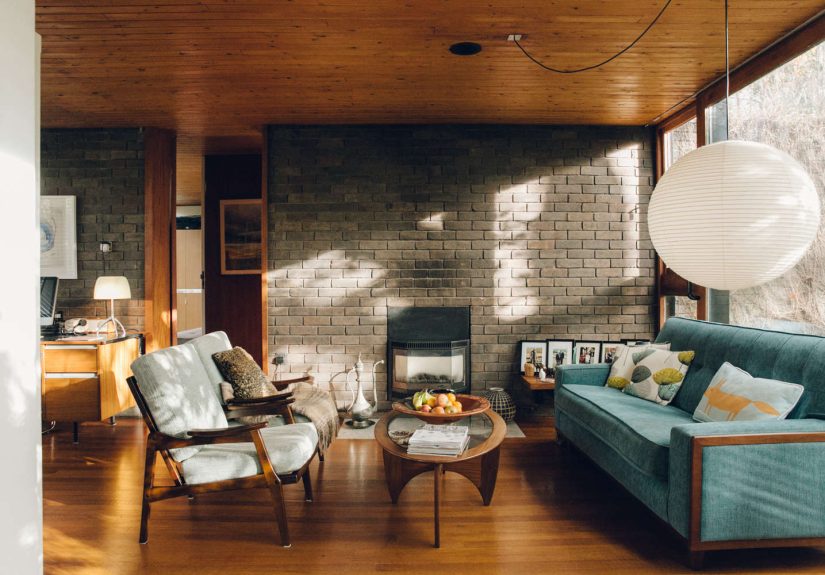
Mellor’s home does exactly that. The wood ceilings and floors run consistently throughout the building, creating calm visual rhythm. Floor-to-ceiling openings and glazing extend the sense of space. Garden views soften the geometry. Even the simple act of letting windows run along both sides of a room transforms the experience of scale. The result is a home that feels airy rather than cramped, disciplined rather than sparse.
In other words, it proves a useful rule: a house does not have to be large to feel rich. It just has to be well thought out. Architects everywhere, please write that on a napkin and slide it under every oversized foyer in America.
The Midcentury Features That Give the House Its Character
This Sheffield dwelling is a strong example of why midcentury modern design still has such staying power. The usual greatest hits are all present, but they are handled with unusual restraint.
1. The Flat Roof and Low Horizontal Profile
The flat roof immediately signals the period. More importantly, it reinforces the house’s calm, grounded posture. Nothing about the exterior strains upward for attention. The building hugs the site, which gives it a relaxed confidence. It feels domestic, human-scaled, and quietly modern.
2. Glass That Connects Instead of Merely Glitters
Midcentury homes are famous for using glass to connect interior space with nature, and Mellor’s dwelling leans into that principle beautifully. Teak-framed glazing, floor-to-ceiling windows, and generous openings pull in daylight throughout the day. The glass is not decorative frosting. It is a tool that shapes mood, movement, and perception.
That connection to the garden is essential. The leafy outdoor setting softens the building’s linear discipline and keeps the home from feeling mechanical. Midcentury design works best when clean lines meet natural life, and this house understands that balance perfectly.
3. Honest Materials
Wood ceilings, wood floors, glass walls, and straightforward construction details all speak the same language: let materials be themselves. There is no theatrical imitation here. No faux-rustic nonsense. No decorative overkill. The pleasure comes from texture, grain, proportion, and light.
This honesty is one reason the home still looks fresh. Materials used sincerely tend to age better than surfaces chosen for effect. Mellor understood that in product design, and the house shows he understood it in architecture too.
4. Flexible Interior Boundaries
Blinds provide privacy from room to room or protection from the sun. Openings run from floor to ceiling. Rooms can feel connected without losing function. This ability to calibrate openness is part of the house’s intelligence. It avoids the all-or-nothing trap that some open-plan homes fall into, where every sound bounces around like a hyperactive tennis ball.
What the Interiors Reveal About David Mellor’s Design Philosophy
The interior atmosphere tells us as much about Mellor as any biography does. It is orderly but never stiff. Warm but not sentimental. Stylish but not attention-starved. The current owner has reportedly filled the house with modern pieces from the period, including several chairs of Mellor’s own design that never went into production. That detail feels especially fitting. This is a home where design is lived with, tested, and quietly appreciated.
Original electric light fittings remain in place, a reminder that good design can survive decades without needing to be reinvented every 18 months by trend forecasters armed with mood boards and dangerous levels of confidence. A Cherner chair in the hallway adds a graceful modern note. Wire-framed dining chairs with leather seats and bent plywood backs reinforce the period language without making the house feel like a museum diorama.
Even better, the house does not appear precious. That is one of its strongest qualities. The rooms suggest a life of use, not a life of posing. Mellor designed objects for real hands, real tables, real streets, and real routines. Naturally, the home associated with him carries the same spirit.
More Than a Pretty House: A Piece of Design History
This is where the dwelling becomes especially interesting. It is not just an attractive midcentury modern home in Sheffield. It is a physical expression of how one of Britain’s most significant postwar designers thought about everyday life.
Mellor’s career moved comfortably from the spoon to the city. He is known for cutlery, but he also designed public objects including traffic lights and other elements of street life. That range matters because it shows a designer concerned with the total environment people inhabit. His home mirrors that holistic mindset. It is not simply decorated; it is conceived.
The building’s Grade II listed status underscores its architectural and cultural value. It has been recognized not because it is flashy, but because it represents a distinctive moment in British design history. It also demonstrates how modern architecture could be humane, compact, and deeply practical. That lesson still feels relevant, especially at a time when housing conversations are full of extremes: either tiny and compromised, or huge and exhausting.
What Today’s Homeowners Can Learn From It
Even if you are not planning to move into a Sheffield modernist landmark, this house offers useful lessons.
Design Around Daily Habits
Mellor’s dwelling was shaped by the rhythms of making, living, and moving through the day. That is a stronger starting point than chasing a trend. Homes work better when they reflect routines rather than fantasies.
Let Light Do Some of the Decorating
Daylight is one of the house’s greatest features. It animates the wood, softens the rooms, and expands the perception of space. Good natural light can do more for a room than another shopping spree disguised as “styling.”
Choose Continuity Over Clutter
The repeated use of wood across ceilings and floors creates visual calm. Continuity is underrated. It helps modest spaces feel legible and serene instead of chopped up and busy.
Make Modesty a Strength
This house does not apologize for being modest. It turns modesty into clarity. That may be its most modern lesson of all.
The Experience of a Quiet Masterpiece
To imagine the experience of being in a house like this is to imagine design working on you slowly, almost politely. Nothing screams for attention. There is no chandelier trying to become your entire personality. No theatrical double staircase demanding a red-carpet entrance before you have even found the coffee. Instead, the experience would likely begin with a sense of calm.
You would notice how the house sits. It does not tower over the garden; it belongs to it. The low profile, the flat roof, and the long lines would make arrival feel composed rather than dramatic. The building would seem to say, “Come in, get on with life, and please don’t ruin the mood with unnecessary clutter.” That is a very comforting message from a house.
Inside, the first real sensation would probably be light. Midcentury homes often use glazing to make the outdoors feel visually present, and this dwelling appears to do that with unusual finesse. Morning light would slide across the wood floors and ceilings, warming the surfaces without turning the rooms into a stage set. Afternoon light would stretch deeper into the living spaces. On a gray Sheffield day, the glass would still keep the house from ever feeling shut down or gloomy.
Then there is the matter of movement. Because the home was designed as both a dwelling and a workspace, circulation would feel purposeful. You could easily imagine crossing from one zone to another with a sketch in hand, a tool on a bench, lunch half-finished, and a design problem still ticking away in your head. The present kitchen, once the drawing office, would carry the faint romance of creative afterlife. Even while making toast, you would know that ideas used to be drafted here. That is infinitely cooler than most kitchens, which can only claim a brave battle with burnt garlic and one regrettable blender incident.
The larger workshop, now a living room, would likely feel generous in a very specific way. Not luxury-hotel generous. Workshop generous. That means useful scale, practical light, and a certain freedom to arrange life without fuss. A room like that invites reading, talking, working, and thinking. It does not force a single performance. It lets you occupy it like an adult with interests.
The details would deepen the experience. Original light fittings would give the house continuity. Internal blinds would offer the small satisfactions of adjustment and control, letting you tune privacy and shade rather than surrendering to either total exposure or blackout gloom. The consistent timber surfaces would make the interior feel stitched together, almost as if the house had one calm pulse running through it.
And then there is the emotional effect of modesty itself. A house like this would not make you feel small. It would make you feel capable. Because the rooms are scaled to living rather than spectacle, ordinary actions would feel dignified. Setting a table, opening a window, moving from room to room, looking out to the garden, sitting with a book in late afternoon light; all of it would gain a little more presence. The architecture would not distract from life. It would sharpen it.
That, ultimately, is the most powerful experience related to David Mellor’s midcentury dwelling. It is not just that the house looks good. It is that it suggests a better rhythm of living: clearer, quieter, more deliberate, and much less interested in showing off. In a loud age, that kind of experience feels almost radical.
Conclusion
A modest midcentury dwelling for UK designer David Mellor might sound, at first, like a niche architecture story. In truth, it is something bigger: a portrait of a design philosophy made livable. The Sheffield house shows how Mellor’s values carried across scales, from cutlery and public objects to rooms, light, materials, and daily routine.
Its lasting appeal comes from a rare combination of qualities. It is modest but not timid. Modern but not sterile. Flexible but not chaotic. It respects craftsmanship, embraces nature, and proves that good design does not have to shout to be unforgettable. If anything, the house becomes more persuasive with time. Trends come and go. Oversized statement homes rise and fall. But a well-planned modern dwelling with honest materials, strong light, and a clear purpose? That remains hard to beat.
David Mellor designed objects meant to be used for years, not seasons. This house follows the same rule. And that may be the clearest sign of all that it was designed by a master.