Table of Contents >> Show >> Hide
- 1. A Polygraph Does Not Detect Lies Directly
- 2. The Process Usually Has Three Parts
- 3. Feeling Nervous Does Not Automatically Mean “Fail”
- 4. Polygraphs Have Serious Accuracy Limits
- 5. U.S. Law Gives Many Workers Important Protections
- 6. Courts Often Treat Polygraph Evidence Cautiously
- 7. Honest Preparation Is Boring but Effective
- 8. So-Called “Beating the Test” Advice Is a Terrible Idea
- 9. Context Matters More Than the Machine
- 10. When the Stakes Are High, Get Real Advice
- Why This Topic Keeps Fooling People
- Experiences People Commonly Describe Around Polygraph Tests
- Conclusion
If you searched for “how to beat a lie detector,” you are not alone. The internet is full of movie-style nonsense that makes polygraphs look like either magical truth lasers or gadgets you can outsmart with one weird trick. Real life is much less cinematic and much more annoying. A polygraph does not read minds, but it also is not something you should treat like a carnival game. The smarter move is to understand what the test can and cannot do, what your rights are, and how to handle the process honestly if you are ever asked to take one.
This guide walks through the top 10 things worth knowing before a lie detector exam, from how the machine works to why the legal and scientific debates around it never seem to leave the room. If nothing else, it will save you from believing every dramatic whisper you hear from a friend of a cousin of a guy who “totally passed one once.”
1. A Polygraph Does Not Detect Lies Directly
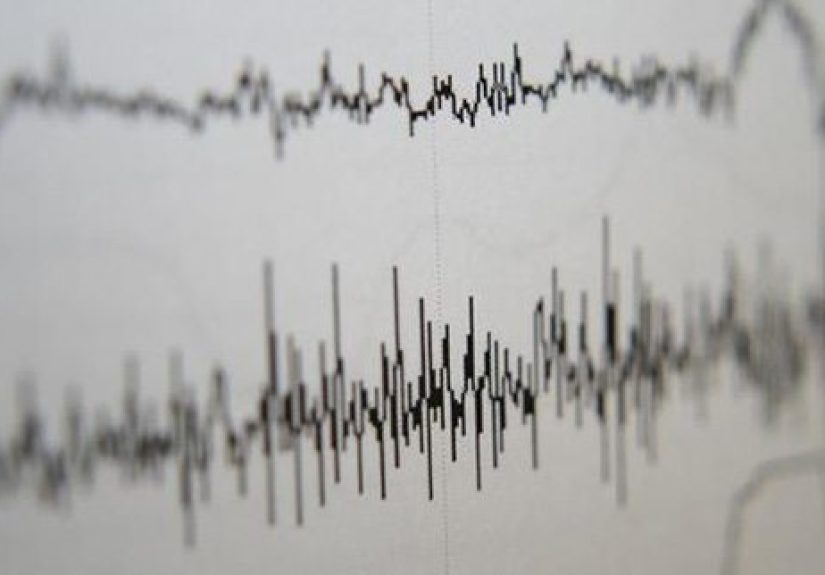
The first thing to know is also the biggest myth-buster: a polygraph does not detect lies the way a thermometer detects fever. It records physiological responses such as breathing, blood pressure, heart rate, and skin conductivity while a person answers questions. From those responses, an examiner tries to infer whether deception may be present. In other words, the machine measures body reactions, and a human being interprets those reactions. That is a big reason polygraphs remain controversial.
2. The Process Usually Has Three Parts
Most people imagine the test begins the second the sensors go on. Not really. A polygraph exam generally includes a pretest phase, the actual testing phase, and a post-test discussion. During the pretest, the examiner reviews background information, explains the procedure, and develops the questions. Then comes the recording phase, where the physiological data is collected. After that, the examiner may discuss results or ask follow-up questions. So yes, the “test” is not just the part where you sit there trying not to blink like a malfunctioning robot.
3. Feeling Nervous Does Not Automatically Mean “Fail”
Many people panic because they think normal anxiety will doom them. Scientific reviews have long noted the basic problem here: the kinds of physiological responses measured by a polygraph can be caused by many things besides deception, including fear, stress, embarrassment, confusion, and the simple fact that being wired to sensors while a stranger studies your breathing is not exactly a spa treatment. That is one reason researchers and psychologists continue to debate how much confidence should be placed in polygraph results.
4. Polygraphs Have Serious Accuracy Limits
The National Academies’ major review concluded that for specific-incident cases, polygraph testing can perform better than chance, but still well below perfection. The same review found that evidence for employee and preemployment screening is much weaker, and that screening accuracy is almost certainly lower than what is seen in more limited incident-based studies. That means the dramatic yes-or-no certainty people expect from lie detectors is not supported by the best-known scientific review of the subject.
The review also highlighted the ugly tradeoff in low-base-rate screening settings, such as trying to identify a tiny number of bad actors in a huge pool of ordinary employees. Even if a screening system looks pretty good on paper, it can still produce lots of false alarms or miss real threats. So when someone says, “Just use a polygraph and you’ll know who’s lying,” the science basically replies, “I would not be that confident, champ.”
5. U.S. Law Gives Many Workers Important Protections
In the United States, most private employers generally cannot require or request lie detector tests for pre-employment screening or during employment under the Employee Polygraph Protection Act. The law also generally bars employers from firing, disciplining, or discriminating against workers for refusing a test or for exercising rights under the Act. There are limited exemptions, including certain security service firms, some pharmaceutical roles, and some workplace-investigation situations involving specific economic loss, but even then the law imposes strict rules.
Where private-sector testing is allowed under those exemptions, the examiner must meet legal standards, and disclosure of information from the test is tightly limited. That means a lot of people who assume “my boss can just make me take a polygraph” are overestimating employer power and underestimating labor law.
6. Courts Often Treat Polygraph Evidence Cautiously
Another surprise for people raised on crime dramas: polygraph results are not universally welcomed in court. The DOJ’s own guidance has long reflected skepticism about introducing polygraph evidence, and the Supreme Court in United States v. Scheffer upheld a rule making polygraph evidence inadmissible in courts-martial. That does not mean polygraphs are never used anywhere in the justice system, but it does show that legal institutions have long recognized reliability concerns.
7. Honest Preparation Is Boring but Effective
If you are asked to take a polygraph in a lawful setting, the best preparation is ordinary, non-dramatic, and painfully un-Hollywood. TSA guidance for applicants says to get a good night’s sleep, follow your usual routine, take your regular medications, do not skip meals, come with an open mind, and allow enough time in your schedule. That advice is refreshingly dull, which is usually a sign that it is useful.
You should also review any instructions you were given, disclose relevant medical or practical issues truthfully, and ask procedural questions if something is unclear. A real advantage of knowing the process is that it can reduce avoidable stress. And unlike internet folklore, “sleep, eat, and tell the truth” is unlikely to explode in your face.
8. So-Called “Beating the Test” Advice Is a Terrible Idea
One reason I will not provide “tips for beating a lie detector” is that research and policy sources treat countermeasures as a serious issue, especially in security contexts. The National Academies reported that conscious cognitive or physical countermeasures can pose a threat to polygraph performance under some conditions, and the National Center for Credibility Assessment explicitly includes countermeasures education and research in its mission. In plain English: trying to game the process is not just unethical, it may also create additional problems for you.
It can also backfire in practical ways. If the stakes involve employment, security clearance, or an investigation, deceptive conduct can become a bigger issue than the original concern. A messy, suspicious, evasive interaction is rarely the life hack people imagine it to be.
9. Context Matters More Than the Machine
Polygraphs are used in different settings for different reasons: criminal investigations, employment screening, national security vetting, and administrative inquiries. Those contexts matter because the questions, incentives, consequences, and standards are different. The National Academies emphasized that specific-incident testing and broad screening are not the same thing, and results from one setting do not automatically translate cleanly to the other. So when you hear one blanket claim about “how accurate lie detectors are,” treat it like a suspiciously cheap umbrella: probably not built for every storm.
10. When the Stakes Are High, Get Real Advice
If a polygraph request is tied to a criminal matter, a sensitive employment issue, or a security-clearance problem, get guidance from a qualified lawyer or appropriate representative rather than relying on internet myths. That is not fearmongering. It is just common sense. A real professional can help you understand your rights, the context, the consequences, and whether the request is voluntary, lawful, strategic, or wise.
Why This Topic Keeps Fooling People
Lie detector tests survive in public imagination because they sit in a weird middle zone between science, psychology, law, and theater. There are wires. There are charts. There is a person asking serious questions in a serious tone. It feels scientific and decisive, which is part of its power. But the actual evidence base is more limited and more conditional than pop culture suggests. That gap between appearance and reality is exactly why so many people go searching for shortcuts instead of learning the basics.
The better takeaway is not “trust the machine completely” or “the machine is meaningless.” It is that polygraphs are imperfect tools used in specific systems by human beings who are interpreting indirect signals. Once you understand that, the whole topic gets less mystical and more manageable.
Experiences People Commonly Describe Around Polygraph Tests
Experience 1: The Sleepless Candidate. One of the most common stories is from a job applicant who spends the night before the exam doom-scrolling forums, reading dramatic claims, and arriving exhausted. By the time the actual appointment starts, the person is not worried about the truth anymore. They are worried about sweating, blinking, breathing, swallowing, and whether blinking too confidently is somehow suspicious. This kind of experience shows how misinformation can become part of the stress. The person often leaves thinking the machine measured some dark secret, when in reality the bigger problem may have been sleep deprivation and panic.
Experience 2: The Honest but Embarrassed Examinee. Another familiar experience involves someone who is telling the truth on the main issue but feels ashamed or anxious about unrelated past behavior. The exam can feel emotionally messy because the body does not sort feelings into neat little folders labeled “relevant” and “irrelevant.” A person can be truthful and still react strongly because they are worried about judgment, misunderstandings, or old mistakes. People in this situation often describe the test as less like “detecting lies” and more like being stuck in an awkward interview with your nervous system loudly oversharing.
Experience 3: The Surprise About Rights. Some workers only learn after the fact that many private employers are heavily restricted in using lie detector tests. They walk into the situation assuming they have no choice, only to discover later that federal law may have given them protections all along. This is one of the most frustrating experiences because it turns a stressful event into an avoidable one. It also explains why understanding the legal context matters almost as much as understanding the device.
Experience 4: The “This Is Longer Than I Expected” Reaction. People who picture a quick ten-minute scene from television are often surprised by how much of the process happens before the test charting even begins. The pretest discussion, question review, paperwork, and follow-up conversation can make the experience feel much longer and more psychologically tiring than expected. That surprise alone can increase anxiety. A lot of the dread surrounding polygraphs comes from not knowing the structure beforehand.
Experience 5: Relief Through Clarity. The most useful experiences tend to be the least dramatic. Someone learns what the exam is for, understands the questions, shows up rested, takes regular medication as directed, answers honestly, and treats the process seriously without turning it into a superstition festival. Whether or not the person likes the experience, they usually leave feeling more in control because they approached it with information instead of folklore. That may not sound exciting, but it beats living inside a homemade thriller movie where every heartbeat feels like a plot twist.
Conclusion
If there is one smart lesson here, it is this: do not waste your energy chasing “how to beat a lie detector” myths. Spend that energy understanding what a polygraph actually measures, what the science says about its limits, what the law allows, and how to prepare honestly if a lawful exam ever lands on your calendar. That approach is more useful, more ethical, and a lot less likely to turn a tense situation into a bigger mess.