Table of Contents >> Show >> Hide
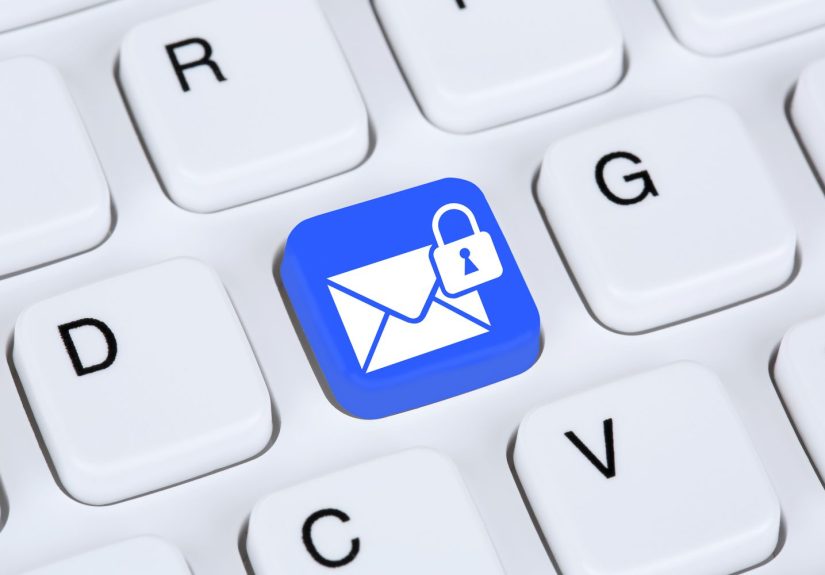
If your inbox feels less like a communication tool and more like a digital junk drawer full of trackers, spam, and “urgent” login alerts from places you’ve never heard of, you are not alone. In 2025, email security is no longer just a concern for journalists, lawyers, executives, or that one friend who stores passwords in a locked notebook. It matters to regular people, too. Your inbox now holds receipts, travel confirmations, tax documents, bank alerts, medical information, and enough personal breadcrumbs to make identity thieves clap like seals.
That is why secure email services have gone from niche privacy toys to serious everyday tools. But here is the catch: not every provider that says “encrypted” deserves a gold medal and a dramatic slow-motion entrance. Some protect messages well but make daily use awkward. Others are friendlier, but leave more metadata exposed than privacy purists would like. So if you are looking for the best secure email service in 2025, the real question is not just who encrypts email. It is who protects your account, respects your privacy, limits tracking, and still makes email usable enough that you will not rage-quit by Tuesday.
After comparing security architecture, encryption model, two-factor authentication, anti-tracking features, metadata protection, interoperability, and day-to-day usability, these are the four most secure email services in 2025: Proton Mail, Tuta Mail, Mailfence, and StartMail.
What Makes an Email Service Secure in 2025?
Before jumping into the list, it helps to define what “secure” actually means. A secure email provider should do more than wrap messages in marketing language and a sleek purple interface. It should protect your data at rest and in transit, reduce how much the provider itself can see, support strong account protection, and make it harder for trackers and phishing attempts to sneak into your workflow.
In practical terms, the best secure email services usually check most of these boxes:
- End-to-end encryption for message content whenever possible.
- Zero-access or zero-knowledge storage so the provider cannot casually peek at your inbox.
- Open-source apps and third-party audits, because “trust us” is not a security model.
- Strong account security, including two-factor authentication.
- Tracker blocking, phishing protections, and alias support to limit exposure.
- Reasonable usability, because the most secure email service in the world is not helpful if using it feels like filing taxes inside a submarine.
It is also important to remember that email itself has structural limits. Even highly secure providers cannot completely erase all metadata in every scenario, and email remains more exposed than modern secure messaging apps for real-time private conversations. Still, for inbox privacy and sensitive routine communication, these four providers stand above the crowd.
The 4 Most Secure Email Services in 2025
1. Proton Mail
Best for: Most people who want the strongest mix of privacy, usability, and ecosystem support.
Proton Mail remains the best overall secure email service in 2025 because it does the hard thing unusually well: it makes privacy practical. That may sound like a small achievement, but in the world of secure email, “practical” is often rarer than “encrypted.” Proton combines end-to-end encryption, zero-access storage, open-source apps, and independent audits with an interface that feels familiar enough for everyday users.
Its biggest strength is balance. Emails stored in Proton Mail benefit from zero-access encryption, and Proton-to-Proton messages are end-to-end encrypted by default. For people emailing outside the Proton ecosystem, the service also supports password-protected messages, which is useful when you need to send something sensitive to a Gmail or Outlook user without simply crossing your fingers and hoping for the best.
Proton also earns points for privacy-friendly extras that make a real difference in daily life. Tracker blocking helps stop invisible pixels from reporting when you opened a message. Alias support reduces the amount of damage one leaked email address can do. And because Proton now sits inside a larger privacy suite, users who want mail, calendar, storage, and password tools under one roof can keep their data habits more centralized and less dependent on ad-funded platforms.
That said, Proton Mail is not magic. While message bodies are strongly protected, some metadata remains less protected than the message content itself. This is not unique to Proton, but it matters. People shopping for a secure email provider should understand that “private email” and “perfect anonymity” are not the same thing.
Why Proton Mail ranks first: It offers a mature security model, strong privacy defaults, audited open-source software, modern apps, and the smoothest on-ramp for people leaving mainstream providers.
Main trade-off: Its strongest protections are most seamless inside the Proton ecosystem, while communication with outside providers still involves the usual compromises of email.
2. Tuta Mail
Best for: Users who want maximum built-in mailbox privacy and fewer compromises around encrypted mailbox data.
Tuta Mail is the privacy purist’s favorite for good reason. If Proton is the best all-around athlete, Tuta is the specialist who shows up with a lockbox, a microscope, and a deeply suspicious attitude toward surveillance capitalism. Tuta focuses heavily on encrypting as much as possible by default, and that gives it a real edge for users who want a cleaner privacy story.
One of the biggest reasons Tuta ranks so highly is its approach to mailbox data. The service emphasizes protection not only for message bodies and attachments, but also for more of the surrounding information in the mailbox experience, including subject lines. In 2025, Tuta also stands out for its post-quantum or quantum-safe messaging language and architecture, which is meant to prepare against future “harvest now, decrypt later” threats. Whether that future arrives next week or later, the forward-looking design is still impressive.
Tuta also deserves credit for its privacy posture beyond encryption. It is open source, does not require a phone number for sign-up, avoids ad targeting, and offers a minimalist experience that feels intentionally focused rather than stripped down by accident. For users who want their email provider to do email well and not behave like a nosy shopping mall, that simplicity is part of the appeal.
The downside is convenience. Tuta does not support traditional IMAP, POP, or SMTP in the same way many conventional email users expect. That is frustrating if you love mixing and matching clients or using long-established workflows through desktop apps. Tuta sees that limitation as a security choice, but it can still feel restrictive in real life.
Why Tuta ranks second: It offers some of the strongest default privacy protections available in a mainstream secure email service, especially for people who care deeply about minimizing data exposure inside the mailbox itself.
Main trade-off: Less interoperability means less convenience if you want a classic email-client workflow.
3. Mailfence
Best for: Users who want strong encryption, digital signatures, and more traditional email flexibility.
Mailfence is a strong choice for people who want secure email without giving up normal email habits. It leans into OpenPGP, digital signatures, key management, and interoperability, which makes it especially appealing to more technical users, small teams, and anyone who wants control instead of a sealed-off ecosystem.
What makes Mailfence stand out is that it gives users real cryptographic tools without forcing them to live inside a bubble. You can manage OpenPGP keys, use digital signatures, and access mail through standard protocols like IMAP and SMTP. That matters if your definition of “secure email” includes compatibility with existing software, not just a beautiful web app and a prayer.
Mailfence also supports TOTP-based two-factor authentication, which is essential. In 2025, secure email is not only about encrypting messages. It is about preventing account takeover in the first place. A provider can have impressive encryption and still fail you if someone steals your password and walks right in through the front door.
Its biggest strength is flexibility, but that is also where the complexity creeps in. Mailfence’s support for multiple protocols and broader interoperability gives users more options, yet more options also mean more settings to manage correctly. That does not make the service less secure by itself, but it does mean the user has to bring a little more responsibility to the table.
Why Mailfence ranks third: It combines strong OpenPGP-based email security with digital signatures, broad interoperability, and a workflow that feels closer to “normal email” than some more locked-down privacy services.
Main trade-off: It is better suited to users who appreciate configuration and control, not those who want a completely automatic privacy experience.
4. StartMail
Best for: People moving from mainstream email who want better privacy, easy aliases, and secure messaging without a steep learning curve.
StartMail earns the fourth spot because it does something many “secure” tools fail to do: it helps normal humans transition into better privacy without demanding that they become email cryptography hobbyists overnight. It supports PGP, password-protected messages, two-factor authentication, IMAP access, and a strong alias system that is genuinely useful.
For many users, aliases are not a side feature. They are a survival tool. StartMail’s alias options help reduce spam, limit tracking, and protect your primary address from endless newsletter creep and data-broker chaos. Its header-stripping feature also adds a welcome layer of privacy by removing certain sender-side technical details that can otherwise leak more information than people realize.
StartMail is particularly good for users who still want desktop and mobile email clients in the mix. If Proton feels like a full privacy ecosystem and Tuta feels like a privacy fortress, StartMail feels like the practical privacy upgrade for someone who wants to keep using familiar tools while quietly making their inbox harder to exploit.
The reason it ranks fourth instead of higher is that its security model is not as all-encompassing or as tightly integrated as Proton’s and Tuta’s. Some encrypted workflows depend more heavily on PGP setup, and not every alias use case supports encrypted sending equally. But for users who value privacy, compatibility, and a lower learning curve, StartMail remains one of the smartest options available.
Why StartMail ranks fourth: It offers a strong blend of encryption tools, aliases, header privacy, and client compatibility that makes secure email feel approachable.
Main trade-off: It is more of a smart privacy upgrade than an all-in-one secure ecosystem.
Which Secure Email Service Should You Choose?
If you want the easiest recommendation, choose Proton Mail. It is the best fit for most people because it pairs serious privacy with mainstream usability.
If your top priority is encrypting as much mailbox data as possible and embracing a privacy-first design with fewer compromises, choose Tuta Mail.
If you want OpenPGP control, digital signatures, and conventional email workflows, choose Mailfence.
If you want a smoother transition from Gmail or Outlook, plus excellent alias tools and client compatibility, choose StartMail.
What Secure Email Still Cannot Fix
This is the part where the cape comes off and reality walks in. Even the best secure email service cannot save you from every bad decision, scam, or protocol limitation. Email still has metadata issues. Phishing still works frighteningly well when attackers trick users into handing over credentials. And if you reuse weak passwords, ignore two-factor authentication, or click every “your package is delayed” message like it is a game show buzzer, no provider can fully protect you.
That is why the best secure email setup in 2025 is not just a provider. It is a provider plus good habits: strong unique passwords, two-factor authentication, careful link-checking, and a healthy distrust of weird urgency in your inbox.
Real-World Experiences With Secure Email Services in 2025
In real life, the experience of switching to a secure email service is usually less dramatic than people expect. There is no triumphant soundtrack. No cyberpunk fireworks. Mostly, what happens first is that you begin noticing how noisy regular email had become. People who move from mainstream inboxes to privacy-focused services often describe the same early reaction: the inbox suddenly feels calmer. Fewer trackers. Fewer creepy marketing echoes. Fewer moments where an ad follows you around the internet because you once opened a coupon for socks at 11:42 p.m.
The first week is usually about adjustment. You update your banking login, move your travel confirmations, change the email attached to your password manager, and remember that yes, your streaming service also knows too much about you. This is where Proton Mail and StartMail tend to feel especially friendly. They lower the friction enough that the switch feels doable. People can keep functioning while improving privacy, which turns out to be a wildly underrated feature.
The second big experience is discovering how useful aliases are. This is where many users become accidental evangelists. Instead of giving every store, giveaway, newsletter, and random Wi-Fi sign-up your real address, you create a separate address or alias. A few months later, when one of those aliases starts attracting junk mail like a porch light attracts bugs, you can shut it down or filter it without setting your whole inbox on fire. It is one of those features that sounds minor until you use it, and then suddenly it becomes the thing you wish you had five years ago.
There is also a noticeable psychological shift. Secure email users often report feeling more deliberate. Not paranoid. Just more aware. You begin to treat email as a place for communication, not a giant storage shed for every online interaction you have ever had. That tends to improve organization as much as privacy. If an address is used only for healthcare, or only for shopping, or only for financial accounts, your digital life starts looking less like spaghetti and more like labeled containers.
Of course, not every experience is friction-free. Tuta’s more locked-down approach can frustrate users who are attached to old-school desktop workflows. Mailfence can feel more technical at first if you have never touched OpenPGP or digital signatures. StartMail’s deeper privacy features may require a little setup before they feel natural. And Proton, while very polished, still cannot erase the fundamental compromises of emailing people on less secure services. The secure inbox is only half the story; the other half is who you are emailing.
Still, by the time users settle in, the most common reaction is simple: they do not miss being profiled. They do not miss leaking their main address to every online form. They do not miss the feeling that their inbox is quietly being watched, sorted, measured, and monetized. The practical experience of secure email in 2025 is not about becoming invisible. It is about regaining control, reducing exposure, and making your everyday communication a lot less sloppy. And in an era when privacy often feels like an optional add-on nobody asked for, that control feels pretty great.
Final Verdict
The best secure email service in 2025 is still Proton Mail for most users, thanks to its rare combination of strong encryption, privacy features, polished apps, and realistic everyday usability. Tuta Mail is the strongest choice for people who want deeper default mailbox privacy and a more uncompromising architecture. Mailfence is excellent for users who want OpenPGP flexibility and digital-signature control. StartMail is the practical pick for people who want stronger privacy without abandoning familiar email habits.
If you are serious about email security, the best move is not endlessly comparing logos and slogans. It is choosing one of these providers, enabling two-factor authentication immediately, using aliases generously, and treating your inbox like the sensitive part of your digital life that it really is. Because in 2025, your email address is not just an address. It is the front door to your online identity. Maybe do not leave it wide open.