Table of Contents >> Show >> Hide
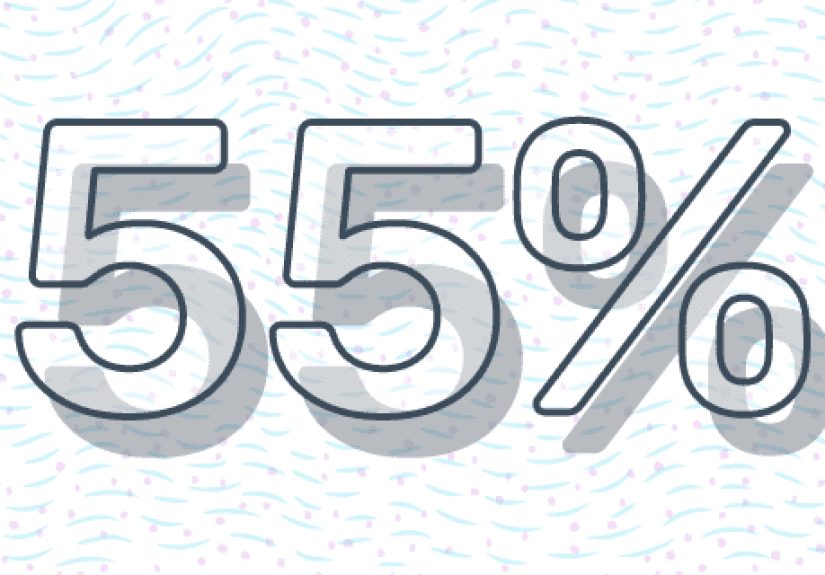
If you like your economic stories served with one spicy little percentage, here it is: 55%. That was the share of small business owners in a late-2020 survey who said they expected Joe Biden’s presidency to be bad for small businesses. For a country that practically treats small business like a fourth branch of government, that number landed with a thud. It was not subtle. It was not fuzzy. It was Main Street saying, “We would like to speak to the manager of economic policy, please.”
But a smart reading of that number requires more than a dramatic eyebrow raise. Small business owners are not one giant hive mind in matching aprons. They are restaurant operators, contractors, retailers, consultants, logistics firms, salons, repair shops, medical practices, and manufacturers. Some are deeply ideological. Others could not care less about Washington until a tax bill, wage bill, or loan payment hits the inbox. So when a majority say they are wary of a president, the real question is not just whether they are nervous. The real question is why.
This is where the story gets interesting. The original “number of the day” captured a political mood, but the broader data paints a more nuanced picture. Small businesses were wary of Biden for reasons that ranged from taxes and regulation to inflation, borrowing costs, labor shortages, and plain old uncertainty. Yet at the same time, many owners also reported decent revenue expectations, stable cash flow, rising plans to invest, and a surprising amount of optimism about their own companies. In other words, they often felt skeptical about the administration while still betting on themselves. Welcome to the wonderfully contradictory world of American entrepreneurship.
The Number Behind the Mood
The headline figure came from a CNBC/SurveyMonkey small business survey taken shortly after the 2020 election. In that poll, 55% of owners said Biden would be bad for small business, while 34% said he would be good. The same survey found concern centered on three familiar policy levers: tax changes, government regulation, and immigration. That matters because small firms tend to be unusually sensitive to cost increases and paperwork burdens. A giant corporation may respond to a new rule by adding a compliance team. A five-person company responds by adding stress, coffee, and one more thing the owner has to do at 10:30 p.m.
Even more revealing, the survey’s Small Business Confidence Index fell to its lowest point since tracking began in 2017. So the 55% figure was not an isolated complaint floating alone in political space. It arrived as part of a wider drop in confidence. Some of that reflected partisan expectations after the election. Small business ownership leans more Republican than the public overall, so a Democratic victory was always likely to shake sentiment. But politics alone does not explain why the wariness lasted.
Why Small Businesses Stayed Uneasy
1. Inflation kept eating the margins
For many owners, the Biden era was not judged by White House speeches or ribbon cuttings. It was judged by supplier invoices. Inflation became the villain that would not leave the stage. Across 2024, survey after survey showed inflation ranking as the top concern for small business owners. The U.S. Chamber’s Small Business Index found that 52% of small businesses called inflation their biggest challenge in the first quarter of 2024, and 55% said the same in the second quarter. NFIB data also showed inflation repeatedly listed as the single most important business problem for a large share of owners.
This was not abstract macroeconomics. This was napkins costing more, ingredients costing more, insurance costing more, rent costing more, and payroll costing more. A big company can spread those costs across a vast customer base, squeeze suppliers, or hedge inputs. A neighborhood business usually has three tools: raise prices, absorb pain, or mutter into the void. None is especially fun.
By spring 2024, many small business owners still believed inflation had not truly peaked. That lingering distrust mattered politically. Even as headline inflation cooled compared with its worst levels, owners remained stuck with the aftereffects: higher baseline costs and customers who were increasingly price sensitive. When your costs are still elevated and your customers are suddenly amateur coupon analysts, the phrase “economic progress” can sound like a joke told at your expense.
2. Borrowing costs made expansion harder
Higher interest rates also fed the sense that the environment was hostile. While the Federal Reserve controls monetary policy rather than the White House, presidents still get blamed when business owners feel squeezed. The Federal Reserve’s Small Business Credit Survey found that most firms said higher interest rates affected their businesses, most commonly through increased debt payments. Reuters reporting in late 2023 and 2024 showed the same pattern: high borrowing costs were a real headwind for smaller firms, especially those planning to refinance debt, expand, or invest in equipment.
That is a major problem because small businesses often live in the land of practical math. They are not asking whether GDP is philosophically healthy. They are asking whether the monthly payment on a loan still makes sense. If the answer flips from “manageable” to “absolutely not,” hiring plans get delayed, equipment purchases get shelved, and expansion dreams start collecting dust.
3. Hiring was still a headache
Another reason for the wary mood was labor. During the Biden years, the labor market stayed strong overall, but that did not mean small firms found staffing easy. In fact, many did not. Reuters reported in mid-2024 that small-firm hiring intentions were stuck near their lowest levels since the pandemic began. The issue was not always lack of demand. Sometimes it was that owners could not find the right people at wages they could sustain.
AP reporting on NFIB survey results captured the tension well: inflation was cooling, but small businesses still struggled more than larger firms to retain workers and absorb higher rent and labor costs. In plain English, it was like trying to run a relay race while bigger competitors kept borrowing your runners.
Labor quality remained a recurring concern, and even when job openings declined somewhat, that did not mean owners suddenly felt relaxed. It often meant they were pulling back. Not hiring because you solved the problem is one thing. Not hiring because you are tired of the problem is another.
4. Regulation, taxes, and compliance anxiety never fully disappeared
The original survey that produced the 55% figure pointed directly to fear of tax and regulatory changes. That concern did not vanish. Even when inflation dominated the headlines, many owners remained deeply sensitive to anything that sounded like added compliance, tighter rules, or higher tax exposure. For a small employer, policy complexity itself can feel like a tax. If an owner has to spend more time on paperwork, legal advice, payroll adjustments, reporting, or permit renewals, that time is being taken from sales, customer service, and operations.
This is why political messaging around small business often misses the mark. Policymakers may talk about targeted credits, incentives, or support programs. Owners may hear, “Wonderful. Another 14-step form I will definitely complete between payroll and a leaking freezer.” The perception gap is real.
The 2024 Data: Wary, Yes. Uniformly Miserable, No.
Here is where the story stops being simple. If all you looked at were Biden approval numbers among small business owners, you might think Main Street was curled up under a desk. In early 2024, CNBC/SurveyMonkey found only about one-third of small business owners approved of the way Biden was handling his job as president, while about two-thirds disapproved. That is not exactly a Valentine.
And yet, in other surveys, many owners were more upbeat about their own firms than about Washington. PNC’s survey in early 2024 found 79% of small and mid-sized business owners highly optimistic about their own business prospects, and 55% optimistic about the national economy. The U.S. Chamber’s second-quarter 2024 index showed improving expectations for revenue, investment, and cash flow, even while inflation remained the top concern by far.
That combination is the key to understanding the small-business mood during Biden’s presidency. Owners could believe the policy environment was risky, the cost environment was annoying, and the political leadership was not speaking their language while also believing their own business could still perform well. Entrepreneurs are nothing if not stubbornly hopeful. They can complain at 9 a.m., raise prices at noon, renegotiate a vendor contract at 2 p.m., and tell you at 5 p.m. that next year might still be their best yet.
The Other Half of the Story: Biden’s Record Was Not All Bad for Small Business
A fair article cannot ignore the counterevidence. Under Biden, entrepreneurship surged by several official measures. The Census Bureau’s Business Formation Statistics showed strong levels of new business applications, and Treasury said the United States was averaging about 430,000 new business applications per month in 2024, far above 2019 levels. The SBA also highlighted a rise in small-dollar lending and broader access to financing through program changes.
That does not magically erase the concerns of existing business owners, but it complicates the claim that Biden-era policy was uniformly anti-small-business. Some firms clearly found opportunity in the period. New businesses kept opening. Lending access improved in some channels. Revenue expectations in several surveys were healthy. Even technology adoption, especially around AI tools, became a source of optimism for some smaller firms looking to save time and operate leaner.
So why the disconnect? Because “small business” is not one story. A startup service firm with low overhead may thrive in conditions that crush a restaurant, retailer, or manufacturer. A fast-growing company may welcome programs that expand demand or credit access, while a mature owner with thin margins may focus on taxes, compliance, and payroll costs. Both can say they are “small business owners” and mean completely different things.
What the Post-Election Shift Revealed
Late 2024 offered one more clue. After the election, NFIB’s optimism index jumped sharply, and uncertainty dropped from record highs. That swing suggested that politics itself was not a side note. It was part of the economic mood. Small business owners were not just reacting to sales trends or loan rates. They were reacting to who they believed would shape the future rules of the game.
That does not mean every owner became more profitable overnight. It means expectations matter. Small businesses make decisions based on what they think is coming next: taxes, regulation, demand, labor conditions, financing costs, and general stability. If they believe the future will be friendlier, they loosen up. If they believe it will be rougher, they clutch the wallet and stare suspiciously at every invoice like it just insulted their family.
Main Street Experiences Behind the Numbers
Behind every survey percentage is an owner having an extremely glamorous moment with spreadsheets, staffing schedules, and a phone full of vendor messages. That is the part economic headlines often miss. “Small businesses wary of Biden” sounds like a political statement, but for many owners it felt more like a daily operating experience than a partisan slogan.
Think about the restaurant owner who finally got customers back after the pandemic, only to discover that food costs, wages, and insurance all moved in the wrong direction at once. Business looked busy from the sidewalk, but the margin on each plate got thinner. Raising menu prices risked annoying customers who were also feeling squeezed. Not raising them meant working harder for less. That owner might not have spent the day debating ideology. They were debating whether to cut opening hours on Tuesdays.
Or consider a contractor who wanted to hire two more workers and add another truck. In a normal year, that would be growth. In a high-rate year, it became a coin toss. Financing cost more, payroll cost more, and customers hesitated longer before approving projects. The work did not disappear, exactly. It just slowed down enough to make every expansion plan feel like a dare.
Retailers had their own version of the stress. Inventory had to be bought at higher prices, but shoppers were becoming more selective. Owners talked about customers trading down, delaying purchases, or waiting for sales. The store looked open, the lights were on, the receipts still printed, but confidence got shakier because every decision became more fragile.
Service businesses felt the labor puzzle in a particularly sharp way. A salon, home-care provider, repair shop, or local office could have demand and still feel boxed in because hiring remained expensive and unpredictable. Owners often had to choose between paying more to attract staff, working longer hours themselves, or limiting appointments. None of those choices feels like a victory lap.
Even the owners who were optimistic about their own companies often described a kind of guarded confidence. They believed in their business model, their customer relationships, and their ability to adapt. What they did not fully trust was the broader policy and cost environment around them. That is the emotional center of the story. The wariness was not always dramatic or theatrical. Often it was practical. It sounded like, “I think we will be okay, but I do not love the direction of taxes, rates, regulations, or inflation.”
So when a headline says small businesses were wary of Biden, the most accurate interpretation is not that Main Street spoke with one voice. It is that many owners experienced the era as one of pressure, caution, and constant adjustment. They kept selling, hiring when they could, cutting where they had to, and hoping the next quarter would be easier than the last. Sometimes it was. Sometimes it was not. But the numbers make more sense once you picture the lived experience behind them: less theory, more payroll; less ideology, more invoices.
Conclusion
The “number of the day” captured a real political and economic mood. Small businesses were wary of Biden not because one survey magically settled the debate, but because many owners saw a pileup of risks: inflation, labor strain, higher borrowing costs, and fear of less favorable tax and regulatory policy. At the same time, the story was never purely negative. New businesses were being formed at unusually high rates, some financing channels improved, and many owners remained impressively confident in their own firms.
That makes the best takeaway a balanced one. Main Street’s view of Biden was skeptical, but not simplistic. Small business owners often disliked the broader environment while still grinding out growth inside their own four walls. They were cautious, not helpless; frustrated, not defeated. And if there is one enduring lesson from the data, it is this: small businesses do not need a perfect economy to survive, but they do need an environment that feels predictable, affordable, and worth betting on.