Table of Contents >> Show >> Hide
- Why a Backrub Can Feel So Good
- Before You Start: Ask First, Assume Nothing
- Set the Scene Without Making It Weird
- The Golden Rules of a Great Backrub
- Step-by-Step: How to Give Your Wife a Backrub
- How Long Should a Backrub Last?
- Pressure: How Much Is Too Much?
- Common Mistakes to Avoid
- When You Should Skip the Backrub
- What to Do After the Backrub
- How to Make Your Backrubs Better Over Time
- Experiences Related to “How to Give Your Wife a Backrub”
- Conclusion
Note: Body-only HTML, English content, copy-ready for web publishing, and cleaned of unnecessary citation artifacts.
There are few household superpowers more underrated than a genuinely good backrub. It costs less than a fancy spa day, takes less planning than a weekend getaway, and can instantly make you look like a thoughtful genius instead of the person who keeps asking where the scissors went. Better yet, when done well, a backrub can help your wife feel more comfortable, more relaxed, and more cared for after a long day of work, parenting, commuting, or simply existing in a world where shoulders somehow migrate up to the ears by 3 p.m.
But let’s be honest: a lot of backrubs start with good intentions and end with wild elbow jabs, dry-skin friction, and the sentence nobody wants to hear: “Uh… thanks, but maybe stop.” The difference between a clumsy rub and a genuinely soothing back massage is not brute strength. It is communication, pace, hand placement, and knowing when gentle is better than deep.
This guide walks you through how to give your wife a backrub that feels relaxing, respectful, and actually helpful. You’ll learn how to set up the space, how much pressure to use, which areas to focus on, what to avoid, and when a backrub is a nice comfort tool instead of a solution for real back pain. In other words, you are about to become much more useful with your hands, and in the least chaotic way possible.
Why a Backrub Can Feel So Good
A good backrub can help in two big ways. First, it may ease muscle tightness and everyday tension, especially around the upper back, shoulders, and the muscles beside the spine. Second, it can create a sense of calm. Slow, steady touch often helps people feel less wound up, less stressed, and more present in their bodies.
That said, keep your expectations realistic. A home backrub is not magic, and it is not a replacement for medical care, physical therapy, or a licensed massage therapist when someone has persistent pain. Think of it as comfort care for ordinary tension, stiffness, and “I have been sitting like a pretzel at a laptop all day” discomfort. That is already a pretty wonderful thing.
Before You Start: Ask First, Assume Nothing
The best backrub begins before your hands ever touch her back. Ask simple questions. Is now a good time? Does she want a relaxing backrub or more focused work on sore spots? Does she want light, medium, or firm pressure? Are there places that are especially tense, and are there places she does not want touched?
This step matters more than people think. One person’s “that feels amazing” is another person’s “why are you trying to knead me like pizza dough?” Communication helps you avoid guessing, and guessing is how people accidentally turn a nice gesture into an apology tour.
Questions Worth Asking
Try something like: “Do you want gentle relaxing pressure or something a little firmer?” “Are your shoulders the main problem, or is it your lower back?” “Tell me right away if anything feels too strong.” This keeps the backrub collaborative instead of experimental in a bad way.
Set the Scene Without Making It Weird
You do not need candles, whale sounds, or a soundtrack called Mist Over a Bamboo Pond. You just need comfort. Pick a place where your wife can lie face down or sit leaning forward comfortably. A bed works, but a couch, padded bench, or yoga mat can also work. Support matters. A pillow under the chest, hips, ankles, or stomach can make a surprising difference.
Warm hands help. Cold hands on a tense back are technically memorable, but not in a good way. Rub your hands together first. You can also use a small amount of lotion or massage oil to reduce friction. Go easy. You want glide, not a spill that turns the whole thing into a slip-and-slide.
What to Keep Nearby
Have a pillow, a towel, and a little unscented lotion or oil within reach. If she likes warmth, a warm shower beforehand or a heating pad used safely for a short time can help the muscles feel less guarded before you begin. If the area feels newly sore or irritated, some people prefer a cool pack afterward instead. Let comfort guide the choice.
The Golden Rules of a Great Backrub
1. Start Light
Always begin with broad, gentle strokes. This gives the muscles time to relax and gives you a chance to learn where the tension is. Jumping straight to deep pressure is like starting a conversation by yelling. The back will not appreciate your enthusiasm.
2. Stay Off the Spine
Do not press directly on the bony spine itself. Focus on the muscles on either side of it. The goal is to work the soft tissue, not audition for a role as an orthopedic cautionary tale.
3. Slow Is Better Than Fast
Most people find slow, steady, rhythmic pressure more relaxing than frantic rubbing. Think calm and consistent. If your hands are moving like you are trying to polish a car before a rainstorm, slow down.
4. Pain Is Not the Goal
More pressure is not always better. A backrub should feel relieving, not punishing. Mild tenderness over a knot can be okay, but sharp pain, burning pain, numbness, or shooting pain means back off immediately.
5. Check In
Ask every couple of minutes: “How’s the pressure?” “Do you want more time here?” “Still good?” That tiny check-in can save the whole experience.
Step-by-Step: How to Give Your Wife a Backrub
Step 1: Begin With Long Gliding Strokes
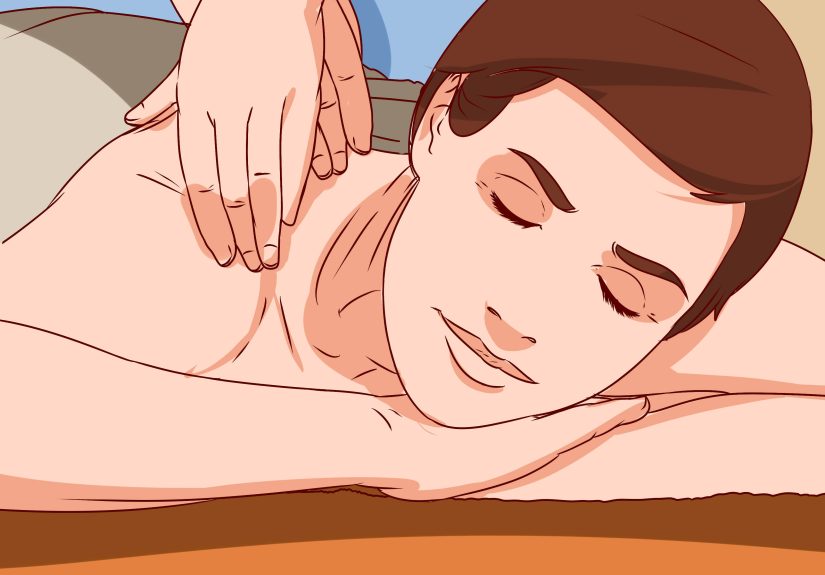
Place both hands on her upper back and glide down the muscles on either side of the spine toward the middle or lower back, then circle outward and back up toward the shoulders. Use your whole palms, not just fingertips. Repeat this several times with light to medium pressure.
This warms the tissue and helps you feel where the tight spots are. Often, the shoulders, upper trapezius area, and the space between the shoulder blades are the first places that ask for attention.
Step 2: Focus on the Shoulders
Use your thumbs or the heels of your hands to make slow circles into the muscles at the tops of the shoulders. Work one side, then the other. Keep the pressure moderate unless she asks for more. A lot of people carry tension here from stress, screens, and the daily habit of pretending everything is fine while their email multiplies.
Step 3: Work Beside the Spine, Not On It
Using your thumbs or the flats of your fingers, press gently into the muscles that run parallel to the spine. Move in slow small circles or gentle upward strokes from the middle back toward the shoulders. Stay about an inch or two off the center bones, depending on body size. You are following muscle lines, not doing archeology on vertebrae.
Step 4: Spend Time Between the Shoulder Blades
This area often holds stubborn tightness. Use one hand over the other if you need more control. Apply steady, comfortable pressure in small circles. If you find a knot, do not attack it like it owes you money. Hold gentle pressure for several seconds, then release slowly. Repeat if it feels relieving.
Step 5: Move to the Lower Back Carefully
The lower back can feel wonderful when rubbed gently, but it can also be sensitive. Use broad palms rather than poky fingers. Make slow upward and outward strokes over the muscles above the hips. If she says this area feels especially sore, go lighter than you think you should.
Step 6: Add Gentle Compression
Place your palms flat on broad muscle areas and lean in with controlled body weight for a second or two, then release. This can feel grounding and relaxing without requiring a lot of hand strain. Let your body weight do the work instead of overworking your wrists.
Step 7: Finish Softly
As the backrub ends, return to long, light strokes across the whole back. This helps the session feel complete instead of abruptly abandoned. Think of it as the massage equivalent of ending a song on the final chord instead of yanking the power cord from the speaker.
How Long Should a Backrub Last?
Ten to fifteen minutes can be enough for a satisfying backrub. Twenty minutes is great if both of you are comfortable. Much longer is not always better, especially if your technique gets sloppier as your hands tire out. Consistency beats heroics.
If she only wants five focused minutes on the shoulders after a stressful day, that absolutely counts. A short backrub done well is better than a long one performed like an undertrained excavator.
Pressure: How Much Is Too Much?
A useful rule is this: aim for “pleasant pressure” rather than “grim determination.” Muscles often respond better to steady, tolerable pressure than to aggressive digging. If she starts bracing, holding her breath, pulling away, or saying “it’s fine” in the tone that clearly means “it is not fine,” ease up.
Deeper pressure can feel good for some people in certain spots, especially around knots in the upper back, but it should still feel controlled and safe. Never try to force a muscle to relax by overpowering it. Muscles are dramatic like that. They often push back.
Common Mistakes to Avoid
Using Fingertips Like Tiny Spears
Fingertips tire fast and can feel sharp. Use palms, the heel of your hand, or supported thumbs instead.
Moving Too Fast
Fast rubbing creates friction and chaos. Slow down and let each movement mean something.
Pressing Directly on Bones
Avoid the spine, shoulder blade edges, and any bony area. Focus on muscle.
Ignoring Feedback
If she asks you to lighten up, change direction, or stop a certain move, do it immediately. The backrub is for her, not for your artistic vision.
Trying to “Fix” Serious Pain
If she has sharp pain, numbness, tingling, weakness, fever, recent injury, swelling, or pain that keeps getting worse, a home backrub is not the answer. That is a sign to pause and seek medical advice.
When You Should Skip the Backrub
Sometimes the right move is not massage at all. Hold off if she has a fever, a rash, sunburn, open wound, skin infection, bruising, a recent back injury, unexplained swelling, severe pain, or pain that shoots down the leg. Also avoid massaging an area that feels numb or causes tingling or weakness.
If your wife is pregnant, has osteoporosis, a bleeding disorder, a blood clot history, nerve symptoms, recent surgery, or another medical condition that makes deep pressure risky, keep things very gentle and ask her healthcare professional what is safe. In some cases, a trained prenatal or therapeutic massage therapist is the better option.
What to Do After the Backrub
Do not pop up and announce, “You’re fixed.” That is bold and usually inaccurate. Instead, let her rest for a few minutes. A warm shower, a short walk, gentle stretching, or simply sitting quietly can help the relaxed feeling last longer.
If the back feels irritated later, less is more. A little heat or ice, depending on what feels better, can help. For general back discomfort, staying gently active is usually better than spending the next eight hours frozen in bed like a museum exhibit titled Person Who Bent Wrong.
How to Make Your Backrubs Better Over Time
The secret is repetition and feedback. Ask what worked best. Was it the shoulder circles? The steady palm pressure? The lower-back glides? Did she want more pressure, less lotion, a different position, or more time on one side? The more you learn her preferences, the better your technique gets.
You can even create a simple routine: two minutes of warming strokes, five minutes on shoulders and upper back, three minutes beside the spine, three minutes on the lower back, and one minute of soft finishing strokes. Familiar routines are comforting, and they keep you from improvising yourself into nonsense.
Experiences Related to “How to Give Your Wife a Backrub”
Many couples discover that the first backrub is a little awkward, the second is better, and by the fifth one they have a whole system. One wife may say her favorite part is when the pressure starts lightly and gradually increases because it gives her muscles time to settle down. Another may realize she does not actually want deep pressure at all; she just wants slow, steady contact across the shoulders after a long day at a desk. That is a common surprise. What people think they need and what actually feels best are not always the same thing.
A very common experience is the “knot hunt.” The person giving the backrub finds one tight spot near the shoulder blade and assumes the mission is now to defeat it with force. Usually that backfires. What tends to work better is broad warming strokes first, then a little focused pressure later, with regular check-ins. When the person receiving the backrub feels safe and listened to, the muscles often soften more easily. In real life, comfort and trust do a lot of the heavy lifting.
Another familiar experience is realizing that body position changes everything. A wife lying flat on a bed may say her lower back still feels tense, but adding a pillow under the hips or ankles suddenly makes the whole thing more comfortable. A side-lying position can also feel much better for some people, especially if lying face down strains the neck or lower back. Couples often assume technique is the only thing that matters, when simple support and positioning can be just as important.
There is also the experience of learning pacing. Plenty of people start a backrub with way too much enthusiasm. The hands move fast, the pressure is inconsistent, and within two minutes both people are wondering how this became a cardio event. Over time, most people discover that the best backrubs feel calm, slow, and almost boring in the best possible way. That is not a flaw. Relaxation usually looks less like a dramatic movie montage and more like steady, repeated motions that help the nervous system calm down.
Some wives mainly want a backrub for stress relief, not because they have a major muscle issue. In those cases, the emotional experience matters just as much as the physical one. Being asked what feels good, being listened to, and being cared for without rushing can be the most memorable part. A technically average backrub can feel wonderful when it is given with patience. On the flip side, even a skilled routine can feel disappointing if the giver is distracted, checking the clock, or obviously hoping to be congratulated every thirty seconds.
Many people also notice that the backrub works best when it is part of a larger comfort routine. Maybe it comes after a warm shower, before bedtime, or after a short walk. Maybe it ends with a glass of water and a few quiet minutes instead of jumping straight back into chores. The shared experience becomes less about “fixing pain” and more about creating a habit of care. That is often why couples keep coming back to it. A good backrub is not only about muscles. It is also about attention, kindness, and learning what helps the other person feel human again at the end of a long day.
Conclusion
If you want to give your wife a backrub that she genuinely enjoys, remember the essentials: ask what she wants, keep the setup comfortable, start light, stay off the spine, move slowly, and check in often. Focus on the shoulders, upper back, and the muscles alongside the spine with steady, controlled pressure. Skip the urge to show off, and aim instead for calm, consistent comfort.
The best backrub is not the one that looks the most impressive. It is the one that leaves your wife feeling relaxed, cared for, and glad she said yes when you offered. That is a pretty excellent result for ten or fifteen minutes of thoughtful effort.