Table of Contents >> Show >> Hide
- What Is a Media Credenza with Casters?
- Why Choose a Rolling Media Credenza?
- Key Features to Look For
- Best Materials for a Media Credenza with Casters
- Choosing the Right Casters
- Safety Matters: Stability, Anchoring, and Smart Placement
- Where a Media Credenza with Casters Works Best
- How to Style a Media Credenza with Casters
- Common Mistakes to Avoid
- Buying Checklist for a Media Credenza with Casters
- Maintenance Tips
- Personal Experience: Living with a Media Credenza with Casters
- Conclusion
A media credenza with casters sounds like a simple piece of furniture: part TV stand, part storage cabinet, part “please help me hide this jungle of cables before guests arrive.” But in real life, it can be one of the smartest upgrades for a living room, office, studio apartment, gaming setup, classroom, or multipurpose family space. It gives your screen a steady home, your devices a place to breathe, and your room the magical ability to rearrange itself without requiring a full-body workout.
Unlike a fixed media console, a credenza on casters is built for movement. You can roll it away from the wall to reach HDMI cables, shift it for a better viewing angle, move it during cleaning, or reposition it when your living room suddenly becomes a birthday-party zone, yoga studio, or emergency blanket-fort headquarters. The best models combine strong construction, locking wheels, smart storage, cable management, and a style that looks intentional rather than “temporary dorm-room solution.”
Below is a complete guide to choosing, styling, using, and maintaining a media credenza with casters, written for real homes where remotes disappear, routers blink like tiny spaceships, and somebody always needs “just one more outlet.”
What Is a Media Credenza with Casters?
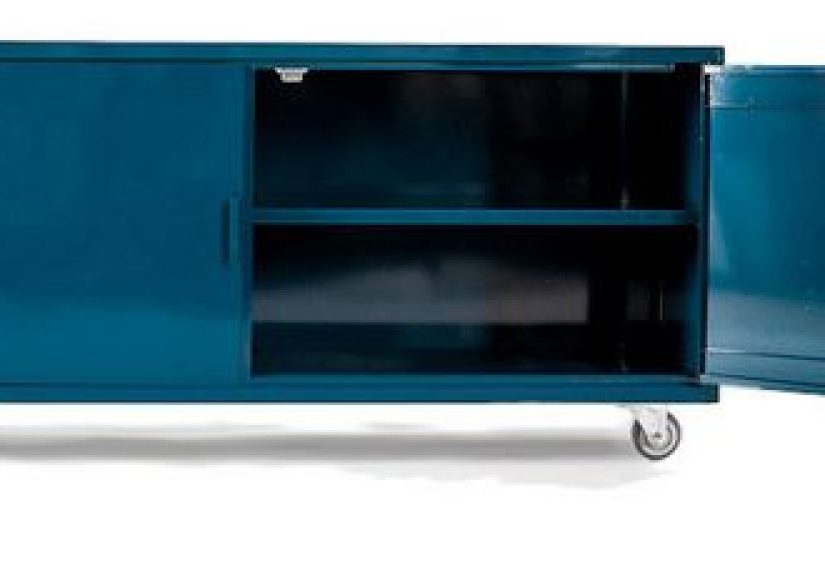
A media credenza with casters is a low storage cabinet designed to support or accompany media equipment, with wheels attached to the base for mobility. It may hold a television, soundbar, game console, streaming box, receiver, router, books, speakers, vinyl records, or decorative accessories. The “credenza” part usually means it has a long, cabinet-like shape with drawers, doors, shelves, or a combination of open and closed storage. The “casters” are the small wheels that let the unit roll.
Some media credenzas use visible industrial-style casters for a loft-inspired look. Others hide the wheels under the frame so the piece appears almost stationary until you need to move it. Both styles can work beautifully. The right choice depends on whether you want the wheels to be part of the design or part of the secret magic trick.
Why Choose a Rolling Media Credenza?
It Makes Cable Access Much Easier
If you have ever tried to plug a cable into the back of a TV stand while crouched sideways with a flashlight in your mouth, you already understand the appeal. A rolling media credenza lets you pull the whole setup forward, connect devices, dust behind the cabinet, and push everything back into place. This is especially useful for home theaters, gaming stations, and work-from-home setups where equipment changes often.
It Works for Flexible Rooms
Modern rooms do more than one job. A living room might also serve as a playroom, workout area, guest space, or office. A media credenza with casters supports that flexibility. Roll it closer for movie night, angle it away from sunlight during the day, or move it aside when you need open floor space. It is furniture with manners: it stays put when locked, but politely leaves when asked.
It Adds Storage Without Feeling Heavy
Media equipment can make a room look cluttered fast. Open shelves are convenient, but too many exposed gadgets can create visual noise. Closed cabinets hide remotes, controllers, manuals, cords, and the mysterious cable nobody recognizes but everyone is afraid to throw away. A good rolling credenza gives you storage without making the room feel overloaded.
Key Features to Look For
Locking Casters
Locking casters are essential. A media credenza should move when you want it to move, not when someone bumps it with a vacuum cleaner. Look for at least two locking wheels, though four locking casters provide better stability. Total-lock casters are even better because they lock both the wheel and the swivel, helping the unit stay steady when parked.
Strong Weight Capacity
Before buying, add up the weight of everything the credenza will hold: television, soundbar, consoles, receiver, books, decor, and storage baskets. Then compare that number with the manufacturer’s weight rating. Do not guess. Furniture is not the place for optimistic math. If the listing says the top supports 100 pounds, treat that as a limit, not a dare.
Proper Width for Your TV
A media credenza should generally be wider than the television placed on it. This improves visual balance and helps the screen look grounded rather than perched. For example, a 65-inch TV is usually about 57 inches wide, so a credenza in the 63- to 72-inch range often looks more proportional. If you use a wall-mounted TV above the credenza, width still matters because the cabinet should visually anchor the screen.
Cable Management
Look for rear cable cutouts, pass-through holes, removable back panels, cord channels, or open ventilation spaces. Good cable management keeps wires from tangling and helps airflow around electronics. It also prevents the dreaded “black spaghetti waterfall” behind the cabinet. If you use several devices, label your cords with small tags. Future you will be grateful, and future you deserves nice things.
Ventilation for Electronics
Receivers, gaming consoles, routers, and streaming devices can generate heat. A media credenza with solid doors should still allow airflow through vented backs, slatted fronts, perforated panels, or open shelving. Avoid trapping hot electronics in a sealed cabinet. Your console should not feel like it is living in a toaster.
Adjustable Shelves
Adjustable shelves make the cabinet more useful over time. Today you may need space for a gaming console; next year you might add a turntable, speaker system, or larger router. Flexible shelves allow the credenza to grow with your setup instead of becoming obsolete the minute you buy a new device.
Best Materials for a Media Credenza with Casters
Solid Wood
Solid wood offers durability, warmth, and long-term appeal. It is a good choice for living rooms, family rooms, and spaces where the credenza will be treated as a statement piece. Wood also pairs well with metal casters for an industrial or farmhouse look. The downside is weight. A large solid-wood credenza can be heavy, so the casters and frame must be properly rated.
Engineered Wood and MDF
Engineered wood and MDF are common in budget-friendly media cabinets. They can look polished, especially with veneer, laminate, or painted finishes. They are often lighter than solid wood, which makes rolling easier. However, they may be less forgiving if overloaded, exposed to moisture, or moved roughly. For best results, choose thicker panels, reinforced corners, and quality hardware.
Metal
Metal media credenzas work well in industrial, modern, garage, studio, and office settings. They are durable, easy to clean, and often pair naturally with casters. Metal can feel cold in a cozy living room, so balance it with warm wood tones, woven baskets, plants, or soft textiles.
Mixed Materials
Many of the most attractive rolling credenzas combine wood, metal, glass, cane, rattan, or mesh. Mixed materials help the piece feel less bulky. A wood cabinet with black metal casters can look modern and grounded. A cabinet with cane or mesh doors can hide electronics while allowing remote signals and airflow to pass through more easily.
Choosing the Right Casters
Casters are small, but they do a big job. The wrong wheels can scratch floors, wobble under weight, or make the cabinet hard to control. The right wheels roll smoothly, lock securely, and match both your flooring and your furniture weight.
Polyurethane Casters
Polyurethane wheels are a strong all-around choice for many indoor spaces. They are often non-marking, durable, and easier on floors than hard metal wheels. They work well on hardwood, tile, vinyl, and smooth concrete. If your media credenza will carry a lot of weight, polyurethane casters are usually worth considering.
Rubber Casters
Rubber casters are quiet and gentle on floors. They can be a good option for hardwood, laminate, and apartments where rolling noise matters. However, lower-quality rubber may compress over time under heavy furniture, so check load ratings carefully.
Metal Casters
Metal casters look fantastic on industrial furniture, but they can be tough on delicate floors. If you love the look, consider using a rug, floor protector, or a design with metal brackets and softer wheel treads. Style is important, but so is not leaving tiny racetrack marks across your living room.
Swivel vs. Fixed Casters
Swivel casters rotate, making the credenza easier to maneuver in tight spaces. Fixed casters roll forward and backward only, which can add control for long, straight movements. Many furniture pieces use a combination of two swivel and two fixed casters, while others use four swivel casters for maximum flexibility. For a media credenza, locking swivel casters are often the most convenient choice.
Safety Matters: Stability, Anchoring, and Smart Placement
A rolling credenza must be treated with more safety awareness than a fixed cabinet. If a television sits directly on top, make sure the furniture is designed to support a TV and that the top surface is wide and deep enough for the TV base. If children or pets are in the home, consider wall-mounting the TV and anchoring the furniture according to the manufacturer’s instructions.
Always engage the caster locks when the credenza is in use. Avoid placing heavy items on upper shelves if the cabinet is tall or narrow. Keep cords from creating trip hazards, and do not let children climb, pull, or ride on the furniture. Yes, wheels make everything look more fun to children. No, the media cabinet is not a parade float.
Where a Media Credenza with Casters Works Best
Living Rooms
In a living room, a rolling media credenza can create a flexible entertainment zone. Choose a style that complements your sofa, coffee table, and shelving. For a modern room, try a low walnut cabinet with hidden casters. For a farmhouse space, a painted wood credenza with black metal hardware feels relaxed and practical. For a small apartment, a compact rolling unit with sliding doors can provide storage without blocking traffic.
Home Offices
A media credenza with casters can hold a monitor, printer, projector, files, camera equipment, or video conferencing gear. It is especially useful in offices where the furniture layout changes for calls, presentations, or hybrid work. Add baskets for cords and label drawers for adapters, chargers, and tech accessories.
Gaming Rooms
Gaming setups are hungry for storage. Consoles, controllers, headsets, charging docks, games, and cables all need a home. A rolling credenza with open shelves for ventilation and closed drawers for accessories can keep the room tidy. Make sure shelves are deep enough for consoles and that airflow is not blocked.
Studio Apartments
In a small apartment, furniture must earn its square footage. A media credenza with casters can act as a TV stand, room divider, storage cabinet, bar cabinet, bookshelf, or work surface. Choose a model with finished backing if it will float in the room rather than sit against a wall.
Classrooms and Conference Rooms
Rolling media furniture is useful in shared spaces where screens, projectors, speakers, or video equipment move between zones. Locking casters, durable materials, and cable management are especially important in commercial or educational settings. A clean, mobile setup makes presentations smoother and reduces the “where did the adapter go?” drama.
How to Style a Media Credenza with Casters
Start with balance. If the TV is wall-mounted, style the credenza surface with a few low-profile pieces: a plant, a shallow bowl for remotes, two stacked books, or a small sculptural object. Avoid tall decor that blocks the screen. If the TV sits on the credenza, keep accessories to the sides and leave breathing room around the base.
Use closed storage for visual clutter and open shelves for attractive items. A basket can hide controllers. A tray can corral remotes. A slim box can store batteries, HDMI cables, and the tiny screwdriver that only appears when you no longer need it. If the credenza has glass doors, use matching bins or dark components inside to reduce visual busyness.
For a designer look, repeat materials already in the room. Black casters can echo black curtain rods, lamp bases, or picture frames. Wood tones can connect to flooring, side tables, or shelving. Brass hardware can tie into lighting. Casters may be functional, but they can also help the whole room feel more intentional.
Common Mistakes to Avoid
Buying Too Small
A credenza that is narrower than the TV can look awkward and may reduce stability. Even if the TV is mounted, a too-small cabinet can make the wall feel visually top-heavy. When in doubt, go wider rather than smaller, as long as the room allows it.
Ignoring Wheel Locks
Non-locking casters may be acceptable for lightweight decorative carts, but they are not ideal for a media cabinet holding expensive electronics. Locking wheels are a must-have feature for safety and everyday convenience.
Forgetting About Floor Type
Hard wheels can scratch wood floors. Tiny wheels can struggle on thick rugs. Soft wheels may drag on carpet. Match the caster material and wheel diameter to your flooring. Larger wheels typically roll more easily over uneven surfaces and rug edges.
Blocking Ventilation
Do not pack electronics tightly into a closed cabinet without airflow. Heat buildup can shorten device life and cause performance issues. Leave space around equipment and use vented doors or open-back sections when possible.
Letting Cables Do Whatever They Want
Cables are like houseplants with ambition: leave them alone and they will spread. Use cord clips, cable sleeves, Velcro ties, and labeled tags. Keep power cords separate from frequently swapped HDMI or USB cables so maintenance stays simple.
Buying Checklist for a Media Credenza with Casters
- Measure your TV width, not just the diagonal screen size.
- Check the top weight capacity and total cabinet load rating.
- Choose locking casters, preferably total-lock wheels for better stability.
- Match caster material to your flooring.
- Look for cable cutouts, rear access, or removable panels.
- Confirm shelf depth for consoles, receivers, and routers.
- Choose ventilation-friendly doors or open shelving for electronics.
- Make sure the style fits your room, not just your shopping cart mood.
Maintenance Tips
Keep the wheels clean. Hair, dust, pet fur, and tiny debris can wrap around caster axles and make rolling harder. Vacuum around the base regularly and wipe the wheels with a damp cloth. Check screws and mounting plates every few months, especially if you move the credenza often. Tighten loose hardware before it becomes a wobble concert.
Use floor protectors or a low-pile rug if the credenza stays parked most of the time. Even good casters can create pressure marks on softer floors if heavy furniture sits in the same place for months. If the cabinet holds electronics, dust vents and shelves regularly to prevent heat buildup.
Personal Experience: Living with a Media Credenza with Casters
The first thing people usually notice about a media credenza with casters is not the mobility. It is the relief. Suddenly, the back of the TV is no longer a forbidden cave. You can roll the cabinet forward, find the right cable, swap a streaming device, and clean the dust bunnies that have been quietly building their civilization behind the wall. That alone makes the design feel worth it.
In a small living room, the difference can be dramatic. A fixed TV stand often forces one layout forever, even if the sunlight hits the screen at exactly the wrong time every afternoon. With casters, you can angle the cabinet slightly during the day, center it for movie night, or move it aside when guests come over. The room feels less bossy. Instead of designing your life around the furniture, the furniture finally cooperates.
Another practical experience is how useful rolling storage becomes during cleaning. Anyone with pets knows that fur has a supernatural ability to gather behind entertainment furniture. With a stationary cabinet, cleaning behind it can become an annual archaeological event. With a rolling credenza, it becomes a two-minute task. Lock the wheels afterward, and the room goes right back to looking polished.
There is also a real benefit for renters. Not every apartment allows wall mounting, and not every renter wants to patch holes before moving out. A media credenza with casters gives flexibility without committing to permanent changes. It can move from one apartment to another, adapt to different wall sizes, and serve different purposes over time. In one home, it may be a TV console. In the next, it may become an office storage cabinet, printer station, or bar cabinet.
The biggest lesson is to take the casters seriously. Cheap wheels can make even a beautiful cabinet feel frustrating. Better wheels roll smoothly, lock firmly, and protect the floor. If the cabinet is heavy, investing in quality casters is not an upgrade; it is common sense wearing tiny shoes. The same goes for cable management. A rolling cabinet is only convenient if cords are long enough and organized enough to move safely. Leave a little slack, bundle cables neatly, and avoid creating a tripwire behind the furniture.
Style-wise, a media credenza with casters can be surprisingly attractive. Visible black metal wheels give a rustic or industrial edge. Hidden casters create a cleaner, more modern look. In family spaces, the best setup often combines closed storage on the sides with open shelving in the middle. The closed sections hide clutter, while the open section keeps devices accessible and ventilated.
After using one for a while, it becomes clear that the appeal is not just movement. It is control. You control the layout, the cables, the cleaning, the storage, and the way the room functions from day to day. That is a lot of power for a cabinet on wheels. And unlike many trendy furniture ideas, this one earns its keep every time you need to plug something in without crawling on the floor like a confused raccoon.
Conclusion
A media credenza with casters is a smart solution for anyone who wants storage, style, and flexibility in one practical piece of furniture. It can support a TV, organize electronics, hide clutter, improve cable access, and make a room easier to rearrange. The best choice will have a sturdy frame, proper weight capacity, locking casters, ventilation, cable management, and proportions that fit your screen and space.
Whether you live in a small apartment, manage a busy family room, build a gaming zone, or need mobile media storage for an office, this type of credenza offers a rare mix of convenience and good looks. Choose carefully, lock the wheels, tame the cables, and enjoy a setup that moves when needed and behaves when parked.