Table of Contents >> Show >> Hide
- Why Responding to Condolences Feels So Hard
- 3 Simple Ways to Respond to Condolences
- Best Responses by Situation
- What Not to Worry About
- Common Mistakes When Responding to Condolences
- A Simple Formula You Can Use Anytime
- Real-Life Experiences: What Responding to Condolences Often Feels Like
- Conclusion
When someone offers condolences, the moment can feel strangely complicated. You appreciate the kindness. You may also feel exhausted, foggy, awkward, and about as emotionally organized as a junk drawer. That is normal. Grief does not magically turn people into polished communicators. In fact, it usually does the opposite.
If you have recently lost someone, you do not need a perfect speech, a poetic reply, or a heartfelt mini-essay worthy of a dramatic piano soundtrack. Most of the time, the best response is simple, sincere, and short. That is not rude. That is human.
One of the most consistent themes in etiquette and grief guidance is that brief, genuine words are enough. A heartfelt acknowledgment matters more than elegant wording. So if you are staring at a sympathy card, rereading a text, or trying to survive a funeral receiving line without becoming a full-time statue, here are three simple ways to respond to condolences with grace and without unnecessary pressure.
Why Responding to Condolences Feels So Hard
Before we get to the three simple ways, it helps to name the obvious: grief is tiring. It affects attention, memory, patience, energy, and language. That is why even easy social moments can suddenly feel weirdly difficult. Someone says, “I’m so sorry for your loss,” and your brain answers with static, one sock, and half a grocery list.
There is also emotional math involved. Some condolences feel deeply comforting. Others feel formal. Some may be beautiful but arrive when you have no energy left. A few may miss the mark entirely. That means your response does not need to match every message with the same warmth, length, or enthusiasm. Different situations call for different replies.
The goal is not to perform grief correctly. The goal is simply to acknowledge kindness in a way that feels manageable.
3 Simple Ways to Respond to Condolences
1. Say “Thank you” and leave it there
This is the simplest and most useful response of all. If you remember only one thing from this article, let it be this: “Thank you” is enough.
It works in person. It works by text. It works in a sympathy card reply. It works when a coworker speaks to you in the hallway. It works when a neighbor sends flowers. It works when your brain is too tired to produce anything beyond two polite words and a blink.
Short responses are especially helpful when:
- you are overwhelmed by many messages,
- you are replying to acquaintances or colleagues,
- you do not feel like talking,
- the condolence was brief, formal, or unexpected.
Examples:
- Thank you so much.
- Thank you. I really appreciate it.
- Thank you for your kind words.
- Thank you for thinking of me.
- Thank you. That means a lot.
This approach is not cold. It is clear and respectful. In many cases, it is ideal. Condolences are meant to offer comfort, not create homework. You are not required to produce an emotionally dazzling response every time someone is kind to you.
2. Say thank you and mention what meant something to you
If you have a little more energy, a thoughtful next step is to add one specific line. This kind of response feels personal without becoming long or heavy. It also lets the other person know their gesture mattered.
You can mention the message, the flowers, the visit, the meal, the memory they shared, or the fact that they showed up at the right time. This style works especially well for friends, relatives, close coworkers, neighbors, and anyone who knew the person who died.
Examples:
- Thank you for your kind message about my mom. Your words really comforted me.
- Thank you for the flowers. They brightened a very hard day.
- Thank you for coming to the service. It meant a lot to our family.
- Thank you for sharing that story about Dad. It made me smile.
- Thank you for checking in. I truly appreciate your support right now.
This response is especially powerful when someone shares a memory. Memories can feel like small rescue boats in the middle of grief. If a person tells you something kind, funny, or meaningful about your loved one, you can acknowledge both the condolence and the memory.
Examples with a memory included:
- Thank you for telling me that story about my grandfather. He really did love making people laugh.
- Thank you for remembering her that way. That sounds exactly like my sister.
- Thank you for sharing that memory. It was wonderful to hear.
Notice the pattern here: brief, warm, specific. No long speech. No emotional gymnastics. No pressure to sound profound enough for a framed quote in a gift shop.
3. Say thank you and set a gentle boundary or ask for practical help
Sometimes the best response is not just gratitude. It is gratitude plus honesty. You may not want to talk. You may not have the energy to answer every call. You may appreciate support but need it in a practical form. That is where boundaries become useful.
Grief etiquette is not about pretending you are available, cheerful, and conversational at all times. It is perfectly acceptable to thank someone while also saying what you need. In fact, that can make the interaction easier for both of you.
Examples of gratitude plus a boundary:
- Thank you so much. I’m not up for talking much today, but I appreciate your message.
- Thank you. I may be slow to reply for a while, but your support means a lot.
- Thank you for reaching out. I’m taking things one day at a time right now.
- Thank you. I don’t really have words yet, but I’m grateful.
Examples of gratitude plus a practical request:
- Thank you. Meals this week would be especially helpful.
- Thank you for asking. A ride to the service on Friday would mean a lot.
- Thank you. I could really use help with errands this weekend.
- Thank you for checking in. Texting is easiest for me right now.
This kind of response is honest, healthy, and useful. It gives people a clear way to support you instead of leaving them to guess. And yes, “Texting is easiest right now” is absolutely a valid sentence. Sometimes grief turns phone calls into mountain climbing.
Best Responses by Situation
How to respond to condolences in person
In person, short and steady is usually best. Try one sentence and stop there.
- Thank you. I appreciate that.
- Thank you for being here.
- Thank you. That’s very kind.
If you become emotional, that is okay. You do not need to apologize for crying, pausing, or not saying much. The person offering condolences is there to support you, not grade your response like a public speaking contest.
How to respond to condolences by text
Text messages are perfect for short replies.
- Thank you so much for your message.
- Thank you. I really appreciate you thinking of us.
- Thank you. I’m not up for talking much, but I’m grateful for your support.
If you cannot answer right away, that is okay too. A delayed thank-you is still a thank-you.
How to respond to sympathy cards
If someone sends a card, especially with a personal note, a brief acknowledgment is thoughtful. It does not have to be long.
- Thank you for your beautiful card and kind words.
- Thank you for thinking of our family during this difficult time.
- Thank you for your note. Your support brought us comfort.
If many cards arrive and you cannot answer all of them immediately, do not panic. Focus first on personal notes, gifts, flowers, donations, meals, or significant acts of help. You can also ask a close family member to assist with acknowledgments.
How to respond to flowers, food, or donations
When someone sends something tangible, mention it directly.
- Thank you for the flowers. They were lovely.
- Thank you for sending dinner. It helped more than you know.
- Thank you for the donation in her memory. That was incredibly thoughtful.
How to respond on social media or an online guest book
If condolences arrive online, a group response is often enough.
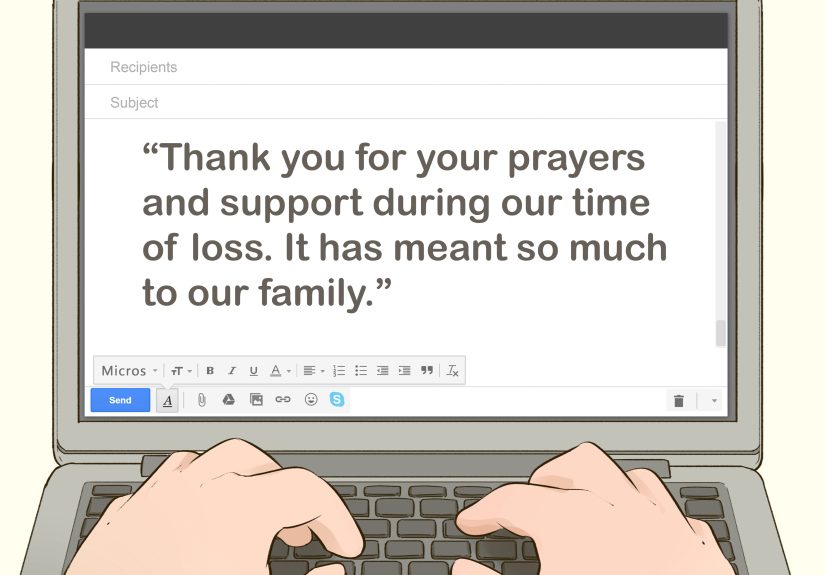
- Thank you all for your kind messages and support.
- Our family appreciates your prayers, love, and condolences.
- Thank you for sharing your memories and kindness during this difficult time.
This can save energy when individual replies are too much. Efficiency is not heartless. Sometimes it is survival wearing sensible shoes.
What Not to Worry About
You do not need to respond immediately. Grief does not run on a customer service timer.
You do not need to answer every message the same way. A close friend may get a personal reply. A former coworker may get a simple thank you. Both are appropriate.
You do not need to hide your emotions. Tears, pauses, and silence are allowed.
You do not need to be extra eloquent. In grief, sincerity beats polish every single time.
You do not need to force optimism. You are not required to sound “better” than you feel.
Common Mistakes When Responding to Condolences
- Overexplaining. You do not owe everyone a detailed emotional update.
- Apologizing for your grief. Being sad after a loss is not bad manners.
- Feeling obligated to comfort the comforter. Their awkwardness is not your assignment.
- Writing long replies when you have no energy. Save your strength.
- Ignoring practical help you actually need. If someone offers support and you need meals, rides, childcare, or errands, say so.
A Simple Formula You Can Use Anytime
When in doubt, use this formula:
Thank you + specific mention + optional boundary or need
Examples:
- Thank you for your kind message about my father. It meant a lot to me.
- Thank you for the flowers. They were beautiful.
- Thank you for reaching out. I may be quiet for a while, but I appreciate your support.
- Thank you for checking in. Texts are easiest for me right now.
That is the whole framework. Clean. Gentle. Effective. No dramatic flourish required.
Real-Life Experiences: What Responding to Condolences Often Feels Like
One of the strangest parts of grief is how ordinary communication suddenly feels unfamiliar. People who are normally quick with words often say that after a death, even basic replies can feel heavy. A text that would usually take ten seconds to answer can sit there all afternoon because the message is kind, the loss is real, and the person reading it simply has no emotional fuel left. That does not mean they are ungrateful. It means grief has changed the speed of everything.
Many people also describe the first wave of condolences as both comforting and overwhelming. The support is meaningful, but it often arrives all at once: texts, calls, cards, flowers, social media comments, visitors at the door, coworkers reaching out, old friends checking in. In those early days, a grieving person may feel deeply touched one minute and completely drained the next. That is why short replies become so valuable. Saying “Thank you, I appreciate it” is not a lazy response. For someone moving through loss, it can be the most honest and manageable response available.
Another common experience is that different condolences land differently. A brief message from an old friend may bring surprising comfort. A long speech from someone trying too hard may feel exhausting. A shared memory can make a person laugh for the first time all week. A generic comment may feel easy to acknowledge and move past. People often remember practical kindness most vividly: the friend who dropped off dinner without creating extra conversation, the neighbor who handled school pickup, the coworker who simply said, “I’m glad to see you back,” without demanding an emotional performance. In real life, support often feels best when it is gentle, specific, and low-pressure.
There is also the delayed response phenomenon, which is very real. Some people answer messages quickly during the first few days because adrenaline is doing half the work. Then the service ends, the house grows quiet, and replying becomes harder, not easier. Others do the opposite: they cannot answer at first, then return later to write thank-you notes, send short texts, or post one message online thanking everyone at once. Both patterns are common. Grief is rarely neat. It has terrible timing and absolutely no respect for inbox management.
People who have been through loss often say they learned an important lesson about permission: permission to be brief, permission to be late, permission to cry mid-conversation, permission to ignore messages for a while, and permission to ask for real help instead of pretending everything is fine. That may be the most useful experience-based wisdom of all. Responding to condolences is not about sounding composed. It is about finding a humane way to receive care while carrying something heavy.
In the end, the best responses are usually the simplest ones. A quiet thank you. A short line about what mattered. A clear boundary. A practical request. These are not small responses. They are honest responses. And in the middle of grief, honesty is more comforting than perfection ever could be.
Conclusion
If you are wondering how to respond to condolences, the answer is refreshingly simple: keep it sincere, keep it short, and let your energy level lead. A plain “thank you” is often enough. A slightly longer response can mention what comforted you. And when needed, gratitude can live alongside a boundary or a specific request for help.
You do not have to become graceful on command. You do not have to write like a poet, smile like a host, or answer like a machine. Grief is hard enough already. Let your response be human. That is more than enough.