Table of Contents >> Show >> Hide
- The Movie News That Got GMA Fans Talking
- Why Robin Roberts Feels Like the Right Person for This Kind of Story
- Why Roberta Flack Is a Brilliant Subject for the Big Screen
- What Fans Are Really Responding To
- What the Film Could Explore Beyond the Greatest Hits
- Why This Announcement Is Smart Entertainment News, Not Just Nice Entertainment News
- What This News Feels Like From the Fan Side of the Screen
- The Bottom Line
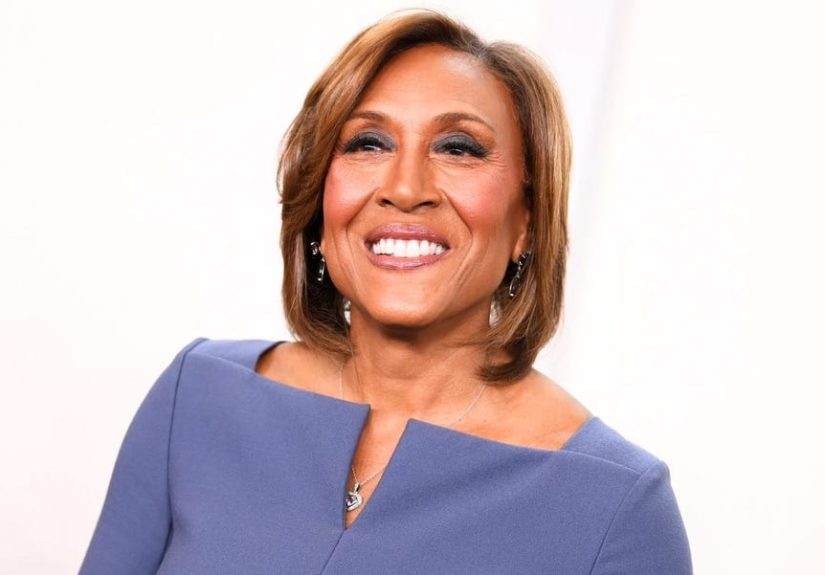
Robin Roberts knows how to deliver a headline. Usually, she does it from behind the Good Morning America desk with her signature mix of warmth, polish, and “I’m smiling, but I also read the briefing memo” energy. This time, though, the big reveal wasn’t about politics, weather, or a celebrity breakup that somehow became a national emergency. It was about movies. Better yet, it was about a movie project with real weight behind it.
The major news lighting up the Robin Roberts corner of the internet is that her company, Rock’n Robin Productions, is developing a feature film about the life of music legend Roberta Flack. A companion documentary is also in the works, which instantly tells you this is not some tossed-together “famous wig, sad montage, end credits” situation. It signals ambition. It signals care. And judging by the reaction from fans, it signals that Roberts has once again found a story people actually want told.
That excitement makes perfect sense. Robin Roberts is one of the rare TV personalities who can move between journalism, daytime television, and long-form storytelling without making it feel like a branding exercise. When viewers hear that she is attached to a project, they do not assume noise. They assume heart. They assume substance. They assume somebody in the room is going to ask, “Yes, but does this version tell the truth?” In an era of flashy entertainment announcements that often arrive dressed like blockbusters and leave like unanswered texts, that kind of trust is a very big deal.
The Movie News That Got GMA Fans Talking
The headline itself is simple, but the implications are huge: Robin Roberts’ production company is moving forward with a Roberta Flack feature film. For fans of Roberts, that is already enough to spark celebration. For fans of Roberta Flack, it feels even more meaningful. Flack was not just a singer with a few giant hits and a glamorous archive of photos. She was a deeply influential artist whose style blended soul, jazz, pop, folk, and classical discipline into something unmistakably elegant. She did not merely sing songs; she seemed to lower the room temperature and force everyone to listen.
So when Roberts shared the news and the entertainment press picked it up, viewers reacted with the kind of enthusiasm reserved for projects that feel overdue. Not random. Not gimmicky. Overdue. Because Flack’s life has all the elements of a compelling film: precocious talent, artistic rigor, breakthrough success, cultural impact, emotional resilience, and a musical legacy that has outlived trends, formats, and multiple generations of radio programmers who thought they were in charge.
And that is really the key to why this announcement landed so well. Fans are not just excited because “Robin Roberts has a new project.” They are excited because the project makes sense. It sounds right. It feels earned. It reflects the kind of storytelling lane Roberts has been building for years, where recognizable public figures are treated as complicated people first and icons second.
Why Robin Roberts Feels Like the Right Person for This Kind of Story
There are plenty of famous people who launch production companies. Some build a logo, a sizzle reel, and a vague promise to “tell important stories,” then vanish into a cloud of development jargon. Robin Roberts has taken a different route. Rock’n Robin Productions has been around since 2014, and over the years, Roberts has built a reputation for projects that lean toward emotional truth, resilience, legacy, and women whose stories deserve fuller treatment.
That history matters. It means the Roberta Flack movie news does not feel like a random left turn into entertainment. It feels like the next chapter in a broader mission. Roberts has expanded beyond the morning-show desk into producing and hosting projects that spotlight extraordinary lives with sensitivity and narrative clarity. That experience gives this new film a level of credibility fans can feel immediately, even before a cast is announced or a trailer exists.
It also helps that Roberts has already shown a clear interest in music-centered storytelling. Her producing work has included projects tied to major musical figures, including films connected to Gloria Gaynor and Mahalia Jackson. That track record suggests she understands a crucial truth about music biopics: the songs may get people in the door, but the interior life keeps them in their seats. Viewers do not just want the hit single and the applause scene. They want the cost of greatness, the private doubts, the personal relationships, the quiet moments when the artist is still becoming who history says they already are.
Roberts is especially well-suited to that balance because her public persona has always blended optimism with seriousness. She is encouraging without being syrupy. She is emotional without turning every story into a performance of emotion. That is one reason fans respond so strongly when her name is attached to a project. She brings a sense of trust, and trust is the secret ingredient almost every biographical film needs.
Why Roberta Flack Is a Brilliant Subject for the Big Screen
Let’s be honest: not every beloved musician automatically deserves a feature film. Some careers are better suited to a concert special, a playlist, or a documentary with well-lit talking heads and a very dramatic cello underneath. Roberta Flack, however, offers something richer. Her life contains both artistic grandeur and deeply human texture.
Before she became a music giant, Flack was a classically trained pianist who earned a full scholarship to Howard University at just 15 years old. That detail alone sounds like the opening of an awards-season screenplay. She was not manufactured by the machinery of pop celebrity. She was built by discipline, education, and raw musical intelligence. She later taught music in the Washington, D.C., area while performing at night, which adds another layer to her story: educator by day, future icon by evening, piano waiting patiently for destiny to catch up.
Then came the rise. Songs like “The First Time Ever I Saw Your Face” and “Killing Me Softly with His Song” did not just become hits; they became part of the emotional architecture of American popular music. Flack’s voice did not overpower listeners. It drew them in. She mastered understatement in an entertainment culture that often mistakes volume for feeling. That distinction is one reason her work still sounds intimate decades later. A lot of old hits feel historical. Roberta Flack’s best recordings still feel personal.
Her career also carried major prestige. She became the first woman to win Record of the Year at the Grammys two years in a row, a remarkable achievement that underscores how revolutionary she was within a mainstream industry that often struggled to recognize quiet genius until it became impossible to ignore. Add in her collaborations, her role as an educator, her influence on generations of artists, and her late-career recognition, and you have the kind of life that can support both a sweeping movie and a reflective documentary without running out of story.
What Fans Are Really Responding To
On the surface, fans are cheering because the announcement is exciting. On a deeper level, they are responding to what the news represents. It represents care for legacy. It represents a rare meeting point between television trust and musical history. And it represents the possibility that a beloved artist will be introduced to younger audiences in a way that is neither dusty nor disposable.
There is also something satisfying about seeing Robin Roberts continue to evolve publicly. Viewers have spent years watching her report, interview, comfort, celebrate, and occasionally give a side-eye that says more than a full monologue ever could. Seeing her step further into the producer role feels like a natural extension of that skill set. She has always been a storyteller. Now she is choosing the frame.
That idea matters because modern audiences are increasingly interested in who is behind a project, not just who is on the poster. A movie about Roberta Flack produced by an anonymous corporate development team might still earn curiosity. A movie about Roberta Flack associated with Robin Roberts carries emotional context. It tells viewers that the project may aim for reverence without flattening the woman at its center. Fans are thrilled because the fit feels right, and rightness is rare enough in Hollywood to deserve its own standing ovation.
What the Film Could Explore Beyond the Greatest Hits
Any smart Roberta Flack movie will, of course, include the music. It has to. The songs are too central to the experience of her life and career to be treated like background décor. But the most exciting possibility is that the film will go further than the playlist. Flack’s story is not just a rise-to-fame arc. It is a story about excellence, intention, and the kind of artistry that does not need to shout to leave a mark.
The movie could explore her early academic gifts, the discipline of classical training, the shift from music education to performance, and the challenge of making a subtle style thrive in a commercial world. It could show how intelligence shaped her artistry, how restraint became its own form of power, and how her legacy reached beyond charts into cultural memory. It could also explore the tension between public success and private perseverance, especially in the later years of her life, when health struggles became part of her story.
That is where Robin Roberts’ involvement becomes especially important. Roberts tends to gravitate toward stories of courage, survival, and dignity under pressure. Those are exactly the qualities that can elevate a music biopic from pleasant to unforgettable. If this film gets the balance right, it will not simply remind audiences that Roberta Flack had beautiful songs. It will remind them that beautiful songs often come from lives built on discipline, sacrifice, and an unwavering sense of self.
Why This Announcement Is Smart Entertainment News, Not Just Nice Entertainment News
There is a difference between “good for her” celebrity news and genuinely meaningful entertainment news. This belongs in the second category. It has strong subject matter, a producer with public credibility, and a built-in audience spanning several generations. Older viewers know Flack’s catalog by heart. Younger audiences may know her influence through samples, covers, family playlists, documentaries, or the simple experience of hearing one of her songs and realizing, within seconds, that modern music owes her rent.
The timing also matters. The entertainment business continues to mine real lives for stories, but audiences have grown far less forgiving of shallow treatment. They want specificity. They want cultural context. They want films that understand the person behind the famous name. A Roberta Flack project led by a team that has secured the rights and appears committed to honoring her life has a real shot at meeting that standard.
And from an SEO point of view, let us not pretend that this story is lacking in headline power. You have Robin Roberts. You have Good Morning America. You have a major movie announcement. You have Roberta Flack. That is the kind of combination that makes search engines sit up in their ergonomic chairs. But the reason people will actually stay on the page is not the celebrity mix. It is the emotional logic of the story. Readers want to know why fans are thrilled, and the answer is refreshingly simple: because this is the kind of project that sounds like it might deserve its own applause before the first frame is even shot.
What This News Feels Like From the Fan Side of the Screen
There is also an experience piece to all of this that goes beyond credits, contracts, and press releases. For many fans, news like this lands in a strangely personal way. You are scrolling in the middle of a normal day. Maybe you are half-awake, maybe your coffee is still trying to negotiate peace with your nervous system, and suddenly there it is: Robin Roberts is bringing a Roberta Flack story to the screen. That tiny moment can feel bigger than it should, because it taps into memory before it taps into analysis.
For some people, Roberta Flack is not just an artist. She is a sound connected to parents, grandparents, road trips, slow dances in the kitchen, or the kind of songs that played in the background while a family cleaned the house on a Saturday morning. Her voice has a way of making rooms feel softer. It can turn a commute into reflection and a random playlist into a personal history lesson. So when fans hear that her life may be getting a thoughtful film treatment, the reaction is not only excitement. It is relief. Relief that somebody still understands certain stories deserve patience.
Robin Roberts brings another layer to that experience. She has been part of so many people’s routines for years that she does not feel like a distant celebrity to them. She feels familiar, steady, and dependable. That familiarity changes how the announcement lands. It feels less like a studio executive making a calculated content move and more like a trusted guide saying, “This story matters, and we are going to treat it like it matters.” Fans respond to that kind of emotional shorthand instantly.
There is also joy in watching generations overlap. A younger viewer might know Robin Roberts first and Roberta Flack second. An older viewer may feel exactly the opposite. This project has the power to meet both in the middle. One audience brings trust in the messenger. The other brings deep love for the music. When those two things click, the result is not just buzz. It is cultural continuity. It is a reminder that not every legacy has to be rediscovered by accident.
And maybe that is the most moving part of the whole story. The announcement invites people to revisit music they love, introduce it to someone else, and imagine a fuller portrait of the woman behind it. Fans are thrilled because they are already feeling the movie before it exists. They are picturing the piano lessons, the stage lights, the breakthrough, the heartbreak, the triumph, the unmistakable voice. They are not just reacting to entertainment news. They are reacting to the possibility of being moved. In a crowded media landscape, that is still one of the most powerful promises any project can make.
The Bottom Line
Robin Roberts has GMA fans thrilled over major movie news because the announcement checks every box that matters: a respected storyteller, an iconic subject, a meaningful legacy, and the promise of a film that could do more than recycle familiar music history. If the Roberta Flack feature film captures even a fraction of the grace, intelligence, and emotional precision that defined Flack’s artistry, fans will have every reason to keep cheering.
In other words, this is not just another entertainment update floating through the morning-news universe. It is a project with purpose. And in Robin Roberts’ hands, purpose usually comes with heart, discipline, and just enough sparkle to keep the audience leaning in. That is why fans are excited. That is why this story has momentum. And that is why this movie news feels less like a passing headline and more like the start of something worth watching.