Table of Contents >> Show >> Hide
- Why Allegra Hicks Was Such a Smart Match for West Elm
- What Defined the Allegra Hicks for West Elm Collection
- Fabrics, Linens, and the Pieces People Actually Remember
- Why the Collaboration Still Feels Relevant
- How to Bring the Look Into a Room Today
- The Real Legacy of Allegra Hicks for West Elm
- Experience: What It Feels Like to Live With This Kind of Design
- Conclusion
Some home collaborations arrive with a trumpet blast. Others glide in quietly, like a really stylish guest who somehow makes the whole room look better by merely existing. Allegra Hicks for West Elm belongs in that second category. It was never just about buying a pillow cover and calling it a day. It was about translating a distinctly artistic, pattern-driven design language into pieces regular people could actually live with, sleep under, drape across a chair, and admire while pretending they totally meant to become “textile people.”
The appeal of the collection came from its balance. Hicks brought a designer’s eye for color, rhythm, and organic form; West Elm brought accessibility, scale, and the kind of retail reach that can take a beautiful idea out of a Chelsea studio mood board and place it into bedrooms and living rooms across America. The result was a line of fabrics, linens, rugs, curtains, and upholstered accents that felt sophisticated without turning snobbish. It was stylish, yes, but it was also usable. And in home design, usable is often the difference between “admired online” and “still loved three years later.”
Why Allegra Hicks Was Such a Smart Match for West Elm
Allegra Hicks has long been known for a design vocabulary shaped by pattern, travel, craft, and nature. That background matters, because her work has never been about decoration for decoration’s sake. Her patterns tend to feel observed rather than manufactured, as if a seedpod, raindrop, insect wing, shoreline, or flower quietly wandered into the studio and volunteered as a muse. That sense of natural inspiration gave her textiles depth. They did not read as generic “prints.” They read as ideas.
West Elm, meanwhile, has built much of its identity around modern design that feels warm instead of sterile. The retailer has often succeeded when it invites outside designers and artists to add freshness to its core look. In that context, Hicks was a perfect collaborator. She brought something West Elm customers wanted but did not always know how to ask for: pattern with soul. Not loud-for-the-sake-of-loud. Not beige-for-the-sake-of-safety. Just enough movement, enough texture, enough whimsy, and enough restraint to keep a room interesting after the honeymoon phase ended.
That is what made the collaboration feel special. It did not betray West Elm’s modern identity. It expanded it. Hicks’s work softened the edges of contemporary interiors and reminded shoppers that modern rooms do not have to be emotionless boxes filled with obedient furniture. A room can be clean-lined and still feel alive. It can be edited and still feel collected. It can be stylish and still let you take a nap in it, which, frankly, should be the baseline standard for all home design.
What Defined the Allegra Hicks for West Elm Collection
1. Nature-inspired motifs that avoided cliché
One of the most compelling aspects of the collection was how it drew from nature without becoming rustic, twee, or aggressively botanical. Hicks’s patterns hinted at rain, waves, petals, geometric growth, and organic repetition. That distinction matters. These were not “cabin throw pillows” or “garden-center florals.” They were abstracted formspatterns filtered through an artist’s hand. That gave the fabrics and linens a softer intelligence. You noticed the motif, but you also noticed the spacing, the color shifts, and the way the pattern sat on the cloth.
2. A palette that felt earthy, calm, and layered
The collection leaned into shades such as light blue, teal, brown, beige, gray, cream, and other softened neutrals. In practice, that palette gave shoppers something useful: flexibility. These pieces could live in a bright apartment, a moodier townhouse, or a bedroom that needed rescuing from the tyranny of all-white bedding. The colors were grounded enough to mix with wood, leather, brass, linen, and painted walls, but still interesting enough to keep a room from looking asleep.
3. Texture that did real work
Good textile design is never only visual. Hicks’s line made texture part of the conversation. Crewel embroidery, hand-blocked effects, woven rugs, and upholstered applications helped the collection move beyond printed prettiness. The surfaces had dimension. A pillow was not just a square with a motif on it; it had tactility. A quilt was not merely a bed covering; it brought softness, hand-feel, and subtle pattern layering into the room. Texture is what makes a room feel finished, and this collection understood that beautifully.
Fabrics, Linens, and the Pieces People Actually Remember
If you look back at the collaboration through the lens of product design, what stands out is range. This was not a one-note designer cameo. The line included decorative pillow covers, fabrics, area rugs, curtains, and upholstered furniture pieces, along with a headboard. Later, Hicks’s graphics also appeared in bedding, including a hand-blocked quilt and a crewel pillow cover. In other words, the collaboration was not content to live on the sofa alone. It wanted the whole home.
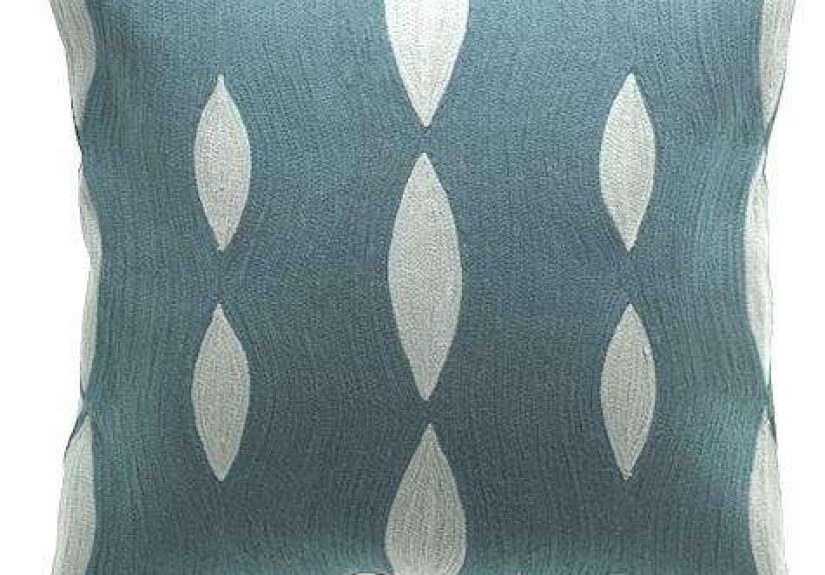
The pillows may have been the easiest gateway into the collection. They delivered the Hicks look in a format that was affordable, movable, and low-commitment. One of the memorable designs was the wave pillow cover associated with her studies of raindrops. That is a very Allegra Hicks sentence, by the wayturning raindrops into an embroidered home accent. But it worked because the motif felt graphic and lyrical at the same time. It added movement without shouting.
The rugs were equally important. A good rug can anchor a room, but a great rug also sets the emotional temperature. Hicks’s rugs tended to do both. They were patterned enough to create identity, yet subtle enough to support rather than dominate the room. That balance helped the collection appeal to shoppers who wanted personality but feared a decorating mistake large enough to require emotional support.
Curtains and upholstery brought the design language into architectural territory. Once a pattern appears on a curtain, it stops being a cute accent and starts shaping the room. Once it lands on a chair or headboard, it enters daily life in a much deeper way. This is where the collaboration became especially interesting. West Elm was not just selling motifs; it was offering a way to build a cohesive interior around them.
The bedding extension strengthened that idea. A hand-blocked quilt in cotton voile and a crewel pillow cover made the Hicks aesthetic feel especially at home in the bedroom, where pattern needs to soothe rather than overstimulate. That is not easy to do. Many patterned bedding collections either disappear into blandness or act like they are auditioning for the role of “most exhausting object in the room.” Hicks managed the middle ground. Her linens felt decorative, but restful.
Why the Collaboration Still Feels Relevant
More than a decade later, the Allegra Hicks for West Elm line still feels instructive because it solved a problem many modern interiors still have: the fear of pattern. Minimalist spaces can be beautiful, but too often they become allergic to delight. A room ends up looking polished, expensive, and about as emotionally available as a corporate lobby. Hicks’s designs offered an antidote. They proved that pattern can be refined. It can be modern. It can be subtle. And it can still have a pulse.
The collaboration also anticipated the now-familiar appetite for designer partnerships in mainstream home retail. Today, shoppers expect brands to team up with artists, stylists, and designers. But part of what made this line memorable was that it felt genuinely authored. Hicks’s motifs did not seem pasted onto generic products. They felt connected to a larger creative point of view. That is why the collection continues to resonate with design lovers who value authorship in the home, even at accessible price points.
There is also a practical reason it remains appealing: the designs were surprisingly livable. You could pair them with walnut furniture, matte black lighting, vintage brass, white walls, warm grays, or blue-green paint. You could use one pillow for a gentle nod to pattern or go bigger with drapery and a rug for a full-room story. The line was flexible. It did not bully the rest of your home into submission.
How to Bring the Look Into a Room Today
Start with one textile hero
The easiest way to channel the spirit of Allegra Hicks for West Elm is to choose one standout textile and build around it. That could be a patterned pillow, a soft geometric rug, or a quilt with hand-worked character. Once you have that piece, echo one or two of its colors elsewhere in the room. This creates continuity without making the space look overly matched. Nobody wants their bedroom to resemble a department store display from 2007.
Layer calm patterns, not competing ones
Hicks’s work shows how effective layered pattern can be when the scale and palette are handled thoughtfully. Try pairing a small repeating motif with a larger, more open design. Mix embroidery with woven texture. Combine soft blue-gray tones with cream, flax, warm brown, or muted green. The room should feel like a conversation, not a shouting match.
Use texture to make the room feel finished
One reason the collection worked so well is that it understood texture as a design tool. So if you want a room inspired by this aesthetic, do not stop at color. Add a linen curtain, a stitched throw, a tactile headboard, a rug with visible weave, or pillows with embroidery. Texture creates the kind of richness that plain surfaces can never fake, no matter how expensive the lamp is.
The Real Legacy of Allegra Hicks for West Elm
The legacy of this collaboration is not simply that it looked good. Plenty of things look good for fifteen minutes. Its real success was that it translated a designer’s refined language into pieces that ordinary households could use to create rooms with feeling. It gave modern interiors more softness, more pattern, more narrative, and more ease.
It also reinforced a truth that still matters in design: textiles often do the emotional heavy lifting. A room may begin with walls, furniture, and lighting, but it becomes memorable through the fabrics and linens. They are what people touch. They are what moves when the window is open. They are what catch the light in the morning and make a bed, a chair, or a sofa feel inhabited instead of staged.
Allegra Hicks for West Elm understood this instinctively. It used pattern the way a good stylist uses accessoriesnot to overwhelm the outfit, but to give it personality. And that is why the collection still earns attention. It was not trying to be louder than the room. It was trying to make the room more interesting. Mission accomplished.
Experience: What It Feels Like to Live With This Kind of Design
The most interesting thing about a collection like Allegra Hicks for West Elm is that its impact is not fully visible in a product shot. You might first notice the color or the motif online, but the real experience begins when the pieces enter a room and start interacting with everyday life. A patterned pillow that looked simply “pretty” on a website suddenly becomes the thing that wakes up a neutral sofa. A quilt that seemed understated in a catalog starts catching morning light in a way that makes the whole bedroom feel gentler. That is the magic of fabrics and linens: they do not just sit there looking decorative. They change the mood of how a room is lived in.
In a living room, the experience is often immediate. The softer Hicks palette plays well with wood tones, especially walnut, oak, and darker stained pieces. A rug with organic movement can make a room feel less rigid, especially if the furniture is boxy or modern. Suddenly, the space feels less like it was assembled by a person with a measuring tape and a grudge against joy. There is a little sway in the room now, a little rhythm. Guests may not identify the designer, but they usually register the feeling. The room seems warmer, more layered, and more confident.
In the bedroom, the effect is even stronger because linens are intimate design objects. You do not just look at them; you live with them closely. Bedding inspired by Hicks’s approach works well because it has visual interest without demanding constant attention. That is a subtle but important achievement. In a bedroom, pattern has to know when to whisper. A hand-blocked quilt, a stitched sham, or a softly patterned coverlet can make the bed feel curated without making it feel formal. The room remains restful, but no longer forgettable.
There is also a tactile pleasure in collections like this that often gets overlooked in trend-driven design talk. Embroidery, quilting, crewel work, and woven texture all create little moments of contact. You brush past a curtain and notice its weight. You smooth a pillow and feel the stitching. You fold back a quilt and appreciate that it has body instead of the sad floppiness of bargain bedding that gives up emotionally after two washes. These details matter. They are the difference between a room that photographs well and one that actually feels good to inhabit.
Another part of the experience is versatility. The Allegra Hicks for West Elm look does not trap a homeowner in a single decorative storyline. It can lean coastal, artistic, modern, tailored, or even slightly bohemian depending on what surrounds it. Pair it with crisp white walls and black accents, and it feels graphic. Add worn wood, books, ceramics, and a brass lamp, and it turns soulful. Mix it with cleaner silhouettes and fewer accessories, and it becomes quietly contemporary. Good textiles are not bossy; they are collaborative.
Ultimately, living with design like this feels less like “owning a collection” and more like adjusting the emotional temperature of a home. The room becomes softer without losing structure. Pattern enters without chaos. Color arrives without panic. And that may be the best compliment possible. The pieces do not demand applause every five minutes. They simply keep making the room better, day after day, while you drink coffee, answer emails, flop onto the sofa, or crawl into bed. That is not flashy design. It is durable design. And in the long run, that is the kind people remember.
Conclusion
Fabrics and linens were the heart of Allegra Hicks for West Elm, but the collaboration succeeded because it understood something bigger than product categories. It understood atmosphere. Through embroidered pillows, patterned rugs, curtains, upholstery, and later bedding, the collection gave shoppers a way to bring artistry into everyday rooms without sacrificing comfort or practicality. Its motifs felt organic, its palette felt livable, and its textures gave modern interiors the softness they often lack. Years later, it still stands as a smart example of what happens when a real design point of view meets accessible retail: the room wins, the homeowner wins, and even the plain beige sofa gets a second chance at a meaningful life.