Table of Contents >> Show >> Hide
- The U.S. Is Not Banning Autonomous Weapons. That Matters.
- Why the U.S. Keeps Moving in This Direction
- The Bureaucratic Version of “Yes”
- So What Is the U.S. Actually Backing?
- The Moral Argument Against This Trend
- The U.S. Answer: Responsible AI, Not No AI
- The Industry Tension No One Can Ignore
- Internationally, the U.S. Wants Rules Without a Hard Ban
- My Take: The U.S. Is Backing the Use of Killer Robots, Just Not Under That Name
- Experiences Around the Debate: What This Feels Like in the Real World
- Conclusion
Note: Editorial analysis for publication. English-only body content.
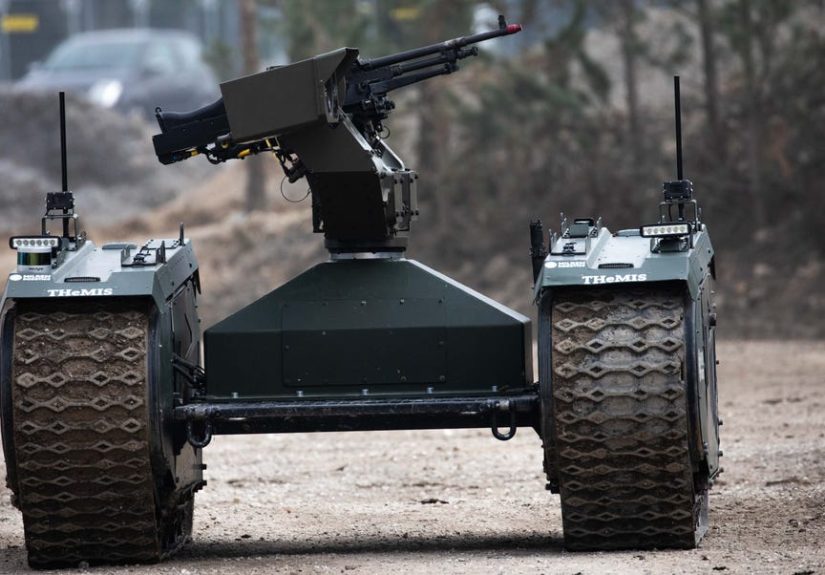
There is a difference between a sci-fi nightmare and a Pentagon budget line, but in 2026 the gap is getting thinner. The United States is not officially shouting, “Release the robots!” from the roof of the Pentagon. It is doing something more bureaucratic, more strategic, and in some ways more consequential: building policy, procurement pathways, and battlefield doctrine that make increasingly autonomous weapons easier to develop, test, buy, and field.
That is why the phrase killer robots keeps crashing into the much calmer language of autonomous weapon systems, AI-enabled drones, and responsible military AI. One side hears a doomsday trailer. The other hears a modernization plan. Somewhere in the middle is the real story: the U.S. is not embracing a cartoon version of robot war, but it is clearly backing military AI that can accelerate targeting, compress decisions, expand drone swarms, and move humans further away from the final act of violence than many critics are comfortable with.
If that sounds like a contradiction, welcome to the debate. It is one of the most important and uncomfortable technology questions in American defense policy today.
The U.S. Is Not Banning Autonomous Weapons. That Matters.
Let’s start with the central point. In public debate, many people assume the United States has drawn a bright red line against lethal autonomous weapon systems. It has not. U.S. policy has long focused on oversight, testing, legality, and human judgment rather than an outright prohibition.
That distinction is everything. A ban would say: this category of weapon is off-limits. The current U.S. approach says: these systems may be developed and used if they meet legal, technical, and policy standards. In plain English, Washington has chosen regulation and fielding rules over refusal.
Supporters of this position argue that this is the only realistic path. Their case goes something like this: America’s rivals are not slowing down, battlefields are getting faster, and AI can help U.S. forces identify threats sooner, protect troops, and operate in communications-denied environments. In that telling, refusing autonomy is not moral purity. It is strategic self-harm dressed up in idealism.
Critics hear that and roll their eyes hard enough to cause orbital weather. They argue that once governments accept the logic of machine-assisted killing, the rest becomes an exercise in moving adjectives around. “Human judgment” becomes “human supervision.” “Human supervision” becomes “ability to intervene.” Then, under pressure, speed wins, oversight shrinks, and the human being becomes less decision-maker than liability sponge.
Why the U.S. Keeps Moving in This Direction
1. Speed is now treated as a military necessity
AI in warfare is not being sold in Washington primarily as a flashy gadget. It is being sold as a time machine. Military planners want systems that can process sensor data faster, classify targets faster, coordinate unmanned platforms faster, and react faster than human operators alone can manage.
That is especially true in scenarios involving drone swarms, missile defense, contested airspace, electronic warfare, and maritime operations in the Indo-Pacific. In those environments, latency is not just annoying. It can be fatal. The U.S. defense establishment increasingly believes that future wars will reward the side that can compress the observe-orient-decide-act cycle the most.
Once speed becomes the sacred value, autonomy starts looking less like an optional upgrade and more like table stakes.
2. Cheap autonomous mass is changing the math
For decades, the U.S. military leaned heavily on expensive, exquisite platforms. Think fewer systems, but very capable ones. AI and autonomy are pushing strategy toward a different model: large numbers of cheaper, attritable, networked systems that can overwhelm defenses and absorb losses.
This is one reason the Pentagon became so interested in swarms, low-cost drones, and programs built around rapid scaling. The theory is brutally simple: if one gold-plated platform is vulnerable, send many lower-cost autonomous systems instead. It is not as glamorous as a movie robot with glowing eyes, but it may be far more relevant to actual warfare.
And yes, this is where the phrase killer robots becomes less science fiction and more spreadsheet.
3. The China factor looms over everything
No serious discussion of military AI in the U.S. can ignore China. American defense planning increasingly frames AI, autonomy, and unmanned systems through the lens of great-power competition. Policymakers worry that if the United States layers too many internal restrictions onto military AI while competitors race ahead, it may lose both deterrence credibility and battlefield advantage.
That fear is politically powerful. It turns autonomy from a niche ethics debate into a national security urgency. Once framed that way, opposition to autonomous weapons is often treated less as a principled objection and more as a luxury position in a dangerous world.
The Bureaucratic Version of “Yes”
Governments rarely announce controversial shifts with dramatic one-liners. They do it through directives, pilots, procurement memos, and oversight language that sounds sleepy until you realize what it adds up to.
That is what has happened in the United States. The legal and policy architecture does not amount to a full-throated endorsement of machines deciding who lives and dies without human involvement. But it absolutely does create a framework in which autonomy in weapons is legitimate, fundable, and expandable.
Even the language is revealing. The policy debate is not centered on whether autonomous weapons should exist at all. It is centered on how much human judgment is enough, what testing is sufficient, what level of approval is required, and how quickly the force can field capabilities that use AI responsibly. That is not a ban conversation. That is a deployment conversation.
The same pattern shows up in procurement. Programs focused on fielding large numbers of smart drones, loosening barriers to acquisition, and prioritizing rapid adaptation all point in one direction: the U.S. wants more operational autonomy in more platforms, sooner rather than later.
So What Is the U.S. Actually Backing?
The answer is more nuanced than “robot assassins,” but more serious than “just decision-support software.” The U.S. is backing a spectrum of military AI capabilities that can include:
- AI-assisted target detection and classification
- Autonomous navigation and mission execution for drones and unmanned vehicles
- Human-supervised systems that can track and engage targets under constrained conditions
- Networked swarms that coordinate actions across large numbers of platforms
- Faster sensor fusion that narrows the gap between identification and engagement
In practice, this means the United States is not just interested in smarter military software. It is building toward operational ecosystems where AI shapes the pace, scale, and logic of force. Sometimes a human will still approve the strike. Sometimes the human’s role will be more about setting parameters in advance. That distinction may look tidy in policy prose, but in a real conflict it can get messy very fast.
The Moral Argument Against This Trend
Opponents of autonomous weapons do not just worry about malfunctions. They worry about moral outsourcing.
Their argument is that lethal force is different from every other kind of automation because it is tied to dignity, accountability, and the meaning of human judgment. A machine does not understand surrender, fear, ambiguity, proportionality, or mercy. It processes inputs. That may be fine for route optimization. It gets darker when the output is a dead person.
There is also the accountability problem. If an AI-enabled system commits an unlawful strike, who is responsible? The commander who approved the mission? The operator who monitored the feed? The acquisition chain that certified the system? The company that trained the model? The engineers who tuned the data? Critics argue that autonomy can create a fog of responsibility just where the law and ethics require the most clarity.
Then there is escalation. Machines are attractive partly because they move fast. Unfortunately, wars also become more dangerous when actions move faster than humans can interpret or politically manage them. An autonomous or semi-autonomous contest between rival systems could produce rapid, unintended escalation before leaders even understand what happened.
That is one reason human rights groups, arms control advocates, and many legal scholars keep pushing for stronger limits and, in some cases, outright bans on systems that operate without meaningful human control.
The U.S. Answer: Responsible AI, Not No AI
American officials generally respond that existing law, rigorous testing, chain-of-command accountability, and AI governance principles can manage the risk. This is where terms like responsible AI, traceability, governability, and human judgment over the use of force come into play.
That framework has political advantages. It sounds serious, modern, and measured. It reassures allies without tying Washington’s hands. It also lets the Pentagon tell two stories at once: one story for ethicists, about safeguards; another story for competitors, about speed and dominance.
But there is a catch. Guardrails are only as strong as the pressure they can survive. In peacetime, officials talk about review processes and deliberate testing. In wartime, especially under intense threat, the incentive is to remove friction. The history of military innovation is not exactly famous for saying, “You know what, let’s keep the slower option.”
That is why some observers see the language of responsible AI as necessary but insufficient. If the strategic goal is faster and broader use of autonomous systems, governance can start to feel like a seatbelt on a race car that is still accelerating.
The Industry Tension No One Can Ignore
Another twist in this story is the relationship between the Pentagon and the U.S. tech sector. Silicon Valley is not monolithic. Some firms are eager to work on defense AI. Others are comfortable with logistics, cybersecurity, or analytics but hesitate when autonomy touches lethal decision-making. A few want bright contractual limits.
That tension matters because the future of military AI will not be built by government labs alone. It will be shaped by commercial models, cloud infrastructure, sensors, autonomy stacks, and dual-use research that move between civilian and defense worlds.
Recent clashes over whether AI tools may be used in fully autonomous weapons show how unstable that relationship can become. Some companies want to support national defense without enabling systems they view as ethically unacceptable. The Pentagon, by contrast, tends to resist contract language that could constrain lawful military use in real time. In other words, one side wants guardrails with teeth, and the other worries those teeth may bite during combat.
Internationally, the U.S. Wants Rules Without a Hard Ban
Globally, Washington has tried to present itself as responsible rather than reckless. It has supported political declarations and nonbinding principles for the military use of AI. That gives the U.S. a way to champion norms while avoiding a treaty that could sharply limit future capabilities.
Critics say this is the diplomatic version of eating salad while ordering fries for the table. The United States speaks the language of responsibility, but it remains unwilling to support the kind of binding restrictions many advocates believe are necessary. That gap is one reason international discussions keep circling the same tension: should autonomous weapons be managed, or should some of them simply be outlawed?
From the U.S. perspective, a hard ban is both strategically risky and practically difficult. From the critics’ perspective, refusing a hard ban is exactly how the world sleepwalks into normalized machine-enabled killing.
My Take: The U.S. Is Backing the Use of Killer Robots, Just Not Under That Name
The title of this article is provocative, but the underlying claim is hard to escape. The United States is backing the use of systems that move warfare toward greater machine autonomy. It is doing so through doctrine, procurement, political language, and operational urgency. It may reject the phrase killer robots as loaded, imprecise, or theatrical. Fine. Bureaucracies hate dramatic phrasing almost as much as they love acronyms.
But if a government builds policy for autonomous weapon systems, funds swarming drones, resists outright bans, treats autonomy as strategically essential, and argues that the solution is better governance rather than nondevelopment, then yes, it is backing the use of what the public commonly calls killer robots.
The more interesting question is not whether that support exists. It does. The real question is whether democratic oversight, military law, and technical safeguards can stay ahead of a battlefield logic that rewards speed, scale, and automation. That race is still underway, and nobody should pretend the outcome is guaranteed.
Experiences Around the Debate: What This Feels Like in the Real World
One of the strangest things about the autonomous weapons debate is how different it feels depending on where a person stands. For defense officials, the experience is often one of urgency. They see battlefields changing in real time, especially through the rise of cheap drones and AI-assisted targeting. To them, the debate is not abstract philosophy. It is a countdown clock. Every procurement delay feels like vulnerability. Every ethical debate sounds important, but sometimes painfully detached from the tempo of actual conflict.
For engineers and AI researchers, the experience can be far more conflicted. Many are proud to build systems that help troops navigate, detect threats, or avoid danger. Yet some become uneasy when the same tools inch toward lethal autonomy. Public reporting has shown that plenty of technologists are not opposed to defense work in general; they are opposed to the possibility that their software could become part of a kill chain with little meaningful human control. That creates a moral gray zone that is hard to live in professionally. It is one thing to optimize perception models. It is another to wonder whether your model may someday sit inside a weapon deciding who looks hostile enough to die.
For military personnel, the experience is often practical rather than ideological. Operators care about whether a system works under pressure, whether it can be jammed, spoofed, or fooled, and whether they will still be held responsible when a machine behaves badly. That last part is huge. Soldiers and commanders may welcome AI assistance, but many do not want to become the legal and moral shock absorbers for technology they cannot fully inspect. Trust in AI is not just about performance metrics. It is about whether the person on the ground believes the system will act within the commander’s intent when everything gets noisy, fast, and terrifying.
For ordinary civilians, the experience is usually one of delayed recognition. Most people do not wake up wondering about machine classification thresholds in autonomous targeting systems. Then a headline appears, a policy shifts, a company disputes a Pentagon contract, or a UN debate flares up, and suddenly the issue sounds less like fiction and more like the next chapter of warfare. That is often when the emotional reaction lands: disbelief first, then discomfort, then the realization that the future is being normalized in paperwork long before the public fully notices it.
And for critics in law, ethics, and human rights, the experience has been one of watching the vocabulary slowly soften the reality. “Killer robots” becomes “autonomy in weapon systems.” “Delegating lethal decisions” becomes “human-machine teaming.” The concern is not that these terms are always wrong. It is that they can make a radical shift sound like routine modernization. That is why the debate remains so intense. Everyone involved feels that something fundamental is being decided, even when the official language sounds calm enough to put a caffeinated squirrel to sleep.
Conclusion
The United States is not publicly campaigning for a world where machines roam freely making life-and-death decisions with zero human involvement. But it is clearly moving toward broader military reliance on AI and autonomy, while rejecting an outright ban and prioritizing speed, scale, and battlefield advantage. That is the uncomfortable center of the story.
Call them autonomous weapon systems, AI-enabled swarms, smart drones, or the phrase that makes everyone in Washington sigh into a briefing folder: killer robots. The policy direction is unmistakable. America is not standing outside the door trying to keep them out. It is inside, drafting the rules for how they come in.