Table of Contents >> Show >> Hide
- 1. Overloading the Nightstand Until It Becomes a Tiny Storage Unit
- 2. Choosing Furniture That Is Too Big for the Room
- 3. Using Too Many Small Décor Pieces
- 4. Leaving Open Storage Exposed
- 5. Mixing Too Many Colors and Patterns
- 6. Ignoring the “Chair Pile” Problem
- 7. Forgetting About Cords, Chargers, and Electronics
- 8. Styling the Bed With Too Many Layers
- Bonus Styling Tips to Make Your Bedroom Look Less Cluttered
- Real-Life Experiences: What Actually Works When a Bedroom Looks Cluttered
- Conclusion: A Less Cluttered Bedroom Starts With Smarter Styling
Your bedroom may be clean, vacuumed, and freshly scented like a luxury hotel lobby, yet somehow it still looks cluttered. The culprit is not always “too much stuff.” Sometimes the real problem is styling. A room can feel crowded because of the wrong furniture scale, busy bedding, overloaded nightstands, awkward lighting, or décor that is trying a little too hard to be charming.
The good news? You do not need to throw away half your belongings or move into a minimalist white cube where one beige vase becomes your entire personality. A bedroom can look cozy, personal, and stylish without looking like a laundry basket had a dramatic life event. The trick is learning which styling mistakes create visual clutter and how to fix them with smarter, calmer choices.
Below are eight common bedroom styling mistakes that make a space look cluttered, plus practical ways to correct them without losing warmth, personality, or your beloved throw pillow collectionthough, yes, we may need to talk about that collection.
1. Overloading the Nightstand Until It Becomes a Tiny Storage Unit
The nightstand is one of the biggest clutter magnets in the bedroom. It starts innocently with a lamp and a book. Then come the water glass, lip balm, phone charger, receipts, jewelry, hair ties, vitamins, three books you swear you are “currently reading,” and one mysterious screw that apparently belongs to something important.
Why It Makes the Bedroom Look Messy
Because the nightstand is right beside the bed, it becomes one of the first things people notice. When it is crowded, the whole room feels less restful. Even useful items can look messy when they are spread across a small surface with no order.
How to Fix It
Keep only daily essentials on top: a lamp, one book, a small tray, and perhaps one decorative item such as a plant or framed photo. Everything else should go into a drawer, basket, or charging station. If your nightstand has no storage, consider switching to one with drawers or using a small lidded box. The goal is not to make the surface empty; it is to make it intentional.
2. Choosing Furniture That Is Too Big for the Room
Oversized furniture can make even a clean bedroom look packed. A massive bed frame, bulky dresser, wide bench, and heavy nightstands can swallow floor space faster than a teenager eats snacks after school. When furniture blocks movement, crowds corners, or sits too close together, the room feels cluttered before you add a single sock.
Why It Creates Visual Clutter
Large furniture reduces negative space, which is the open breathing room around objects. Without enough negative space, the eye has nowhere to rest. Everything feels squeezed, even if every drawer is perfectly organized.
How to Fix It
Measure before buying furniture, especially in small bedrooms. Choose pieces that match the room’s scale. A platform bed with storage may work better than a heavy sleigh bed. A tall dresser can save more floor space than a wide one. If a bench at the foot of the bed blocks walking space, skip it or choose a slimmer storage ottoman. Good styling starts with furniture that fits the room, not furniture that needs its own ZIP code.
3. Using Too Many Small Décor Pieces
Small decorative objects can add personality, but too many of them can make a bedroom look scattered. Tiny candles, mini frames, little bowls, souvenir figurines, crystals, faux plants, and random trinkets may all be cute individually. Together, they can create a “gift shop shelf during an earthquake” effect.
Why It Makes the Room Feel Busy
Small objects create many visual stopping points. The eye jumps from one item to another, and the room begins to feel crowded. This is especially true on dressers, shelves, windowsills, and bedside tables.
How to Fix It
Group décor in odd numbers, such as three items with different heights and textures. For example, style a dresser with a table lamp, a framed print, and a small ceramic bowl. Leave empty space around the grouping. Rotate sentimental pieces instead of displaying them all at once. Your bedroom should tell a story, not read the entire autobiography in one paragraph.
4. Leaving Open Storage Exposed
Open shelves, rolling racks, under-bed bins, and visible baskets can be useful, but they can also make a bedroom look cluttered when everything inside is on display. Even neatly folded clothes can feel visually noisy if the colors, labels, textures, and shapes are all visible at once.
Why Open Storage Often Backfires
Open storage requires constant styling discipline. Most people do not fold sweaters like a boutique employee every Tuesday night, and that is completely reasonable. The problem is that open storage turns everyday items into part of the décor, whether they are attractive or not.
How to Fix It
Use closed storage whenever possible: drawers, cabinets, lidded bins, storage benches, and wardrobes with doors. If you need open shelving, use matching baskets or fabric bins to hide smaller items. Under-bed storage should be tucked behind a bed skirt or hidden in built-in drawers. A bedroom instantly looks calmer when storage works quietly in the background instead of shouting, “Look at all these seasonal sweaters!”
5. Mixing Too Many Colors and Patterns
Pattern is wonderful. Color is wonderful. But when bedding, curtains, rugs, wallpaper, throw pillows, and artwork all compete for attention, the bedroom can feel chaotic. A floral duvet, striped rug, geometric curtains, bright accent wall, and multicolor gallery wall may each be stylish on its ownbut together they can look like five Pinterest boards fighting for custody of the same room.
Why It Looks Cluttered
Visual clutter is not only physical clutter. A busy color scheme or too many patterns can make a room feel crowded even when surfaces are clear. Bedrooms benefit from a sense of calm, and a confusing palette can interrupt that feeling.
How to Fix It
Choose one main color palette and repeat it throughout the room. A simple formula is one dominant neutral, one supporting color, and one accent color. If you love patterns, let one pattern be the star and keep the others subtle. For example, pair a patterned duvet with solid curtains and a textured rug. Texture adds depth without making the room visually loud.
6. Ignoring the “Chair Pile” Problem
Almost every bedroom has one: the chair, bench, treadmill, or corner that becomes a halfway house for clothing. These are clothes not clean enough for the closet, not dirty enough for the hamper, and apparently important enough to form a mountain. This pile can make a beautifully styled bedroom look messy in about four seconds.
Why It Ruins the Styling
A pile of clothing breaks the room’s lines and adds random color, texture, and shape. It also sends a visual message that the room does not have a working system. Even if the bed is made and the décor is lovely, the chair pile steals the spotlight like a very wrinkled celebrity.
How to Fix It
Create a real “in-between clothes” solution. Add hooks behind the door, a slim wall rack, a small basket for re-wear items, or a dedicated drawer section. Make the hamper easy to reach. If the chair only collects laundry, consider removing it. A chair that never gets used as a chair is not seating; it is a fabric-covered confession.
7. Forgetting About Cords, Chargers, and Electronics
Nothing says “peaceful sleep sanctuary” like a knot of charging cables, a blinking router, and a power strip peeking out from under the bed like a small technological swamp creature. Electronics are part of modern life, but when they are not styled or hidden, they create instant visual clutter.
Why Cords Make a Room Look Messy
Cords create messy lines that interrupt clean surfaces and furniture edges. They are especially noticeable around nightstands, desks, lamps, TVs, and humidifiers. Even expensive furniture can look less polished when tangled cords are visible.
How to Fix It
Use cord clips, cable sleeves, cord covers, or a charging drawer. Choose lamps with built-in USB ports if they reduce visible cables. Hide power strips inside cable boxes or behind furniture. If you keep a workspace in the bedroom, store papers, chargers, and office supplies in a lidded box when not in use. The fewer cables your eye sees, the calmer the room feels.
8. Styling the Bed With Too Many Layers
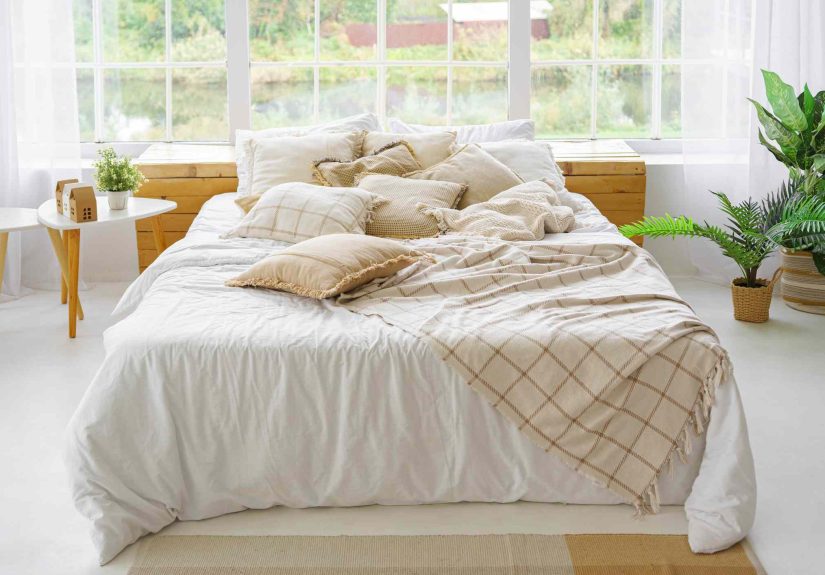
A beautifully layered bed can make a bedroom feel luxurious. But there is a fine line between “cozy hotel suite” and “pillow avalanche with a duvet trapped underneath.” Too many pillows, throws, blankets, and folded quilts can make the bed look bulky and high-maintenance.
Why the Bed Matters So Much
The bed is usually the largest object in the bedroom. If it looks cluttered, the entire room looks cluttered. Since bedding covers so much visual space, its colors, patterns, and layers have a huge impact on the room’s overall mood.
How to Fix It
Use a simple bedding formula: sleeping pillows, two to three decorative pillows, one duvet or comforter, and one throw if needed. Choose bedding in a coordinated palette. If you love texture, try linen, cotton, waffle weave, or a chunky knit instead of adding more patterns. A well-made bed should look inviting, not like it requires a 12-step assembly manual every morning.
Bonus Styling Tips to Make Your Bedroom Look Less Cluttered
Use Trays to Create Order
A tray can make everyday items look intentional. Use one on a dresser for perfume, jewelry, or a candle. The tray creates boundaries, which helps small objects feel styled instead of scattered.
Choose Fewer, Larger Pieces of Art
Instead of many small frames, consider one large piece above the bed or dresser. Larger art can make the room feel more polished and less busy.
Let the Floor Breathe
Visible floor space makes a bedroom feel bigger. Avoid crowding the floor with extra baskets, shoes, boxes, and furniture pieces that do not serve a daily purpose.
Repeat Materials
Repeating materials such as wood, linen, brass, rattan, or ceramic helps the room feel connected. When every piece has a different finish, the bedroom may look accidental rather than styled.
Real-Life Experiences: What Actually Works When a Bedroom Looks Cluttered
In real bedrooms, clutter rarely happens because someone wakes up and says, “Today I shall ruin the mood with seven hoodies and a receipt from 2022.” It usually happens because the room does not support daily habits. Styling can help, but only when it works with real life instead of pretending real life does not exist.
One of the most effective changes is clearing the nightstand first. It is a small area, but it has an oversized emotional effect. When the bedside table is calm, the bed feels calmer. A lamp, one book, a small dish, and a glass of water look much better than a pile of “I’ll deal with that tomorrow.” The secret is giving every recurring item a home. Glasses go in a tray. Chargers clip to the back of the nightstand. Medicine goes in the drawer. Books get limited to one or two. Suddenly the room feels more grown-up, even if there are still socks hiding somewhere with suspicious confidence.
Another experience-based lesson is that baskets are helpful only when they are not treated like decorative black holes. A basket at the foot of the bed can store throws. A basket in the closet can collect off-season accessories. But five random baskets filled with mystery items simply move the clutter into prettier containers. The best baskets have a job. Label them if needed. Use them for categories, not emotional avoidance.
Furniture scale also matters more than people expect. A small bedroom with a giant dresser can feel messy even when the dresser is empty on top. Switching to a taller, narrower piece can open the floor and make the room feel cleaner. The same applies to nightstands. A tiny nightstand beside a large bed often looks awkward and gets cluttered quickly because it cannot hold basic essentials. A slightly larger nightstand with drawers may actually make the room look less cluttered because it hides what you need.
Bedding is another surprisingly powerful fix. Many bedrooms look busy because the bed has too many colors, too many pillows, or too many competing textures. Simplifying the bedding can change the entire mood of the room in one afternoon. A neutral duvet, two shams, two sleeping pillows, and one textured throw often look more expensive than a complicated pile of decorative pillows that must be relocated every night like tiny fabric roommates.
The most practical experience is this: your bedroom needs a reset routine that takes less than five minutes. Put laundry in the hamper, clear the nightstand, straighten the duvet, return cups to the kitchen, and remove anything that belongs in another room. This tiny habit works because styling is not a one-time event. A bedroom stays beautiful when the systems are easy enough to repeat on tired nights, busy mornings, and days when life is doing cartwheels in muddy shoes.
Conclusion: A Less Cluttered Bedroom Starts With Smarter Styling
A cluttered-looking bedroom is not always a sign that you own too much. Sometimes it means your surfaces are overworked, your furniture is too bulky, your colors are competing, or your storage is too visible. By simplifying the nightstand, choosing better-scaled furniture, hiding everyday storage, calming the bedding, and controlling small visual distractions, you can make your bedroom look cleaner without stripping away personality.
The goal is not perfection. The goal is a bedroom that feels peaceful when you walk in, practical when you use it, and easy to reset when life gets messy. Because life will get messy. The bedroom just does not need to look like it is filing an official complaint about it.