Table of Contents >> Show >> Hide
- 1) Rich, Nature-Forward Color Palettes (Stark White Is Taking a Breather)
- 2) Mixed Materials and Warm Wood Tones (Texture Is the New “Wow”)
- 3) The “Front Door Moment” Gets Bigger (Literally)
- 4) Roof Upgrades as Curb Appeal (The “Fifth Façade” Finally Gets Respect)
- 5) Landscaping That Looks Established (Native Plants, Less Lawn, More Layers)
- 6) Outdoor Living and Lighting That Flatters (Because Your House Deserves Good Lighting Too)
- A Quick Reality Check: How to Make 2025 Exterior Trends Work for Your Home
- Conclusion
- Bonus: of Real-World Experiences With 2025 Exterior Trends
If your house could talk, 2025 is the year it would politely clear its throat and say:
“I’d like to look expensive… but also like I belong here.” Translation: the hottest curb appeal trends
aren’t about chasing a single “Instagram look.” They’re about making exteriors feel warmer, smarter,
and more connected to naturewithout signing up for a lifetime of weekend maintenance.
Designers and builders keep pointing to the same big shifts: richer exterior color palettes (hello, moody blues),
more texture and mixed materials, upgraded entries that actually feel welcoming, and landscaping that looks
established instead of “newly installed yesterday.” Add in outdoor living upgrades and smarter lighting, and you’ve
got the 2025 exterior vibe: polished, practical, and a little bit “main character.”
1) Rich, Nature-Forward Color Palettes (Stark White Is Taking a Breather)
For a while, exteriors were stuck in a minimalist loop: bright white siding, black trim, repeat.
In 2025, the palette broadensstill clean and classic, but with more depth. Think warm whites and creamy neutrals,
chalky greens, dusky taupes, and saturated shades like navy and charcoal. And yes, dark exteriors keep gaining
groundespecially when balanced with natural textures like wood or stone.
What this looks like in real life
- Moody blues on siding with crisp trim for contrast (especially on traditional homes).
- Inky black or charcoal used strategicallyfull façade if you’re bold, or as trim/accents if you’re cautious.
- Sage and gray-green tones that blend into landscaping instead of fighting it.
- Warm whites that feel inviting, not “blinding in full sun.”
How to try it without repainting your whole house
Start with a “one-feature commitment.” Paint the front door a standout shade (deep navy, teal, earthy clay, or even a
softened black) and keep the rest of the façade neutral. This is the easiest way to look updated without turning your
home into a 30-foot-tall paint swatch.
Pro tip: If your neighborhood leans traditional, choose a bold color with a classic undertone (navy, forest green,
charcoal). It reads modern without looking like the house is trying too hard.
2) Mixed Materials and Warm Wood Tones (Texture Is the New “Wow”)
A flat exterior is starting to feel like an email written in all lowercasetechnically fine, but it could use some
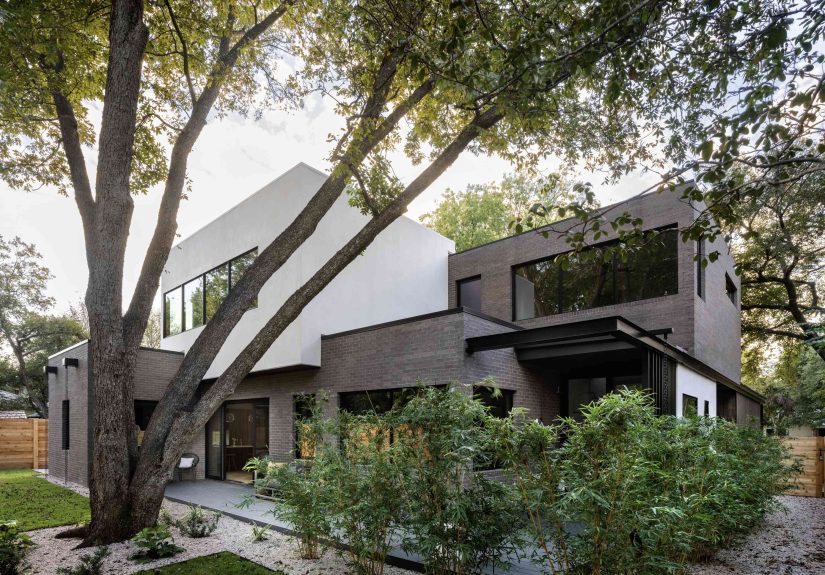
personality. In 2025, exteriors are getting more dimensional through layered materials: brick with wood accents,
stone with smooth siding, stucco paired with metal details, and contrasting profiles like wide-plank cladding or
vertical panel styles.
This trend has two main drivers: people want a more “custom” look, and manufacturers have improved low-maintenance
options that mimic natural materials without constant upkeep. Wood tones are especially popular as accents because they
warm up moody paint colors and make modern exteriors feel less severe.
Easy mixed-material combos that look intentional (not accidental)
- Brick + wood tone siding: brick grounds the home, wood adds warmth and modernity.
- Stone veneer + smooth siding: stone gives texture at the base, clean siding keeps it contemporary.
- Board-and-batten + lap siding: vertical panels add height; horizontal lap keeps the façade calm.
- Dark siding + light trim + black-framed windows: crisp contrast without looking harsh.
Pro tip: Limit yourself to two main materials plus one accent. When everything is a feature, nothing is.
Let one element be the hero (wood gable, stone entry, or statement cladding), and keep the rest supportive.
3) The “Front Door Moment” Gets Bigger (Literally)
In 2025, the entry is no longer a forgotten rectangle you sprint through with groceries. It’s a design focal point.
Oversized doors, grander steps, wider porches, and modern hardware are showing up more oftenbecause the front of your
house is the only part you see every day without trying.
The vibe is less “tiny door, tiny stoop” and more “this home has a handshake.” Doors with clean lines, modern materials
(including metal looks), and tasteful glass details are trending. Smart locks are also becoming part of the curb appeal
conversation, because convenience is officially fashionable.
Budget-friendly ways to get the look
- Paint the front door a rich accent color (navy, teal, terra-cotta, charcoal) and upgrade the hardware.
- Add oversized, modern house numbers and a mailbox that doesn’t scream “1998 builder special.”
- Refresh the porch light with a warm-toned fixture that fits the home’s scale.
- Frame the entry with planters or symmetrical landscaping for instant “intentional.”
Pro tip: If you’re tempted to paint brick just because it’s trendy, pause. A thorough cleaning plus updated trim
and door color often delivers the “new” look with less long-term regret.
4) Roof Upgrades as Curb Appeal (The “Fifth Façade” Finally Gets Respect)
Roofs are having a moment in 2025, and honestly, it’s about time. A roof is a huge part of what you see from the street
(and from your neighbors’ second-floor windowshi, Linda). Designers are talking more about higher-quality roofing
materials and finishes because they change the entire silhouette of a home.
Expect to see more interest in natural-looking or premium materialslike slate-inspired profiles, terra-cotta looks,
and wood-like texturesalong with a continued rise in standing-seam metal roofing for its crisp lines and durability.
Many homeowners are also thinking “solar-ready,” even if panels aren’t installed immediately, because planning ahead is
cheaper than redoing work later.
How to make a roof feel like a design choice
- Match undertones: warm roof + warm siding; cool roof + cool siding. (Your eyes will thank you.)
- Use complementary accents: metal awnings, gutters, and downspouts can tie the roof into the façade.
- Consider longevity: the best “trend” is the one you won’t have to replace anytime soon.
Pro tip: If you’re updating siding, trim, or paint, look at the roof first. It’s hard to make a gorgeous color palette
work if the roof is fighting it like a toddler refusing pants.
5) Landscaping That Looks Established (Native Plants, Less Lawn, More Layers)
In 2025, the best landscaping often looks like it’s been there forever. Instead of perfectly edged “new development”
beds, homeowners are leaning into more natural, layered landscaping with native plants and varied textures. This approach
can look softer, more local, andbonusoften easier to maintain once established.
You’ll also see more eco-friendly choices: drought-tolerant planting, groundcovers that reduce mowing, rock or mulch beds
for low maintenance, and pollinator-friendly gardens that bring life (literally) to the yard. Smart irrigation is part of
this shift too: weather-based controllers can adjust watering schedules using local conditions and can save a typical home
thousands of gallons of water each year when compared with clock-based watering habits.
Design moves showing up everywhere
- Layered beds: a mix of heights (trees, shrubs, perennials, groundcover) for depth and softness.
- Native-first planting: helps new builds look “settled,” not dropped onto bare dirt.
- Less thirsty lawns: smaller turf areas, more groundcover, and smarter irrigation strategies.
- Edible landscaping: herbs and veggies woven into ornamental beds for beauty + function.
Pro tip: If you want a fast curb appeal win, focus on the “frame”: clean edges along beds, fresh mulch, and two or
three strong plant groupings near the entry. It reads intentional even before everything fills in.
6) Outdoor Living and Lighting That Flatters (Because Your House Deserves Good Lighting Too)
Outdoor living isn’t just a backyard thing anymoreit’s a lifestyle cue. In 2025, homeowners are investing in outdoor dining
zones, front-porch seating, and flexible entertaining areas that feel like extensions of the home. That might mean a simple
bistro setup, a pergola, a compact outdoor kitchen, or a deck refresh with richer wood tones.
Lighting is the not-so-secret weapon behind this trend. Smart outdoor lighting systems and warm-toned LEDs are helping homeowners
highlight architecture, improve safety, and create “scenes” for everyday uselike a welcoming front path glow, or brighter
lighting for gatherings. The key is avoiding harsh, overly bright lighting that makes your yard look like a parking lot.
Warm, layered light is what gives exteriors that upscale, inviting feel after sunset.
Simple lighting upgrades that feel expensive
- Layer it: combine porch lights, path lights, and subtle uplighting on trees or architectural features.
- Keep the tone warm: choose a natural, inviting glow instead of bright white.
- Use smart controls: schedules, motion sensing, and voice control make it practical, not just pretty.
Pro tip: Before you buy new fixtures, stand outside at dusk and note what feels dark or awkward. Most homes don’t need
more lightingthey need lighting in smarter places.
A Quick Reality Check: How to Make 2025 Exterior Trends Work for Your Home
Trends are fun. Regret is not. Use these guardrails to keep your exterior looking current without feeling like a time capsule later:
- Pick one “hero” trend: dark paint, mixed materials, or a bold doorthen keep the rest classic.
- Respect the architecture: a Tudor wants different choices than a modern ranch. Let the style lead.
- Balance maintenance with looks: choose finishes and materials you can realistically maintain.
- Think in undertones: warm with warm, cool with cool, and you’ll avoid “why does this feel off?” syndrome.
- Start small, scale up: lighting, landscaping, and door upgrades can transform curb appeal without a full remodel.
Conclusion
The best home exterior trends of 2025 aren’t about copying a single aesthetic. They’re about creating a home that feels grounded,
welcoming, and thoughtfully designedwhether that’s through richer color, layered textures, a better entry experience, or landscaping
that looks like it belongs. If you do it right, your home won’t just look “on trend.” It’ll look like you, but with better lighting.
Bonus: of Real-World Experiences With 2025 Exterior Trends
In neighborhood after neighborhood, the most common “2025 upgrade story” starts the same way: someone is tired of looking at the
front of their house and feeling… nothing. Not hate. Not love. Just the design equivalent of elevator music. And instead of jumping
straight into a massive renovation, many homeowners are stacking smaller improvements that add up to a dramatically fresher exterior.
One of the clearest patterns is how people are approaching color. Rather than repainting everything at once, homeowners often test
the waters with the front door first. A navy or deep green door is a popular move because it feels bold, but it’s also reversible if
the next trend wave rolls in. Once the door looks sharper, the trim suddenly looks tiredso trim gets repainted. Then the porch light
looks datedso a new fixture goes up. That’s how “I’m just painting the door” becomes “We basically did a curb appeal makeover,” all
without ever calling it that.
Mixed materials are showing up in a similarly practical way. Instead of re-siding an entire home, homeowners add a wood-tone accent
in a gable, around the entry, or on a small bump-out. It’s the design version of putting on a good jacket: the whole outfit looks more
intentional. Contractors and designers often favor these smaller accents because they give the warmth and texture people want, while
keeping costs and maintenance more manageable than a full exterior overhaul.
Landscaping “experiences” in 2025 are shifting too. Homeowners who used to default to lots of lawn are increasingly asking for plants
that look established and localespecially natives that don’t require constant babysitting. The first season can feel a little sparse
(plants are polite that way), so people lean on mulch, rock, and strong edging to make the yard look finished while it grows in. There’s
also more interest in smart irrigation controllers because watering schedules are easy to forget, weather is unpredictable, and nobody
wants to pay for overwatering. The appeal is simple: less waste, healthier plants, and fewer “Why is that shrub mad at me?” moments.
Outdoor living upgrades tend to be the “surprise favorite.” People start because they want the backyard to be usable, but they discover
the front porch can be a lifestyle upgrade too. A small seating area by the entry changes how the home feels day-to-daylike the house
is inviting you to pause instead of sprinting inside. And once people begin using outdoor spaces more, lighting becomes non-negotiable.
Homeowners quickly learn that bright, cold lighting can make an exterior look harsh, while warm, layered lighting makes the home feel
high-end and welcoming. It’s a small change that has an outsized effectkind of like good photos on a dating app, but for your house.
The biggest takeaway from real projects is that “trendy” doesn’t have to mean risky. The most successful 2025 exteriors use trends as
accentscolor here, texture there, better lighting everywhereso the home feels updated now and still timeless later.