Table of Contents >> Show >> Hide
- What Was the Nvidia Jetson TX1, Exactly?
- Why the Jetson TX1 Was Such a Big Deal
- Why It Was Not for Everybody
- What the Jetson TX1 Was Actually Good At
- The Software Side: Better Than a Bare Board, Harder Than an Appliance
- The Real Reason People Still Remember It
- How the Jetson TX1 Looks Today
- Final Thoughts
- Experience: What Living With a Jetson TX1 Actually Feels Like
Some gadgets are easy to explain. A laptop is for laptop things. A game console is for gaming. A smart speaker is for answering questions you could have Googled in half the time. The Nvidia Jetson TX1 was never that simple. It was not a mainstream consumer device, not a cheap hobby board, and definitely not the sort of thing you bought on a whim because you wanted to blink an LED and feel accomplished before lunch.
What it was, however, was a fascinating piece of engineering. The Jetson TX1 took serious GPU-accelerated computing, squeezed it into a tiny embedded module, and aimed it at robots, drones, smart cameras, and other machines that needed to see, think, and react without leaning on a giant desktop tower or a constant cloud connection. In the mid-2010s, that felt a little like science fiction escaping the lab and asking for a workbench.
That is why the Jetson TX1 still matters. Not because everyone should rush out and build a new project around one today. They should not. But because it marked an important moment in the shift toward edge AI, on-device computer vision, and compact systems that could do real work in the field. It was niche, pricey, a bit demanding, and gloriously overqualified for ordinary tinkering. In other words, it was not for everybody. And that is exactly what made it so cool.
What Was the Nvidia Jetson TX1, Exactly?
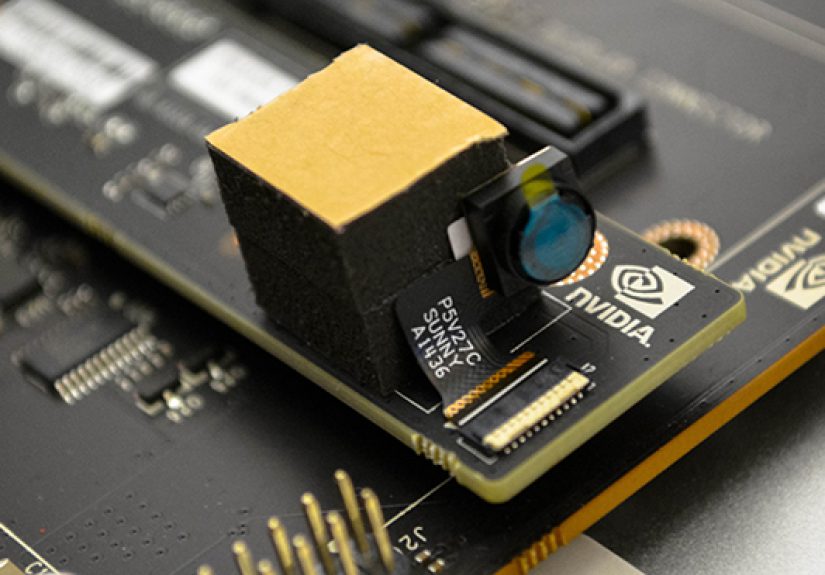
The Jetson TX1 was a compact embedded computing module built around Nvidia’s Tegra X1 platform. The basic pitch was simple enough: take a credit-card-sized module, give it a Maxwell GPU with 256 CUDA cores, pair it with 64-bit ARM processing, fast memory, onboard storage, wireless connectivity, and video features, then mount it on a carrier board so developers could start building products without first spending six months inventing a motherboard from scratch.
That last part mattered. The TX1 was not just a chip in search of a dream. Nvidia sold it as both a production module and a developer kit. The module was the part you could eventually design into a finished product. The developer kit was the practical bridge that let engineers, startups, and research teams prototype with full I/O, standard connectors, Linux support, and a real toolchain instead of pure optimism and caffeine.
Out of the box, the TX1 developer kit looked more like a lab instrument than a toy. You got a carrier board, the module, a heat spreader and cooling solution, display support, Ethernet, storage options, camera interfaces, and expansion headers galore. That made it feel serious right away. This was not the kind of board that whispered, “Let’s build a weather station.” It loudly suggested, “Let’s teach a flying robot not to crash into a tree.”
Why the Jetson TX1 Was Such a Big Deal
It brought real GPU computing to embedded devices
The biggest reason the TX1 turned heads was simple: it delivered a surprising amount of parallel compute in a tiny, low-power package. Plenty of small boards could handle control logic, basic Linux tasks, or lightweight sensor work. The TX1 was different because it gave developers access to CUDA-enabled GPU acceleration in a form factor small enough for mobile machines and embedded systems.
That changed the conversation. Instead of asking whether a device could merely collect images, developers could ask whether it could interpret them on board. Instead of shipping raw sensor data to the cloud and waiting for answers, teams could start thinking about real-time inference, obstacle avoidance, classification, and tracking right on the device itself. Today that sounds normal. Back then, it felt like someone had miniaturized part of a data center and bolted it to a robot.
It was built for vision-heavy workloads
The TX1 was especially appealing for computer vision. Its design emphasized camera input, video handling, and the kind of throughput needed for image-rich applications. This made it a natural fit for drones, robotics, smart surveillance, industrial inspection, and prototypes that needed multiple sensors plus enough compute to do something useful with the data.
That focus was not accidental. Nvidia clearly saw the future leaning toward machines that could perceive the world, not just follow scripts. The TX1 was built for exactly that kind of environment: lots of pixels, lots of motion, lots of decisions, and not much room for a bulky box full of fans.
It connected development to production
One of the smartest things about the Jetson TX1 was that it was not merely a showcase board. Nvidia’s approach let teams start on a developer kit and move toward a production module. That made the platform attractive to companies building real products, not just academic demos or weekend experiments.
For startups and engineering teams, this reduced friction in a big way. You could test your software stack, validate sensors, work through thermal and power constraints, and develop around the same core computing module you hoped to deploy. That is much more appealing than building your prototype on one board, then rewriting half your life when it is time to ship.
Why It Was Not for Everybody
The price was firmly in “serious project” territory
Let’s begin with the obvious. The Jetson TX1 developer kit launched at a price that instantly separated the curious from the committed. If you were comparing it to budget single-board computers, the TX1 looked expensive enough to make your wallet file a complaint. That alone meant it was not a casual purchase for most hobbyists.
And honestly, that was fair. The TX1 was not trying to compete with a Raspberry Pi on price or simplicity. It was trying to deliver a different class of computing for a different class of problem. Still, if your idea of fun was building a retro emulator box or a simple home server, the TX1 was like bringing a race drone to a paper-airplane contest.
The learning curve was very real
The TX1 could boot Linux and get developers moving quickly, but “quickly” in engineering language does not mean “effortlessly” in human language. There was setup, flashing, drivers, toolkits, libraries, API choices, hardware quirks, and the usual stack of tiny mysteries that arrive whenever software meets sensors and power rails.
That is part of the product’s identity. The TX1 rewarded people who had a reason to wrestle with embedded Linux, CUDA workflows, camera pipelines, and performance tuning. It was much less charming for someone who just wanted a tiny PC that worked like a desktop after ten cheerful minutes.
Its strengths were specialized
The Jetson TX1 made the most sense when you actually needed its GPU acceleration, camera support, or low-power edge processing. If you were not doing machine vision, robotics, advanced video work, or AI-adjacent development, a lot of its magic went unused. And unused magic is just expensive silicon.
This is where some early reactions got it exactly right: the TX1 was an engineering tool. It was built for autonomy, perception, and embedded intelligence. It was not meant to be the universal answer to “Which dev board should I buy?” Sometimes the correct answer is still, “The cheaper one. Please be sensible.”
What the Jetson TX1 Was Actually Good At
Drones
Drones were one of the TX1’s clearest use cases. Weight and power matter in the air. So does real-time perception. A board that can process visual data on board without dragging around desktop-class hardware is naturally attractive. That is why the TX1 showed up in autonomous and semi-autonomous drone projects, where local compute could help with navigation, tracking, and environmental awareness.
This was not theoretical. TX1-powered drones appeared in real products and demos, including systems focused on speed, vision, and autonomous behavior. When a drone needs to react now instead of “after the server gets back to us,” edge computing stops sounding trendy and starts sounding necessary.
Robotics
Robotics was another sweet spot. The TX1 supported the kind of on-device processing that makes robots more useful in messy real environments. Recognizing objects, following motion, interpreting multiple sensor streams, and working within a compact power envelope are not side quests in robotics. They are the whole game.
The board’s Linux foundation also helped. Developers could bring familiar tools, use common robotics frameworks, and build systems that mixed GPU workloads with conventional control and integration logic. That made the TX1 appealing to robotics labs, startups, and developers who needed something stronger than a lightweight SBC but smaller than a traditional PC.
Smart cameras and edge AI
The Jetson TX1 also fit the broader category we now call edge AI. Smart cameras, mobile imaging devices, industrial systems, and on-site analytics all benefit from keeping processing close to the data source. Local inference reduces latency, can improve reliability when connectivity is limited, and may help with privacy because not everything has to leave the device.
That broader edge story is one reason the TX1 aged well conceptually even as the hardware itself got old. The industry kept moving in the direction it was pointing. The terms changed, the models got bigger, and the product lines expanded, but the underlying idea stayed the same: sometimes the smartest place to run intelligence is right where the sensor lives.
The Software Side: Better Than a Bare Board, Harder Than an Appliance
One reason the TX1 built such a reputation was that Nvidia did not toss the hardware onto the market and wish developers luck. The platform came with a Linux-based environment and a growing stack of tools that made serious development possible. CUDA support mattered, of course, but so did the broader ecosystem around computer vision, multimedia, and performance tuning.
As the software matured, the platform became more compelling. JetPack and related tooling gave developers a more complete path from setup to deployment. That meant the TX1 was not just interesting on paper; it became increasingly practical for teams who needed to squeeze more performance from embedded inference and visual workloads.
Still, practical does not equal effortless. The TX1 lived in that special engineering zone where setup is straightforward right up until you need one unusual camera, one mildly cursed dependency, or one kernel detail that ruins a perfectly good afternoon. That was part of the experience. You were not buying convenience. You were buying capability with a side order of problem-solving.
The Real Reason People Still Remember It
The Jetson TX1 is memorable because it arrived before “AI at the edge” became an overused phrase in investor decks and conference keynotes. It showed up early, carrying real hardware, real interfaces, and real intent. It was a board for building machines that could interpret the world around them while staying small enough to ride on that world at the same time.
It also sat at an interesting intersection. It was advanced enough to impress professionals, but visible enough to excite hackers and makers. It inspired the sort of reaction all great niche hardware inspires: half the audience said, “This is wildly impractical,” and the other half said, “Yes, but imagine what I could do with it.” Usually, the second group builds the future while the first group writes sensible emails.
How the Jetson TX1 Looks Today
Today, the Jetson TX1 is better understood as an important milestone than a smart default choice for new deployments. Nvidia has long since moved on to newer Jetson generations with better performance, better efficiency, and stronger long-term value for modern AI workloads. The TX1 itself has reached end-of-life status, and its support story now belongs to the archive rather than the front page.
That does not make it irrelevant. It makes it historical in the best possible way. The TX1 helped prove that compact, power-conscious, GPU-accelerated embedded systems were not just feasible, but useful. Many of the products and ideas that followed stand on that groundwork.
If you are maintaining a legacy TX1 project, studying embedded AI history, or picking up used hardware for experimentation, it still has something to teach. If you are starting a fresh commercial build in the present day, newer hardware is the more sensible path. The TX1 walked so later Jetsons could sprint, somersault, and probably detect a stop sign while doing it.
Final Thoughts
The Nvidia Jetson TX1 was never meant to please everyone. It was too specialized for casual buyers, too expensive for impulse tinkering, and too ambitious to be mistaken for a generic single-board computer. But that narrow focus is exactly what gave it its charm and its impact.
It was a board for people who needed real embedded compute, real visual processing, and real room to experiment with autonomous systems. It was a glimpse of where edge intelligence was heading before the rest of the market fully caught up. No, it was not for everybody. But if your interests involved robots, drones, smart cameras, or tiny machines with unusually big brains, it was undeniably very cool.
Experience: What Living With a Jetson TX1 Actually Feels Like
Using a Jetson TX1 feels less like unboxing a gadget and more like being handed a small assignment from the future. At first glance, it is just a compact board with a large heat sink and a serious expression. Then you start connecting things and realize this is not a “plug it in and browse the web” kind of machine. It wants a monitor, keyboard, power, maybe Ethernet, maybe a camera, maybe your weekend, and definitely your attention.
The first emotional phase is usually admiration. It is hard not to appreciate how much capability Nvidia crammed into the platform. The hardware looks purposeful. The carrier board gives you the sense that somebody expected you to do something ambitious, not just cute. Even before you run anything substantial, the TX1 has the vibe of a device that would rather help build a robot than sit around streaming cat videos. It has priorities.
The second phase is confusion, which is healthy and traditional in embedded development. You start thinking, “Great, I will just install my tools and run a test pipeline,” and then the TX1 politely reminds you that hardware projects are made of details. There are operating system images, toolkits, cables, package versions, drivers, power considerations, thermal assumptions, and the subtle realization that one camera behaving correctly can feel more rewarding than most ordinary desktop victories.
Then comes the good part. Once the system is up and the software stack is cooperating, the TX1 starts to make sense in a very physical way. You are not running workloads on some abstract server farm. You are watching a small machine process images, handle sensors, and do meaningful compute right there on the bench. That is satisfying. It makes concepts like “edge inference” and “on-device vision” feel concrete instead of buzzword-shaped.
There is also something memorable about the TX1’s balance of power and limitation. It is capable enough to feel impressive, but constrained enough that you have to think like an engineer. You notice thermals. You care about power draw. You become strangely interested in how data moves from camera to memory to compute to output. The board teaches discipline because it cannot afford laziness. That is a useful lesson, even when it arrives disguised as troubleshooting.
And maybe that is the real experience people remember. The Jetson TX1 makes you feel like you are building something serious. Sometimes that something is a drone, sometimes a vision prototype, sometimes a smart camera, and sometimes it is just a slightly unstable stack of hopes, wires, and terminal windows. But even then, the board never feels boring. It feels like a machine with a mission. For the right kind of builder, that is half the fun.