Table of Contents >> Show >> Hide
- Can You Really Grow Potatoes from Potatoes?
- Why Certified Seed Potatoes Are the Best Choice
- How to Choose the Right Spot
- When to Plant Potatoes
- How to Prepare Potatoes for Planting
- How to Plant Potatoes Step by Step
- What Hilling Is and Why Potatoes Need It
- How to Water Potatoes the Right Way
- Do Potatoes Need Fertilizer?
- Common Mistakes That Ruin Potato Harvests
- When and How to Harvest Potatoes
- How to Cure and Store Potatoes
- Conclusion
- Garden Experience: Real-Life Lessons from Growing Potatoes at Home
- SEO Tags
Growing potatoes from potatoes sounds almost too simple, like a gardening trick your grandpa would whisper while holding a shovel and judging your lawn. But it really works. In fact, potatoes are one of the easiest crops for beginners because the thing you plant is basically the thing you want more of. No fancy seed-starting trays, no dramatic greenhouse setup, no motivational speeches to fragile seedlings. Just a healthy seed potato, decent soil, water, sunlight, and a little patience.
If you have ever looked at a sprouting potato in the kitchen and thought, “Congratulations, you are now a plant,” you were not entirely wrong. Potato tubers naturally grow new shoots from their “eyes,” which makes them perfect for home gardens. The catch is that not every potato is a good planting potato. If you want a strong harvest instead of a mysterious underground disappointment, there are a few rules worth following.
This easy planting guide walks through everything you need to know about how to grow potatoes from potatoes, from choosing the right tubers to planting, hilling, watering, harvesting, and storing your crop. Whether you want buttery new potatoes for dinner or enough storage potatoes to feel gloriously self-sufficient, this guide will help you grow them with confidence.
Can You Really Grow Potatoes from Potatoes?
Yes, absolutely. Potatoes are typically grown from pieces of tuber rather than true botanical seed. Each potato eye can sprout into a new plant, and that plant forms a cluster of new tubers underground. That is the magic of potatoes: they are productive, forgiving, and slightly smug about it.
Still, there is an important difference between a seed potato and a grocery store potato. Seed potatoes are grown and sold specifically for planting. They are usually certified disease-free and not treated to prevent sprouting. Grocery store potatoes, on the other hand, may carry disease or be treated with sprout inhibitors. In other words, the potato in your pantry might be technically ambitious, but it is not always the best employee for the job.
Why Certified Seed Potatoes Are the Best Choice
If you want healthy plants and better yields, start with certified seed potatoes. This is one of the most important tips in any potato planting guide. Certified seed potatoes are selected for vigor and reduced disease risk, which matters because potatoes are vulnerable to problems like rot, scab, and viruses. Starting clean gives your crop a much better chance.
You can usually buy seed potatoes from garden centers, farm stores, seed catalogs, or local nurseries during planting season. Choose varieties that suit your climate and your kitchen. Want fluffy baked potatoes? Go for a russet-type variety. Prefer creamy all-purpose potatoes? Yukon Gold-style options are popular. If you love quick harvests, look for early-season types. If you want potatoes that store well, choose mid- or late-season varieties.
How to Choose the Right Spot
Potatoes like full sun, loose soil, and good drainage. Translation: they do not want to sit in cold, soggy mud while you hope for the best. Pick a garden area that gets at least six hours of direct sunlight a day, though more is even better. The more sun your plants receive, the more energy they have to produce those beautiful underground tubers.
Loose, well-drained soil is especially important because potatoes expand underground. If your soil is compacted like a parking lot, tubers can turn out small, misshapen, or hard to dig. A sandy loam or fluffy garden bed works well. Raised beds are also great for potato growing because they warm up quickly in spring and drain efficiently.
Before planting, mix in compost or organic matter to improve soil texture. Avoid adding too much fresh manure, which can contribute to disease issues and overly leafy growth. Potatoes generally prefer slightly acidic soil, and that is one reason they often do better when gardeners avoid liming the bed unless a soil test says it is necessary.
When to Plant Potatoes
Timing matters. Potatoes are usually planted in early spring once the soil has started to warm and can be worked without turning into a sticky mess. In many regions, that means a few weeks before the last expected frost. Cool weather is fine, but icy, waterlogged soil is not.
A good rule is to plant when the soil is around 45 to 50 degrees Fahrenheit or warmer. Potatoes can handle light frost above ground better than many vegetables, but their seed pieces are still vulnerable to rotting in cold, wet conditions. If the forecast looks miserable and the soil feels like a refrigerated sponge, wait a bit.
How to Prepare Potatoes for Planting
1. Start with small seed potatoes or cut larger ones
If your seed potatoes are small, about egg-sized, you can often plant them whole. Larger potatoes should be cut into chunks. Each piece should have at least one or two healthy eyes and enough potato flesh attached to support early growth.
2. Let the cut pieces dry
After cutting larger seed potatoes, let the pieces sit for a day or two in a cool, humid, airy place out of direct sunlight. This allows the cut surfaces to dry and form a callus. That small pause can help reduce rot after planting. It is basically giving your potato a tiny scab and a fighting chance.
3. Optional: let them sprout first
Some gardeners like to pre-sprout seed potatoes before planting, a step often called chitting. You simply place the potatoes in a bright, cool area and let short, sturdy sprouts develop. This can give the plants a head start, especially in cooler climates with shorter growing seasons. It is helpful, but not mandatory.
How to Plant Potatoes Step by Step
Step 1: Dig a trench or planting holes
Make a trench about 3 to 5 inches deep for early planting, or a little deeper for later crops. If you are planting in rows, keep rows around 24 to 36 inches apart so the plants have room to grow and you have room to hill them later without conducting balancing acts between leaves.
Step 2: Space the seed pieces correctly
Place seed potatoes or seed pieces about 8 to 12 inches apart. Closer spacing tends to give you more, smaller potatoes. Wider spacing usually gives fewer but larger tubers. If your dream is baby potatoes roasted with olive oil and herbs, closer planting works. If you want larger baking potatoes, give them more elbow room.
Step 3: Position them properly
Set each piece with the eyes facing upward. Cover with soil. You do not need to bury them extremely deep at first because you will add more soil later as the plants grow.
Step 4: Water thoroughly
After planting, water the bed well enough to settle the soil. Do not keep the ground constantly soaked, but do aim for consistent moisture once growth gets underway.
What Hilling Is and Why Potatoes Need It
Hilling is the practice of mounding soil around the stems as potato plants grow. It is not optional fluff. It is one of the most useful things you can do for a healthy crop.
When the plants reach about 6 to 8 inches tall, pull soil up around the stems, leaving just the top leaves exposed. Repeat every couple of weeks or as needed. This does several useful things at once: it supports the plant, protects forming tubers from sunlight, and encourages additional tuber production along the buried stem.
If potatoes are exposed to light, they can turn green. Green tubers develop compounds that make them bitter and potentially unsafe to eat in large amounts. So yes, hilling is partly about productivity and partly about preventing your dinner from becoming dramatic.
If you run out of soil to hill with, straw or mulch can help shield developing potatoes from light, though many gardeners use a combination of both soil and mulch for the best results.
How to Water Potatoes the Right Way
Potatoes like even moisture, especially once tubers begin to form. Inconsistent watering can lead to cracked, knobby, or hollow potatoes. A good general rule is around 1 inch of water per week from rain or irrigation, with more often needed in sandy soil or hot weather.
The goal is deep, steady watering, not a daily sprinkle that barely dampens the surface. Water in the morning if possible so leaves dry quickly and disease pressure stays lower. Drip irrigation or a soaker hose works well because it keeps water focused near the soil where it belongs.
As harvest approaches for storage potatoes, it is smart to ease off heavy watering so the skins can mature and the tubers do not sit in overly wet soil.
Do Potatoes Need Fertilizer?
Yes, but with restraint. Potatoes are fairly hungry plants, but overdoing nitrogen can give you a jungle of leaves and a disappointing crop underground. That is great if your hobby is admiring foliage and terrible if you actually wanted potatoes.
Before planting, work in compost or a balanced garden fertilizer if your soil needs it. If you have not done a soil test, a moderate all-purpose fertilizer is usually enough for home gardeners. Some growers side-dress with fertilizer again once the plants are established and tubers begin forming. The key is balance, not excess.
Common Mistakes That Ruin Potato Harvests
Using grocery store potatoes
This is the classic shortcut that often turns into a setback. Grocery store potatoes may sprout, but they may also carry disease or perform poorly compared with seed potatoes.
Planting in compacted or soggy soil
Potatoes need loose soil for expansion and drainage. If the bed stays wet, seed pieces can rot before they really get going.
Skipping hilling
If you do not cover the developing tubers, they can turn green from light exposure. No one wants surprise green potatoes after months of effort.
Watering erratically
Too little water during tuber development can affect size and quality. Too much can invite rot and disease. Potatoes appreciate consistency, not chaos.
Overfertilizing
More fertilizer does not always mean more harvest. Too much nitrogen pushes leafy growth and delays tuber production.
When and How to Harvest Potatoes
You can harvest potatoes at two main stages: new potatoes and mature storage potatoes.
New potatoes
These are small, tender potatoes harvested early, often about 6 to 8 weeks after planting or around flowering time, depending on the variety. They have thin skins and excellent flavor, but they do not store long. Think of them as the fresh-baked cookies of the potato world: best enjoyed soon, ideally with butter involved.
Mature potatoes
For full-size potatoes that store well, wait until the vines yellow and die back. This signals the tubers are finishing up underground. If you are unsure, dig one potato and rub the skin gently. If the skin is thin and rubs off easily, give the crop more time.
Use a garden fork or shovel carefully and dig a little away from the base of the plant to avoid spearing your harvest. Potato stabbing is a heartbreak nobody needs.
How to Cure and Store Potatoes
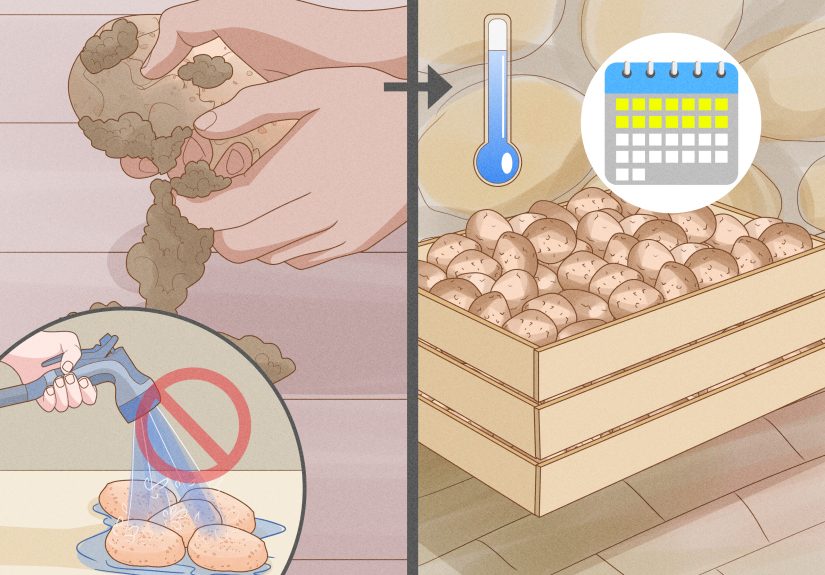
If you want your potatoes to last beyond the immediate victory meal, cure them first. Spread them in a dark, well-ventilated place for about one to two weeks. A cool area with moderate temperatures and high humidity is ideal. Curing helps the skins toughen and minor injuries heal, which improves storage life.
After curing, store potatoes in a dark, cool location with good airflow. Do not wash them before storage. Brush off loose soil instead. Keep them away from light to prevent greening, and do not store them with apples or other fruit that release ethylene, which can shorten storage life.
Check the stored crop every so often and remove any potatoes that soften, rot, or sprout aggressively. One rotten potato cannot literally spoil the whole barrel every time, but it can absolutely ruin the mood.
Conclusion
If you want an easy, satisfying food crop, potatoes are hard to beat. Growing potatoes from potatoes is simple enough for beginners and rewarding enough for experienced gardeners. Start with certified seed potatoes, plant them in loose sunny soil, give them consistent water, hill them as they grow, and harvest when the plants tell you they are ready. That is the core formula.
The beauty of growing potatoes is that the process feels both practical and strangely magical. You plant a chunky little tuber, keep faith for a few months, and then dig up dinner like a treasure hunter with dirt under your fingernails. And honestly, very few vegetables can compete with that kind of drama.
Garden Experience: Real-Life Lessons from Growing Potatoes at Home
One of the most interesting things about learning how to grow potatoes from potatoes is that the best lessons usually come from what happens after you think you have done everything right. On paper, potato growing looks almost suspiciously simple. Cut the seed pieces, plant them, water them, hill them, harvest them. In reality, the garden always adds a few surprise plot twists.
Many gardeners remember their first potato crop because it teaches patience in a very specific way. At first, there is just a row of soil and hope. Then shoots appear, and suddenly everything feels promising. A week later, the plants seem to double in size overnight, and you start imagining baskets of perfect potatoes. That is usually the exact moment weather, weeds, or your own overconfidence tries to intervene.
A common beginner experience is planting potatoes too shallowly. The plants grow beautifully, and then one day you notice a potato peeking through the soil like it is trying to tan. That is when hilling stops feeling like optional garden exercise and starts feeling like a rescue mission. After a few seasons, most gardeners become deeply loyal to hilling because they have seen the difference it makes in both yield and quality.
Watering is another place where experience changes everything. New gardeners often either baby potatoes too much or forget them too often. The best results usually come from steady, boring consistency. Not glamorous, not exciting, just reliable. A potato patch tends to reward calm routines more than bursts of heroic effort. It is the vegetable equivalent of saying, “Please stop overthinking and just be consistent.”
Then there is harvest day, which feels like a cross between unwrapping gifts and digging for buried treasure. Even people who garden regularly get a small thrill from sliding a fork into the soil and turning up a cluster of potatoes. You never completely lose that feeling. It does not matter whether the harvest is huge or modest. The moment a few clean tubers roll out of the dirt, you feel wildly competent.
Experienced growers also learn that not every potato has to be perfect to be useful. Some come out lumpy. Some are tiny. Some look like they were sculpted by a distracted raccoon. They still roast beautifully. They still mash into something glorious. Homegrown potatoes often have more personality than store-bought ones, and that is part of the charm.
Another lesson repeated by countless gardeners is that variety choice matters more than people expect. One year a certain type may thrive, while another struggles with heat, timing, or soil conditions. Keeping notes helps. A simple record of planting date, variety, weather, and harvest quality can turn one decent season into a much better next season.
Perhaps the best long-term experience of growing potatoes is that it changes how you see the crop itself. Potatoes stop being anonymous pantry staples and start feeling like a real seasonal food with texture, timing, and character. You notice the difference between fresh new potatoes and cured storage potatoes. You understand why gardeners fuss over soil texture and moisture. And you gain a little more respect for the humble potato, which, despite its plain reputation, is actually one of the hardest-working stars in the garden.
Once you have grown them successfully, it is hard not to do it again. Potatoes have a way of turning first-time growers into repeat customers. One season becomes two. Two becomes a yearly tradition. And before long, you are standing in the yard, holding a seed catalog, seriously comparing potato varieties as if this is the most normal hobby in the world. To be fair, it is. And it is a delicious one.