Table of Contents >> Show >> Hide
- First, Define What Kind of Diving You Are Teaching
- Start with Safety Before Technique
- Know Your Student Before You Teach the Dive
- Teach the Foundation: Body Line, Balance, and Awareness
- Use a Step-by-Step Teaching Progression
- How to Teach Scuba Diving Skills Safely
- Teach Equalization Early and Often
- Make Buoyancy Control a Core Lesson
- Use Clear Demonstrations and Simple Language
- Correct Common Diving Mistakes
- Build Confidence Through Drills
- Create a Positive Learning Environment
- How to Know When a Student Is Ready to Progress
- Experience-Based Lessons for Teaching Diving
- Conclusion
Teaching diving is a little like teaching someone to flyexcept the landing zone is water, the student is wearing goggles, and gravity has very strong opinions. Whether you are helping a beginner learn a safe pool dive, coaching springboard fundamentals, or preparing students for scuba skills, the goal is the same: build confidence without rushing the process.
Diving looks graceful when done well, but underneath that smooth entry is a careful mix of safety awareness, body control, breathing, communication, and repetition. A good instructor does not simply say, “Jump in.” A good instructor teaches students how to think before they enter the water, how to control their bodies in motion, and how to stay calm when something feels unfamiliar.
This guide explains how to teach diving in a practical, safety-first way. It covers beginner readiness, pool and scuba safety, step-by-step teaching progressions, common mistakes, useful drills, and real-world coaching experience. It is written for swim teachers, youth coaches, aquatic staff, dive professionals, and enthusiastic mentors who want students to learn properlynot just dramatically splash in front of their friends.
First, Define What Kind of Diving You Are Teaching
The word “diving” can mean several different things. Before you teach anything, be clear about the type of diving involved.
Pool or Recreational Headfirst Diving
This usually means teaching someone to enter the water safely from the side of a pool or starting block. The focus is on safe body position, depth awareness, arm placement, shallow-angle entry, and avoiding head, neck, or spinal injuries.
Springboard or Platform Diving
This is the competitive sport of diving. It includes approaches, hurdles, takeoffs, flight positions, spotting, rotations, and clean entries. It requires structured coaching, proper equipment, progressive drills, and strong supervision.
Scuba Diving
Scuba diving involves breathing underwater with specialized equipment. Teaching scuba requires professional certification through a recognized agency. A casual swimmer, no matter how confident, should not teach scuba skills independently without proper instructor credentials.
Freediving or Breath-Hold Diving
Freediving is not simply “holding your breath and going down.” It requires formal safety training, equalization knowledge, rescue awareness, and strict buddy procedures. Students should never practice breath-hold diving alone.
For the rest of this article, “how to teach diving” refers mainly to beginner-safe diving instruction, with added notes for scuba and sport-diving contexts.
Start with Safety Before Technique
The most important diving lesson happens before anyone leaves the deck. Students must understand that diving is not a dare, a party trick, or a good way to impress someone named Kyle. It is a skill with real risk if done carelessly.
Begin every lesson by checking the environment. Is the water deep enough? Is the diving area clearly marked? Are there obstructions? Is the water clear? Is there a lifeguard or trained supervisor present? Are students following pool rules? If any answer makes you hesitate, do not dive.
For pool diving, teach students this simple rule: when in doubt, enter feet first. Headfirst entries should only happen in areas clearly marked for diving and free from obstacles. Never allow students to dive into shallow water, cloudy water, above-ground pools, unfamiliar lakes, rivers, or surf zones where depth and underwater hazards can change quickly.
For scuba instruction, safety begins with certification standards, medical fitness, equipment checks, dive planning, air management, buoyancy control, equalization, and emergency procedures. Students must learn that underwater confidence is built through preparation, not bravado.
Know Your Student Before You Teach the Dive
A diving lesson should match the student, not the instructor’s ego. Before teaching, assess the learner’s swimming ability, comfort in deep water, age, coordination, listening skills, and fear level.
Ask a few simple questions:
- Can the student swim comfortably in deep water?
- Can they float, tread water, and recover to the surface calmly?
- Are they afraid of putting their face in the water?
- Can they follow multi-step instructions?
- Have they had a previous bad experience with water?
If a student is nervous, do not treat fear like a character flaw. Fear is useful information. It tells you where the lesson should begin. A student who is anxious about deep water does not need a lecture about courage; they need smaller steps, patient repetition, and a coach who does not turn the pool deck into a motivational movie scene.
Teach the Foundation: Body Line, Balance, and Awareness
Before a student dives, teach body alignment on land. The body should learn the shape before it learns the splash.
The Streamline Position
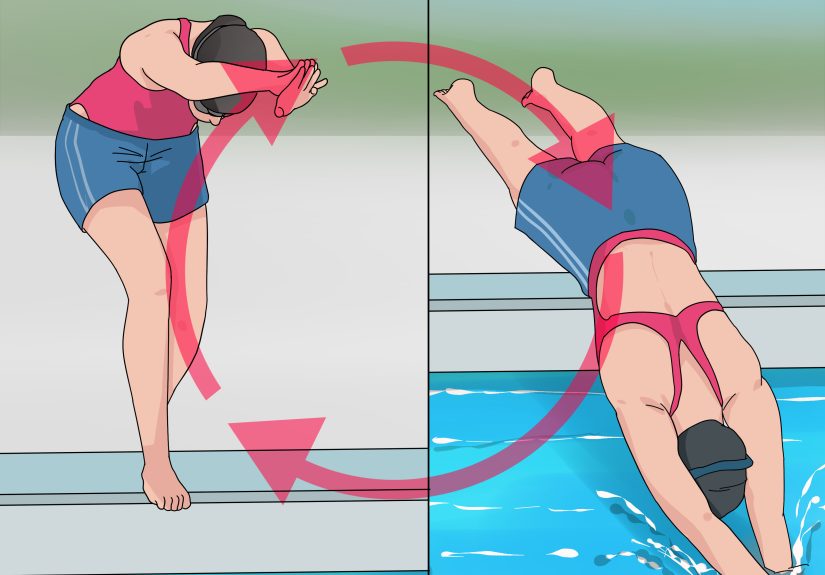
The basic diving shape is a tight streamline: arms extended overhead, hands together, head tucked between the arms, core firm, legs straight, and toes pointed. This position protects the head and helps the body enter the water cleanly.
Chin and Head Position
Many beginners look forward during a dive because they want to see where they are going. Unfortunately, lifting the head can change the body angle and create a belly flop with sound effects. Teach students to keep the head neutral, ears between the arms, and eyes looking toward the hands or water line.
Core Control
A loose body folds in the air. A controlled body travels with purpose. Dryland planks, hollow holds, wall streamlines, and simple balance drills help students feel the difference between floppy and firm.
Use a Step-by-Step Teaching Progression
Good diving instruction moves from easy to difficult. Skipping steps may look efficient, but it usually creates fear, bad habits, or a splash that clears three lounge chairs.
Step 1: Seated Entry
Start at the edge of deep water with the student sitting. Have them place arms in streamline, lean forward gently, and slide into the water hands first. This introduces headfirst direction without height or speed.
Step 2: Kneeling Dive
Once the student is comfortable, move to a kneeling position. One knee stays near the edge while the arms reach forward. The student leans, pushes gently, and enters at a shallow angle. The goal is not distance; the goal is control.
Step 3: Crouching Dive
Next, teach a crouched start with toes gripping the edge, knees bent, hips high enough to encourage forward movement, and arms extended. Students should push forward, not straight down.
Step 4: Standing Dive
Only after the student shows consistent control should you move to a standing dive. Emphasize a shallow-angle entry, strong streamline, and smooth push from the legs.
Step 5: Start or Board-Specific Skills
For swimmers, this may lead to racing starts. For springboard divers, it may lead to approach drills, hurdle mechanics, takeoff timing, and entry practice. These should be taught with appropriate coaching qualifications and facility rules.
How to Teach Scuba Diving Skills Safely
Scuba diving instruction must follow agency standards and should be conducted by qualified instructors. However, the teaching principles are useful to understand. Scuba students usually learn through a sequence: classroom or online knowledge development, confined water practice, and open water application.
Core scuba skills include mask clearing, regulator recovery, controlled breathing, buoyancy control, equalization, safe descents, safe ascents, buddy communication, and emergency procedures. These skills should first be practiced in a calm, controlled environment before students attempt them in open water.
The best scuba instructors avoid information overload. They explain the skill, demonstrate it slowly, let students practice, correct one or two points at a time, and repeat until the skill becomes comfortable. In diving, “comfortable” matters. A student who can perform a skill once while stressed has not truly mastered it. A student who can perform it calmly, repeatedly, and while staying aware of the buddy and surroundings is much closer to real readiness.
Teach Equalization Early and Often
For scuba and freediving, equalization is essential. As a diver descends, pressure changes affect air spaces in the ears and sinuses. Students must learn to equalize early, gently, and frequently. Waiting until pain appears is like waiting until smoke fills the kitchen before checking the oven.
Teach students never to force equalization. If they cannot equalize, they should stop descending, ascend slightly, relax, and try again. If discomfort continues, the dive should be ended. Good instructors normalize this decision so students do not feel embarrassed about protecting their ears.
Make Buoyancy Control a Core Lesson
In scuba, buoyancy control is one of the most important skills a diver can develop. A well-controlled diver can hover, descend, ascend, and move without crashing into the bottom or popping to the surface. Poor buoyancy creates stress, wastes energy, increases air consumption, and can damage fragile underwater environments.
Teach buoyancy as a feeling, not just a button on a buoyancy compensator. Students need to understand breathing control, weighting, trim, body position, and small adjustments. Practice hovering in shallow water, slow ascents, controlled descents, and fin pivots where appropriate. Praise calm control more than speed.
Use Clear Demonstrations and Simple Language
Students learn better when instructions are short and visible. Instead of giving a five-minute speech about hydrodynamics, say, “Arms tight. Head between arms. Push forward. Hold your line.” Then demonstrate.
A good demonstration has three parts:
- Show the skill slowly on land.
- Explain the key safety points.
- Demonstrate in the water or controlled practice area.
After the student tries, give specific feedback. “Good job keeping your arms straight” is more useful than “Nice.” “Next time, keep your chin tucked longer” is better than “Don’t flop.” Students need to know what worked and what to adjust.
Correct Common Diving Mistakes
Mistake 1: Looking Up
Looking up often causes the chest to lift and the hips to drop. Correct it with wall streamlines, seated entries, and the cue “hide your ears with your arms.”
Mistake 2: Diving Down Instead of Forward
Beginners may aim straight toward the bottom. Teach them to push forward at a shallow angle, especially from the pool edge. Use visual targets, such as a floating marker, to encourage forward travel.
Mistake 3: Bent Arms
Bent arms reduce protection and create a sloppy entry. Practice streamline holds on land and have students squeeze their ears with their upper arms.
Mistake 4: Fear at the Edge
Fear usually means the step is too large. Return to seated or kneeling entries. Let the student regain control before progressing.
Mistake 5: Rushing Scuba Skills
In scuba, rushing leads to panic. Slow the lesson down. Let students breathe, signal, reset, and repeat. Calm repetition is the secret sauce, and unlike actual sauce, it does not stain the wetsuit.
Build Confidence Through Drills
Drills help students focus on one piece of the skill at a time. Here are several useful examples.
Dryland Streamline Drill
Have students stand against a wall with arms overhead, ribs down, legs straight, and body tight. This builds awareness of a straight line.
Target Reach Drill
Place a floating target a safe distance from the edge. The student practices reaching toward the target during a kneeling or crouched dive.
Bubble Control Drill
For scuba students, have them practice slow breathing while stationary in shallow water. The goal is calm, steady bubbles and relaxed body language.
Buddy Signal Drill
Teach scuba students hand signals on land first, then practice them underwater. Communication should become automatic before open water distractions appear.
Create a Positive Learning Environment
The way you teach matters as much as what you teach. Diving can make students feel exposed because mistakes are loud. A belly flop is basically the pool clapping back. Keep the mood light, but never mock students.
Use encouragement that rewards effort and control. Celebrate small improvements: a better streamline, a calmer breath, a cleaner push, a smarter decision to stop and reset. These moments build trust.
For youth diving, maintain professional boundaries, visible coaching spaces, and appropriate supervision. Coaches and instructors working with minors should follow athlete-safety policies, background screening rules, and abuse-prevention training required by their organizations.
How to Know When a Student Is Ready to Progress
A student is ready for the next step when they can perform the current skill safely, calmly, and consistently. One lucky attempt does not equal mastery. Look for repeatable control.
For pool diving, readiness may mean the student can hold a streamline, enter at a safe angle, recover comfortably, and follow instructions. For scuba, readiness may mean the student can clear a mask, recover a regulator, equalize, control buoyancy, communicate with a buddy, and respond calmly to simulated problems.
Progress should be earned, not guessed. The safest instructors are not the ones who move fastest. They are the ones who know exactly why the next step is appropriate.
Experience-Based Lessons for Teaching Diving
After teaching diving for a while, you learn that every student brings a different story to the water. Some arrive fearless, which sounds helpful until they sprint toward the deep end like a superhero with no insurance policy. Others arrive cautious, gripping the pool edge as if it has personally promised them safety. Both students need the same thing: structure.
One of the most useful experiences is watching how quickly confidence can change when a lesson is broken into tiny steps. A nervous beginner may refuse a standing dive but happily try a seated entry. After three or four calm attempts, the same student may ask to kneel. Then crouch. Then stand. The instructor did not “remove” the fear; the instructor gave the student enough successful repetitions that fear lost its microphone.
Another important lesson is that students remember your tone. If you sound impatient, they tense up. If you sound careless, they may become careless too. A calm instructor creates calm students. This is especially true in scuba training, where a fogged mask, a dropped regulator, or unexpected water in the nose can make a beginner’s brain shout, “We live here now!” The instructor’s job is to bring the moment back to basics: breathe, signal, pause, solve.
Good teaching also means knowing when not to teach the next skill. There will be days when conditions are wrong, the student is tired, the pool is crowded, or the diver is mentally overloaded. Stopping is not failure. In diving, restraint is a professional skill. The ocean, pool, and springboard will all be there tomorrow. Probably. The pool definitely. The ocean has a busy schedule.
Finally, the best diving lessons are never just about entering water. They teach judgment. Students learn to check depth, respect signs, listen to briefings, inspect equipment, communicate with buddies, and admit discomfort before it becomes danger. That mindset follows them beyond the lesson. A student who learns to pause and assess before diving is not just a better diver; they are a safer human around water.
So, if you want to teach diving well, remember this: make it safe, make it progressive, make it clear, and make it encouraging. The clean entry at the end is wonderful, but the real success is a student who understands why the skill works and how to protect themselves while doing it.
Conclusion
Teaching diving is a responsibility, not just a lesson plan. The instructor must balance excitement with caution, confidence with humility, and technical skill with human patience. Start with safety. Assess the student. Teach body position on land. Progress from seated entries to kneeling, crouching, and standing dives only when the student is ready. For scuba, follow recognized certification standards and emphasize equalization, buoyancy, communication, and calm problem-solving.
The best diving teachers do not rush students toward impressive moves. They build strong foundations, one controlled repetition at a time. When students understand both the “how” and the “why,” diving becomes more than a splashy entrance. It becomes a skill rooted in awareness, discipline, and respect for the water.