Table of Contents >> Show >> Hide
- What Are Homemade Pickles, Exactly?
- Why Make Pickles at Home?
- The Best Cucumbers for Pickling
- Ingredients You Need for Basic Homemade Pickles
- How To Make Pickles Yourself at Home: An Easy Refrigerator Method
- How To Keep Homemade Pickles Crisp
- Favorite Pickle Flavor Variations
- Common Homemade Pickle Mistakes To Avoid
- Can You Ferment Pickles at Home?
- How To Use Homemade Pickles
- Final Thoughts on Making Pickles at Home
- Kitchen Experiences and Lessons From Making Pickles at Home
- SEO Tags
If your idea of domestic bliss includes a jar of cold, crunchy pickles waiting in the fridge like tiny green trophies, you are in the right place. Making pickles at home is one of those kitchen projects that sounds suspiciously old-fashioned until you realize how easy, affordable, and oddly satisfying it is. One minute you have a pile of cucumbers. The next minute you have a homemade condiment that makes sandwiches brighter, burgers happier, and late-night snacking far more respectable.
The best part? You do not need to be a canning wizard with a cellar full of jars and a mysterious family brine recipe written on a flour-dusted index card. For most home cooks, the easiest place to start is with refrigerator pickles: quick, flavorful, crunchy, and low drama. Once you understand the basics, you can branch out into bread-and-butter pickles, spicy pickle chips, garlic dills, and even fermented styles if you want to get a little more adventurous.
In this guide, you will learn how to make pickles yourself at home, what ingredients matter most, how to keep pickles crisp, what mistakes to avoid, and how to customize flavor without turning your cucumbers into a science fair experiment. Let’s get that jar popping.
What Are Homemade Pickles, Exactly?
Pickles are fruits or vegetables preserved in an acidic environment, a salty brine, or both. In plain English, that means you take fresh produce, add a brine that is usually built around vinegar or fermentation, then give it time to develop flavor.
There are three common home styles:
1. Refrigerator pickles
These are the easiest pickles for beginners. You pour a vinegar-based brine over fresh cucumbers, refrigerate them, and wait. They stay crisp, bright, and fresh-tasting, and they do not require water-bath canning.
2. Fresh-pack or quick-process canned pickles
These also use vinegar, but they are processed in a boiling water bath so they can be stored on a shelf. This method is great, but it needs to follow a tested recipe closely because acidity is a safety issue, not just a flavor choice.
3. Fermented pickles
These rely on salt and time rather than vinegar alone. Naturally occurring bacteria create lactic acid, which gives fermented pickles that classic deli-style tang. They are delicious, but they take longer and require a little more attention.
For most people asking how to make pickles yourself at home, refrigerator pickles are the ideal starting point. They are fast, forgiving, and extremely hard to mess up unless you decide that “close enough” is a measurement system.
Why Make Pickles at Home?
Store-bought pickles are fine. Some are even very good. But homemade pickles let you control the salt level, sweetness, garlic, dill, heat, and crunch. Want a bold garlic dill that could scare away a vampire from across the yard? Done. Want sweet bread-and-butter pickles with a little extra mustard seed? Easy. Want spicy pickle chips for burgers that bite back? Absolutely.
Homemade pickles are also a smart way to use up garden cucumbers or that giant farmers market haul you bought in a moment of vegetable optimism. They are budget-friendly, giftable, and wildly useful in the kitchen. A jar of pickles can wake up grain bowls, potato salad, tuna salad, cheese boards, deviled eggs, and plain old turkey sandwiches that need a personality transplant.
The Best Cucumbers for Pickling
Yes, you can pickle many vegetables, but cucumbers are the star of the show here. If you want the best texture, choose pickling cucumbers rather than standard waxed slicing cucumbers. Pickling cucumbers are usually smaller, firmer, and better at staying crisp in brine.
Look for cucumbers that are:
- Fresh and firm
- Free of soft spots or mold
- Small to medium in size
- Used as soon as possible after buying or harvesting
If you are working with very fresh cucumbers from a garden or market, congratulations: you are already halfway to better pickles. Old cucumbers tend to produce softer results, and no amount of wishful thinking or extra dill can fully fix that.
Ingredients You Need for Basic Homemade Pickles
The ingredient list for homemade pickles is simple, but each item matters more than people think.
Cucumbers
The main event. Wash them well and cut off about 1/16 inch from the blossom end. That tiny trim helps reduce enzymes that can soften pickles.
Vinegar
Use commercial vinegar with 5% acidity for safe, reliable pickling. White distilled vinegar gives a clean, sharp flavor and keeps the color bright. Apple cider vinegar adds a slightly mellower, rounder flavor and a warmer color.
Water
Use clean water. In recipes for canned pickles, do not casually add extra water to make the brine “less intense.” That is how people wander from “homemade” into “possibly unsafe.”
Salt
Pickling salt or canning salt is best because it does not contain additives that can cloud the brine. Table salt can work for some refrigerator pickles, but pickling salt is the better choice for clarity and consistency.
Sugar
Optional, but helpful depending on the style. Sugar balances acidity. Dill pickles may use little to none. Bread-and-butter pickles practically invite it to the party.
Flavorings
Fresh dill, garlic, mustard seed, peppercorns, red pepper flakes, coriander, bay leaf, and onion are all classic. Pickles are like jazz: structure matters, but there is room for riffs.
How To Make Pickles Yourself at Home: An Easy Refrigerator Method
If you want a beginner-friendly recipe, this is the one. It is simple, delicious, and does not require canning equipment.
Ingredients
- 1 1/2 pounds pickling cucumbers
- 2 cups white vinegar
- 2 cups water
- 2 tablespoons pickling salt
- 1 to 2 tablespoons sugar, optional
- 4 cloves garlic, smashed
- 4 to 6 sprigs fresh dill
- 1 teaspoon mustard seeds
- 1 teaspoon black peppercorns
- 1/2 teaspoon red pepper flakes, optional
Equipment
- 2 clean pint jars or 1 large quart jar
- A saucepan
- A knife and cutting board
Step 1: Prep the cucumbers
Wash the cucumbers thoroughly. Slice off the blossom ends. Then cut them into spears, rounds, or thick slices depending on how you want to use them. Spears are great for snacking; chips are perfect for burgers and sandwiches.
Step 2: Pack the jars
Divide the garlic, dill, mustard seeds, peppercorns, and red pepper flakes between the jars. Pack the cucumbers in tightly, but do not crush them like you are settling a score.
Step 3: Make the brine
In a saucepan, combine the vinegar, water, salt, and sugar if using. Bring the mixture to a gentle simmer, stirring just until the salt and sugar dissolve.
Step 4: Pour and cool
Carefully pour the hot brine over the cucumbers until they are fully covered. Let the jars cool to room temperature.
Step 5: Refrigerate
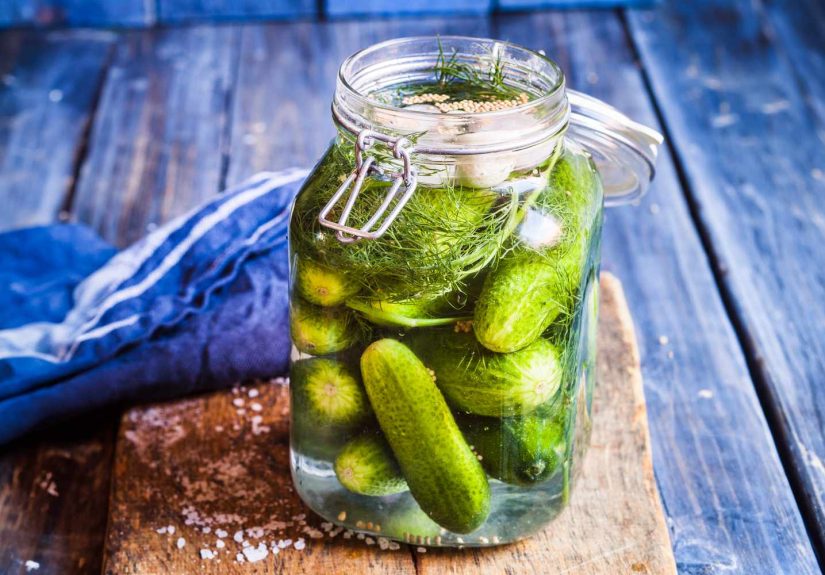
Seal the jars and refrigerate. You can nibble them after 24 hours, but the flavor gets noticeably better after 2 to 3 days. After about a week, they really start acting like proper pickles.
How To Keep Homemade Pickles Crisp
Crunch is the holy grail of homemade pickles. Soft pickles are disappointing in a very specific, very personal way. Here is how to improve your odds of getting that snap:
- Start with very fresh cucumbers. Older cucumbers are more likely to go limp.
- Trim the blossom end. This small step can make a real difference in texture.
- Use pickling cucumbers. They are naturally better suited to the job.
- Do not overcook them. Heat is useful, but too much softens texture.
- Chill them properly. Refrigerator pickles stay crisper when stored cold and undisturbed.
- Consider a calcium chloride crisping product. These are commonly sold with canning supplies and can help maintain crunch when used as directed.
Some older recipes suggest lime or alum. Those methods are more complicated, less necessary, and easier to misuse. For the average home cook, fresh cucumbers plus proper brine plus cold storage is the crispness trifecta.
Favorite Pickle Flavor Variations
Classic garlic dill pickles
Add extra fresh dill and a little more garlic. This is the crowd-pleaser and the one most people picture when they hear the word “pickle.”
Bread-and-butter pickles
Use sliced cucumbers with onion, more sugar, mustard seed, and celery seed. Sweet, tangy, and excellent on fried chicken sandwiches.
Spicy pickles
Add jalapeño slices, red pepper flakes, or a dried chile to each jar. Suddenly your pickle has opinions.
Half-sour style refrigerator pickles
Use less sugar, plenty of garlic and dill, and let the cucumbers chill in the brine for a shorter time if you want a fresher, greener taste.
Pickled mixed vegetables
Once you understand the method, you can use carrots, onions, radishes, green beans, or cauliflower in refrigerator-style pickles. Different vegetables absorb brine at different speeds, so texture and timing will vary.
Common Homemade Pickle Mistakes To Avoid
Using weak or homemade vinegar for canning
For canned pickles, acidity matters. Use commercial vinegar with the correct strength and follow tested ratios.
Changing the brine too much
Adding a little extra garlic is fine. Randomly cutting the vinegar in half because you felt brave is not.
Using old produce
Pickles do not magically turn tired cucumbers into premium crunch sticks. Start with good produce.
Reusing brine that already soaked vegetables
Once vegetables sit in the brine, the acidity changes. For best quality and safety, make a fresh batch when starting over.
Confusing refrigerated pickles with shelf-stable pickles
If a recipe has not been processed for canning, it belongs in the refrigerator. A sealed-looking lid is not the same thing as a safely canned product.
Can You Ferment Pickles at Home?
Yes, absolutely. Fermented pickles are delicious and have a more complex sour flavor than vinegar-only pickles. They are usually made by submerging cucumbers in a salt brine and letting beneficial bacteria do the preserving work over time.
That said, fermentation is not the best first project for everyone. Temperature, salt concentration, and submersion matter a lot. If you want to try it, use a tested method, keep the cucumbers fully submerged, and learn the signs of normal fermentation versus spoilage. It is rewarding, but it is more of a slow dance than a quick two-step.
How To Use Homemade Pickles
Once your pickles are ready, the obvious move is eating them directly from the jar while standing under the refrigerator light like a goblin with excellent taste. But beyond that, homemade pickles are wildly versatile.
- Layer them on burgers and sandwiches
- Chop them into tuna or chicken salad
- Add them to potato salad or pasta salad
- Serve them with barbecue and grilled meats
- Use the brine in dressings or marinades
- Set them out on snack boards with cheese and cured meats
Homemade pickles also make thoughtful gifts. A neat jar with a handwritten label says, “I care about you enough to preserve cucumbers on your behalf.” That is friendship.
Final Thoughts on Making Pickles at Home
Learning how to make pickles yourself at home is one of the most practical and satisfying kitchen skills you can pick up. It does not require fancy tools, a culinary degree, or a grandmother named Dot who has been pickling since 1958, though that would certainly add atmosphere.
Start with refrigerator pickles if you are new. Focus on fresh cucumbers, a balanced brine, clean jars, and patience. Once you get comfortable, try new spice combinations, sweeter profiles, or fermented batches. Before long, you will have strong opinions about garlic levels, dill placement, and whether pickle chips are superior to spears. That is when you know the hobby has taken hold.
And honestly? There are worse obsessions than turning produce into crunchy little jars of joy.
Kitchen Experiences and Lessons From Making Pickles at Home
The first time I made pickles at home, I treated the whole thing like a grand culinary event. I bought cucumbers with the seriousness of someone selecting diamonds, lined up jars like I was prepping for a laboratory trial, and measured spices with the kind of intensity usually reserved for baking wedding cakes. Then I waited one whole day, opened a jar early, and discovered a hard truth: impatient pickles are basically cucumbers with ambition. They were not bad, but they were not yet the bright, garlicky, salty little miracles I had imagined.
That early batch taught me something useful: pickles reward patience more than drama. You do not need to overcomplicate the process. What matters is using fresh produce, building a good brine, and giving the flavors enough time to settle in. By day three, those same pickles had transformed. The garlic tasted deeper, the dill had spread through the jar, and the cucumbers had developed that satisfying tang that makes you immediately want a sandwich nearby.
Another memorable lesson came from a batch made with giant cucumbers that had clearly missed their calling as baseball bats. I did not want to waste them, so I sliced them up and pickled them anyway. Technically, I made pickles. Emotionally, I made a cautionary tale. The flavor was fine, but the texture was softer and less crisp than I wanted. Since then, I have become almost annoyingly loyal to small, firm pickling cucumbers. They just behave better.
I have also learned that homemade pickles are one of the easiest ways to make a kitchen feel lively. A pot of warm vinegar, dill, and spice smells like something useful is happening. The jars look beautiful in the fridge. Guests always notice them. And there is a quiet little thrill in saying, “Oh, those? I made them,” as casually as possible, even though internally you are doing a full victory lap.
One of my favorite experiences is making a few different jars at once: a classic dill, a spicy version with jalapeño, and a slightly sweet batch for people who like bread-and-butter pickles. It turns the project into something creative instead of repetitive. You start noticing how small changes in garlic, sugar, or spice shift the whole personality of the jar. One pickle tastes sharp and assertive, another tastes mellow and sandwich-friendly, and another practically demands to be served next to fried chicken.
Over time, making pickles at home stops feeling like a novelty and starts becoming a habit. Cucumbers go on sale, and suddenly you are reaching for vinegar instead of just another salad plan. Leftover dill has a purpose. Empty jars become opportunities. And the whole process reminds you that preserving food at home does not have to be complicated to feel meaningful. Sometimes it is just a simple act of turning something fresh into something lasting, flavorful, and a little bit special.