Table of Contents >> Show >> Hide
- Quick Answer: How to Make 2/3 Cup with a 1/4 Cup
- Why the Math Works
- The Best Ways to Measure 2/3 Cup with a 1/4 Cup
- Dry Ingredients vs. Liquid Ingredients
- When Accuracy Really Matters
- Common Mistakes to Avoid
- Handy Conversion Cheat Sheet
- Real-Life Recipe Examples
- Final Thoughts
- Extra Kitchen Experiences: Why This Tiny Conversion Matters More Than You Think
- SEO Tags
If you have ever stood in your kitchen holding a 1/4-cup measure and staring at a recipe that demands 2/3 cup, welcome to one of home cooking’s most annoying little math quizzes. It always seems to happen when your hands are dusty with flour, your butter is melting too fast, and your brain has already clocked out for snack break.
The good news is that making 2/3 cup with a 1/4 cup is not hard at all. You do not need wizard powers, a calculator, or a sudden passion for fractions. You just need a simple conversion trick, a little kitchen confidence, and an understanding of when “close enough” is actually close enough. This guide walks you through the easiest ways to measure 2/3 cup using a 1/4 cup, explains the math in plain English, and shows you how to avoid common measuring mistakes that can mess with a recipe.
Quick Answer: How to Make 2/3 Cup with a 1/4 Cup
The most accurate answer is this: 2/3 cup equals 10 tablespoons plus 2 teaspoons. Since 1/4 cup equals 4 tablespoons, you can build 2/3 cup in a few practical ways.
| Method | How to Measure It | Accuracy |
|---|---|---|
| Best exact method | Fill the 1/4 cup twice, then add 2 tablespoons + 2 teaspoons | Very accurate |
| Math shortcut | 1/4 cup + 1/4 cup + 1/6 cup | Exact, if you can measure 1/6 cup another way |
| Rough visual method | Fill the 1/4 cup twice, then fill it about 2/3 full one more time | Okay for casual cooking, not ideal for baking |
If you are baking cookies, cake, or anything that gets cranky when your measurements are off, use the exact method. If you are making soup, rice, chili, or pancake batter for a lazy Saturday morning, the rough method may be good enough.
Why the Math Works
Start with the basics
To understand how to make 2/3 cup with a 1/4 cup, it helps to break the measurements into smaller kitchen units.
Here is the simple chain:
- 1 cup = 16 tablespoons
- 2/3 cup = 16 × 2/3 = 10 2/3 tablespoons
- 2/3 tablespoon = 2 teaspoons
- So, 2/3 cup = 10 tablespoons + 2 teaspoons
Now let’s connect that to your 1/4-cup tool:
- 1/4 cup = 4 tablespoons
- Two 1/4 cups = 1/2 cup = 8 tablespoons
- You still need 2 tablespoons + 2 teaspoons more
That is why the most precise method is so straightforward: two full 1/4-cup measures, plus 2 tablespoons and 2 teaspoons.
Another way to think about it
You can also think of 2/3 cup as:
2/3 cup = 1/2 cup + 1/6 cup
Since two 1/4-cup fills make 1/2 cup, you only need another 1/6 cup. And 1/6 cup equals 2 tablespoons plus 2 teaspoons. Same result, less fraction drama.
The Best Ways to Measure 2/3 Cup with a 1/4 Cup
Method 1: Exact and easy
This is the method you should use for most recipes:
- Fill the 1/4 cup once.
- Fill the 1/4 cup a second time.
- Add 2 tablespoons.
- Add 2 teaspoons.
This gives you exactly 2/3 cup. It is the safest choice for baking recipes where too much flour can make muffins dense, too little milk can thicken batter, or an off-ratio sauce can go from silky to strange in a hurry.
Method 2: Use the 1/4 cup as your main tool
If you really want to rely mostly on the 1/4 cup, the math still works:
2/3 cup = 1/4 cup + 1/4 cup + 2/3 of a 1/4 cup
That last part is the tricky bit. Two-thirds of a 1/4 cup equals 1/6 cup. You can eyeball that by filling the 1/4 cup about two-thirds full. This works best for forgiving dishes such as stews, oatmeal, smoothies, marinades, and rustic sauces. It is not the method to trust with macarons, pie crust, or your aunt’s “famous” holiday cake that everyone pretends not to judge.
Method 3: Use weight when possible
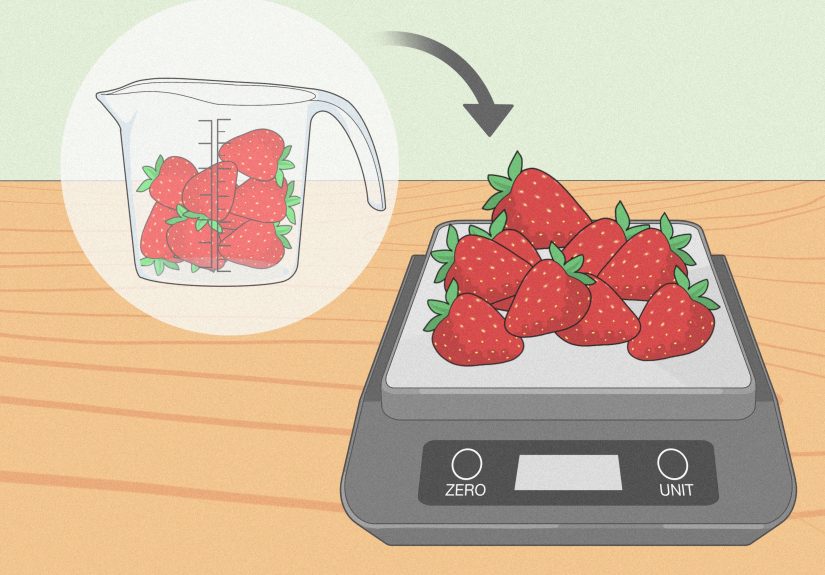
If you are measuring an ingredient like flour, sugar, oats, or cocoa powder for baking, a kitchen scale is often the smartest option. Volume measurements are useful, but weight is more precise because ingredients settle, pack, and fluff differently. A scoop of flour can vary a lot depending on whether you spooned it lightly or dug into the bag like a determined raccoon.
If the recipe includes grams, use them. That is often the easiest way to avoid conversion problems entirely.
Dry Ingredients vs. Liquid Ingredients
When people search for how to make 2/3 cup with a 1/4 cup, they are usually thinking about volume. But how you fill that volume matters too.
For dry ingredients
Use a dry measuring cup. Spoon the ingredient into the cup until it overflows slightly, then level it off with a straight edge. This is especially important for flour. If you scoop directly into a bag of flour, you can pack too much into the cup and accidentally turn tender baked goods into edible bricks.
For liquids
Use a liquid measuring cup when possible and read it at eye level. If you are only using a 1/4-cup measure, fill carefully and avoid overpouring. For liquids like oil, milk, broth, or melted butter, small measurement errors can still affect texture and consistency, even if the recipe is not strictly baking.
For sticky ingredients
Honey, peanut butter, sour cream, yogurt, and syrup like to cling to measuring cups as if they pay rent there. Lightly greasing the measuring cup can help sticky ingredients release more cleanly. Also, be patient. Scraping out half the ingredient and leaving the rest behind is not really measuring; it is more like emotional guessing.
When Accuracy Really Matters
Baking is less forgiving
If your recipe is for brownies, biscuits, muffins, pie dough, or bread, precision matters more. Baking is a chain reaction. Too much flour can dry things out. Too little liquid can make batter too thick. Too much sugar can affect spread, browning, and texture. In those cases, use exact conversions instead of eyeballing the last bit of the 1/4 cup.
Cooking gives you more wiggle room
If you are making soup, casserole, sauce, chili, or a grain dish, tiny differences may not matter much. A rough fill of that final partial cup can work just fine. Cooking usually allows room for adjustment. You can add more broth, simmer longer, thin a sauce, or season to taste. Baking, on the other hand, often just stares back at you from the oven and refuses to negotiate.
Common Mistakes to Avoid
- Guessing the full 2/3 cup in one try: It sounds fast, but it is rarely accurate.
- Using a liquid cup for dry ingredients: The shapes are different, and dry ingredients are harder to level properly in liquid cups.
- Packing flour by accident: Spoon and level instead of scooping.
- Forgetting the teaspoons: Two tablespoons alone only get you from 1/2 cup to 5/8 cup. You still need 2 teaspoons.
- Assuming all ingredients behave the same: Flour, brown sugar, oats, and chopped nuts each settle differently.
- Eyeballing in fussy recipes: Fine for soup, risky for sponge cake.
Handy Conversion Cheat Sheet
| Measurement | Tablespoons | Teaspoons |
|---|---|---|
| 1/4 cup | 4 tablespoons | 12 teaspoons |
| 1/3 cup | 5 tablespoons + 1 teaspoon | 16 teaspoons |
| 1/2 cup | 8 tablespoons | 24 teaspoons |
| 2/3 cup | 10 tablespoons + 2 teaspoons | 32 teaspoons |
| 3/4 cup | 12 tablespoons | 36 teaspoons |
Real-Life Recipe Examples
Example 1: Pancake batter
A recipe calls for 2/3 cup milk, but you only have a 1/4 cup. Easy fix: measure 1/4 cup twice, then add 2 tablespoons and 2 teaspoons. Since pancake batter is forgiving, you could also use the rough final partial-cup trick if needed.
Example 2: Brownie mix-in
You need 2/3 cup chocolate chips. Since chips are dry and easy to scoop, use the exact method. The good news is that no one complains if you accidentally add three extra chocolate chips. That is called generosity.
Example 3: Sugar for cookies
You need 2/3 cup sugar. Use two full 1/4 cups, then 2 tablespoons and 2 teaspoons. This is one of those times where being precise helps the cookies spread and brown the way the recipe intended.
Final Thoughts
So, how do you make 2/3 cup with a 1/4 cup? The cleanest answer is this: fill the 1/4 cup twice, then add 2 tablespoons and 2 teaspoons. That gives you an exact 2/3 cup without guesswork.
If you are cooking something casual, you can get by with two full 1/4-cup measures plus a roughly two-thirds-full 1/4 cup. But for baking, accuracy matters, and exact measurements are worth the extra few seconds.
The bigger lesson is that kitchen conversions do not have to feel intimidating. Once you know a few basics, recipes become much easier to scale, fix, and understand. And that means fewer panicked internet searches, fewer mystery textures, and fewer moments where you stare at a measuring cup like it has personally betrayed you.
Extra Kitchen Experiences: Why This Tiny Conversion Matters More Than You Think
One of the funniest things about cooking is that a tiny measurement problem can feel huge in the moment. You can be calm, organized, and fully capable of making dinner, then suddenly a recipe asks for 2/3 cup and you only have a 1/4 cup. Now you are standing in the kitchen acting like you are about to retake middle school math. It is humbling.
I have seen this happen most often when people are halfway through a recipe and do not want to stop. Maybe the butter is already browning. Maybe the onions are soft and ready. Maybe the kids are asking when dinner will be ready every forty-five seconds. In that moment, nobody wants a long lecture on kitchen fractions. They want a simple answer that works. That is why this conversion is so useful. It solves a real problem in a real kitchen, where time is short and people are hungry.
There is also something surprisingly satisfying about understanding the “why” behind the measurement. Once you know that 2/3 cup equals 10 tablespoons plus 2 teaspoons, you stop feeling stuck. You start seeing recipes as flexible, not fragile. You realize that measuring is not magic. It is just a system. And once you understand the system, you cook with more confidence.
This comes up a lot when people scale recipes up or down. Maybe you are halving a cake recipe, making a smaller batch of mac and cheese, or trying not to produce enough mashed potatoes for a family reunion when only two people live in your house. Measurements like 2/3 cup show up everywhere, and not every measuring set includes that size. Knowing how to build it from tools you already own can save money, time, and counter space.
It also teaches a useful kitchen habit: pay attention to the type of recipe you are making. In baking, precision is your friend. In everyday cooking, flexibility is often fine. Once you learn that difference, you stop overthinking every tablespoon in a soup and stop underthinking the flour in a biscuit recipe. That balance makes cooking less stressful and much more enjoyable.
And honestly, there is a confidence boost that comes from solving a small kitchen puzzle without leaving the room, opening ten tabs, or texting the one relative who somehow knows every measurement by heart. The next time a recipe throws an awkward fraction at you, you will not freeze. You will know what to do.
That is why this little conversion is worth learning. It is not just about getting to 2/3 cup. It is about becoming the kind of cook who can adapt, improvise, and keep moving. In a good kitchen, that matters. In a busy kitchen, that matters even more.