Table of Contents >> Show >> Hide
- What Is a Desert Temple in Minecraft?
- Where Desert Temples Spawn
- How to Spot a Desert Temple Fast
- The Best Ways to Find a Desert Temple
- Use Commands If Cheats Are Enabled
- Use the Seed to Find a Desert Temple
- What to Do When You Find One
- Best Loot You Might Find
- Archaeology Tips for Desert Temples
- Mistakes That Make Finding Temples Harder
- Quick Strategy for Finding a Desert Temple Early Game
- Final Thoughts
- Player Experience: What Finding a Desert Temple Actually Feels Like
- SEO Tags
If Minecraft had a version of treasure hunting that didn’t require a pirate hat, it would absolutely be the desert temple. One minute you’re jogging across a peaceful sea of sand, wondering why you still haven’t found a single cactus worth bragging about. The next minute, two sandstone towers pop up on the horizon like the game is winking at you and saying, “Congratulations, you may now risk your inventory for shiny stuff.” That’s the magic of the desert temple.
Also called a desert pyramid, this structure is one of the most exciting places to loot early in a survival world. It can reward you with valuable treasure, rare items, and, in newer Minecraft versions, archaeology goodies that make the whole adventure feel like Indiana Jones by way of blocky chaos. But first, you have to find one. And that’s where many players end up doing the digital equivalent of wandering in circles and yelling at sand.
This guide breaks down the smartest ways to find a desert temple in Minecraft, how to recognize one quickly, what tools make the search easier, and how not to turn the loot room into a very expensive crater. Whether you’re playing casually, speed-looting on a new world, or just want the bragging rights of saying, “I saw the temple before the chunks fully loaded,” these tips will help.
What Is a Desert Temple in Minecraft?
A desert temple is a naturally generated structure that appears in desert biomes. It is made mostly of sandstone and usually has two tall front towers marked with orange terracotta patterns. From a distance, it stands out nicely against the sand, assuming you’re not busy sprinting straight past it while chasing a rabbit for reasons even you can’t explain.
Inside, the temple looks fairly calm at first. That calm is lying to you. Beneath the patterned center floor is a hidden chamber with four loot chests and a trap powered by TNT. In newer versions, desert temples are even more useful because they can include suspicious sand for archaeology and can also reward players with the Dune Armor Trim. In other words, this structure isn’t just decorative sandstone with good posture. It is a legitimate jackpot.
Where Desert Temples Spawn
The first rule of finding a desert temple is charmingly obvious: search deserts. These temples generate in desert biomes, so your goal is not to roam randomly across forests, frozen peaks, and swamps while “hoping for the best.” Your goal is to locate a wide desert and search it efficiently.
Desert biomes are usually easy to recognize thanks to their huge stretches of sand, cacti, dead bushes, and open sightlines. They may also contain desert villages, desert wells, fossils, and pillager outposts. If you find any of those, that is your cue that you are in the right neighborhood. A desert village does not guarantee a temple nearby, but it does confirm you’re hunting in the correct biome, which is already better than wandering through a birch forest pretending optimism is a strategy.
How to Spot a Desert Temple Fast
1. Look for the twin towers
The easiest visual clue is the temple’s front face. Desert temples typically have two towers and orange markings that contrast with the pale sandstone. In a flat desert, those towers can be visible from a surprising distance, especially if your render distance is decent and you’re traveling on high ground.
2. Search from hills, dunes, and ridgelines
If the desert terrain is uneven, stop climbing down into every dip and start using elevation to your advantage. Scan from dunes, ridges, and sandstone rises. The higher your viewpoint, the better your odds of spotting the temple’s outline before you waste ten minutes investigating a suspiciously temple-shaped sand hill that is, in fact, just a hill.
3. Watch for partially buried structures
Not every desert temple appears in perfect postcard condition. Some generate partially buried, which means only part of the roof, towers, or upper windows may be visible. If you see odd sandstone geometry sticking out of the sand, investigate it. Minecraft loves making treasure look slightly inconvenient.
The Best Ways to Find a Desert Temple
Explore in straight lines, not random loops
Many players waste time by zigzagging all over a desert biome. A better method is to move in long, deliberate lines across the biome, then shift over and sweep back in the opposite direction. Think of it like mowing a lawn, except the lawn is trying to hide treasure and occasionally set you on fire with sunlight and bad decisions.
Use biome clues
If you find a desert village or desert well, keep searching the surrounding desert instead of leaving immediately. These structures don’t guarantee a temple, but they strongly suggest you’re in a solid region for one. Wide desert biomes are especially worth searching because the more desert terrain the game has to work with, the better your chances of stumbling across a temple naturally.
Travel light and fast
If your goal is specifically to find a temple, don’t bring half your storage room with you. Pack food, a bed, a shovel, a pickaxe, a water bucket, and maybe a few blocks for quick climbing. Speed matters. The faster you can cross a biome, the more territory you can check before night falls and starts spawning mobs that want to discuss your life choices with swords.
Use a mount when possible
Horses make desert exploration much faster, and flat sandy terrain is ideal for riding. If you have access to one early, bring it. A horse won’t magically summon a temple, but it will help you cover enough ground to find one before you become emotionally attached to the fifth desert well of the day.
Use Commands If Cheats Are Enabled
If you are playing in a world where commands are allowed, the /locate structure command is the quickest legitimate shortcut. It can point you toward the nearest matching structure. The exact structure name can vary a bit by edition and version, so check your game’s autocomplete if needed. This is especially useful in testing worlds, creative mode, or when you’ve already spent an hour exploring and the desert has started to feel personal.
Some players think using commands ruins the fun. Others think spending forty-five minutes squinting at sandstone is the part that ruins the fun. You are allowed to choose peace.
Use the Seed to Find a Desert Temple
If you know your world seed, you can use a seed map or temple finder to locate desert temples much faster. This method is popular because it lets you see where structures are generated before you travel there in-game. It’s especially handy if you want a temple near spawn, want to plan a survival route, or are trying to chain together a village, temple, ruined portal, and other useful structures in one efficient run.
That said, seed tools are best treated like helpful scouts, not all-knowing wizards. Always verify the location in-game, and make sure the app settings match your exact version and edition. A mismatch can send you on a scenic desert tour you did not ask for.
What to Do When You Find One
Enter carefully
The front entrance may be obvious, but sometimes sand partly covers it. In those cases, check the upper openings or dig around the sides until you can get in safely. Don’t just smash downward through the center floor like a caffeinated mole. That is how players accidentally meet TNT on a first-name basis.
Find the loot chamber
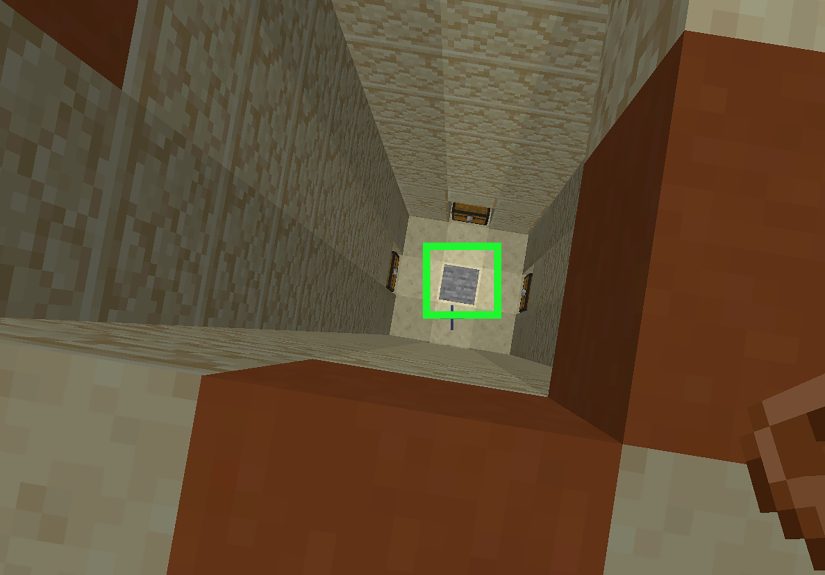
In the middle of the temple floor, you’ll usually see a colorful pattern. Under that center area is the hidden chamber with the four chests. The classic danger is the stone pressure plate at the bottom, which activates TNT underneath if triggered.
Disarm the trap first
The smartest move is to dig down from the side of the center chamber instead of dropping straight in. Once you reach the bottom safely, break the pressure plate before touching anything else. After that, loot the chests at your leisure and enjoy the deeply satisfying feeling of outsmarting a trap built from geometry and spite.
Best Loot You Might Find
Desert temple loot can be excellent, especially early in survival. Depending on your version and luck, you may find valuables such as iron ingots, gold ingots, emeralds, diamonds, horse armor, and other useful treasure. In modern Minecraft, desert pyramids can also reward players with the Dune Armor Trim, which makes these structures even more appealing if you enjoy customizing gear.
And if your world includes archaeology features, you should also search carefully for suspicious sand. Use a brush, not brute force. Smashing suspicious sand destroys the reward, which is a very on-brand Minecraft way of teaching patience.
Archaeology Tips for Desert Temples
Newer Minecraft updates gave desert temples an extra layer of value through archaeology. In addition to the classic hidden chamber, some desert pyramids contain buried areas with suspicious sand. This means a temple can now pay off twice: once through chest loot and again through careful brushing.
If you want to maximize your haul, slow down after you clear the TNT trap. Look around buried rooms and sandy interior sections rather than assuming the four chests are the entire prize. A brush should be part of your desert expedition kit if you are playing a version where archaeology is active. It’s one of those tools that feels optional until it suddenly turns a “nice find” into a “why am I yelling at my monitor in celebration?” moment.
Mistakes That Make Finding Temples Harder
Leaving the desert too early
A lot of players search for two minutes, find nothing, and wander back into grasslands. Big mistake. Temples are not guaranteed to sit next to spawn and wave at you.
Ignoring suspicious sandstone shapes
If you notice a half-buried tower, straight line, or orange pattern, investigate it. Desert temples do not always generate in picture-perfect form.
Using the wrong version settings on a seed finder
If your seed map is set to the wrong edition or version, the structure locations can be off. Double-check before committing to a thousand-block road trip.
Dropping into the center shaft too quickly
Finding the temple is only half the battle. Blowing up the loot room one second later is the kind of efficiency nobody wants.
Quick Strategy for Finding a Desert Temple Early Game
If you want the shortest practical plan, do this: spawn in, gather basic food and tools, locate the nearest desert biome, search it in broad straight lines, check villages and wells as biome confirmation, and scan for the temple’s twin towers or roofline. If cheats are enabled, use the locate command. If you know the seed, use a seed finder. Once you reach the structure, enter carefully, disarm the trap, loot the chests, and brush any suspicious sand you find.
That strategy is simple, fast, and repeatable. It’s also much better than “run toward the horizon and trust destiny,” which is how you end up with three dead bushes, one angry husk, and no temple.
Final Thoughts
Finding a desert temple in Minecraft is part exploration, part pattern recognition, and part resisting the urge to panic-dig through the floor. The good news is that once you know what to look for, the process becomes much easier. Search wide deserts, use height to scan the landscape, keep an eye out for partially buried sandstone, and take advantage of commands or seed tools when appropriate. Then, when you finally spot those towers in the distance, pause for one dramatic second and enjoy the moment. You earned it.
Just remember: the real treasure isn’t the diamonds, the trim, or the archaeology loot. It’s the deeply satisfying experience of surviving the temple without detonating yourself into a cautionary tale. Although, to be fair, the diamonds are still pretty great.
Player Experience: What Finding a Desert Temple Actually Feels Like
One of the reasons desert temples are so memorable is that they create a very specific kind of Minecraft story. You usually don’t just “find a structure.” You remember the whole chain of events around it. Maybe you started out looking for a village and wandered into a huge desert by accident. Maybe you were low on food, the sun was going down, and you were already planning to turn back when the temple appeared on the horizon like the game had suddenly decided to reward stubbornness. Desert temples are excellent at turning ordinary exploration into a mini adventure.
In early survival worlds, finding one can feel like hitting a lucky streak in a casino built entirely out of sandstone. You walk in poor and hopeful, and if things go well, you walk out with enough loot to upgrade your next few hours of gameplay. That feeling gets even stronger when the temple is near a village or ruined portal, because suddenly your world stops feeling random and starts feeling generous. It’s the Minecraft equivalent of finding a parking spot right in front of the store.
There’s also a unique tension to these structures that makes them more exciting than many other early-game finds. You know there is treasure underneath you, but you also know the floor is hiding a trap. Even experienced players tend to slow down a little when they reach the center pattern. That moment never gets old. It’s a weird little ritual: stare at the floor, remember the TNT, act confident, then immediately become very careful.
The archaeology angle adds another layer to the experience. Desert temples are no longer just smash-and-grab loot stops. They reward patience. After you deal with the obvious danger, the temple can turn into a quiet treasure hunt where you brush suspicious sand and wait to see what appears. That shift in pace is part of what makes modern desert temples so enjoyable. First they test your reflexes, then they test whether you can stop acting like a goblin for five minutes.
For a lot of players, desert temples also become landmarks in memory. You remember the first one you found naturally, the first one you almost blew up, and the first one that made you think, “Okay, this seed might actually be amazing.” They’re simple structures, but they punch above their weight in fun. When people talk about classic Minecraft exploration, desert temples are almost always part of that conversation for a reason. They are easy to understand, satisfying to discover, risky enough to stay exciting, and profitable enough to matter. That’s a pretty great recipe for an adventure made of blocks.