Table of Contents >> Show >> Hide
- What Is an Alcohol Breath Test?
- Why Breath Can Reveal Alcohol in the Body
- How the Test Actually Works
- The Two Main Technologies Behind Breath Tests
- Screening Device vs. Evidential Breath Test
- How Breath Alcohol Becomes a BAC Estimate
- Why Timing Matters So Much
- What Can Affect Breath Test Accuracy?
- What the Results Mean
- Common Uses for Alcohol Breath Testing
- Can a Breath Test Be Wrong?
- The Big Takeaway
- Real-World Experiences Related to Alcohol Breath Testing
- SEO Tags
If you have ever seen someone blow into a handheld device on the side of the road, you already know the basic idea of an alcohol breath test: breathe out, wait a second, and let a machine decide whether the night has gone from “I’m fine” to “please step over here.” But the science behind it is more interesting than most people realize.
An alcohol breath test works because alcohol does not politely stay in your stomach after a drink. It gets absorbed into your bloodstream, circulates through your body, and a portion of it moves into the air in your lungs. When you exhale, that breath carries tiny amounts of alcohol vapor. A breath-testing device measures that vapor and uses it to estimate how much alcohol is in your system.
That is the short version. The longer version involves chemistry, physics, body temperature, timing, device design, and one inconvenient truth: your body does not always behave like a perfectly calibrated laboratory instrument. This guide breaks down how an alcohol breath test works, what the results mean, and why the number on the screen is not magic, even if it sometimes feels like it.
What Is an Alcohol Breath Test?
An alcohol breath test is a noninvasive way to estimate alcohol concentration by analyzing a person’s exhaled breath. In everyday conversation, people often call the device a breathalyzer, but that term is commonly used as a catch-all rather than a precise technical label.
The main number measured in a breath test is usually BrAC, or breath alcohol concentration. This is related to BAC, or blood alcohol concentration, which is the amount of alcohol in a person’s blood. Breath tests do not draw blood. Instead, they estimate blood alcohol levels by measuring alcohol in deep lung breath and applying a conversion formula.
That is why alcohol breath testing is so popular in law enforcement, workplace testing, treatment programs, and ignition interlock systems. It is fast, portable, and a lot easier than asking someone to roll up a sleeve and hand over a vein at a traffic stop.
Why Breath Can Reveal Alcohol in the Body
To understand how an alcohol breath test works, start with what happens after a drink. Alcohol, specifically ethanol, is absorbed through the digestive system and enters the bloodstream. From there, it travels throughout the body, including the lungs.
Inside the lungs are tiny air sacs called alveoli. These are the places where gases move between blood and breath. Oxygen goes in. Carbon dioxide comes out. Ethanol, being volatile, also passes from blood into the air in the lungs. That means the air you exhale contains alcohol vapor that reflects alcohol circulating in your body.
This is the scientific foundation of a breath alcohol test. If alcohol is present in the blood, some of it will show up in exhaled breath. The deeper and more consistent the breath sample, the better the device can estimate alcohol concentration.
How the Test Actually Works
Step 1: You blow into the device
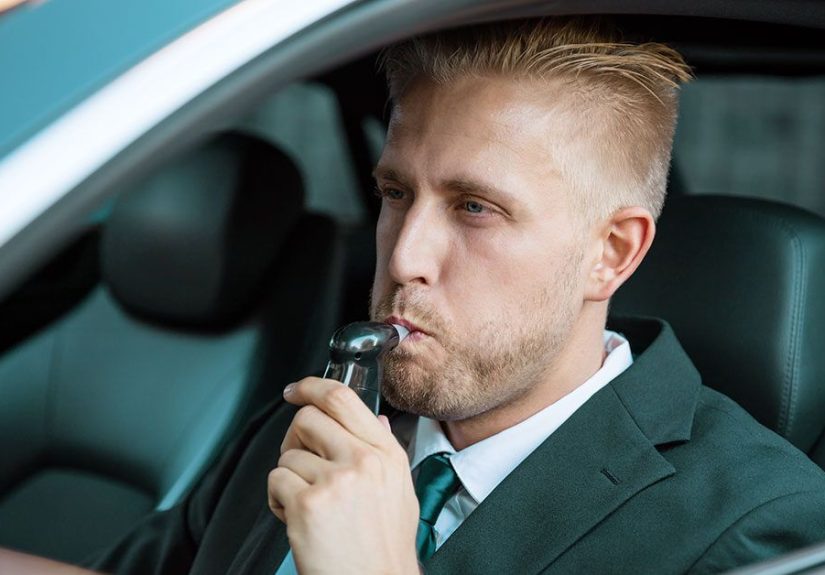
The person being tested blows steadily through a mouthpiece. The goal is not a tiny puff like you are cooling soup. The device typically needs a sustained breath sample, often from deep lung air, because that sample is more representative of alcohol exchange in the lungs.
Step 2: The device captures and analyzes the sample
Once the breath enters the instrument, the machine measures the alcohol in the sample. Depending on the device, it may use one of several technologies, but the two most common are fuel cell sensors and infrared spectroscopy.
Step 3: The device calculates a result
The instrument converts the measured breath alcohol into a reading. Some devices show a screening result. Others produce a more formal evidential result used in regulated or legal settings. In many systems, the device is calibrated to estimate how the breath reading corresponds to blood alcohol concentration.
The Two Main Technologies Behind Breath Tests
Fuel cell technology
Fuel cell breath testers use an electrochemical reaction. When ethanol in the breath sample reaches the sensor, it gets oxidized and generates an electrical current. The stronger the current, the more alcohol is present. Fuel cell devices are common in portable screening tools because they are compact, fairly specific to alcohol, and designed for quick readings.
Think of it as chemistry doing math at high speed. Blow in, ethanol reacts, electrons get busy, and the device translates that little electrical event into a number that can ruin a perfectly good excuse.
Infrared spectroscopy
Evidential breath-testing instruments often use infrared light absorption. Ethanol molecules absorb infrared light at specific wavelengths. The device shines infrared light through the breath sample and measures how much of that light is absorbed. More absorption means more alcohol molecules are present.
This method is especially useful in formal testing environments because it can identify and quantify alcohol with high precision when the device is properly maintained, calibrated, and operated according to procedure.
Screening Device vs. Evidential Breath Test
Not every alcohol breath test serves the same purpose. Some are built for fast screening. Others are designed for evidentiary use.
Screening devices
Portable screening devices are often used roadside, in workplace settings, or for preliminary checks. They are useful for quickly detecting the presence of alcohol and estimating whether someone may be over a threshold. They are fast and practical, but they are not always the final word.
Evidential devices
Evidential breath-testing instruments are used when a more formal, documented result is needed. These devices usually follow stricter rules, such as observation periods, calibration standards, confirmation procedures, and printed records. In many jurisdictions, this is the type of test that matters most in an official DUI or DWI process.
In plain English, a screening device says, “Something is going on here.” An evidential device says, “Here is the number, here is the procedure, and here is the paper trail.”
How Breath Alcohol Becomes a BAC Estimate
One of the most important concepts in a DUI breath test is the relationship between alcohol in breath and alcohol in blood. Breath-test systems use a standard conversion assumption to estimate BAC from breath alcohol. A commonly used ratio in U.S. practice is based on the idea that a certain amount of alcohol in breath corresponds to a larger amount in blood.
This is useful, but it is not perfect. Human beings are not identical soda cans with barcodes. The actual relationship between breath alcohol and blood alcohol can vary based on body temperature, breathing pattern, the timing of drinking, and individual physiology. That is why breath tests are extremely useful, but also why proper testing procedure matters so much.
Why Timing Matters So Much
If someone drinks alcohol and immediately takes a breath test, the result can be affected by mouth alcohol. That means alcohol left in the mouth, throat, or upper digestive tract can temporarily inflate the reading, even though the goal of the test is to measure alcohol from deep lung breath.
This is one reason formal testing procedures often require an observation period before a confirmation test. During that time, the person should not eat, drink, smoke, burp, or place anything in the mouth. The purpose is simple: reduce the chance that the machine is measuring a recent swig instead of the body’s actual absorbed alcohol level.
Timing also matters because alcohol absorption is not instant. A person’s BAC can continue to rise after the last drink. That means someone who feels “done drinking” may still be climbing toward a higher alcohol level while walking to the car, arguing with a friend, or confidently saying, “No, seriously, I’m good.”
What Can Affect Breath Test Accuracy?
A good breath test is not just about the machine. It is also about the body, the environment, and the method.
1. Recent drinking
If alcohol is still lingering in the mouth, the reading may be artificially high.
2. Burping or regurgitation
These can bring alcohol vapor from the stomach or esophagus into the mouth, which may interfere with the result.
3. Breathing pattern
Hyperventilating, holding the breath, or giving an incomplete sample can affect the concentration of alcohol in the breath that reaches the sensor.
4. Body temperature
Higher body temperature can raise breath alcohol readings because it changes how volatile substances behave and how alcohol exchanges in the lungs.
5. Device calibration and maintenance
Even the best instrument needs regular checks. A breath tester that is not properly calibrated can drift and become less reliable.
6. Certain chemicals or medical situations
Some compounds can potentially interfere with particular devices, and unusual medical circumstances may complicate interpretation. However, the classic everyday culprit remains much less dramatic: recent alcohol in the mouth.
What the Results Mean
Breath test results are usually reported as a number that reflects alcohol concentration. In many U.S. driving contexts, a BAC of 0.08% is the standard adult per se limit, though lower thresholds may apply for commercial drivers, young drivers, workplace testing, treatment settings, or ignition interlocks.
But the bigger point is this: the number is not just about legality. It is also about impairment. Judgment, reaction time, coordination, divided attention, and decision-making can all worsen before someone reaches a dramatic-looking number. In other words, the body does not wait for a courtroom threshold before it starts making bad choices look surprisingly reasonable.
Common Uses for Alcohol Breath Testing
Roadside enforcement
Police may use portable devices for initial screening and then use an evidential breath test later under more controlled conditions.
Ignition interlock programs
These systems require a driver to provide a breath sample before a vehicle can start. If the breath alcohol reading is over the preset limit, the car stays parked.
Workplace and transportation testing
Some jobs, especially safety-sensitive positions, use alcohol breath testing because it gives rapid results and helps document current alcohol exposure rather than past use.
Treatment and monitoring programs
Breath tests may also be used in recovery and supervision settings to verify current sobriety.
Can a Breath Test Be Wrong?
Yes, a breath test can be wrong in the sense that no real-world test is flawless. That does not make breath tests useless. It simply means they are tools, and tools work best when used correctly.
A properly conducted evidential breath test can be highly reliable. But reliability depends on following the rules: the right device, proper calibration, trained operators, correct waiting periods, a clean breath sample, and documentation of the test process.
That is why formal systems include safeguards. The science is solid. The procedure is what keeps the science from being sabotaged by human shortcuts, rushed testing, or a sandwich eaten at exactly the wrong time.
The Big Takeaway
So, how does an alcohol breath test work? It measures alcohol vapor in exhaled breath, usually from deep lung air, and uses that measurement to estimate how much alcohol is in the body. The device may rely on fuel cell chemistry, infrared light absorption, or another approved method. The final reading depends on both science and procedure.
At its best, the alcohol breath test is a clever mix of biology and engineering. Your body supplies the sample. Your lungs reveal the chemistry. The machine reads the evidence. And the result offers a quick snapshot of alcohol exposure in real time.
It is not wizardry. It is not guesswork. It is chemistry with a deadline.
Real-World Experiences Related to Alcohol Breath Testing
For many people, alcohol breath testing feels less like a science lesson and more like a jolt of reality. The experience often starts with confidence. Someone has had a couple of drinks, feels talkative, laughs a little too hard at a joke that was not actually that good, and honestly believes everything is under control. Then the breath test enters the scene and suddenly turns vibes into numbers.
One common experience is surprise. People often assume that if they are walking normally and speaking clearly, their alcohol level must be low. But that is not always how alcohol works. Tolerance, adrenaline, and personality can make someone seem perfectly fine while the breath test tells a less flattering story. The person who says, “I barely had anything,” is sometimes the same person staring at the result as if the machine has betrayed the friendship.
Another common experience is confusion about timing. Someone may stop drinking, sit around for a while, and assume their alcohol level is dropping fast. In reality, alcohol absorption may still be happening. A person can test higher later than expected, especially if the last drink was recent or consumed quickly. This is one of the most misunderstood parts of alcohol breath testing. People think the drinking ended, so the risk ended too. The body, unfortunately, does not always follow that schedule.
There is also the nervousness factor. Even sober or low-level drinkers can become anxious during a breath test. Breathing too weakly, blowing too briefly, or trying too hard to “pass” can make the process more awkward. Some people are so tense they practically turn the mouthpiece into a wind tunnel experiment. Others puff once and look proud, as though they just completed an Olympic event, only to be told they need to provide a deeper sample.
In treatment or monitoring settings, the experience can feel very different. There, the breath test is less about punishment and more about accountability. For some people, it becomes a routine check that supports recovery. It may not be glamorous, but it can create a clear moment of honesty. The device does not argue, does not judge, and does not fall for creative storytelling.
Ignition interlock users often describe a different relationship with breath testing altogether. For them, the test becomes part of daily life. It is no longer a dramatic event on the roadside. It is a built-in checkpoint before the car starts. That changes the experience from surprise enforcement to repeated behavior control, which can be frustrating, humbling, or useful depending on the person and the circumstances.
What all these experiences have in common is this: an alcohol breath test takes something invisible and makes it visible. A person may feel fine, sound fine, or insist they are fine, but the breath test creates a measurable snapshot that can challenge assumptions in seconds. That is why the experience often sticks in people’s memory. It is not just a number on a screen. It is a moment when chemistry cuts through confidence and reality clears its throat.