Table of Contents >> Show >> Hide
- Medicine Is Not Chess, but the Mental Overlap Is Real
- Chess Trains Pattern Recognition Without Worshipping Guesswork
- It Sharpens Differential Thinking
- It Teaches You to Respect Hidden Threats
- Chess Makes Time Pressure Feel Less Like a Personal Attack
- It Rewards Reflection, Not Ego
- It Can Strengthen Focus in an Age of Cognitive Overload
- Chess Also Teaches Humility, Which Medicine Never Has Enough Of
- Where the Chess Analogy Breaks Down
- How Physicians Can Use Chess as Practical Mental Cross-Training
- Why Chess Fits Especially Well in Modern Medicine
- Experience: What It Feels Like When a Chess Mindset Shows Up in Medicine
- Conclusion
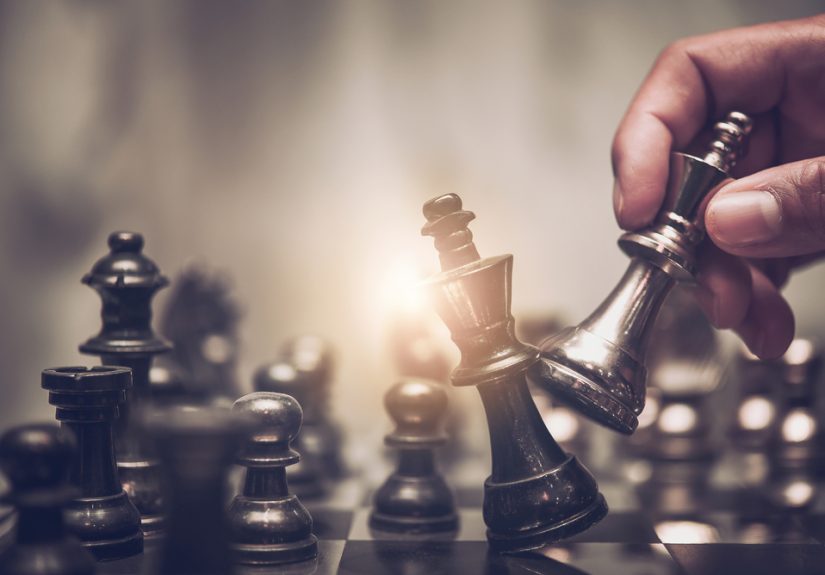
Medicine and chess look like distant cousins who only meet at awkward family reunions. One lives in the fluorescent glow of hospitals and clinics. The other lives on 64 squares with tiny wooden monarchs and an unreasonable number of opinions about the Sicilian Defense. But spend enough time in both worlds, and the overlap becomes hard to ignore.
Both chess and medicine reward pattern recognition, disciplined thinking, humility under pressure, and the ability to act without pretending uncertainty does not exist. Both punish overconfidence. Both tempt you into making a flashy move before you have actually understood the position. And both can make you look brilliant one moment and deeply confused the next.
To be clear, playing chess does not magically turn anyone into a great physician. A sharp endgame does not teach bedside manner, and knowing how to spring a fork does not help much if you cannot listen to a frightened patient. But chess can train several mental habits that map surprisingly well to excellent clinical practice. It can help physicians think more clearly, slow down when needed, anticipate complications, review mistakes honestly, and become more comfortable making decisions when perfect information simply does not exist.
In other words, chess will not hand you a white coat. It may, however, help you deserve one a little more.
Medicine Is Not Chess, but the Mental Overlap Is Real
Modern medicine is full of decisions made under uncertainty. A physician gathers clues from history, physical exam, labs, imaging, and the patient’s lived experience, then builds a working explanation that can change as new information arrives. That process is part pattern recognition, part analysis, part intuition, part communication, and part damage control for the fact that humans are gloriously imperfect thinkers.
Chess works the same mental muscles in a cleaner, less messy setting. A position on the board asks a series of quiet but demanding questions: What matters most here? What is the threat? What am I missing? What happens if my first idea is wrong? What is the best move now, not in fantasy world, but on this actual board?
A physician asks similar questions every day. What is the most likely diagnosis? What dangerous alternative cannot be missed? Which detail is signal and which is noise? What should be treated now, and what can wait? What does the patient understand, fear, or value in this moment?
That is why chess can be so useful. It gives the mind a structured place to practice disciplined thinking before the stakes become a human being instead of a rook.
Chess Trains Pattern Recognition Without Worshipping Guesswork
One of the best-known insights in chess expertise is that strong players do not calculate everything from scratch. They recognize meaningful patterns. They see familiar structures, weak squares, tactical motifs, and recurring threats. That recognition helps them narrow the field of reasonable choices before deeper calculation begins.
Experienced physicians do something similar. A seasoned internist does not stare at every case as though humanity has invented disease five minutes ago. They notice constellations of findings. A rash plus joint pain plus kidney involvement means something. Chest pain plus diaphoresis plus radiation means something. Confusion plus fever plus neck stiffness means something, and probably not “let’s see how tomorrow goes.”
Chess reinforces the idea that expertise is not random brilliance. It is stored experience organized into usable patterns. That matters in medicine because pattern recognition is powerful, but it can also become dangerous when it turns lazy. The skilled physician, like the skilled chess player, recognizes the pattern and then checks whether the position truly fits.
That last step is crucial. Bad chess players see one tactic and leap. Bad clinicians see one familiar story and anchor too soon. Chess teaches a more useful habit: recognize first, verify second, commit third.
It Sharpens Differential Thinking
If you want a short definition of a differential diagnosis, here it is: a ranked list of possible explanations competing for truth. Chess players live inside ranked lists. Every move is a mini differential. Candidate move one looks attractive. Candidate move two is safer. Candidate move three is weird but tactically justified. Candidate move four loses the queen and your self-respect.
That process mirrors good medical reasoning. When a patient presents with shortness of breath, the best physician does not cling to the first plausible explanation like a desperate passenger clinging to an inflatable flamingo. They generate alternatives, weigh probabilities, identify red flags, and think through consequences. Common things are common, yes. But dangerous things are dangerous, and rare things have an irritating habit of showing up during busy clinic days.
Chess helps because it normalizes the act of holding multiple possibilities in mind at once. It teaches that the first idea is not always the best one, and the most obvious move may hide a tactical disaster two turns later. In medicine, that translates into stronger differentials, better prioritization, and fewer avoidable diagnostic blind spots.
It Teaches You to Respect Hidden Threats
Beginner chess players often lose because they focus on their own plans and ignore the opponent’s threats. They think, “My move is clever,” right before discovering that their bishop has been hanging for three moves and their king is one bad decision away from unemployment.
In clinical care, the same cognitive trap appears all the time. A physician may become so focused on confirming one diagnosis that they overlook the dangerous alternative. They may become enamored with a tidy story and miss the small inconsistency that changes everything. They may order tests that support the favored theory while ignoring findings that do not fit.
Chess trains the habit of asking, before every move, “What is my opponent threatening?” Medicine benefits from a parallel question: “What am I about to miss?” That one question can improve rounds, chart review, team discussion, and handoffs. It creates mental space for a broader differential, a backup plan, and a little humility, which is cheaper than malpractice and better for everyone involved.
Chess Makes Time Pressure Feel Less Like a Personal Attack
Physicians make decisions in conditions that are rarely ideal. The clinic is running behind. The pager is loud. The chart is a novel written by ten coauthors and edited by chaos. The patient is worried. The family wants answers. Somewhere, an inbox notification is breeding.
Chess does not replicate the emotional stakes of medicine, but it does teach decision-making under time pressure. You learn to manage the clock, choose what deserves deep calculation, and recognize when perfection is impossible. You also learn that some positions require speed, while others demand a deliberate pause before disaster arrives dressed as efficiency.
That is a useful lesson for physicians. Good clinicians are not just smart; they are strategically paced. They know when to move quickly, when to ask for help, and when a sixty-second pause can prevent a six-hour mistake. Chess makes that rhythm more natural. It teaches tempo, triage, and the value of not panicking just because the situation has become noisy.
It Rewards Reflection, Not Ego
One of the healthiest habits in chess is the post-game review. You replay the moves, identify turning points, and discover where the game slipped away. Usually the answer is not “the universe was unfair.” Usually the answer is “I missed something obvious, misjudged the position, or got cocky and deserved what happened.” Very humbling. Very educational.
Medicine needs that same spirit. Great physicians do not simply collect wins and bury losses in the backyard. They revisit cases, especially the uncomfortable ones. They ask what cues were missed, what assumptions went unchallenged, what communication failed, and what system issue made the error more likely. Morbidity and mortality conferences exist for a reason. Reflection is not a ritual of shame; it is how skill grows up.
Chess quietly trains people to separate identity from error. You can make a bad move and still become a stronger player if you study it honestly. The same is true in medicine. Defensive pride blocks growth. Thoughtful review builds it.
It Can Strengthen Focus in an Age of Cognitive Overload
Clinical work is mentally expensive. A physician may have to synthesize symptoms, probabilities, guidelines, medications, social context, patient preferences, chart clutter, and team input, often while being interrupted by messages that seem to arrive from another dimension. Cognitive load is not a theory in medicine. It is Tuesday.
Chess offers a compact form of attention training. A serious game asks you to track the whole board, suppress impulsive moves, remember plans, calculate consequences, and stay engaged without drifting into mental static. Over time, that kind of practice can reinforce concentration, working memory, and disciplined sequencing.
For physicians, the payoff is not that chess turns the brain into a supercomputer. It is that chess can make sustained attention feel more trainable. It encourages the habit of pausing, scanning, prioritizing, and returning to the main problem after distraction. Those are deeply practical clinical skills.
Chess Also Teaches Humility, Which Medicine Never Has Enough Of
Nothing cures arrogance like a board game in which a twelve-year-old can calmly dismantle your plan while eating a granola bar. Chess is brutally honest. It does not care about your title, your confidence, or the intensity with which you stare at the board. If your position is bad, it remains bad no matter how eloquently you explain it.
That is healthy training for physicians. Medicine requires confidence, but it punishes false certainty. The best doctors are decisive without becoming rigid. They can say, “Here is my leading diagnosis,” while also saying, “Here is what would make me rethink it.” Chess normalizes that posture. Every position contains uncertainty. Every move carries tradeoffs. Every conclusion remains vulnerable to new information.
That mindset protects patients. It also makes colleagues more likely to trust you, because nothing is more exhausting than working with someone who is wrong at full volume.
Where the Chess Analogy Breaks Down
This is the part where we save the article from becoming unbearably smug.
Patients are not pieces. Illness is not a game. There is no checkmate in compassionate care, and nobody wins because they made a clever move on rounds. Medicine is a human profession before it is an intellectual one. A physician can be excellent at pattern recognition and still fail if they cannot listen, explain, comfort, or collaborate.
Chess can sharpen reasoning, but it does not automatically build empathy. It does not teach informed consent, shared decision-making, cultural humility, or how to sit with a family during a painful conversation. Those skills must be practiced directly, intentionally, and repeatedly. A better physician is not simply a better thinker. A better physician is a better partner to patients.
So the real lesson is not that chess replaces the human side of medicine. It is that chess can strengthen the cognitive side, freeing more energy for the human side to show up well.
How Physicians Can Use Chess as Practical Mental Cross-Training
You do not need to become a tournament player or begin announcing “interesting position” during staff meetings. A modest chess habit can still be useful.
Use short games to practice disciplined decision-making
Rapid or blitz games can train calm under time pressure, but only if you review them afterward and learn from recurring mistakes.
Review losses more seriously than wins
That is where the educational gold lives. The same principle applies to difficult cases in clinical work.
Practice asking better questions
Before each move, ask: What changed? What is the threat? What am I assuming? What is the safer alternative? Those questions transfer beautifully to patient care.
Use chess to build metacognition
Notice your patterns. Do you rush when you feel behind? Overcomplicate winning positions? Ignore quiet moves? The answers may sound suspiciously familiar in a hospital setting.
Why Chess Fits Especially Well in Modern Medicine
Medicine today is not suffering from a shortage of information. It is suffering from a shortage of clean attention, reflective space, and reliable decision hygiene. Physicians face cognitive bias, administrative overload, burnout, fragmented data, and increasing pressure to make good decisions in increasingly complex systems.
That is exactly why chess feels relevant. It is a low-cost, high-discipline practice in structured thinking. It teaches you to slow down without freezing, to plan without fantasizing, to adapt without panicking, and to review without self-destruction. It also happens to be a pleasant way to be humbled by reality, which is one of the more useful continuing education experiences available.
No, chess will not teach you how to break bad news, negotiate goals of care, or earn a patient’s trust. But it can help you become the kind of physician whose mind is a little clearer, whose reasoning is a little cleaner, and whose decisions are a little less vulnerable to noise, haste, and ego.
That is not everything in medicine. It is not even most of it. But it is far from nothing.
Experience: What It Feels Like When a Chess Mindset Shows Up in Medicine
In real clinical life, the benefit of chess rarely arrives with dramatic music. It usually shows up in small moments that almost look ordinary.
It feels like walking into a patient room and resisting the urge to decide too early. The story sounds familiar, but something is slightly off. Instead of forcing the case into the first recognizable pattern, the physician pauses the way a chess player pauses before making the “obvious” move. That brief hesitation creates room for a better question, a more accurate differential, or the one missing detail that changes the whole position.
It feels like getting comfortable with the fact that every case has candidate moves. One test now, one test later, one consult immediately, one treatment started empirically, one diagnosis held loosely instead of married in public after five minutes. Chess teaches that not every reasonable move is equal, and sometimes the best move is simply the one that keeps the position safe while more information develops. That mindset can make a physician less impulsive and more strategically patient.
It also feels like becoming less emotionally attached to being right on the first try. Chess players lose games, review them, and come back tomorrow. Physicians, of course, work in a far more serious arena, but the internal discipline is similar. The useful question is not “How do I protect my pride?” It is “What did I miss, and how do I see it earlier next time?” Over time, that habit can make case review feel less like self-punishment and more like skill-building.
A chess mindset in medicine also shows up during rounds and team discussions. Strong players are used to explaining plans, defending lines, and revising them when a better move appears. In the hospital, that can translate into clearer presentations, more transparent reasoning, and better collaboration. Instead of sounding certain for the sake of appearance, the physician can say, “Here is my leading thought, here are the dangerous alternatives, and here is what would make me change course.” That kind of clarity is reassuring because it is honest.
Then there is the experience of handling pressure. In chess, the clock can create panic. In medicine, the pressure is obviously more meaningful, but the mental response can be similar: tunnel vision, rushed thinking, overconfidence, or analysis paralysis. Physicians who have practiced staying calm in complex positions may find it easier to create mental structure in chaos. Not because they are emotionally detached, but because they have rehearsed the act of sorting signal from noise while under strain.
And finally, there is the quieter experience: enjoyment. Medicine can become so burdened by documentation, inboxes, and administrative friction that physicians forget what disciplined thinking feels like when it is still a craft. Chess can restore some of that pleasure. It reminds the mind that complexity can be challenging without being soul-crushing, and that careful reasoning can still feel elegant.
That may be the most underrated benefit of all. A physician who protects curiosity, reflection, and mental sharpness is not just better at diagnosis. They are more likely to remain fully present in a profession that constantly tests presence. In that sense, chess does not merely sharpen the physician’s mind. It helps preserve the part of the physician that still wants to think well.
Conclusion
Chess can make you a better physician not because medicine is a game, but because medicine demands the same disciplined habits that strong chess players practice all the time: pattern recognition, strategic patience, bias checking, reflective review, humility, and calm decision-making under pressure.
The board is simpler than the clinic, of course. It has fixed rules, visible pieces, and no worried family member asking whether everything will be okay. But that simplicity is part of its value. Chess is a clean laboratory for messy human thinking. It lets physicians practice how to think before real lives depend on the next move.
And in a profession where reasoning quality can shape diagnosis, safety, trust, and outcomes, that is a habit worth cultivating.