Table of Contents >> Show >> Hide
- Why This Obscure Handheld Game Matters
- Understanding the RF Protocol Before Touching a Radio
- OOK, Manchester Encoding, and Why Simple RF Still Works
- The Tools Behind the Investigation
- From Radio Waves to Packets
- What the Protocol Reveals About the Game Design
- RF Protocol Hacking as Digital Archaeology
- Legal and Ethical Boundaries
- Why This Topic Is Still Relevant
- Practical Lessons From the P-O-X RF Protocol
- Experience Notes: What It Feels Like to Hack an Old RF Game
- Conclusion
Note: This article is written for educational, historical, and legal hardware research. RF reverse engineering should be performed only on devices you own, in a controlled environment, and within applicable radio regulations.
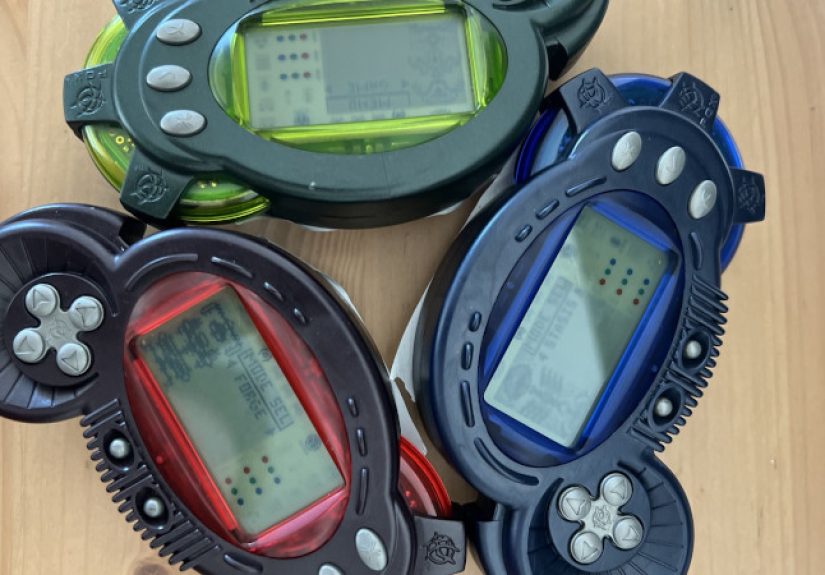
Some retro gadgets become legends because they changed the world. Others become legends because they disappeared so quickly that they feel like something a kid imagined during a long car ride. Hasbro’s P-O-X sits cheerfully in the second category: a strange early-2000s handheld game where tiny alien creatures battled wirelessly using radio signals. It was part toy, part strategy game, part “wait, this thing had wireless multiplayer before my phone had a color screen?”
The story gets even better when modern hardware hackers start asking the big question: how did this odd little handheld game actually communicate? That question leads into the world of RF protocol hacking, software-defined radio, packet analysis, modulation, Manchester encoding, checksums, and the kind of patient troubleshooting that makes coffee nervous.
Hacking the RF protocol of an obscure handheld game is not just nostalgia with antennas. It is a compact lesson in how wireless systems work, how old consumer electronics solved problems with limited memory and battery life, and why reverse engineering often feels like archaeologyexcept the ruins occasionally transmit at 315 MHz.
Why This Obscure Handheld Game Matters
When people remember classic handheld gaming, they usually jump to the Game Boy, Game Gear, or maybe the Tamagotchi if they still feel guilty about digital pet neglect. P-O-X was different. Released by Hasbro around 2001, it allowed players to build alien creatures from parts, assign simple battle behavior, and let those creatures fight other nearby units wirelessly.
That was unusual for its time. Mainstream handheld systems often depended on cables or dedicated accessories for multiplayer. P-O-X instead used low-power RF communication so a player’s creature could encounter another player’s creature without a formal link session. It was asynchronous, mysterious, and very ahead of its toy-aisle pay grade.
The game’s commercial life was short, partly because its disease-and-invasion theme landed awkwardly in late 2001. Yet its technical design remained fascinating. Years later, reverse engineer Zachary Ennenga investigated the system and showed how public records, patents, SDR tools, and careful packet analysis could reveal the game’s wireless behavior.
Understanding the RF Protocol Before Touching a Radio
The first lesson in RF protocol reverse engineering is surprisingly calm: do not start by wildly clicking buttons and hoping the universe sends you bits. Start with research. Any RF-emitting consumer device sold in the United States usually has compliance history, FCC-related information, or patent paperwork that can reveal clues.
For P-O-X, public documentation pointed toward several important details: the system used low-power radio communication, discussed operation around 315 MHz in the United States, and described possible data rates, packet structure, integrity checking, and modulation approaches. The patent material referenced Manchester encoding, On-Off Keying, CRC validation, and packet timing concepts. In plain English: the toy was not just shouting random alien gossip into the void. It had structure.
That matters because reverse engineering is easier when you can form testable guesses. The likely questions become:
- What frequency does the device use?
- Is the modulation OOK, ASK, FSK, or something else?
- What is the approximate baud rate?
- Does the packet contain a preamble and sync pattern?
- How is game data packed into bytes?
- Is there a checksum or CRC?
Each answer narrows the mystery. Instead of searching an ocean, you are checking a pond with a very suspicious duck in it.
OOK, Manchester Encoding, and Why Simple RF Still Works
Many low-cost wireless devices use simple modulation because simple means cheap, battery-friendly, and good enough. P-O-X appears to have used On-Off Keying, or OOK, a form of amplitude-based signaling where the presence of a signal can represent one state and the absence of a signal can represent another.
OOK is not glamorous. It will not arrive wearing sunglasses and saying “enterprise-grade.” But it is practical. Garage remotes, sensors, toys, and older wireless gadgets often used similar ideas because they could be implemented with inexpensive RF hardware.
Manchester encoding adds another layer. Instead of representing bits only as long highs or lows, Manchester encoding uses transitions to help keep timing recoverable and reduce ambiguity. That is useful when receivers are cheap, signals are noisy, and the hardware would rather save batteries than perform Olympic-level digital signal processing.
The Preamble and Sync Pattern
Wireless packets often begin with a preamble, a repeated pattern that helps the receiver wake up, lock timing, and recognize that meaningful data is arriving. After the preamble comes a sync pattern, which says, in effect, “Stop stretching; the real packet starts now.”
In the P-O-X analysis, the reverse-engineering process identified repeating signal patterns, a sync sequence, and a fixed packet size after decoding. That is classic RF detective work: capture, visualize, measure, hypothesize, test, and repeat until the packet stops looking like abstract art and starts looking like a data structure.
The Tools Behind the Investigation
The modern RF reverse-engineering toolbox is powerful, affordable, and slightly dangerous to anyone who enjoys sleeping. A basic investigation may involve an SDR receiver, signal-analysis software, and a healthy respect for radio law.
Software-Defined Radio
A software-defined radio, or SDR, lets software handle tasks that once required specialized radio hardware. Instead of buying one receiver for one purpose, researchers can tune, capture, and inspect many kinds of signals using a flexible device and software tools.
Popular SDR learning ecosystems include GNU Radio, RTL-SDR-based receivers, and HackRF-style hardware. GNU Radio is especially useful because it lets researchers build signal-processing flowgraphs: input, filtering, demodulation, visualization, and output can be connected like technical LEGO bricks with fewer foot injuries.
Signal Visualization
Tools such as Inspectrum help researchers inspect captured RF data visually. For OOK signals, the amplitude plot can reveal bursts, pauses, timing intervals, and repeated structures. Once you can see the signal, you can measure symbol duration and compare it to suspected baud rates.
For P-O-X, this kind of inspection helped validate the working theory: the signal behaved like OOK, the timing aligned with the lower data-rate figures, and the decoded structure showed recognizable patterns.
From Radio Waves to Packets
The magical moment in any RF protocol hacking project is when a noisy waveform becomes a stream of bits, and those bits become bytes, and those bytes become recognizable information. It feels like finding a label on a treasure map that says “Treasure, probably.”
In P-O-X, the packet needed to carry enough information for another unit to simulate a battle. That meant it likely included the creature’s head, body, and tail parts; hit points; player or unit identifier; creature name; color version; and the simple battle behavior known as the WAD system.
The clever part was packing. A toy with limited bandwidth and memory cannot casually send bloated data like a modern web page loading fourteen tracking scripts to display one sentence. It must be efficient. Names could be encoded with a limited character set. Battle choices could fit into two-bit fields. Colors could fit into two bits. Body part IDs and hit points could be squeezed into compact positions.
CRC and Data Integrity
A cyclic redundancy check, or CRC, helps a receiver decide whether a packet looks valid. It does not make the data secret, and it is not encryption. It is more like a spelling check for packets: “This message seems intact” or “This message fell down the stairs.”
The P-O-X research found that the final bytes matched CRC behavior, specifically aligning with a CRC-16/XMODEM-style check in the analysis. That discovery is important because it explains how the handheld could ignore corrupted packets and avoid treating random RF noise as a terrifying alien with excellent cheekbones.
What the Protocol Reveals About the Game Design
The RF protocol shows that P-O-X was designed around asynchronous encounters. Rather than requiring two players to negotiate a live battle session, each unit could broadcast enough data about its creature for another unit to compute the outcome independently.
That is elegant. It reduces the need for complex handshaking, acknowledgments, retransmissions, and constant coordination. In a toy designed for kids, low cost, and battery operation, that simplicity makes sense. The protocol’s job was not to support competitive esports. It was to let alien critters bump into each other invisibly across a playground.
This is also why reverse engineering old toys is so rewarding. The constraints are visible. Every bit has a reason. Every shortcut reveals a design tradeoff. You can almost hear the original engineers saying, “We have 20 bytes, a tiny receiver, limited power, and a deadline. Pack the monster efficiently and hope the children appreciate us.”
RF Protocol Hacking as Digital Archaeology
Reverse engineering a wireless toy is not about “breaking” it in the dramatic movie sense. There are no green code waterfalls, no hacker hoodie requirement, and nobody says “I’m in” unless they are joking, which they should be. It is closer to careful documentation.
The process includes:
- Researching public technical records
- Capturing signals from owned hardware
- Identifying modulation and timing
- Extracting encoded bits
- Finding packet boundaries
- Mapping bytes to real game variables
- Testing hypotheses by changing one variable at a time
That last point is crucial. If you change five things and the packet changes, congratulations: you have created a mystery smoothie. Good reverse engineering changes one variable, captures the result, and compares it against previous data. Change the name. Capture. Change the creature part. Capture. Change the color unit. Capture. Slowly, the protocol confesses.
Legal and Ethical Boundaries
RF research must stay inside legal and ethical boundaries. Receiving signals from your own device in a controlled setting is very different from interfering with someone else’s equipment or transmitting unauthorized signals. In the United States, unlicensed low-power devices generally fall under FCC Part 15 rules, which include limits and conditions intended to prevent harmful interference.
The responsible approach is simple: work with devices you own, avoid transmitting unless you understand the rules, keep experiments isolated, and never target systems that control safety, access, vehicles, alarms, medical devices, or public infrastructure. Curiosity is wonderful. Creating interference is not. The spectrum is shared, and shared things require manners.
Why This Topic Is Still Relevant
At first glance, hacking the RF protocol of an obscure handheld game sounds like a niche hobby for people whose idea of a good Saturday is measuring pulse widths. That is accurate, but incomplete.
The same analytical ideas apply to modern IoT devices, wireless sensors, smart-home gadgets, remote controls, badges, toys, and embedded systems. Many devices still use simple RF protocols because they are cheap and effective. Understanding how these systems work helps engineers build better products, security researchers find weaknesses, and hobbyists preserve forgotten technology.
It also teaches humility. A tiny toy from 2001 can contain enough engineering nuance to keep a modern researcher busy for days. Old hardware is rarely “primitive.” It is often optimized for a different world, where memory was scarce, batteries mattered, and every transmitted bit had to pay rent.
Practical Lessons From the P-O-X RF Protocol
1. Public Documents Can Be Gold
Patents, FCC filings, manuals, and archived marketing materials can reveal frequencies, timing, packet assumptions, and intended features. In this case, the patent was unusually rich, describing communication modes, possible data rates, packet ideas, and game mechanics.
2. Reality May Differ From Documentation
Documentation often describes possibilities, not final implementation. P-O-X patent material referenced ambitious ideas such as trading, web connectivity, and multiple protocol options. The final toy used a smaller, more practical subset. Reverse engineering means respecting documents but verifying everything.
3. Visualization Beats Guessing
Seeing the waveform helps identify modulation, timing, and structure. A signal that looks like regular bursts and gaps can strongly suggest OOK. Repeated transitions can suggest Manchester encoding. A stable packet length can reveal framing.
4. Data Packing Tells a Story
The compact packet structure reflects the game’s constraints. Names, IDs, colors, WAD values, part numbers, hit points, and CRC all had to fit into limited space. That kind of efficient packing is common in embedded systems.
5. Reverse Engineering Rewards Patience
The best discoveries come from boring discipline: change one value, capture again, compare bytes, repeat. It is not flashy, but neither is brushing your teeth, and both prevent chaos.
Experience Notes: What It Feels Like to Hack an Old RF Game
The first experience that stands out in a project like this is how quickly excitement turns into uncertainty. You place the handheld game on the desk, open your SDR software, press the toy’s wireless mode, and suddenly the screen shows a strange burst of signal. For three seconds, you feel like a wizard. Then you realize you have no idea what the wizard language means.
That is normal. RF reverse engineering begins with confusion. The trick is to make the confusion smaller. First, confirm the signal appears where expected. Then check whether the bursts repeat. Then inspect timing. Then compare captures. Every small confirmation removes one layer of fog.
Another memorable part is learning to trust boring measurements. The human brain loves patterns, which is great for poetry and terrible for packet analysis. You may stare at a waveform and think, “Aha, that gap must mean something dramatic.” Maybe it does. Maybe your antenna moved. Maybe the device battery is weak. Maybe the cat walked between the transmitter and receiver because cats are natural multipath interference generators.
The best habit is documentation. Save captures. Label them clearly. Write down exactly what changed between tests. If the unit name was AAAAAA in one packet and BAAAAB in another, note that. If you changed the creature’s head part, note that too. Future you will be grateful, because future you is usually tired and wondering why “final_capture_REAL_final_2.bin” exists.
The most satisfying moment is when bytes begin to match visible game behavior. You change a creature name and see specific packet positions shift. You change a battle routine and see two-bit fields behave as predicted. You identify a CRC and suddenly rejected packets make sense. The toy stops being a sealed plastic mystery and becomes a conversation between engineers across time.
There is also a surprising emotional side. Obscure handheld games were made by real people solving real constraints. Reverse engineering their RF protocol can feel like reading their notes in the margins. You see why they avoided complex handshakes. You see why data was packed tightly. You see why the game could broadcast a creature rather than negotiate a live session. It is design empathy, delivered by radio waves.
Finally, projects like this teach respect. RF is invisible, but it is not imaginary. A careless transmission can interfere with other devices. A responsible researcher treats the spectrum like a shared workspace: clean up after yourself, do not shout over others, and do not test on systems that are not yours. The goal is understanding, preservation, and learningnot disruption.
In the end, hacking the RF protocol of an obscure handheld game is less about defeating the toy and more about letting it speak again. It is retro computing, embedded engineering, wireless analysis, and childhood curiosity all squeezed into one small plastic device. Not bad for a forgotten alien battle game that most people never knew existed.
Conclusion
Hacking the RF protocol of an obscure handheld game shows how much engineering can hide inside a simple toy. Hasbro’s P-O-X may have had a short shelf life, but its wireless design remains a fascinating case study in low-power communication, compact packet design, OOK modulation, Manchester encoding, CRC validation, and practical reverse engineering.
The bigger lesson is that old devices still have new things to teach. With public research, SDR tools, careful captures, and ethical boundaries, a forgotten handheld can become a complete classroom for RF protocol analysis. Sometimes the best technology stories are not found in the newest gadget. Sometimes they are hiding in a dusty plastic toy, patiently waiting to transmit one more weird little packet.
Research note: This article synthesizes information from public RF engineering references, FCC/eCFR radio-device rules, GNU Radio and SDR learning materials, Great Scott Gadgets documentation, RTL-SDR protocol-analysis examples, the public P-O-X patent record, and published reverse-engineering writeups about Hasbro’s P-O-X handheld game.