Table of Contents >> Show >> Hide
- Why Dakota Johnson’s Nepo Baby Comments Sparked Backlash
- The “Birth Lottery” Argument Fans Keep Bringing Up
- Then Came Her Comments About “The Office”
- Why Fans Connected the Two Controversies
- Dakota Johnson’s Career Is More Complicated Than the Label
- The Nepo Baby Debate Is Really About Access
- Was the Backlash Fair?
- What Celebrities Can Learn From the Dakota Johnson Backlash
- Experience Notes: Why This Topic Hits a Nerve With Regular People
- Conclusion
Dakota Johnson has built a career on being cool, dry, and just a little allergic to Hollywood polish. That usually works in her favor. She can make an awkward pause feel like a punchline, a press-tour answer feel like performance art, and a red-carpet interview feel like it wandered into a therapy session wearing Gucci. But every so often, that same blunt charm walks straight into the internet’s spinning lawn mower. This time, the topic was the “nepo baby” debate, and fans were not exactly sending her a fruit basket.
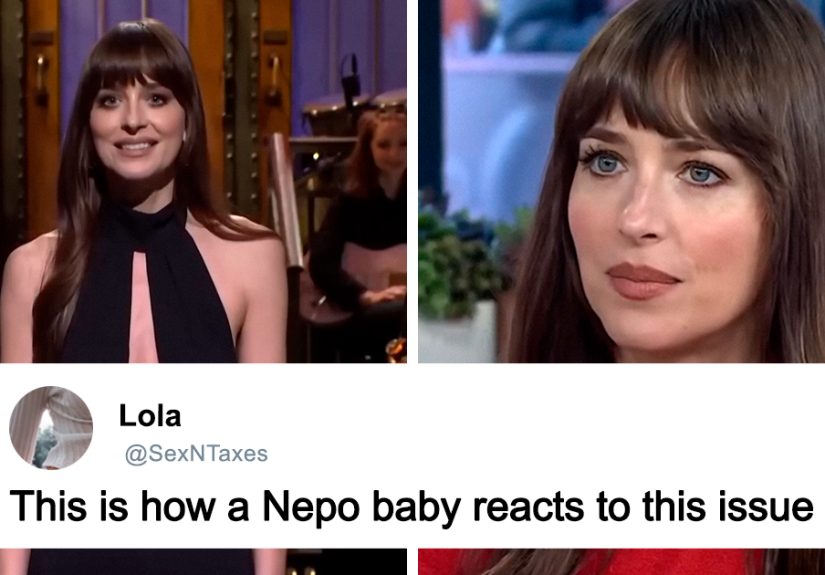
The latest backlash started after Johnson dismissed the conversation around famous children in Hollywood as “annoying,” “boring,” and “lame” during a promotional interview. The timing made things even messier. Just days earlier, she had also made headlines for criticizing her experience guest-starring in the series finale of The Office, saying the shoot was much less magical than fans might imagine. Put those two moments together, add social media, sprinkle in one extremely beloved sitcom, and suddenly the internet had a full buffet of opinions.
At the center of the debate is a familiar question: Can a celebrity acknowledge family privilege without sounding dismissive of the advantages that helped open doors? Johnson did not deny that her parents are famous. Her mother is Melanie Griffith, her father is Don Johnson, and her grandmother is classic Hollywood icon Tippi Hedren. That is not a family tree; that is a red-carpet ecosystem. Still, many fans felt her response minimized why the nepo baby conversation exists in the first place.
Why Dakota Johnson’s Nepo Baby Comments Sparked Backlash
The phrase “nepo baby” refers to people whose family connections may have helped them enter competitive industries, especially entertainment, fashion, media, and politics. It does not automatically mean the person has no talent. It does not mean they never worked hard. It means their starting line was not the same as everyone else’s. In Hollywood, where thousands of unknown actors are trying to get one audition, being born into a famous acting family can provide visibility, advice, access, credibility, and a safety net that most newcomers do not have.
Johnson’s frustration seemed to be with the repetitiveness of the label. She has joked about it before, including during her Saturday Night Live appearance, where she leaned into the topic with the comedy group Please Don’t Destroy. In that sketch, she and the trio roasted one another over family connections and comedy status. The bit worked because it admitted the obvious. Everyone was in on the joke, and the joke had receipts.
The trouble came when Johnson appeared to wave away the wider conversation. To many fans, calling the topic boring sounded less like a joke and more like someone with generational Hollywood access telling journalists to stop noticing generational Hollywood access. That is a tough sell. It is like a person standing on a balcony saying elevators are overrated.
The “Birth Lottery” Argument Fans Keep Bringing Up
Fans who criticized Johnson were not necessarily arguing that she has coasted through her entire career. Many acknowledged that she has taken creative risks, worked with serious directors, and built a filmography beyond the Fifty Shades franchise. The anger was more about tone. When a celebrity from a famous family sounds irritated that people mention the famous family, the public often hears privilege being treated as an inconvenience rather than a structural advantage.
Johnson’s defenders point out that she has been candid about being cut off financially by her father after choosing acting over college. According to Johnson, Don Johnson had a family rule: school meant allowance; no school meant independence. She said she did modeling jobs, auditioned, and at times needed help from her mother when money was tight. That detail complicates the narrative. It suggests she did face pressure, rejection, and financial uncertainty during her early adult years.
But critics argue that being “cut off” from regular family support is not the same as starting from nowhere. Having famous parents can still mean growing up around film sets, meeting industry professionals, understanding how the business works, and carrying a last name that makes casting offices pause for at least half a second. In Hollywood, half a second can be the difference between “next” and “come in.”
Then Came Her Comments About “The Office”
The nepo baby backlash did not happen in isolation. Johnson had also recently reflected on her cameo in the series finale of The Office, where she appeared as a new Dunder Mifflin employee after Kevin Malone was fired. For many fans, appearing in the final episode of one of the most beloved sitcoms of the 2000s sounds like winning a pop-culture golden ticket. Johnson described it very differently.
She said she loved the show and thought the role would require only a brief visit. Instead, she spent about two weeks on set and appeared only briefly in the final cut. She also described the atmosphere as emotionally strange, with the longtime cast preparing to say goodbye after nine seasons. In her telling, people were sad, there were odd dynamics, and she felt like an enthusiastic outsider who had wandered into the last day of senior year.
That may be a fair description of an uncomfortable work experience. Finales can be intense. Cast members who have worked together for a decade are processing the end of a major chapter. A guest actor arriving at that moment might absolutely feel like the new kid at a family reunion where everyone is quietly fighting over the potato salad. Still, fans of The Office were protective. Some felt Johnson sounded ungrateful. Others thought she was simply being honest and funny.
Why Fans Connected the Two Controversies
On their own, Johnson’s comments about The Office might have passed as a quirky late-night anecdote. On their own, her nepo baby remarks might have been another entry in the endless celebrity privilege debate. Together, they created a less flattering story: a famous actor’s daughter complaining about a beloved TV cameo and then dismissing questions about famous-family advantage.
That is why the backlash grew so quickly. The internet loves patterns, especially when those patterns can be turned into a moral lesson by lunchtime. Fans connected the dots and framed Johnson as out of touch. Was that completely fair? Not entirely. Celebrity interviews are short, edited, and often built around jokes that become headlines without the surrounding tone. But public perception is rarely a courtroom. It is more like a group chat with Wi-Fi and caffeine.
The larger issue is that audiences have become much more sensitive to how celebrities discuss privilege. In the past, a star could say, “I worked hard,” and the public would move on. Now, fans expect a fuller answer: “I worked hard, and I also had advantages.” That “and” matters. It allows both things to be true. Johnson’s critics felt her comments leaned too hard on irritation and not enough on acknowledgment.
Dakota Johnson’s Career Is More Complicated Than the Label
Reducing Dakota Johnson to only a nepo baby is lazy. She has had commercial hits, critical swings, oddball indies, franchise chaos, and enough dry press-tour moments to qualify as a separate genre. Her breakthrough came with Fifty Shades of Grey, a role that brought global fame but also intense scrutiny. She later appeared in films such as A Bigger Splash, Suspiria, The Peanut Butter Falcon, The Lost Daughter, and Cha Cha Real Smooth. Those choices suggest an actor trying to build a varied career, not just sit comfortably inside a famous surname.
She also co-founded TeaTime Pictures, a production company with Ro Donnelly. That move matters because producing gives Johnson more creative control and a path beyond simply waiting for studios to call. It also shows ambition outside the traditional actor-for-hire lane. In a business where actresses are often judged harshly for both success and failure, building a production company is not exactly the lazy route.
Still, nuance is not the internet’s favorite snack. Social media prefers a crunchy headline. “Dakota Johnson has advantages but also works” is accurate, but it does not travel as fast as “Nepo baby complains again.” The problem for Johnson is not that people refuse to see any complexity. It is that her own comments gave critics an easy frame.
The Nepo Baby Debate Is Really About Access
The reason this topic refuses to disappear is that it is not really about one actor. It is about access. Hollywood sells itself as a dream factory, but the dream often arrives faster for people whose parents already know the gatekeepers. A famous last name can make agents curious, make casting directors attentive, and make journalists interested. That does not guarantee a career, but it can create the first chances that unknown performers spend years chasing.
Fans are not usually angry that celebrity children exist. Most people understand that kids often follow parents into the family business. Teachers have children who become teachers. Doctors have children who become doctors. Restaurant owners have children who learn the kitchen. The difference is that entertainment sells success as magic: raw talent discovered under a spotlight. When audiences see that the spotlight was already installed in someone’s childhood living room, they get skeptical.
That skepticism grows when celebrities seem annoyed by the question. A better answer is simple: yes, family helped; yes, work still matters; yes, the industry should make room for people without famous parents. That kind of response does not erase criticism, but it usually lowers the temperature. It tells the audience, “I see the system, even if I did not build it.”
Was the Backlash Fair?
The backlash was understandable, but parts of it were probably exaggerated. Johnson did not claim she came from total obscurity. She has publicly named her parents, joked about her background, and discussed the complicated family dynamics around her career. The headline-friendly version of the controversy makes it sound like she stood in front of a Hollywood Walk of Fame star and declared herself self-made from dust and coupons. That is not exactly what happened.
However, celebrities do not need to make the worst possible statement to trigger a valid criticism. Sometimes the issue is not the literal meaning but the emotional effect. For fans who see talented unknown actors struggling for years, hearing a star from a famous family call nepotism coverage “boring” can feel dismissive. It suggests the topic is tiresome mainly to the people who benefit from it being ignored.
Her Office comments had the same problem. She was likely making a self-deprecating, funny, slightly chaotic talk-show story. But fans of the show heard someone describing a beloved finale as miserable. Add the nepo baby remarks, and the internet built one grand theory of tone-deafness. Was it a little dramatic? Absolutely. But this is celebrity culture. Drama is the house salad.
What Celebrities Can Learn From the Dakota Johnson Backlash
The lesson is not that famous people must apologize for their parents. Nobody chooses their family, and being born near success does not automatically make a person untalented. The lesson is that public conversations about privilege require care. When stars treat the topic as annoying, audiences hear avoidance. When they acknowledge the advantage and then discuss their work, audiences are more willing to listen.
Johnson’s brand is built on deadpan honesty, and that is part of why people follow her. She is not a polished quote machine. She can be charming because she seems unfiltered. But unfiltered answers are risky when the subject is inequality. A joke that works in a sketch can sound different in an interview. A complaint that feels funny in a room can look entitled as a headline. Context evaporates quickly online, leaving only the most combustible sentence behind.
For Johnson, the controversy is unlikely to define her career. She has survived bigger storms, including franchise criticism and the unpredictable weather system known as a superhero press tour. But it does show how quickly celebrity goodwill can shift when audiences feel a star is missing the bigger picture.
Experience Notes: Why This Topic Hits a Nerve With Regular People
One reason the Dakota Johnson nepo baby backlash became so loud is that it mirrors experiences many people recognize outside Hollywood. Most workers have seen some version of the same pattern: someone gets an introduction because of family, a friend, a school, a neighborhood, or a powerful last name, and then insists the path was exactly the same for everyone. That is when people start side-eyeing the conference room wall.
In everyday life, privilege often does not look like a giant golden ticket. It looks like someone knowing which internship matters. It looks like a parent who can explain how contracts work. It looks like being able to take a low-paying starter job because rent will not destroy you. It looks like confidence that comes from seeing people like your family already inside the room. Those advantages do not guarantee success, but they reduce friction. For people without them, every step can feel like pushing a sofa up a staircase while someone else gets a moving crew.
That is why fans react strongly when celebrities sound tired of the nepo baby conversation. To the public, the conversation is not just gossip. It is a symbol of a broader frustration: the gap between the story of meritocracy and the reality of access. People are not asking stars to be ashamed of their families. They are asking them to be honest about the boost. A simple acknowledgment can go a long way because it respects the audience’s intelligence.
The Office part of the controversy adds another relatable layer. Many people have had disappointing work experiences that looked glamorous from the outside. A dream job can still have awkward coworkers. A famous set can still feel lonely. A big opportunity can still turn into two weeks of standing around wondering if anyone remembers your name. In that sense, Johnson’s story is not hard to understand. The problem is that most people do not get to complain about being briefly included in a legendary sitcom finale while also being annoyed that journalists mention their famous parents.
The public’s response also shows how celebrity interviews now function as cultural stress tests. Every answer is judged not only for humor but for awareness. Fans want stars to be funny, but not dismissive; honest, but not ungrateful; confident, but not blind to advantage. That is a difficult balance, and Johnson is far from the only celebrity to stumble across it. Still, the reaction proves that audiences are done pretending that access does not matter.
In the end, the Dakota Johnson nepo baby debate is less about whether she deserves a career and more about how privilege should be discussed. She can be talented and connected. She can have worked hard and benefited from a famous family. She can have had an awkward time on The Office and still sound a little tone-deaf when describing it. Real life allows contradictions. The internet prefers verdicts. Somewhere between those two is the more useful truth: fame may open the door, but humility helps keep the room from turning against you.
Conclusion
Dakota Johnson’s nepo baby controversy became a perfect celebrity storm because it combined family privilege, beloved TV nostalgia, dry humor, and online frustration with Hollywood access. Her comments did not erase her talent or her work, but they reminded fans that tone matters. When public figures talk about privilege, audiences listen closely for humility. When they hear annoyance instead, the backlash writes itself.
The fairest reading is not that Johnson is talentless or that she has never struggled. It is that her reaction landed badly at a time when fans are increasingly aware of how family connections shape entertainment careers. The nepo baby label may be overused, but the conversation behind it is not going away. In Hollywood, the audience may forgive a famous last name. What it rarely forgives is acting like the name was never part of the invitation.