Table of Contents >> Show >> Hide
- 1) Start With Function: A Pretty Room That Works Wins Every Time
- 2) Measure First, Decorate Second (Your Tape Measure Is Your Best Friend)
- 3) Anchor the Room With “Big Yeses”: Rug, Sofa, Bed, Table
- 4) Choose a Color Strategy That Prevents Chaos (and Paint Panic)
- 5) Lighting Is Not an AfterthoughtIt’s the Mood Manager
- 6) Texture Makes a Room Feel Expensive (Even When It’s Not)
- 7) Styling Rules That Work (Until You Break Them on Purpose)
- 8) Small-Space Decorating Advice That Actually Helps
- 9) Paint Finish, Practicality, and the “Real Life” Factor
- 10) A Quick “Don’t Do This” Checklist (Because We’ve All Been There)
- Real-Life Decorating Experiences (So You Don’t Have to Learn the Hard Way)
- Conclusion
Decorating advice is easy to love in theory (“Just add character!”) and easy to hate in practice (“Why does my ‘character’
look like a yard sale hosted by raccoons?”). The good news: great rooms aren’t built by perfect taste or unlimited budgets.
They’re built by a few repeatable decisionslayout, color, light, scale, and layersdone in a way that fits how you actually
live. (Yes, even if you live with kids, pets, roommates, or your own habit of setting a water glass on every surface like
you’re marking territory.)
Below is practical, real-home decorating advicemeant for people who want a space that looks pulled together, feels comfortable,
and doesn’t require a master’s degree in Throw Pillow Studies. We’ll talk through the “why,” show you the “how,” and sprinkle in
examples so you can apply it room by room without falling into the classic trap of buying cute stuff… and then realizing you’ve
purchased 11 cute things that don’t like each other.
1) Start With Function: A Pretty Room That Works Wins Every Time
The biggest decorating flex isn’t a fancy chandelierit’s walking through your room without hip-checking a coffee table.
Before you pick colors or art, answer three questions:
- What happens here? (Reading, gaming, movie nights, dinners, homework, naps disguised as “just resting my eyes.”)
- Who uses it? (Adults, kids, guests, pets, the Roomba that gets stuck in the same spot daily.)
- What needs to be easy? (Cleaning, storage, moving furniture, charging devices, hosting.)
Once you know the job, plan zones. Even a small living room can have a conversation area (so seating faces each other instead
of the TV like it’s the only celebrity in town), a reading corner, or a tiny desk nook. Layout ideas from design editors often
revolve around the same principle: create a “gathering shape” (U-shape, L-shape, or opposing seating) that supports conversation
and flow.
And here’s a counterintuitive tip: pushing all furniture against the walls doesn’t automatically make a room feel bigger.
Often, it makes the center feel empty and the edges feel stiff. If you can, “float” key pieces inwardeven a few inchesto
create a cozier, more intentional layout.
2) Measure First, Decorate Second (Your Tape Measure Is Your Best Friend)
Decorating is basically the art of scale and proportionaka “Is this too big, too small, or just right?” The fastest way to
level up a room is to stop guessing and start measuring:
- Room dimensions: length, width, ceiling height, window placement.
- Key furniture: sofa length, table size, bed size, clearance needed for doors/drawers.
- Walkways: aim for comfortable paths so the room flows naturally.
If you’re a visual person, use painter’s tape on the floor to outline a sofa, rug, or dining table footprint before buying.
It’s the cheapest way to avoid expensive regret.
3) Anchor the Room With “Big Yeses”: Rug, Sofa, Bed, Table
Most rooms feel “off” because the big pieces don’t agree. Start with one or two anchorsusually the largest itemsthen build
outward. For example:
Living room
The rug is often the quiet hero. A common mistake is choosing a rug that’s too small, which makes furniture look like it’s
tiptoeing around the edges. Instead, pick a rug size based on your furniture layout (not just the room size). In many setups,
at least the front legs of major seating should sit on the rug so everything feels connected.
Dining room
Rug sizing matters even more here because chairs move. A helpful rule of thumb is to add about 24 inches on all sides of the
table so chairs can slide out while staying on the rugno wobbly chair legs, no snagging, no dramatic “chair scoot” sound effects
at dinner.
Bedroom
Your bed is the anchor. If the room feels flat, don’t panic-buy new furniture. Start by adjusting what frames the bed:
lamps (pair or mismatched), a headboard, layered bedding, and a rug that adds softness underfoot.
4) Choose a Color Strategy That Prevents Chaos (and Paint Panic)
Color is where many people spiral: “I like green.” Great. Which green? Sage? Olive? “Cucumber But Make It Moody”?
Use a simple system so you don’t end up with five almost-matching neutrals that somehow all fight.
Try the 60-30-10 guideline
If picking a palette feels overwhelming, use the classic 60-30-10 approach:
60% dominant color (walls, large rug, big upholstery),
30% secondary color (curtains, accent chairs, bedding),
10% accent color (pillows, art, accessories).
It’s a flexible guide, not a law. (You won’t be arrested by the Decorating Police for using 12% accent. You might just get a
strongly worded note from your throw pillows.)
Respect undertones
Undertones are why your “warm white” can look pink at night or vaguely green next to your floors. When colors clash, it’s often
undertones, not “bad taste.” Compare paint chips against fixed elements you’re not changing (flooring, countertops, large
furniture) and look at them in different lighting.
Sample paint like a pro
Before committing, test paint in your actual room. Apply at least two coats for a true read, and consider testing on movable
boards so you can see the color in morning light, afternoon light, and the “why is my living room suddenly orange?” evening
light. Also test shadowsbecause your room doesn’t exist in a permanent Instagram filter.
5) Lighting Is Not an AfterthoughtIt’s the Mood Manager
If your room feels “meh,” check the lighting before you blame your decor. Designers consistently recommend layering light:
- Ambient: overall light (ceiling fixtures, recessed lighting).
- Task: focused light (reading lamps, desk lamps, under-cabinet kitchen lighting).
- Accent: decorative glow (picture lights, sconces, shelf lighting).
Add dimmers where possible and aim for warmer bulbs in living spaces if you want cozy. A single bright overhead light can make
even a beautiful room feel like a waiting room. Layering creates depth, softens harsh corners, and makes the space feel intentional
at every time of day.
6) Texture Makes a Room Feel Expensive (Even When It’s Not)
Color gets the spotlight, but texture does the heavy lifting. Texture is what stops a room from feeling flatespecially if your
palette is neutral. Think in categories:
- Soft: linen, velvet, boucle, cotton, wool.
- Hard: wood, metal, stone, glass, ceramic.
- Natural: rattan, jute, leather, plants.
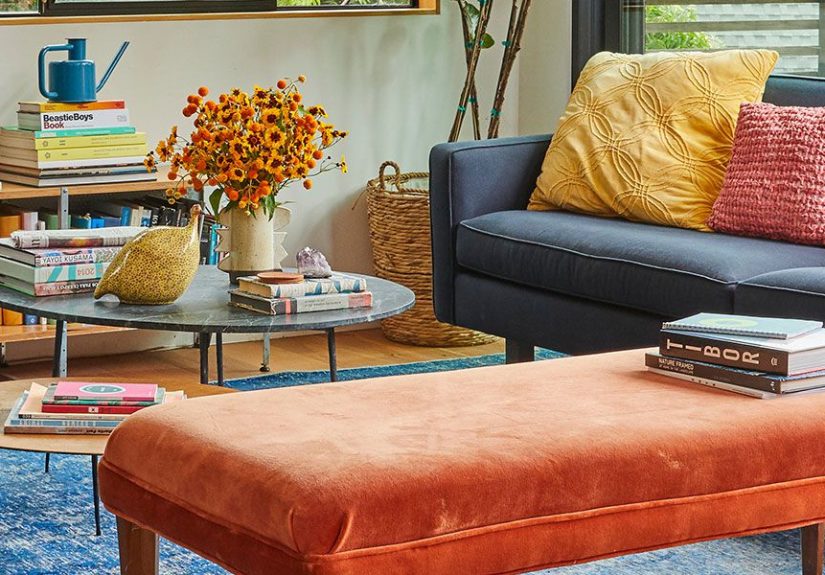
Mix at least three textures in a single “view.” Example: a leather sofa (smooth), a chunky knit throw (cozy), a matte ceramic
vase (chalky), plus a woven basket (natural). Same color family, different textures = instant depth.
Pattern without panic
You don’t have to go full maximalist, but pattern adds life. A simple way to mix patterns is to vary the scale:
one large pattern (rug), one medium (curtains), one small (pillows). If you love a bold look, “pattern drenching” (layering
complementary patterns across a space) can work beautifully when the colors relateeven if the prints are different.
7) Styling Rules That Work (Until You Break Them on Purpose)
The Rule of Three (and other odd-number magic)
Grouping decor in odd numbersespecially threesoften looks more natural and relaxed than perfect symmetry. Try three vases of
different heights, or a trio of frames, or a cluster of objects that share a color but vary in shape. It’s an easy way to make
shelves and tables look “styled” rather than “stuffed.”
Hang art at a sane height
Art is frequently hung too high. A common gallery guideline is to place the center of the artwork around
57 inches from the floor (adjust a bit depending on ceilings and furniture). Above a sofa or bed, keep the art
visually connecteddon’t leave a giant “awkward gap” that feels like the art is floating away to start a new life.
Give the eye a place to rest
Not every inch needs decor. Leaving some open space (a clean wall, a clear surface, a calmer corner) makes the “styled” moments
stand out more. Think of it like a playlist: if every song is a chorus, your brain gets tired.
8) Small-Space Decorating Advice That Actually Helps
Small spaces don’t need “less style.” They need smarter choices:
- Choose multifunctional pieces: storage ottomans, nesting tables, beds with drawers, wall shelves.
- Use reflective surfaces: mirrors and glossy finishes bounce light and add depth.
- Go vertical: hang curtains higher, use tall bookcases, add vertical art or stripes to pull the eye up.
- Keep a cohesive palette: fewer competing colors can make the room feel larger and calmer.
Minimalism isn’t required, but editing helps. In a small room, each item should earn its keepby being useful, beautiful, or
ideally both.
9) Paint Finish, Practicality, and the “Real Life” Factor
Decorating isn’t just aestheticsit’s durability. Paint finish (sheen) matters more than most people realize. Lower-sheen paints
can hide imperfections; higher-sheen finishes tend to be easier to clean but can highlight wall texture. If you’ve got kids,
pets, or a hallway that gets more traffic than a coffee shop, choosing a durable finish can save your sanity (and your weekend).
10) A Quick “Don’t Do This” Checklist (Because We’ve All Been There)
- Too-small rug that makes furniture look disconnected.
- All furniture shoved to the walls, leaving an awkward empty middle.
- Matching furniture set that feels like a showroom instead of a home.
- One overhead light doing all the work (and making everyone look tired).
- Art hung too highyour walls aren’t a museum lobby.
- Too many tiny accessories that read as clutter from a distance.
Real-Life Decorating Experiences (So You Don’t Have to Learn the Hard Way)
Decorating advice is helpful, but experience is where the lessons stickusually right after you’ve moved a sofa and questioned
every life choice that led you to owning a sectional. Here are a few real-world moments that mirror how decorating actually
plays out in normal homes (where people eat snacks and sometimes leave socks on the floor like they’re breadcrumb trails).
Experience #1: The “Cute Rug” That Shrunk the Room
Many people start with a rug because it feels like the fun part. But the classic mistake is choosing based on the pattern and
ignoring the size. In real life, that adorable rug can make the entire room look smallerlike your furniture is avoiding it out
of social awkwardness. The fix is surprisingly simple: decide your seating layout first, then pick a rug that supports it. If you
can’t buy bigger, cheat a little by pulling the rug forward so at least the front legs of your seating sit on it. That one change
often turns “random furniture pieces” into “a room.”
Experience #2: The Magic of Moving Furniture 6 Inches
People tend to treat furniture placement like it’s permanentlike the couch signed a long-term lease. But one of the biggest
“wow” moments often comes from tiny shifts. Pulling a sofa even a few inches off the wall can make a living room feel more
designed and less like a waiting area. The room suddenly has breathing space. Conversation feels easier. Walkways feel clearer.
Bonus: you stop scraping knuckles along the wall when you walk behind chairs.
Experience #3: Paint Looked Perfect… Until Nighttime
Paint drama is real. A color can look gorgeous at noon and then turn into something else at night under warm bulbsor look
sterile under cool LEDs. People who test paint only once often end up repainting. The better experience is to test big and test
often: put the sample in multiple spots (near windows, in darker corners) and look at it at different times of day. If you can,
test on a movable board so you can hold it next to your sofa fabric, your floor tone, and the cabinet color you swear you’re not
repainting “for at least five years.” (We’ve all said that. We’ve all lied.)
Experience #4: Lighting Changed Everything Without Buying New Furniture
Sometimes the room isn’t “missing something”it’s just poorly lit. Adding a floor lamp in a dim corner, swapping a harsh bulb for
a warmer one, or using multiple light sources can make the same furniture look dramatically better. People are often shocked that
a room can feel more expensive just by creating layers of light. It’s one of the few upgrades that improves both the vibe and the
function: you can read comfortably, the room photographs better, and your home stops feeling like it’s being interrogated by a
ceiling fixture.
Experience #5: The Moment You Learn to Edit
Another common experience is realizing that “more decor” doesn’t equal “more style.” In practice, too many small items can make a
space look clutteredeven if every item is cute. Editing is when you start choosing fewer, larger pieces with presence:
one statement vase instead of five small ones, one bold art print instead of a scatter of tiny frames. Oddly enough, removing
things can make the room feel richer because the remaining pieces have room to shine. If you want a quick test, clear a shelf
completely, then put back only what you truly loveplus one practical item. The difference is immediate.
Conclusion
Good decorating advice isn’t about perfectionit’s about decisions that work together. Start with function and layout, anchor the
room with correctly scaled “big yes” pieces, choose a color plan you can actually live with, and then add depth with lighting,
texture, and meaningful details. Measure more than you guess, test paint in real light, and remember: the best room is the one
that feels like youonly slightly more organized.