Table of Contents >> Show >> Hide
- What Is Mandu?
- Before You Start: 6 Rules for Better Frozen Dumplings
- The Best Cooking Methods for Frozen Dumplings
- How to Boil Frozen Dumplings
- How to Pan-Fry Frozen Dumplings
- How to Steam Frozen Dumplings
- How to Air-Fry Frozen Dumplings
- How to Cook Frozen Dumplings in Soup or Broth
- Can You Microwave Frozen Dumplings?
- The Best Method for Different Situations
- Common Mistakes to Avoid
- What to Serve with Frozen Mandu
- Real-World Experiences with Frozen Dumplings (Mandu)
- Conclusion
Frozen dumplings are one of the great modern miracles. They sit quietly in your freezer, ask for almost nothing, and somehow become dinner, a snack, or a “this is all I can emotionally manage tonight” masterpiece in minutes. And if those dumplings happen to be mandu, the beloved Korean style often filled with meat, vegetables, kimchi, or glass noodles, you are already halfway to a very good meal.
The trick is not simply cooking frozen dumplings. It is cooking them well. Nobody wants wrappers that split open like overdramatic movie characters, bottoms that burn before the centers heat through, or dumplings so soggy they look like they lost an argument with a puddle. The good news is that frozen mandu are extremely forgiving once you understand which method gives you which result.
In this guide, you will learn how to boil, steam, pan-fry, air-fry, microwave, and soup-cook frozen dumplings, plus how to choose the best method for your mood, your schedule, and your level of patience. Spoiler: pan-frying usually wins when you want texture, boiling is great for speed and tenderness, and soup might be the coziest answer of all.
What Is Mandu?
Mandu is the Korean word for dumplings, and it covers a wide range of shapes, sizes, and fillings. Some are crescent-shaped like potstickers, some are larger and more rounded, and some are designed for steaming while others are built for pan-frying. In American grocery stores, frozen mandu often overlap with products labeled as potstickers, gyoza, or dumplings, but Korean mandu tends to lean boldly savory, with common fillings like pork, beef bulgogi, kimchi, tofu, chives, cabbage, and garlic.
That is why frozen mandu are so useful: they can act like an appetizer, a lunch, a soup add-in, a rice-bowl topper, or the main character of an ultra-fast weeknight dinner. They are flexible, satisfying, and far more glamorous than the phrase “frozen food” usually suggests.
Before You Start: 6 Rules for Better Frozen Dumplings
1. Cook them from frozen
In most cases, do not thaw frozen dumplings first. Cooking them straight from the freezer helps the wrappers keep their shape and prevents the filling from turning mushy while you wait around pretending to be organized.
2. Read the package
This is not the exciting part, but it is the smart part. Some frozen dumplings are fully cooked, some are raw, and some have thinner wrappers than others. Brand directions should always outrank generic internet advice.
3. Do not overcrowd the pan or pot
Dumplings like a little personal space. If they are packed too tightly, they stick together, steam unevenly, and make you question your life choices.
4. Use a nonstick skillet for frying
If you are pan-frying, a nonstick skillet with a lid makes life much easier. This is especially true for mandu with delicate wrappers or for dumpling lovers who do not enjoy prying dinner off stainless steel with a spatula.
5. Keep a little water nearby
For pan-frying, water is not the enemy. It is the secret weapon. A quick splash creates steam that cooks the top and filling while the bottom gets crisp.
6. Decide what texture you want
This is the real question. Soft and tender? Boil them. Stretchy and juicy? Steam them. Crispy bottoms and tender centers? Pan-fry them. Fastest possible path from freezer to face? Microwave or soup.
The Best Cooking Methods for Frozen Dumplings
| Method | Best For | Texture | Typical Time |
|---|---|---|---|
| Boiling | Quick, tender dumplings | Soft, juicy | 5 to 8 minutes |
| Pan-Frying | Best all-around flavor and texture | Crispy bottom, tender top | 7 to 10 minutes |
| Steaming | Clean texture and gentle cooking | Firm, springy wrapper | 8 to 10 minutes |
| Air Frying | Crispy results with less stovetop fuss | Crisp outside | 10 to 12 minutes |
| Soup | Easy one-bowl meal | Tender, brothy | 4 to 6 minutes in simmering broth |
| Microwave | Absolute speed | Soft, less crisp | 2 to 4 minutes |
How to Boil Frozen Dumplings
Boiling is the easiest method when you want dumplings that are tender, juicy, and ready for sauce or soup. It is also ideal when you are cooking a lot at once. No special equipment, no precise skillet drama, no hot oil trying to audition for an action movie.
How to do it
- Bring a large pot of water to a boil.
- Add frozen dumplings in a single layer.
- Stir gently once so they do not stick to the bottom.
- Cook until the dumplings float.
- Let them cook another 2 to 3 minutes, or a bit longer for larger mandu.
- Remove with a slotted spoon and drain well.
Why boiling works
Boiling cooks the wrapper evenly and gives the filling time to heat through without burning the exterior. If you want to add frozen mandu to soup, this same principle applies; the dumplings gently warm and plump in the broth.
Best for
Soup dumplings without the “soup dumpling” label, large mandu, party platters, and anyone who values reliability over crunch.
How to Pan-Fry Frozen Dumplings
If frozen mandu had a red-carpet method, this would be it. Pan-frying gives you the texture contrast people crave: crisp golden bottoms, tender steamed tops, and a hot juicy center. It is the method that makes frozen dumplings taste the least like freezer food and the most like you knew exactly what you were doing.
How to do it
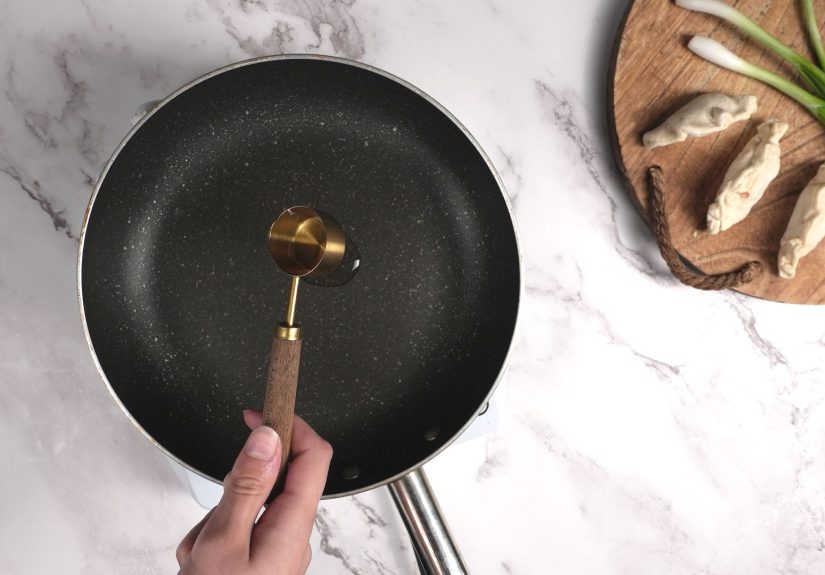
- Heat 1 to 2 tablespoons of neutral oil in a nonstick skillet over medium to medium-high heat.
- Arrange the frozen dumplings flat-side down in one layer.
- Let them cook 2 to 3 minutes until the bottoms start turning golden.
- Add about 1/4 to 1/3 cup water, then cover immediately.
- Lower the heat slightly and steam 3 to 6 minutes, depending on size.
- Remove the lid and let the remaining water cook off.
- Continue cooking for 1 to 2 minutes to re-crisp the bottoms.
Why pan-frying works
This method combines the best parts of frying and steaming. The oil creates browning and flavor. The water creates steam so the thick pleats and filling cook through. The final uncovered minute restores crispness. It is basically a dumpling glow-up.
Pro tips
- Do not move the dumplings too much at the beginning, or they will not brown properly.
- Keep the lid ready before adding water, because steam appears immediately.
- If you want a restaurant-style crispy lace skirt, stir a little flour into the water before pouring it in.
How to Steam Frozen Dumplings
Steaming is excellent when you want clean flavor and a wrapper with a pleasant chewy bite. It is often a great choice for Korean mandu, especially larger ones, because the filling stays moist and the dumplings hold their shape nicely.
How to do it
- Bring water to a boil in a pot or wok fitted with a steamer basket.
- Line the basket with parchment, cabbage leaves, or a lightly oiled liner.
- Place frozen dumplings in a single layer with space between them.
- Cover and steam for 8 to 10 minutes.
- Serve immediately.
Common mistake
Skipping the liner. Frozen dumplings love to stick to bare bamboo or metal, and nobody wants to peel dinner off the basket in pieces.
How to Air-Fry Frozen Dumplings
Air frying is the method for people who want crisp edges without standing over the stove. It is not identical to classic potsticker texture, but it is fast, convenient, and surprisingly effective.
How to do it
- Preheat the air fryer to about 370 to 390 degrees Fahrenheit.
- Lightly oil the basket or brush the dumplings with a little oil.
- Arrange dumplings in a single layer.
- Cook 10 to 12 minutes, flipping halfway through if needed.
- Check that they are hot all the way through before serving.
What to expect
Air-fried mandu will usually be crisper on the outside and a touch drier than steamed or pan-fried dumplings, so this method shines when paired with a dipping sauce. Think soy sauce, vinegar, chili crisp, or a sesame-heavy sauce that brings back a little richness.
How to Cook Frozen Dumplings in Soup or Broth
This might be the most comforting method of all. Add frozen mandu to simmering broth, throw in greens or mushrooms, and suddenly your freezer dinner looks suspiciously intentional.
How to do it
- Bring broth to a gentle boil or steady simmer.
- Add aromatics if you like, such as garlic, ginger, scallions, soy sauce, or sesame oil.
- Drop in the frozen dumplings.
- Cook 4 to 6 minutes, or until heated through.
- Add greens, beaten egg, tofu, or noodles near the end if desired.
Easy soup ideas
- Chicken broth + ginger + spinach + scallions
- Miso broth + mushrooms + bok choy
- Kimchi broth + tofu + mandu
- Bone broth + chili crisp + egg ribbons
This is one of the smartest ways to turn dumplings into a full meal instead of just an appetizer that mysteriously disappears before the rice is ready.
Can You Microwave Frozen Dumplings?
Yes, though this is the “I need food now” method, not the “I am crafting a culinary memory” method. Microwaving works best for convenience, for some packaged soup dumplings, or as a shortcut before crisping in a skillet.
How to do it
- Place frozen dumplings in a microwave-safe bowl.
- Add enough water to come about halfway up the dumplings.
- Cover loosely with a microwave-safe plate.
- Microwave on high for about 3 minutes, then check for doneness.
The result will be soft rather than crispy, but it gets the job done. If you want better texture, microwave first and then give the dumplings a quick skillet finish.
The Best Method for Different Situations
For the crispiest dumplings
Pan-fry or air-fry.
For the juiciest filling
Steam or boil.
For the easiest cleanup
Boil or microwave.
For a complete meal
Cook them in soup or stir-fry them with vegetables.
For impressing guests without admitting the dumplings were frozen
Pan-fry, add a crispy skirt, serve with a glossy dipping sauce, and act mysterious.
Common Mistakes to Avoid
- Thawing first: This often leads to torn wrappers and sticky dumplings.
- Using too much heat too early: The bottoms burn while the filling stays cold.
- Skipping the cover during pan-frying: The tops will not cook evenly.
- Adding dumplings to aggressively boiling soup for too long: The wrappers can split.
- Ignoring brand differences: Small gyoza, big mandu, and soup dumplings do not all cook the same way.
What to Serve with Frozen Mandu
Frozen dumplings are already pretty charming on their own, but they become even better with the right supporting cast.
Easy dipping sauce
Mix soy sauce, rice vinegar, a few drops of sesame oil, and chili crisp or red pepper flakes. Add scallions if you are feeling fancy and not just trying to eat in sweatpants.
Easy sides
- Steamed rice
- Cucumber salad
- Kimchi
- Stir-fried greens
- Miso soup or clear broth
- Asian-style chopped salad
Real-World Experiences with Frozen Dumplings (Mandu)
The real experience of cooking frozen mandu is not usually about chasing perfection. It is about learning which method fits the moment. On a busy Tuesday, boiling dumplings in broth feels like a small miracle because dinner goes from freezer to bowl with almost no friction. The kitchen smells like ginger and garlic, the dumplings puff up nicely, and even a sparse fridge can suddenly look useful once a few scallions and a handful of spinach join the party.
Pan-frying creates a very different experience. It is louder, crispier, and somehow more theatrical. There is the brief sizzle when the dumplings hit the oil, the tiny suspense of waiting for the bottoms to brown, and the dramatic hiss when water goes into the pan and the lid slams down. This method feels the most satisfying because the texture payoff is huge. You get that contrast between crunchy base and tender wrapper that makes frozen dumplings feel restaurant-worthy, even if you are standing in your kitchen wearing socks that do not match.
Steaming is the calmest route. It is the method people often appreciate after one too many batches of over-browned potstickers. Steamed mandu come out plump, glossy, and gentle, with filling that tastes clean and well-defined. If the dumplings are kimchi-filled, steaming can really highlight the tangy, savory interior without distracting from it. It is less flashy than frying, but very dependable.
Air frying tends to be the method people fall in love with after they realize they can get crisp dumplings without babysitting a skillet. The experience is convenient, but it still helps to know that air-fried dumplings usually want sauce. Without it, they can taste a little drier than pan-fried mandu. With a good dip, though, they become an easy lunch, game-night snack, or late-night “I should probably cook something” solution.
Then there is the soup route, which might be the most emotionally useful of all. Frozen dumplings in broth have a way of making dinner feel warm, practical, and complete without much effort. Add egg ribbons, greens, mushrooms, or tofu, and it starts tasting like something you planned on purpose. That is one of the best real-life lessons with mandu: they are not just a side item. They are a shortcut to a real meal.
Another common experience is discovering that not every bag cooks the same. Some mandu are huge and meaty. Some are thin-skinned and delicate. Some are fully cooked and just need heating. Others need a little more time for the center to finish. That is why experienced home cooks stop treating dumplings like identical little freezer clones. They check the package, watch the wrapper, listen for the pan, and adjust as needed. In other words, the real secret is not a magic number of minutes. It is paying attention.
And that may be the best thing about frozen mandu: they reward common sense more than culinary ego. Start with a good bag, pick the texture you want, and use the method that matches your mood. Crispy, brothy, steamed, or air-fried, frozen dumplings are one of the rare convenience foods that can still feel thoughtful, comforting, and honestly delicious.
Conclusion
If you want the simplest answer to how to cook frozen dumplings, here it is: cook them from frozen, choose a method based on texture, and do not ignore the package. Boiling is easy, steaming is gentle, air frying is convenient, soup is cozy, and pan-frying is the all-around winner when you want the best balance of crispness and tenderness. Frozen mandu may begin as a freezer shortcut, but with the right method, they end up tasting like a solid plan.