Table of Contents >> Show >> Hide
- Why the Dream of Bringing Back Dinosaurs Still Works
- How Jurassic World Evolution Turns Dinosaur Evolution into Gameplay
- The Real Science Problem: Why We Still Cannot Bring Back Dinosaurs
- The Dinosaurs Have Evolved in Our Minds
- De-Extinction Is Real Science, Just Not for T. rex
- What Jurassic World Gets Right Even When It Gets Things Wrong
- The Experience of Bringing Back Dinosaurs in Pop Culture, Games, and Everyday Life
- Conclusion
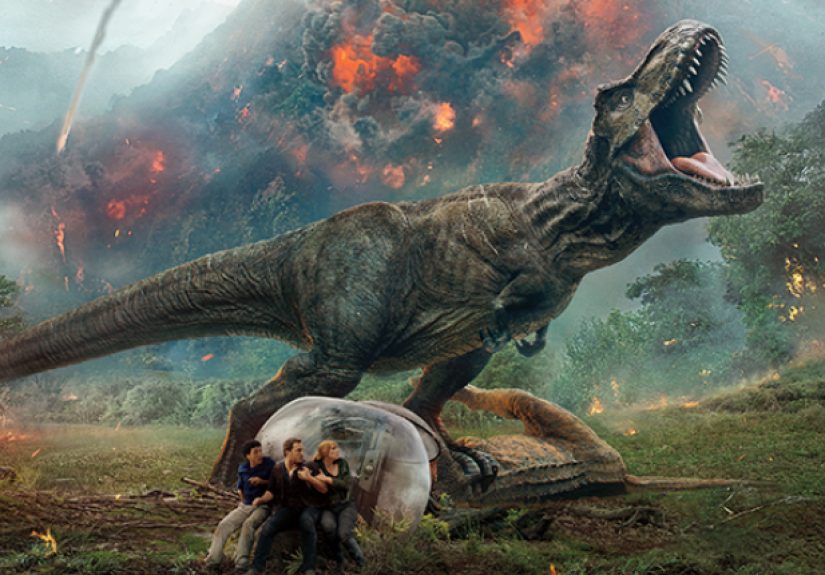
If there is one fantasy modern pop culture refuses to leave buried, it is the idea of bringing back dinosaurs. Give people one mosquito in amber, one suspiciously well-funded lab, and one billionaire with poor judgment, and suddenly everybody becomes a part-time paleogeneticist. That dream powers the Jurassic franchise, but it also fuels the strange appeal of Jurassic World Evolution, where players get to do the one thing science still cannot: rebuild a dinosaur-filled world and pretend the fences will definitely hold this time.
That mix of wonder, chaos, and scientific what-if is exactly why “bringing back dinosaurs” remains such a sticky idea. It lives at the intersection of blockbuster entertainment, fossil science, evolutionary biology, and just a dash of corporate hubris. In other words, it is catnip for audiences and a minor stress event for actual paleontologists.
So what does dinosaur evolution really mean in the age of Jurassic World? It means more than making bigger teeth and louder roars. It means understanding how our picture of dinosaurs has changed, why games and films still bend the truth, and why the real science of de-extinction is both more impressive and less cinematic than the movies suggest. It also means admitting a delicious truth: even when Jurassic World gets the science wrong, it gets the feeling right. We are still captivated by the possibility that the past could stomp back into the present.
Why the Dream of Bringing Back Dinosaurs Still Works
The idea survives because dinosaurs are the perfect blend of familiarity and impossibility. They were real animals, not mythological beasts, yet they feel mythic anyway. We know they walked the Earth. We have bones, nests, eggs, footprints, feathers, and even microscopic clues about their biology. But we can never watch a living Tyrannosaurus rex turn its head, hear a real hadrosaur herd move through a wet forest, or see a raptor flash its feathers in courtship. That gap between what we know and what we long to witness creates an irresistible imaginative playground.
Jurassic World Evolution taps directly into that urge. The park-building premise is not only about management; it is about control. The fantasy is not merely “I want dinosaurs back.” It is “I want dinosaurs back, and I want to arrange them by biome, guest appeal, and gift-shop profitability.” That is a very modern fantasy. We do not just want wonder. We want a user interface for wonder.
At the same time, the franchise keeps evolving because science keeps evolving. The dinosaurs people met in 1993 were not the dinosaurs many scientists imagine today. Back then, the public idea of dinosaurs still leaned heavily toward giant reptiles: leathery skin, lumbering movement, and an attitude that suggested they had never once skipped leg day. Today, many paleontologists emphasize active, dynamic animals with bird-like behaviors, complex growth stages, nesting strategies, feathers, and more varied body coverings than older depictions allowed.
How Jurassic World Evolution Turns Dinosaur Evolution into Gameplay
The most interesting thing about Jurassic World Evolution is that it treats dinosaurs as both spectacle and system. In the newer version of the series, players are not just printing reptiles and hoping for the best. The game leans harder into animal management, social needs, lifecycle mechanics, and environmental design. Dinosaurs are still the stars, but they function less like theme park props and more like simulated populations with requirements, interactions, and quirks.
From Synthesis to Social Behavior
That shift matters. Earlier dinosaur fantasies often focused on the “wow” moment of resurrection itself. Newer design choices care more about what happens after the wow. How do species behave in mixed habitats? What kind of enclosure helps them thrive? How does park infrastructure reduce chaos? The game’s appeal comes from managing living systems, not just displaying giant teeth under flattering lighting.
That is where the “dinosaur evolution” angle becomes especially clever. The game reflects how our culture has evolved in its understanding of prehistoric animals. Dinosaurs are no longer treated as one-note movie monsters. They are increasingly framed as creatures with social needs, developmental stages, and species-specific habits. That does not make them less fun. It makes them more interesting.
Why Baby Dinosaurs Change the Tone
One of the most revealing additions to the modern park-sim formula is the presence of juveniles and breeding systems. Suddenly the fantasy stops being just “build a dangerous zoo” and becomes something more ecological. A hatchling wandering beside an adult has a totally different emotional effect than another fully grown predator bursting out of a steel gate. It nudges the series toward conservation, lifecycle management, and family groups rather than nonstop cinematic disaster.
That tonal change is a big deal. The original Jurassic Park sold awe through terror. Jurassic World Evolution often sells awe through stewardship. Players are asked to think like park architects, field biologists, and occasionally anxious operations managers who know one broken fence can turn a five-star attraction into a lawsuit with claws.
The Real Science Problem: Why We Still Cannot Bring Back Dinosaurs
Now for the buzzkill portion of our program: real dinosaur de-extinction is not around the corner. It is not around the block. It is not even in the same neighborhood.
DNA Does Not Last Long Enough
The core problem is DNA decay. The Jurassic Park premise assumes dinosaur DNA could survive inside blood meals trapped in amber for tens of millions of years. In reality, DNA is fragile. Even under ideal conditions, it breaks down over time, and research on ancient DNA has shown that useful genetic material does not persist anywhere close to the age of non-avian dinosaurs. That means no complete dino genome is waiting inside fossilized tree resin like a biological USB drive from the Cretaceous.
In practical terms, this is the scientific equivalent of opening an ancient cookbook, discovering every page has dissolved, and then announcing dinner will be served at seven. You cannot reconstruct a genome from absence, wishful thinking, and a frog.
Amber Is Amazing, But It Is Not a Time Machine
Amber is still scientifically valuable. It preserves extraordinary details of prehistoric life, including feathers, insects, and ecological interactions that bones alone cannot show. Amber can help scientists understand what ancient environments looked like and how some creatures lived. It can even preserve molecular traces better than many other contexts. But there is a canyon-sized gap between “helpful fossil evidence” and “viable dinosaur cloning template.”
That distinction is crucial. The public often treats amber as magical storage. Science treats it as a remarkable but limited form of preservation. It can illuminate deep time. It cannot rewind it.
The Dinosaurs Have Evolved in Our Minds
If the animals themselves are gone, our reconstructions of them are very much alive. This is where the phrase “dinosaur evolution” gets especially rich. We are not evolving dinosaurs in the lab. We are evolving our understanding of what dinosaurs were.
Feathers Changed the Conversation
One of the biggest shifts in dinosaur science has been the growing evidence that many theropods had feathers or feather-like structures. That changed everything from museum art to debates about movie design. The public image of raptors as sleek, naked reptile-athletes looks increasingly outdated when compared with feathered reconstructions supported by fossil evidence.
This does not mean every dinosaur was fluffy like an exploded pillow. It does mean the old scaly stereotype no longer works as a default setting. Feathers likely served different functions across species and life stages, from insulation to display to brooding behavior. Dinosaur appearance was more varied than older movies suggested, and probably more colorful too.
Even the famous velociraptors of pop culture are not quite what the name implies. The movie monsters were closer in size and vibe to larger relatives such as Deinonychus than to the real Velociraptor, which was smaller and, by modern interpretation, feathered. Hollywood did not invent the confusion alone, but it certainly gave it excellent marketing.
Birds Are Not “Like” Dinosaurs They Are Dinosaurs
Perhaps the most mind-bending correction is also the most delightful: dinosaurs never fully disappeared. Birds are living dinosaurs. Not metaphorically. Not in a “distant cousin” sense. In evolutionary terms, birds are part of the dinosaur lineage. That means the age of dinosaurs did not end so much as molt, miniaturize, and start stealing your fries at the beach.
This insight changes how we think about prehistoric life. Dinosaurs become less like failed monsters from a dead world and more like members of a long, branching evolutionary story that still surrounds us. Every pigeon strutting through a parking lot is, in its own humble way, a reminder that evolution rarely bothers with dramatic endings when a weird sequel will do.
De-Extinction Is Real Science, Just Not for T. rex
While dinosaur resurrection remains fantasy, de-extinction research involving more recent animals is very real. Scientists and biotech companies are exploring ways to recreate traits of extinct species in living relatives, especially in cases involving mammoths, the dodo, and other comparatively recent losses. But even here, the science is messy, controversial, and far from the clean resurrection narrative movies prefer.
What Scientists Can Potentially Do
The plausible version of de-extinction looks more like genetic proxy engineering than literal return. Researchers may identify preserved DNA fragments from recently extinct species, compare them with living relatives, and edit certain traits into a modern genome. In other words, they are not opening an ancient freezer and pulling out a complete original animal. They are assembling a biological approximation with selective inherited features.
That makes a woolly mammoth-style project fundamentally different from a dinosaur project. Mammoths disappeared recently enough, and have close living relatives, that scientists can at least attempt trait-based reconstruction. Dinosaurs are separated from us by a chasm of time, missing genomes, and a total lack of suitable surrogate species for anything resembling authentic revival.
Why the Ethics Matter
There is also an ethical side that blockbuster stories usually skip. If de-extinction efforts require repeated gene editing, surrogate pregnancies, and experimental animals with uncertain welfare outcomes, then the “because we can” argument starts sounding shaky. Critics also ask whether money poured into flashy resurrection efforts might be better spent protecting species that are endangered right now.
That is the real modern tension. The fantasy says: bring back the lost. The ethical question says: why not stop creating more losses first?
What Jurassic World Gets Right Even When It Gets Things Wrong
To be fair, the Jurassic franchise was never meant to function as a peer-reviewed journal with better sound design. Its job is to dramatize the relationship between scientific ambition and human overconfidence. On that front, it remains painfully accurate.
Jurassic World Evolution also gets something emotionally right: it understands that dinosaurs are fascinating because they sit at the border of knowledge and imagination. Players want authenticity, but they also want drama. They want paleo-informed creatures, yet they also want a park cool enough to make a child gasp and an adult immediately say, “That seems uninsurable.”
The best dinosaur storytelling lives in that tension. Too much fantasy, and the animals become generic monsters. Too much rigid correction, and the magic can disappear. The sweet spot is respectful invention: use real science as the bones, then let art and play add the muscle, skin, motion, and meaning.
The Experience of Bringing Back Dinosaurs in Pop Culture, Games, and Everyday Life
What makes this topic especially powerful is not just the science or the spectacle. It is the experience. “Bringing back dinosaurs” is one of those rare ideas that feels different depending on where you encounter it. In a movie theater, it lands like adrenaline. In a museum, it lands like awe. In a game like Jurassic World Evolution, it lands like a strange combination of creativity, responsibility, and mild panic when your enclosure budget starts spiraling.
For players, the experience is part god mode, part crisis management. You are arranging lagoons, habitats, pathways, and amenities while pretending everything is under control. Then one species gets unhappy, another develops a social conflict, and suddenly your elegant prehistoric paradise starts behaving like a family reunion with more horns. That friction is exactly why the game works. It lets people feel the thrill of resurrection while also confronting the burden of care. Dinosaurs are not just attractions; they are needs, risks, systems, and stories.
For film fans, the experience is more primal. The joy comes from scale. A screen-filling dinosaur still hits like a freight train because it compresses millions of years into one immediate moment. You know it is fiction. You know the science is loose in places. You also do not care for those few glorious seconds when a giant animal steps through the trees and your inner eight-year-old takes the wheel. That emotional reaction is hard to overstate. Dinosaurs collapse the distance between education and wonder in a way few subjects can.
Museums offer a third kind of experience: quiet revelation. Standing under a mounted skeleton or staring at a fossil feather does not feel like watching an action sequence. It feels stranger and, in some ways, deeper. You realize these were not monsters designed by a concept artist. They were real organisms with anatomies, ecosystems, growth patterns, injuries, and evolutionary descendants. That is often the moment when people stop thinking of dinosaurs as fantasy creatures and start understanding them as life forms that once occupied a real world.
There is also something uniquely communal about dinosaur fascination. Parents bond with children over dinosaur names no one should be able to pronounce before fourth grade. Friends compare favorite species with suspicious seriousness. Gamers swap park layouts and enclosure ideas like suburban planners with a prehistoric problem. Even adults who insist they are “not dinosaur people” somehow perk up when a feathered raptor reconstruction appears on screen. Dinosaurs are one of the few topics that can unite science nerds, movie buffs, museum lovers, and chaos-loving simulation players at the same table.
That shared experience matters because it keeps paleontology culturally alive. Every film, every game, every museum exhibit, and every viral argument about whether T. rex wore feathers pushes the public back toward deeper questions. What do fossils really tell us? How does evolution work? What survives in the geological record? What is the difference between resurrection and reconstruction? Those are not small questions. They are doorways.
In that sense, “bringing back dinosaurs” is already happening, just not biologically. We bring them back through research, reconstructions, simulations, classrooms, museums, and stories. We bring them back every time we replace an outdated image with a better one. We bring them back every time a kid looks at a chicken and suddenly understands that extinction is not always the end of a lineage. And we bring them back every time a player spends an unreasonable amount of time perfecting a digital enclosure for animals that have been gone for 66 million years. Honestly, that last one may be the purest tribute of all.
Conclusion
Bringing Back Dinosaurs Jurassic World Dinosaur Evolution is not really a story about cloning the past. It is a story about how the past continues to evolve in our imagination. Jurassic World Evolution transforms dinosaur fascination into an interactive experiment in control, design, and simulated ecology, while real science keeps rewriting what dinosaurs looked like, how they behaved, and how closely they are tied to the birds outside our windows.
The fantasy of a revived T. rex remains fiction, because ancient DNA simply cannot bridge a gap that large. But the bigger truth is arguably more exciting. Dinosaurs are not static relics. They are part of a living scientific narrative that keeps changing as new fossils, new methods, and new debates emerge. Our reconstructions get sharper. Our questions get smarter. Our wonder somehow gets bigger.
So no, we are not about to open a real Jurassic park. Probably for the best. But through science, games, and storytelling, we keep finding richer ways to bring dinosaurs back into modern life. And that may be the most meaningful evolution of all.