Table of Contents >> Show >> Hide
- What Makes a TV Couple “Best,” Anyway?
- The “Bumpy Road” Is the Point
- The 50 Best TV Couples Who Survived the Potholes
- Trailblazers, Icons, and the Couples Who Basically Invented “Shipping”
- Modern Marriage, Sitcom Edition (Where Love Is Real and the Bills Are Also Real)
- Workplace & Friend-Group Romances (AKA: HR Would Like a Word)
- Teen & Coming-of-Age Couples (Feelings at Maximum Volume)
- Drama Couples Who Kept the Show’s Heart Beating
- Fantasy, Sci-Fi, and “Love While the World Is Ending”
- Modern “Ship” Royalty (The Ones the Internet Will Never Let Go)
- Real-Life Viewing Experiences: Why These Couples Hit So Hard (and Why We Keep Coming Back)
- Conclusion: Love Wins, Even When the Writers Get Creative
The thing about TV love is that it’s rarely allowed to be normal. If two characters fall in love and immediately communicate well, respect each other’s boundaries, and split the chores fairly… congratulations, you’ve just created a couple that writers will “challenge” by introducing an ex, a secret, a job offer in another city, or (the classic) an episode where someone temporarily forgets they’re in love because a lamp fell on their head.
And yet, some pairings survive the chaos with their charm intact. They ride out the bumpy roadsbreakups, long distances, plot twists, bad timing, character growth spurts, and the occasional season that everyone agrees we should pretend didn’t happenand still leave us rooting for them like it’s our part-time job.
Below are 50 of the best TV couples whose love stories kept moving even when the road looked less like “scenic route” and more like “construction zone with no detour signs.” This isn’t a rigid ranking; it’s a curated hall of fame for chemistry, resilience, and the sacred art of making us yell, “JUST TALK TO EACH OTHER!”
What Makes a TV Couple “Best,” Anyway?
A great TV couple isn’t just two attractive people standing near a jukebox while a perfectly licensed indie song plays. The best couples usually have a few things in common:
- They change each other (without shrinking each other). The relationship builds both characters, not just one.
- They can handle conflict. Not perfectlyTV demands messbut in a way that feels emotionally honest.
- They’re fun to watch in everyday scenes. If they’re only interesting during big fights, that’s not romance; it’s cardio.
- Their dynamic makes the show better. The love story enhances the world instead of hijacking it.
The “Bumpy Road” Is the Point
Television romances are built for obstacles. The best couples don’t avoid hardship; they reveal who they are because of it. Some pairs thrive in the slow burn of a will-they/won’t-they. Others prove themselves in the less glamorous phase: the “we’re together now, so let’s figure out adulthood” part, where the real villain is usually scheduling.
Either way, the couples below earn their spot because they kept us investedeven when the writers tried their absolute best to stop that from happening.
The 50 Best TV Couples Who Survived the Potholes
Trailblazers, Icons, and the Couples Who Basically Invented “Shipping”
- Lucy Ricardo & Ricky Ricardo (I Love Lucy) Comedy chaos, real affection, and a marriage that proved love can survive both misunderstandings and whatever Lucy was planning in the kitchen.
- Rob Petrie & Laura Petrie (The Dick Van Dyke Show) Flirty, funny, and refreshingly equal partners before “relationship goals” was a phrase anyone would dare to say out loud.
- Gomez Addams & Morticia Addams (The Addams Family) The gold standard for “married and still obsessed,” delivered with poetry, passion, and impeccable spooky-season energy year-round.
- Archie Bunker & Edith Bunker (All in the Family) A relationship that played opposites for laughs, but also showed the tenderness underneath decades of cultural change and household friction.
- George Jefferson & Louise Jefferson (The Jeffersons) Moving on up didn’t erase life’s pressures; it just gave them nicer wallpaper to argue in front ofwhile staying devoted through it all.
Modern Marriage, Sitcom Edition (Where Love Is Real and the Bills Are Also Real)
- Dre Johnson & Rainbow Johnson (Black-ish) A marriage that balances parenting stress, ambition, and cultural conversations without losing the sense that they’re on the same team.
- Phil Dunphy & Claire Dunphy (Modern Family) “I’m doing my best” as a love language. They’re chaotic, sincere, and proof that romance can survive three kids and one extremely enthusiastic husband.
- Mitchell Pritchett & Cameron Tucker (Modern Family) They bicker, they bond, they parent, they overreact. Somehow, it all adds up to a relationship you can’t help but root for.
- Hal Wilkerson & Lois Wilkerson (Malcolm in the Middle) Wild devotion wrapped in total exhaustion. Their love says, “We may be broke, but we’re broke together.”
- Bob Belcher & Linda Belcher (Bob’s Burgers) She’s pure optimism, he’s anxious pragmatism, and their romance survives financial stress with singing, support, and stubborn hope.
- Hank Hill & Peggy Hill (King of the Hill) A steady partnership built on loyalty, routine, and the quiet heroism of showing up even when life is deeply unglamorous.
- Homer Simpson & Marge Simpson (The Simpsons) Thirty-plus years of TV marriage: messy, complicated, sometimes ridiculous, and still anchored by genuine affection.
Workplace & Friend-Group Romances (AKA: HR Would Like a Word)
- Monica Geller & Chandler Bing (Friends) The relationship that snuck up on everyone and then quietly became the show’s healthiest long-term romance: goofy, supportive, and surprisingly sturdy.
- Ross Geller & Rachel Green (Friends) A master class in “wrong timing, strong chemistry.” Their road is bumpier than a shopping cart with one bad wheel, but the obsession is undeniable.
- Jim Halpert & Pam Beesly (The Office) The slow burn that made staring across fluorescent lighting feel like epic romance. Even when adulthood hit, the emotional foundation mattered.
- Dwight Schrute & Angela Martin (The Office) Strange, stubborn, oddly perfect. Their journey is a reminder that compatibility can look… unconventional. (Beets optional.)
- Leslie Knope & Ben Wyatt (Parks and Recreation) The rare TV romance where ambition doesn’t destroy love; it fuels it. They grow together without making each other smaller.
- April Ludgate & Andy Dwyer (Parks and Recreation) Cynic meets golden retriever. Their love works because they accept each other’s weirdness as a feature, not a bug.
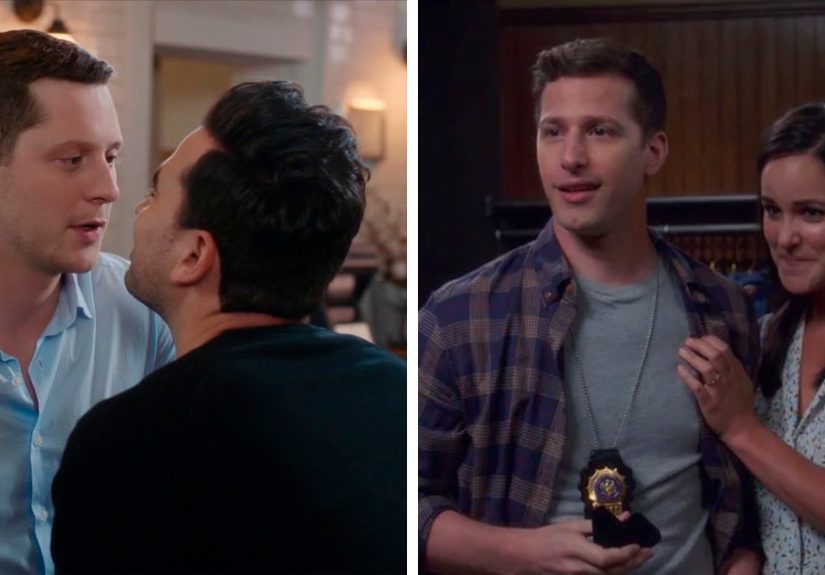
- Jake Peralta & Amy Santiago (Brooklyn Nine-Nine) Competitive, affectionate, and built on mutual respect. Also built on binders. So many binders.
- Jess Day & Nick Miller (New Girl) A pairing that turns “opposites attract” into something surprisingly tender. They stumble, reset, and ultimately land where the story always wanted them.
- Cece Parekh & Schmidt (New Girl) The glow-up romance: he grows up, she stops settling, and the relationship becomes sweeter because it’s earned.
- Marshall Eriksen & Lily Aldrin (How I Met Your Mother) A long-term relationship that actually feels long-term: compromises, fears, big dreams, and the kind of loyalty that survives terrible apartment layouts.
- Niles Crane & Daphne Moon (Frasier) Years of yearning, comedy, and the classic question: “Is this romantic destiny… or just Niles being Niles?”
- Fran Fine & Maxwell Sheffield (The Nanny) Class differences, slow-burn tension, and heartwarming payoff with enough sarcasm to keep things from getting too sugary.
Teen & Coming-of-Age Couples (Feelings at Maximum Volume)
- Cory Matthews & Topanga Lawrence (Boy Meets World) A rare “grew up together” story that feels like a warm blanket… even when the drama gets extra dramatic.
- Seth Cohen & Summer Roberts (The O.C.) A nerd’s dream romance that becomes real because Summer grows into her own person, not just the cool girl in Seth’s imagination.
- Pacey Witter & Joey Potter (Dawson’s Creek) The pairing that makes you rethink the whole premise of the show. Sometimes the “best friend” isn’t the destiny; the surprise is.
- Damon Salvatore & Elena Gilbert (The Vampire Diaries) High drama, higher cheekbones, and a relationship powered by danger, desire, and constant supernatural interruptions.
Drama Couples Who Kept the Show’s Heart Beating
- Coach Eric Taylor & Tami Taylor (Friday Night Lights) A marriage that feels lived-in: honest talks, hard choices, and a partnership that survives pressure without turning love into a trophy.
- Philip Jennings & Elizabeth Jennings (The Americans) A romance built inside a lieand then tested by loyalty, ideology, and the terrifying fact that feelings are real even when identities aren’t.
- Jack Pearson & Rebecca Pearson (This Is Us) Epic love, imperfect choices, and a relationship whose impact ripples through generations like emotional dominoes.
- Randall Pearson & Beth Pearson (This Is Us) The kind of marriage that survives because it’s honest: disagreements, support, humor, and the willingness to keep choosing each other.
- Meredith Grey & Derek Shepherd (Grey’s Anatomy) The romance that turned “Pick me” into a cultural moment. Their road is chaotic, but the gravitational pull is the point.
- Miranda Bailey & Ben Warren (Grey’s Anatomy) A relationship built on admiration and resilience, where love has to squeeze into the margins of careers that don’t respect office hours.
- Olivia Pope & Fitzgerald Grant (Scandal) A political pressure-cooker romance where the stakes are always sky-high and the timing is always inconvenient. Feelings: yes. Peace: rarely.
- Carrie Bradshaw & Mr. Big (Sex and the City) A relationship that’s equal parts chemistry and frustration. Not always aspirational, but absolutely unforgettable.
- Lorelai Gilmore & Luke Danes (Gilmore Girls) Small-town comfort meets stubborn slow burn. Their romance feels like a cup of coffee that finally admits it’s in love with the mug.
- Veronica Mars & Logan Echolls (Veronica Mars) Noir meets vulnerability. They clash, they heal, and their connection deepens because it’s forged in truth, not convenience.
- Mindy Lahiri & Danny Castellano (The Mindy Project) A rom-com engine turned long-form: charm, conflict, and the messy reality that love isn’t an ending; it’s a season after season.
- Patrick Jane & Teresa Lisbon (The Mentalist) Years of partnership, trust, and emotional tension that simmers just under the case-of-the-week structure until it finally boils over.
- David Fisher & Keith Charles (Six Feet Under) A relationship that’s honest about how hard commitment can be: love, conflict, growth, and the work of building something lasting.
Fantasy, Sci-Fi, and “Love While the World Is Ending”
- Buffy Summers & Angel (Buffy the Vampire Slayer) The blueprint for angsty supernatural romance: yearning, sacrifice, and the tragic truth that love doesn’t always mean “happy.”
- Willow Rosenberg & Tara Maclay (Buffy the Vampire Slayer) A groundbreaking TV relationship with genuine sweetness, depth, and emotional resonance that still matters.
- Fox Mulder & Dana Scully (The X-Files) Two believers in different ways, tethered by trust. Their romance is subtle, slow, and powered by the intimacy of shared obsession.
- Claire Randall & Jamie Fraser (Outlander) Time travel might be the hook, but devotion is the story: distance, danger, and love that refuses to be a footnote.
- Jon Snow & Ygritte (Game of Thrones) Love on opposite sides of a war, where tenderness feels like rebellion and every quiet moment comes with dread.
- Clark Kent & Lois Lane (Smallville) A slow-build dynamic that works because it’s built on banter, respect, and Lois seeing the man before the myth.
Modern “Ship” Royalty (The Ones the Internet Will Never Let Go)
- Eleanor Shellstrop & Chidi Anagonye (The Good Place) Philosophy meets feelings. Their romance is a gentle argument for becoming better because someone believes you can.
- David Rose & Patrick Brewer (Schitt’s Creek) A relationship that feels refreshingly adult: honest communication, real support, and big emotional payoffs without cheap sabotage.
- Fleabag & The Hot Priest (Fleabag) A lightning-strike romance that’s funny, devastating, and wildly human. Proof that a love story can be “best” even when it breaks your heart.
Real-Life Viewing Experiences: Why These Couples Hit So Hard (and Why We Keep Coming Back)
Here’s a funny thing about “the best TV couples”: we don’t just watch themwe participate. Not in a “storm the writers’ room” way (please don’t), but in the everyday ways that turn fiction into a shared experience. We text friends mid-episode. We pause to rewind a look that lasted half a second because it contained an entire emotional dissertation. We start conversations with, “Okay, but are you a Ross-and-Rachel person or a Monica-and-Chandler person?” and suddenly we’re debating emotional maturity like we’re defending a thesis.
The bumpy-road couples are especially powerful because they mirror the real emotional rhythms of relationshipsminus the convenient sitcom timing and the dramatic lighting. They show how affection can survive stress, how trust can be rebuilt, and how chemistry doesn’t automatically equal compatibility (a truth that TV loves to ignore until it absolutely cannot). Watching them can feel like practicing empathy in a low-stakes environment: you get to root for people, be disappointed in them, forgive them, and celebrate their growth without having to attend a single awkward family dinner.
And then there’s the “watching together” experience, which deserves its own Emmy category. Couples and roommates develop their own rules: the “no cheating on episodes” pact, the “we only watch this when we’re both awake” vow, and the delicate diplomacy of choosing what to binge next. One person wants dragons. Another wants zero dragons. A compromise is reached. Nobody is fully happy, which means it’s a realistic relationship.
These TV couples also become shorthand for phases of life. Maybe you remember where you lived when you first watched Jim and Pam finally get together, or how it felt to see David and Patrick model a romance built on gentleness instead of chaos. Maybe you were a teenager watching Cory and Topanga and thinking, “Surely all love will be this straightforward,” only to later discover that adulthood is mostly Google Calendar and nervous laughter. Maybe you watched Philip and Elizabeth Jennings and realized, “Wow, communication is important,” and then immediately thought, “Also maybe don’t marry a spy.”
The most comforting part is that these stories give us permission to love imperfectly. Not irresponsiblyjust imperfectly. They remind us that romance can be awkward, that timing can be brutal, and that the best partnerships aren’t magic; they’re made. Even the couples who don’t end up together can still matter, because they represent something true: a season of growth, a brush with happiness, a lesson learned the hard way. That’s why we rewatch. That’s why we argue. That’s why we ship.
So the next time you find yourself loudly coaching fictional adults through basic conversation (“Say the thing!” “Stop lying!” “Just ask her out!”), consider this: you’re not just being dramatic. You’re engaging with the core promise of TV romancethe hope that, even with every pothole imaginable, love can still find a way forward.
Conclusion: Love Wins, Even When the Writers Get Creative
The best TV couples don’t glide to happiness on a smooth highway. They crawl, swerve, detour, U-turn, and occasionally drive straight into a metaphorical lake. But they also make us feel something real: the thrill of connection, the ache of distance, and the relief of being understood. Whether your favorite ship is a cozy marriage, a slow-burn partnership, or a romance that ends with a beautiful wound, the couples above prove one thing: bumpy roads don’t end the journeythey make it memorable.