Table of Contents >> Show >> Hide
- What Is the Biddew Noir Textile Piece?
- Why the Design Feels So Modern
- The Cultural Story Behind the Piece
- From Craft to Wall Art
- How to Style a Biddew Noir Textile Piece
- Why It Resonates with Today’s Buyer
- What to Look for If You Love This Style
- Living with a Biddew Noir Textile Piece: The Experience
- Conclusion
Some wall art hangs quietly. The Biddew Noir Textile Piece does not. It arrives with geometry, texture, history, and just enough mystery to make a room feel instantly smarter. In a world full of generic prints that seem to have been designed by an algorithm with a Pinterest account, this piece stands apart. It carries the visual punch of modern graphic art, yet its roots are in a deeply traditional weaving practice connected to Senegalese textile culture.
That contrast is exactly what makes it so compelling. The Biddew Noir Textile Piece feels clean and contemporary at first glance, with a bold black-and-cream palette and a pattern that reads almost architectural. But look closer and the work reveals something warmer: handwoven texture, human rhythm, and a design language shaped by craft rather than speed. It is both decorative and meaningful, which is a rare trick in home design. Plenty of objects look expensive. Far fewer feel important.
This article takes a closer look at what makes the Biddew Noir Textile Piece special, why it has become such a favorite in design-forward interiors, and how it reflects a larger shift toward framed textile art, artisan-made decor, and meaningful wall pieces that do more than just fill empty space above a sofa.
What Is the Biddew Noir Textile Piece?
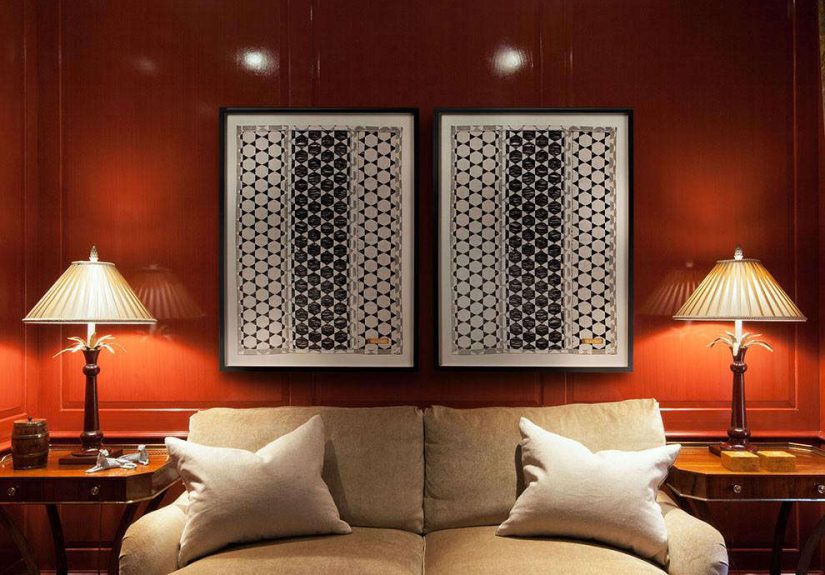
The Biddew Noir Textile Piece is best understood as a handwoven textile artwork presented as framed decor. It is associated with artist-designer Johanna Bramble and widely known through St. Frank, the home brand that helped popularize framed textiles for a broader American interiors audience. The piece is admired for its striking hexagon-based geometry, tactile surface, and sharp contrast between traditional making techniques and a very modern visual sensibility.
And that visual sensibility matters. “Noir” is not just a color note here. It signals mood. The black tones bring gravity, contrast, and confidence. This is not shy wall decor. It is the sort of piece that can anchor a room without shouting at every other object in it. Put differently, the Biddew Noir Textile Piece has main-character energy, but it still knows how to share the stage.
Part of its fascination comes from the weaving process itself. The textile is tied to a Senegalese weaving approach that requires coordination between two people at the loom. That kind of collaboration gives the finished work a quiet sense of choreography. You do not need to know anything about looms to feel that there is intention in the pattern. The symmetry is too precise to be accidental and too alive to feel mechanical.
Why the Design Feels So Modern
Bold geometry without coldness
Many geometric textiles can look stiff, like they belong in a showroom where nobody is allowed to sit down. The Biddew Noir Textile Piece avoids that trap. Its pattern feels structured, but the woven surface softens the effect. The result is a balance designers chase constantly: crisp lines paired with visible handwork. You get order and warmth in the same frame.
Texture does the heavy lifting
One reason framed textile art has become more popular is simple: texture changes a room faster than almost anything else. Paint changes color. Furniture changes function. But texture changes mood. A woven wall piece introduces depth, softness, and shadow, especially in spaces filled with hard finishes like glass, stone, plaster, and metal. The Biddew Noir Textile Piece works beautifully in minimalist homes for exactly this reason. It breaks up visual flatness without turning the room into a craft store explosion.
Black and cream is the decor equivalent of a great white shirt
Color trends come and go. Black and cream keep showing up because they are adaptable, elegant, and nearly impossible to embarrass. The Biddew Noir palette makes the piece easy to place in contemporary, transitional, and collected interiors. It can sit above a walnut credenza, near plaster walls, beside brass lighting, or against warm neutrals and still look intentional. It is versatile without being boring, which is harder than it sounds.
The Cultural Story Behind the Piece
What elevates the Biddew Noir Textile Piece beyond stylish wall art is its connection to broader Senegalese textile traditions. In design writing about the piece, woven textiles from this tradition are described as deeply valued household objects, associated with important moments of life and often understood as carrying symbolic or protective meaning. That context matters because it reminds us that textiles are not merely decorative surfaces. In many cultures, cloth is memory, status, ritual, identity, and protection all at once.
The woven wrapper tradition linked to Senegal has long been admired for its density, structure, and significance. Textile scholarship and museum collections also point to Senegalese woven cloth as something tied to life passages and lived meaning, not just appearance. So when the Biddew Noir pattern enters an American living room in a frame, it does more than deliver visual impact. It brings a fragment of a much older conversation about what textiles do in human life.
The hexagon motif associated with the Biddew design adds another layer of interest. In design storytelling around the piece, the hexagon is interpreted as a symbol tied to wisdom, life, and health. Whether you approach that symbol spiritually, artistically, or purely visually, the shape gives the work a sense of order and continuity. It is a pattern that feels ancient and modern at the same time, which is probably why it reads so well in current interiors.
From Craft to Wall Art
Framed textiles have become one of the most interesting developments in American interior design because they sit right at the intersection of art, craft, and storytelling. Designers and editors increasingly talk about textiles not as secondary decor, but as focal-point artwork. That shift has changed how people shop for wall pieces. Instead of asking, “What print matches my sofa?” more homeowners are asking, “What piece adds texture, history, and a point of view?”
The Biddew Noir Textile Piece lands squarely in that new design sweet spot. It is decorative, yes, but it is also educational in the best way. The framing highlights the handwork rather than hiding it. The textile becomes easier to preserve, easier to hang, and easier to read as art. Framing also encourages viewers to slow down. A folded textile on a shelf can be beautiful, but a framed textile says, “Please notice what happened here.”
That may explain why pieces like this show up so often in curated homes and editorial interiors. They create instant depth. They tell a story without requiring a label. And they give a room that elusive collected feeling, as though someone who lives there has opinions, curiosity, and possibly excellent coffee. Not guaranteed, but the odds improve.
How to Style a Biddew Noir Textile Piece
In a minimalist room
In a sparse interior, the Biddew Noir Textile Piece can act as the main focal point. Pair it with warm woods, off-white walls, linen upholstery, and matte black accents. Because the textile already brings pattern, you can keep the rest of the room fairly restrained. Think fewer accessories, larger forms, and breathing room around the piece so the texture has space to register.
In an eclectic or collected interior
This piece also works in homes that lean layered and worldly. Mix it with ceramics, vintage books, sculptural lighting, and natural materials. The key is to let the textile hold the graphic line while other objects contribute shape and color. It plays especially well with earthy tones, hand-thrown pottery, leather, cane, and aged brass. In those spaces, the Biddew Noir Textile Piece feels less like a single artwork and more like the steady heartbeat of the room.
In a bedroom
A bedroom is one of the smartest places for framed textile art because bedrooms benefit from softness. Above a bed, the Biddew Noir piece introduces calm through repetition and comfort through texture. The palette keeps it sophisticated, while the woven quality prevents the wall from feeling too sharp or sterile. It can also work above a dresser or fireplace, especially if you want one statement piece instead of a gallery wall that keeps collecting more frames like a hobby gone slightly too far.
Why It Resonates with Today’s Buyer
People are tired of disposable decor. They want homes that feel layered, personal, and grounded in something real. The Biddew Noir Textile Piece answers that desire beautifully. It offers craftsmanship in an age of shortcuts. It offers cultural texture in a market flooded with lookalike products. And it fits a growing appetite for pieces that blur the line between fine art and functional design.
There is also an ethical dimension in the way this type of piece is marketed and understood. Brands like St. Frank built part of their identity around supporting artisans, preserving traditional crafts, and helping customers see handmade work as collectible design rather than “ethnic accent decor,” a phrase that deserves to be retired forever. That framing has helped more people appreciate textile art as serious visual culture.
Of course, appreciation should always come with respect. The best way to value a piece like Biddew Noir is not to flatten it into a trend. Its appeal comes from the fact that it is rooted in a real making tradition, not invented by a branding meeting and a mood board full of beige squares.
What to Look for If You Love This Style
If the Biddew Noir Textile Piece speaks to you, pay attention to the qualities that make it work:
- Visible handwork: Texture should feel intentional and dimensional, not printed or fake.
- Graphic restraint: Strong geometry works best when the palette is disciplined.
- Cultural context: The story behind the craft matters as much as the look.
- Thoughtful framing: Good framing protects the textile and enhances its presence.
- Scale: Textile art often works best when large enough to hold a wall with confidence.
That combination is why Biddew Noir feels memorable. It is not just black-and-cream decoration. It is craft presented with clarity. It is tradition translated into modern design language. And it is proof that textiles can be as visually commanding as paintings, while offering something paintings often cannot: a visible record of touch.
Living with a Biddew Noir Textile Piece: The Experience
Now for the part design articles do not always admit: some decor looks amazing for six minutes and then becomes invisible. The Biddew Noir Textile Piece is not that kind of object. Living with it would be less like owning a trendy accessory and more like sharing a room with a very composed, very stylish guest who somehow improves everybody else’s behavior.
In the morning, the experience would begin with light. Natural light catches woven surfaces differently than it catches flat artwork. A print gives you image. A textile gives you image plus relief. As the sun shifts, the tiny rises and dips of the weave start doing their own quiet performance. That means the piece does not stay visually fixed. It changes throughout the day, which is one reason textile art tends to feel alive in a room.
There is also the emotional effect of the pattern. The hexagonal geometry has a calming rhythm. It is structured enough to feel grounding, but organic enough to avoid looking rigid. In a busy home, that matters. A room with too many random forms can feel scattered, while a room with too much symmetry can feel bossy. Biddew Noir sits in the sweet spot between the two. It steadies a space without draining it of personality.
Guests would probably notice it quickly. Not in the “Wow, that thing is huge” sense, but in the “Wait, what is that?” sense. That is the best kind of design conversation starter because it invites curiosity rather than performance. You can talk about weaving, Senegalese textile traditions, framing, pattern, or why textile art feels more intimate than a mass-market canvas print. Suddenly the room has a story. And rooms with stories always feel better than rooms that are merely coordinated.
There is a tactile temptation too. Most people will want to get closer, even if they do not actually touch it. Good textile art creates that reaction because you can sense the labor in the surface. You can imagine the rhythm of weaving, the coordination at the loom, and the patience required to build pattern thread by thread. That awareness changes the viewing experience. It makes the object feel human-scaled, even when it functions as a statement piece.
Over time, the piece would likely become one of those anchoring elements that quietly organize everything around it. Rearrange the sofa, switch out pillows, replace the coffee table, paint the walls a warmer white, and the textile still holds the room together. That is a useful test for lasting design. A good piece survives your evolving taste. A great one helps guide it.
And perhaps most importantly, living with a Biddew Noir Textile Piece would remind you that beauty does not have to be loud to be powerful. It can come through material, process, and proportion. It can come from knowing that what hangs on your wall is not just a decorative object, but a work shaped by skill, tradition, and design intelligence. That kind of presence changes the mood of a room slowly and deeply. It makes home feel less assembled and more considered.
Conclusion
The Biddew Noir Textile Piece succeeds because it does several hard things at once. It is visually bold but emotionally warm. It feels contemporary without severing its connection to tradition. It works as wall decor, but it also works as conversation, history, and texture. In a design world that often confuses novelty with value, this piece offers something much better: depth.
If you are drawn to interiors that feel layered, grounded, and genuinely personal, the appeal of Biddew Noir is easy to understand. It is not simply about buying a beautiful object. It is about bringing in a piece of textile art that carries craft, symbolism, and presence. And frankly, that beats another forgettable framed quote any day of the week.