Table of Contents >> Show >> Hide
- Why Cold War Misconceptions Still Matter
- Misconception 1: The Cold War Was “Cold,” So Nobody Really Fought
- Misconception 2: The Cold War Was Just the United States vs. the Soviet Union
- Misconception 3: The United States Had One Clear Cold War Strategy From the Start
- Misconception 4: The Cuban Missile Crisis Was the Only Moment of Real Nuclear Danger
- Misconception 5: The Space Race Was Just a Fun Science Competition
- Misconception 6: The Cold War Ended Cleanly When the Berlin Wall Fell
- What These Misconceptions Teach Us
- Experience Section: How to Understand Cold War Misconceptions in Real Life
- Conclusion
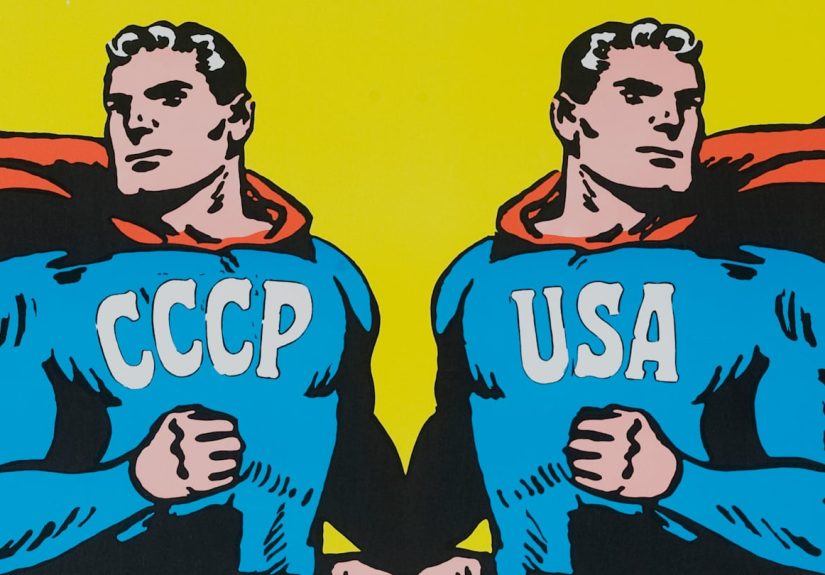
The Cold War is one of those historical topics that sounds simple until you actually open the closet and discover it is packed with nuclear anxiety, spy drama, proxy wars, space rockets, ideological arguments, and enough diplomatic tension to make a family Thanksgiving look peaceful. Many people remember it as a neat boxing match: the United States in one corner, the Soviet Union in the other, both glaring across the ring while everyone else waited for the bell.
That version is memorable, but it is also too tidy. The real Cold War was messy, global, and deeply human. It shaped schoolrooms, military budgets, scientific research, elections, pop culture, immigration, sports, and the way ordinary people imagined the future. It influenced conflicts in Korea, Vietnam, Afghanistan, Latin America, Africa, and the Middle East. It also produced moments when leaders had to make terrifying choices with incomplete information and very little time.
This article clears up six major misconceptions about the Cold War. Think of it as historical windshield cleaning: same road, better visibility, fewer bugs.
Why Cold War Misconceptions Still Matter
Misconceptions about the Cold War matter because the era did not simply vanish into old textbooks. Its alliances, weapons systems, intelligence habits, political language, and global fault lines continued to influence international relations long after the Soviet flag came down in 1991. When people misunderstand the Cold War, they often misunderstand modern diplomacy too.
The Cold War was not just a dramatic background for movies about spies in trench coats. It was a long struggle over power, ideology, security, technology, economics, and reputation. It involved presidents, premiers, diplomats, soldiers, scientists, teachers, students, factory workers, refugees, and families who built backyard shelters because “what if?” suddenly became a household question.
Misconception 1: The Cold War Was “Cold,” So Nobody Really Fought
The phrase “Cold War” can be misleading. It sounds like the world was simply giving itself the silent treatment for four decades. In reality, “cold” mainly meant that the United States and the Soviet Union avoided direct, full-scale war against each other. That avoidance was crucial, especially in the nuclear age. But it did not mean the period was peaceful.
Across the world, the Cold War became very hot. The Korean War, the Vietnam War, the Soviet-Afghan War, and conflicts in Angola, Central America, and elsewhere were shaped by superpower competition. Local causes mattered enormously, but the United States, the Soviet Union, China, and their allies often supplied money, training, weapons, diplomatic backing, or military support.
The Reality: It Was Cold at the Center, Hot at the Edges
The Cold War was like a stove with the burner turned low in Washington and Moscow but blazing in many other regions. Korea became one of the first major military tests of containment. Vietnam became a painful symbol of how Cold War logic could expand a local and regional struggle into a massive international crisis. In Southeast Asia, U.S. involvement extended beyond Vietnam into Laos and Cambodia, showing how broad the conflict became.
The Berlin Airlift also reminds us that not every dangerous confrontation involved open combat. When the Soviet Union blocked land access to West Berlin in 1948, the United States and its allies responded with an airlift rather than a ground attack. Planes carried food, fuel, and supplies into the city for months. It was a logistical operation, a political message, and a giant flying “we are not leaving” sign all at once.
So yes, the Cold War was “cold” in the sense that Washington and Moscow never launched a direct total war against each other. But for millions of people living in contested regions, the era was anything but chilly.
Misconception 2: The Cold War Was Just the United States vs. the Soviet Union
The U.S.-Soviet rivalry was the central axis of the Cold War, but it was not the whole machine. Reducing the era to two superpowers is like describing a full orchestra as “two loud trumpets.” Important? Absolutely. Complete? Not even close.
The Cold War included NATO, the Warsaw Pact, China, Cuba, North Korea, Vietnam, Eastern Europe, Western Europe, newly independent countries in Asia and Africa, and nations that tried to avoid being swallowed by either side. The Non-Aligned Movement, associated with leaders and countries seeking independence from both U.S. and Soviet blocs, challenged the idea that the entire world had to pick one of two jerseys.
The Reality: Smaller Countries Had Their Own Goals
Many countries did not behave like chess pieces waiting for a superpower hand to move them. They had their own leaders, fears, ambitions, rivalries, and domestic pressures. Some accepted aid from one side while resisting full control. Some switched alignments. Some used Cold War competition to gain resources or attention. Some tried to remain neutral, although neutrality was often harder than it looked.
Decolonization made the Cold War even more complex. After World War II, empires weakened and dozens of new nations emerged. The United States and the Soviet Union both claimed to oppose old-style colonialism, yet both also tried to influence the political direction of newly independent states. In practice, nationalism, anti-colonial struggle, economic development, and Cold War ideology often collided in ways that did not fit a simple “capitalist versus communist” chart.
Understanding this complexity helps prevent a common mistake: assuming every Cold War conflict was created entirely by Washington or Moscow. Superpowers mattered, but local history mattered too. Sometimes the Cold War poured gasoline on an existing fire. It did not always strike the match.
Misconception 3: The United States Had One Clear Cold War Strategy From the Start
It is tempting to imagine U.S. Cold War policy as a perfectly organized binder labeled “Plan for Defeating Communism, Please Return to Truman.” The reality was less tidy. American strategy developed over time through debate, fear, improvisation, elections, intelligence reports, and crises.
Containment became the central idea: limit the expansion of Soviet influence rather than immediately try to overthrow the Soviet system by force. But containment was not a magic button. It had different meanings depending on the place, president, and moment. Economic aid, military alliances, covert operations, diplomacy, nuclear deterrence, and public messaging all became part of the toolkit.
The Reality: Containment Evolved Through Crisis
The Truman Doctrine of 1947 signaled that the United States would support countries threatened by communist pressure, beginning with Greece and Turkey. The Marshall Plan offered economic assistance to rebuild Western Europe, helping stabilize societies devastated by war while also reducing the appeal of communist parties. NATO, founded in 1949, made the U.S. commitment to Western Europe formal and military.
These policies were not universally accepted without argument. Americans debated costs, risks, and whether the country should take on such large global responsibilities. Critics worried about militarization, overreach, and the possibility that every local conflict would be interpreted through the same Cold War lens. That worry was not unreasonable. Once a nation starts seeing the world as a giant ideological scoreboard, even complicated local problems can begin to look like points won or lost.
U.S. Cold War policy was powerful, but it was not robotic. It changed from Truman to Eisenhower, Kennedy, Johnson, Nixon, Carter, Reagan, and George H. W. Bush. Each administration inherited old problems and added its own flavor, from nuclear brinkmanship to détente to renewed confrontation to arms-control negotiations. The strategy had a backbone, but it also had plenty of elbows.
Misconception 4: The Cuban Missile Crisis Was the Only Moment of Real Nuclear Danger
The Cuban Missile Crisis of October 1962 deserves its reputation as one of the most dangerous moments in human history. For thirteen days, the United States and the Soviet Union faced off after American intelligence discovered Soviet nuclear missile sites in Cuba. The crisis involved military pressure, secret negotiations, public speeches, naval quarantine, and a terrifying possibility: one mistake could trigger catastrophe.
But it is a misconception to think the world only came close to nuclear danger once. The Cuban Missile Crisis was the most famous close call, not the only one. During the Cold War, false alarms, intelligence gaps, military exercises, political suspicion, and technological uncertainty repeatedly created risk.
The Reality: Miscalculation Was a Constant Threat
The U-2 spy plane incident in 1960 damaged U.S.-Soviet relations when an American reconnaissance aircraft was shot down over the Soviet Union. The episode exposed how much both sides relied on surveillance and how easily secrecy could inflame diplomacy. Later, in 1983, the NATO exercise Able Archer 83 alarmed Soviet observers who feared it might be cover for a real attack. Historians continue to debate details, but declassified evidence shows that the war scare was serious enough to remind leaders how dangerous misinterpretation could be.
Nuclear deterrence depended on a grim assumption: if both sides knew that a nuclear attack would bring devastating retaliation, neither side would start one. That logic helped prevent direct superpower war. It also meant human civilization spent decades trusting radar systems, military communication, political judgment, and the emotional stability of leaders under pressure. No wonder the era produced so many movies where computers blink ominously and someone says, “Sir, you need to see this.”
The lesson is not simply that nuclear weapons are powerful. Everyone knew that. The deeper lesson is that fear, secrecy, and speed can make crises more dangerous. In the Cold War, the scariest question was often not “Who wants war?” but “What happens if someone thinks war has already started?”
Misconception 5: The Space Race Was Just a Fun Science Competition
The Space Race gave the world unforgettable achievements: Sputnik, Yuri Gagarin, the Mercury and Gemini programs, Apollo 11, and the Moon landing. It inspired students, accelerated technology, and made astronauts into global celebrities. It also produced some excellent helmet hair. But the Space Race was never just a wholesome science fair with better rockets.
Space exploration was tied directly to Cold War prestige, military capability, missile development, education policy, and national confidence. When the Soviet Union launched Sputnik in 1957, it shocked many Americans. A satellite orbiting Earth was not only a scientific success; it suggested Soviet rocket technology had advanced rapidly. If a rocket could send a satellite into orbit, people naturally wondered what else it could carry.
The Reality: Space Was About Science and Power
American leaders responded by investing in science education, research, aerospace technology, and space programs. The creation and growth of NASA-era projects did not happen in a vacuum. They were part of a larger contest over which political system appeared more modern, capable, and future-oriented.
The Moon landing in 1969 was a scientific and engineering triumph. It was also a global message. The United States was not merely planting a flag on lunar soil; it was demonstrating organizational capacity, technological sophistication, and national ambition. The astronauts were explorers, but they were also representatives in a peaceful-looking contest with enormous political meaning.
This does not make the Space Race fake or cynical. The science was real. The courage was real. The discoveries were real. But the political context was real too. The Cold War turned outer space into a stage where rockets performed both research and reputation.
Misconception 6: The Cold War Ended Cleanly When the Berlin Wall Fell
The fall of the Berlin Wall on November 9, 1989, is one of the most powerful images of the twentieth century. Crowds climbed, chipped, danced, cheered, and crossed a barrier that had symbolized division for nearly three decades. It was dramatic, emotional, and historically enormous.
But the Cold War did not end as neatly as a movie fading to credits while everyone hugs near a broken wall. The Soviet Union still existed after the Berlin Wall fell. Germany reunified in 1990. The Warsaw Pact dissolved in 1991. The Soviet Union collapsed in December 1991, creating fifteen independent states and raising urgent questions about nuclear weapons, borders, economies, and political power.
The Reality: The Ending Was a Process, Not a Scene
The late Cold War involved reform movements, economic strain, public protest, arms-control talks, leadership changes, and national independence movements. Mikhail Gorbachev’s policies of glasnost and perestroika loosened old controls, but they also revealed how fragile the Soviet system had become. Eastern European governments fell at different speeds. People pushed change from below, while leaders negotiated from above.
The end of the Cold War reduced some dangers, especially the constant fear of U.S.-Soviet nuclear confrontation. Yet it did not erase every problem the Cold War had shaped. Former Soviet republics had to define new political and economic futures. NATO’s role changed. Russia’s relationship with the West evolved unevenly. Old archives opened, revealing new details that complicated earlier stories.
So yes, the Berlin Wall’s fall was a turning point. It was a magnificent historical symbol. But symbols are not the same as full stops. The Cold War ended through a chain of events, decisions, pressures, and surprises. History rarely closes the door politely; it usually leaves a few boxes in the hallway.
What These Misconceptions Teach Us
Correcting Cold War myths is not about making history harder for fun, although historians do sometimes appear to enjoy doing that. It is about seeing the past more accurately. The Cold War was not one thing. It was a military rivalry, an ideological struggle, an intelligence contest, a technology race, a cultural mood, and a global political framework.
It was also full of contradictions. The United States promoted freedom while sometimes supporting authoritarian anti-communist regimes. The Soviet Union spoke of anti-imperialism while dominating Eastern Europe. Both sides claimed to defend peace while building weapons capable of ending civilization. Both used propaganda, and both feared the other side’s propaganda. If irony were a fuel source, the Cold War could have powered a small moon base.
The biggest takeaway is that the Cold War was shaped by choices. Leaders made choices. Citizens made choices. Scientists, soldiers, activists, journalists, and voters made choices. Some choices lowered tensions. Others raised them. Some were brave. Some were reckless. Some were made with good information, and some were made in the fog of fear.
Experience Section: How to Understand Cold War Misconceptions in Real Life
One of the best ways to understand Cold War misconceptions is to move beyond memorizing dates and start noticing how the era felt to people who lived through it. A textbook may tell you that the Cuban Missile Crisis lasted thirteen days. That is useful. But imagine being a student in October 1962, hearing adults talk quietly in the kitchen, watching the president on television, and realizing that geography class had suddenly become extremely relevant because Cuba was only 90 miles from Florida. That emotional dimension changes the topic from “old politics” to “people trying to sleep while history knocked on the window.”
Students, travelers, and history fans can build a deeper understanding by visiting museums, reading primary documents, listening to oral histories, and comparing sources from different countries. A Cold War exhibit may show a civil defense poster, a spy camera, a space capsule model, or a piece of the Berlin Wall. Each object tells a different story. The poster shows public fear. The camera shows secrecy. The space capsule shows ambition. The wall fragment shows division, but also the human desire to cross barriers that governments build.
Another useful experience is watching how people argue about the Cold War today. Some describe it as a victory story, with democracy defeating communism. Others focus on the human costs of proxy wars, nuclear anxiety, and political repression. Both approaches can contain truth, but neither should become a slogan that flattens everything else. Good historical thinking means being able to hold more than one idea at once without dropping the whole tray.
In classrooms, the most effective Cold War discussions often begin with a misconception. Ask, “Was the Cold War really cold?” and students quickly discover Korea, Vietnam, Afghanistan, and other conflicts. Ask, “Was it just America versus Russia?” and suddenly China, Cuba, India, Yugoslavia, Egypt, and newly independent African and Asian nations enter the room. Ask, “Did nuclear weapons keep everyone safe?” and the conversation becomes more complicated, because deterrence may have prevented direct war while also keeping humanity under permanent threat.
For writers and content creators, the experience lesson is simple: avoid turning the Cold War into a cartoon. The era had heroes, villains, victims, opportunists, reformers, hard-liners, idealists, and ordinary people trying to live normal lives under abnormal pressure. A strong article, documentary, podcast, or classroom presentation should include specific examples, not just giant labels. Berlin, Cuba, Korea, Vietnam, Sputnik, Able Archer, and the fall of the Berlin Wall each reveal a different side of the same long conflict.
Finally, understanding Cold War misconceptions can improve how we read modern news. Whenever a political argument divides the world into two pure camps, Cold War history should tap us on the shoulder and whisper, “Careful.” Real international events usually include local motives, economic pressures, historical memories, leadership choices, and public opinion. The Cold War teaches that fear can simplify the world too much. History’s job is to make it complicated againbut in a useful way.
Conclusion
The Cold War was not a frozen pause between World War II and the modern world. It was an active, global, nerve-rattling era that shaped politics, science, culture, warfare, education, and everyday imagination. Its biggest misconceptions survive because they are easy to remember: no direct war, two superpowers, one crisis, one wall, one ending. But the real history is richer and more revealing.
The Cold War was cold and hot, ideological and practical, global and local, terrifying and strangely creative. It pushed humanity toward both extraordinary achievements and extraordinary dangers. Understanding its misconceptions does more than correct old quiz answers. It helps us recognize how power, fear, technology, and storytelling can shape the world people think they are living in.
And if there is one final lesson, it is this: when history looks simple, it is probably wearing a disguise.