Table of Contents >> Show >> Hide
- Before You Start: Roundhouse Kick Safety and Setup
- Way 1: The Basic Beginner Roundhouse Kick
- Way 2: The Rear-Leg Power Roundhouse Kick
- Way 3: The Lead-Leg Speed Roundhouse Kick
- Way 4: The Low Roundhouse Kick
- How to Practice a Roundhouse Kick Safely
- Roundhouse Kick Form Checklist
- Extra Experience: What Practicing the Roundhouse Kick Teaches You
- Conclusion
A roundhouse kick looks simple from the bleachers: lift leg, turn hips, make dramatic “whoosh” sound, feel like an action-movie extra. In real training, however, the roundhouse kick is a full-body technique that asks your balance, hips, core, supporting foot, and timing to work together like a tiny athletic orchestra. When one section plays off-key, the kick turns into a wobbly weather report.
Whether you train Taekwondo, Karate, Muay Thai, kickboxing, or general martial arts fitness, learning how to do a roundhouse kick safely can improve coordination, flexibility, lower-body strength, and body awareness. The key is not just “kick harder.” It is learning how to stand, pivot, chamber, rotate, strike, and recover without twisting yourself into a human pretzel.
This guide breaks down four practical ways to do a roundhouse kick: the basic beginner roundhouse, the rear-leg power roundhouse, the lead-leg speed roundhouse, and the low roundhouse kick. Each variation has a different purpose, but they all share the same foundation: warm up first, practice under qualified supervision when possible, kick pads rather than people, and keep your ego out of the driver’s seat. Ego has terrible footwork.
Before You Start: Roundhouse Kick Safety and Setup
Before practicing any martial arts kick, warm up your body with light cardio and dynamic movement. A good warm-up may include jogging in place, jumping rope, hip circles, leg swings, ankle rolls, lunges, and gentle practice chambers. Your hips, knees, ankles, and core should feel awake before you start throwing kicks. Cold muscles and surprise high kicks are not best friends.
Practice on a safe surface with enough room around you. Use a heavy bag, kick shield, focus mitt, or air-kicking drill instead of striking another person. If you are new, keep your kicks low at first. Waist-height practice is usually smarter than trying to kick above your head on day one and discovering gravity has a personal grudge.
Basic Roundhouse Kick Mechanics
Most roundhouse kick variations include five core movements:
- Stance: Start in a balanced fighting stance with your hands up.
- Pivot: Turn the supporting foot so your hips can rotate safely.
- Chamber: Lift and bend the kicking knee before extending the leg.
- Strike: Rotate the hip and snap or swing the leg toward the target.
- Rechamber and recover: Pull the leg back and return to a stable stance.
The pivot is especially important. If your support foot stays glued forward while your hips rotate, your knee may absorb stress it did not volunteer for. Turn on the ball of the supporting foot and let your heel move naturally. The better your pivot, the more smoothly your hips can power the kick.
Way 1: The Basic Beginner Roundhouse Kick
The basic beginner roundhouse kick is the best place to start because it teaches control before speed. This version is common in Taekwondo and Karate classes, where students learn to chamber the knee, pivot the base foot, extend the leg, and return with balance.
How to Do It
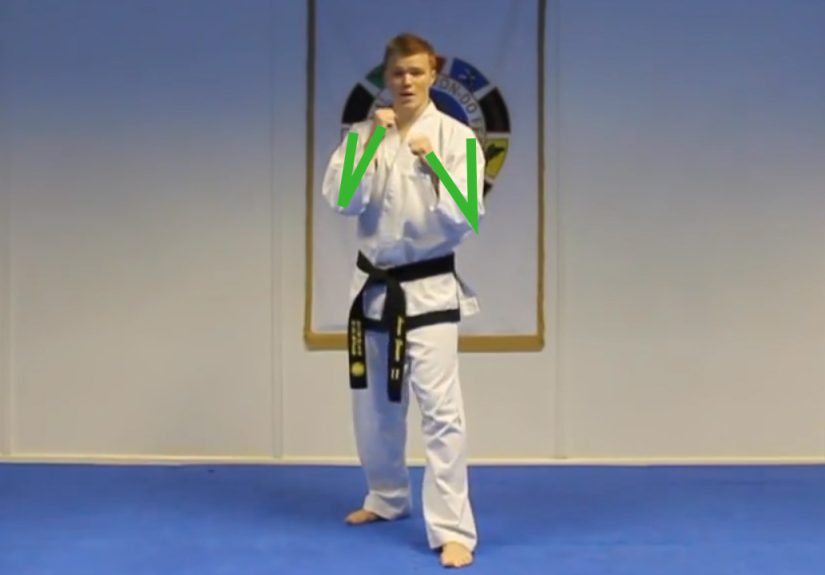
Stand in a comfortable fighting stance with your left foot forward and your right foot back. Keep your hands near your face and your elbows relaxed. Shift a little weight onto your front leg. Now lift your rear knee toward the target, bending the leg as if you are folding it before the kick. This folded position is called the chamber.
Next, pivot your supporting foot. Turn the toes of your standing foot away from the target so your hips can open. As your hips rotate, extend your kicking leg in a smooth arc. For a beginner-friendly version, strike with the instep or top of the foot when practicing on a pad. After contact, bend the knee again, bring the leg back, and step down into stance.
Why This Works
The beginner roundhouse kick builds the foundation for nearly every other version. It teaches you to separate the steps: stance, chamber, pivot, kick, rechamber, recover. Practicing slowly helps you feel where your balance slips. If you rush, you may swing your leg without hip rotation, which looks active but produces about as much power as a pool noodle in a breeze.
Common Mistakes
The first mistake is skipping the chamber. Without the chamber, the kick becomes a lazy sideways lift. The second mistake is failing to pivot. The third is dropping both hands while kicking. Keep your guard up. Even when practicing for fitness, good habits make your movement cleaner and safer.
Way 2: The Rear-Leg Power Roundhouse Kick
The rear-leg roundhouse kick is the heavier, more powerful version. It travels farther, uses more hip rotation, and can generate serious force on a bag or pad. In kickboxing and Muay Thai-inspired training, this version often emphasizes hip turn, shin contact on pads, and full-body rotation.
How to Do It
Begin in your fighting stance with the kicking leg behind you. Keep your chin tucked and your hands high. Push lightly from the rear foot and start turning your hip toward the target. As the rear leg comes forward, pivot strongly on the ball of your front foot. Your front heel should rotate outward so your hips can follow through.
Lift the kicking leg and drive the hip across the center line. Depending on your martial arts style, your leg may snap out from a chamber or swing in a wider arc. For pad training, many practitioners use the shin for a more durable striking surface, while Taekwondo and Karate drills may use the instep or ball of the foot depending on the target and purpose.
After the strike, do not let the leg fall wherever it wants like it just quit its job. Either return it to the original stance or allow it to step through under control. The recovery matters because a powerful kick that ends in a stumble is just a dramatic way to rearrange your own balance.
Best Uses in Training
The rear-leg power roundhouse is excellent for heavy bag work, pad drills, hip rotation practice, and learning how the core contributes to kicking power. Start at low or middle height. Focus on clean mechanics before increasing speed. A controlled medium kick beats an uncontrolled high kick every time, especially if the high kick ends with you meeting the floor socially.
Common Mistakes
Many beginners try to power the kick only with the thigh. A strong roundhouse comes from the ground up: foot pivot, hip rotation, core engagement, leg extension, and clean recovery. Another mistake is leaning too far backward. Some lean is natural, but excessive leaning makes recovery slower and can reduce control.
Way 3: The Lead-Leg Speed Roundhouse Kick
The lead-leg roundhouse kick is faster because the front leg has less distance to travel. It usually produces less power than the rear-leg version, but it is useful for timing, distance control, point-style sparring drills, and quick pad touches. Think of it as the espresso shot of roundhouse kicks: smaller, quicker, and surprisingly effective when used correctly.
How to Do It
Start in a fighting stance with your lead foot slightly forward. Keep your weight balanced, not too heavy on the front leg. Lift the front knee into a chamber. At the same time, pivot the rear foot so your hips can turn. Extend the lead leg toward the target, striking with the instep or ball of the foot depending on your style and training goal.
For extra reach, some students use a small switch step. In a switch roundhouse, the rear foot quickly replaces the lead foot, and the original lead leg fires forward. This adds momentum but also adds complexity, so practice the basic lead-leg version first. Speed should come from efficient movement, not from panicking your leg into action.
Best Uses in Training
The lead-leg roundhouse is ideal for practicing balance, reaction time, and clean chambering. It is also useful for light target drills where the goal is accuracy rather than maximum power. Try placing a small target at waist height and touching it with control. If your foot slaps everywhere except the target, slow down and rebuild the chamber.
Common Mistakes
The biggest mistake is leaning away too early. When you lean before the leg moves, you telegraph the kick and lose balance. Another common issue is failing to rotate the hip. Even a fast kick needs some hip turn, or it becomes a weak flick with fancy branding.
Way 4: The Low Roundhouse Kick
The low roundhouse kick targets a lower pad or bag area and is commonly practiced in kickboxing and Muay Thai-style training. For safety, beginners should practice this kick only on bags, shields, or under instructor supervision. Do not practice low kicks on a partner’s leg unless you are in a properly supervised class with protective equipment and clear rules.
How to Do It
Stand in your fighting stance. Step slightly to the outside with your lead foot if needed, creating an angle. Pivot the support foot and rotate your hips. Let the kicking leg travel in a round path toward the lower target. When using a kick shield or heavy bag, the shin is often the preferred contact surface for this style of kick.
Keep your upper body organized. Your opposite arm may swing slightly for balance in some styles, but your head should not drift wildly. After the kick lands, return to your stance or step through in a controlled way. Control is not optional; it is the part that keeps training from turning into a blooper reel.
Best Uses in Training
The low roundhouse is useful for learning hip rotation because the target height is manageable. Many beginners find it easier to feel the pivot and hip turn when they are not trying to kick high. Practice lightly first. The goal is clean mechanics, not proving the heavy bag owes you money.
Common Mistakes
A frequent mistake is kicking with the foot while the hip stays behind. This reduces power and can feel awkward on impact. Another mistake is standing too square. If your stance is too flat, your hips have less room to rotate. Adjust your angle, pivot smoothly, and keep your knees aligned with your movement.
How to Practice a Roundhouse Kick Safely
Good practice is boring in the best possible way. It repeats the basics until your body understands them. Begin with slow air kicks. Use a wall or chair lightly for balance if needed, but do not hang on so much that you avoid learning stability. Practice the chamber, pivot, extension, rechamber, and recovery as separate pieces.
Next, move to a soft target. A kick paddle or shield gives feedback without requiring full force. Start with ten controlled kicks per side. Rest. Repeat. Switch legs often so your non-dominant side does not become the forgotten sibling of your martial arts training.
A Simple Beginner Drill
- Warm up for five to ten minutes.
- Do ten slow chambers on each leg.
- Do ten pivot-only reps on each side.
- Do ten light roundhouse kicks to a pad per leg.
- Finish with gentle stretching after training.
This simple routine helps you build the movement without overloading your joints. Add speed only after you can stay balanced. Add power only after your pivot and recovery feel natural.
Roundhouse Kick Form Checklist
Use this checklist when practicing:
- Your hands stay up before, during, and after the kick.
- Your supporting foot pivots on the ball of the foot.
- Your knee chambers before the leg extends.
- Your hips rotate toward the target.
- Your kicking leg returns under control.
- You land in a balanced stance.
- You stop if you feel sharp pain.
If your kick feels weak, check your pivot first. If your balance feels terrible, slow down. If your hip feels stuck, lower the target and improve mobility gradually. The roundhouse kick rewards patience. It does not reward dramatic facial expressions, although those may appear naturally during stretching.
Extra Experience: What Practicing the Roundhouse Kick Teaches You
One of the funniest things about learning a roundhouse kick is how quickly it exposes the difference between “I understand this” and “my body has filed a formal complaint.” You can watch a clean roundhouse kick and think, “Sure, lift leg, turn, kick.” Then you try it, and suddenly your supporting foot refuses to pivot, your hands drop like tired curtains, and your balance leaves the room without saying goodbye.
That experience is normal. The roundhouse kick is not only a leg technique; it is a coordination lesson. Beginners often focus on the kicking foot because that is the part making contact. Over time, you realize the support leg is the quiet hero. A good pivot protects the knee, opens the hip, and lets the kick travel naturally. Without it, you feel stuck, and the kick becomes forced.
Another lesson is that height is overrated at the beginning. Many students want a head-height roundhouse kick immediately because it looks impressive. But high kicks require flexibility, strength, balance, timing, and control. If you skip the foundation, the kick may look like a heroic attempt to remove a spiderweb from the ceiling. Waist-height kicks are better for learning. They let you feel the chamber, hip rotation, and recovery without turning every rep into a survival event.
Pad work also teaches humility in a useful way. Air kicks can feel fast and powerful because nothing pushes back. The moment you hit a pad, your structure gets tested. If your hip is not behind the kick, the impact feels weak. If your hands are down, you notice your posture falling apart. If you overcommit, you stumble after contact. The pad is honest. It does not flatter you, but it does help you improve.
Breathing is another underrated detail. Many beginners hold their breath while kicking, as if oxygen is a luxury item. A short exhale during the strike helps keep the body relaxed and coordinated. Tension slows the kick. Relaxation, surprisingly, makes it sharper.
Training both sides is important, even though one side will usually feel like it graduated from martial arts school and the other side is still looking for the entrance. Practicing your weaker side improves balance, coordination, and body awareness. It may feel awkward, but awkward practice is often where real progress hides.
The best experience-based advice is simple: keep the kick clean, low, and controlled before making it fast or powerful. Record yourself occasionally if allowed in your training space. You may notice details you cannot feel in the moment, such as dropping your guard, skipping the pivot, leaning too far back, or failing to rechamber. Small corrections add up.
Finally, the roundhouse kick teaches patience. Progress comes from hundreds of careful repetitions, not one magical training session. Some days your kick feels crisp. Other days your leg behaves like it was assembled during a power outage. Stay consistent. Warm up, practice safely, listen to your body, and enjoy the process. A good roundhouse kick is built one balanced rep at a time.
Conclusion
Learning how to do a roundhouse kick is really learning how to coordinate your whole body. The kick may finish with the foot or shin, but it begins with stance, balance, pivot, hip rotation, and control. The four methods in this guidethe basic beginner roundhouse, rear-leg power roundhouse, lead-leg speed roundhouse, and low roundhouse kickgive you a practical way to understand the technique from multiple angles.
Start slowly. Practice with a safe target. Keep your hands up. Pivot your support foot. Let your hips do their job. Most importantly, train with respect for your body and for the people around you. A roundhouse kick can be a beautiful martial arts technique, a fun fitness skill, and a surprisingly honest teacher. It will tell you exactly when your balance, mobility, or patience needs workand it will do so without sending an email first.
Note: This article is for educational and fitness-focused martial arts practice. Train with a qualified instructor when possible, use pads or bags, wear appropriate protective gear, and avoid practicing kicks on another person outside supervised training.