Table of Contents >> Show >> Hide
- What Makes Tempest Tileworks Special?
- Filmore Clark: A Curated Home for American Artisan Tile
- Color: The Quiet Superpower of Tempest Tileworks
- Pairing Tempest Tileworks with Countertops
- Where to Use Tempest Tileworks in the Kitchen
- Why Handmade Tile Works in Modern Interiors
- Installation Considerations: Pretty Tile Still Needs a Grown-Up Plan
- Design Examples That Make Sense
- How to Choose the Right Tempest Tile
- Experience Section: Living with Artisan Tile and Countertops
- Conclusion
Some tile wants to behave. It lines up, stays quiet, and politely disappears behind the toaster. Then there is Tempest Tileworks at Filmore Clark: handmade, painterly, a little moody, and fully prepared to steal the scene from your fancy faucet. For homeowners, designers, and tile daydreamers who believe a backsplash should do more than block spaghetti sauce, this Portland-made artisan tile line offers a refreshing mix of craft, color, history, and everyday usefulness.
Tempest Tileworks is a handcrafted tile studio based in Portland, Oregon, known for field tile, decorative tile, silkscreened patterns, custom color work, and a design language that feels part antique print, part modern kitchen, and part “yes, I absolutely meant to make this wall the best-dressed guest in the room.” Filmore Clark, the Los Angeles artisan tile showroom associated with the line, has long been admired for its focus on American-made ceramic, glass, and mosaic tile collections. Together, they represent a very specific sweet spot in interior design: old-world character without museum dust, handmade charm without chaos, and enough color options to make even a minimalist pause dramatically.
What Makes Tempest Tileworks Special?
Tempest Tileworks is not the kind of tile brand that appears out of nowhere with a catalog full of beige rectangles named after weather events. The studio was founded by Leigh Odell and Andy Morrison, tile makers with backgrounds in architecture, interiors, art history, and a serious affection for travel and antique imagery. Their tile designs often draw from historic etchings, engravings, textiles, botanical motifs, and decorative patterns from earlier centuries. The result is tile that feels layered, collected, and lived-in rather than flat and mass-produced.
One of the most memorable qualities of Tempest Tileworks is the visible hand in the work. Field tiles may show subtle brushstroke details, tonal variation, and glaze movement. Decorative tiles are often created through traditional silkscreening processes, while field tile and trims can involve hand rolling, cutting, stacking, glazing, and painting. In other words, this is not tile made by a robot having a dull Tuesday. It is tile with fingerprints, rhythm, and a little personality.
Filmore Clark: A Curated Home for American Artisan Tile
Filmore Clark has built its identity around domestically produced artisan tile. Rather than chasing every imported trend that flashes across a design feed, the showroom has been associated with makers whose work celebrates craft, material honesty, and design longevity. That matters because tile is not a throw pillow. You do not casually “swap it out next season” unless you enjoy dust, grout haze, and questioning your life choices.
For designers and homeowners in Los Angeles, Filmore Clark has offered access to makers such as Tempest Tileworks, Pratt Larson, ModCraft, and other American tile studios. This type of showroom is especially useful for people who need to see glaze variation in person. A tile that looks soft gray online may read blue, green, pearl, or “surprisingly emotional” once placed beside real cabinets and countertop samples. Filmore Clark’s appeal lies in that tactile, sample-board experience: hold the tile, compare the finish, watch how light catches the glaze, and then try not to redesign the entire house around one beautiful 3-by-6 rectangle.
Color: The Quiet Superpower of Tempest Tileworks
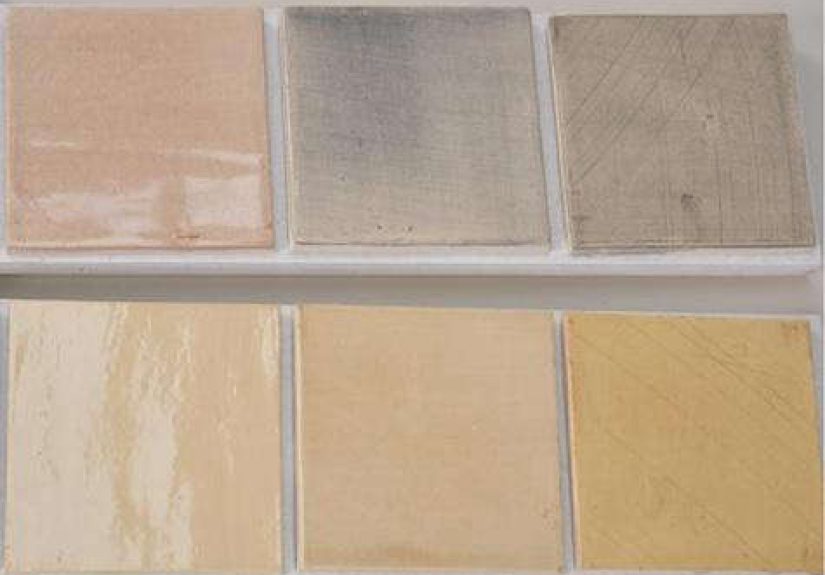
Tempest Tileworks is particularly strong in color. The early Field Tile line that drew attention at Filmore Clark was described as available in muted, watercolor-like shades, with standard sizes such as 3-by-3, 3-by-6, 4-by-4, and 2-by-4 inches. That scale is important. Smaller handmade tiles bring movement to a surface. They create tiny shifts in light and tone that make a backsplash feel alive without becoming noisy.
Today, Tempest’s broader universe includes in-house lines such as Bread & Butter, Temparto, and decorative collections with gloss, matte, rustic, smooth, red clay, blonde clay, custom glaze possibilities, and patterned layouts. The Bread & Butter line is especially useful for kitchens because it includes an expansive glaze palette, from soft whites and creams to blues, greens, yellows, smoky grays, deep navies, and earthy tones. For a countertop pairing, that range is gold. Or maybe sage. Or fog. Or whatever poetic glaze name convinces you that you are now a person who discusses undertones at brunch.
Pairing Tempest Tileworks with Countertops
A successful tile and countertop pairing starts with a simple question: who gets to be the star? If the countertop is dramatic quartzite, heavily veined marble, terrazzo, or richly patterned stone, Tempest field tile in a restrained glaze can create balance. A soft milk, fog, putty, sage, mushroom, or smoke tone can let the stone do its glamorous opera solo while the tile provides harmony in the background.
If the countertop is quieter, such as white quartz, butcher block, soapstone, honed black granite, concrete, or a simple solid surface, Tempest decorative tile can become the main event. This is where patterned tile behind a range, a tile mural in a pantry bar, or a rhythmic Temparto layout can bring charm to a kitchen that might otherwise feel too safe. Safe is fine for seat belts. Backsplashes are allowed to have a little mischief.
Best Countertop Pairing Ideas
White quartz with soft green tile: A clean white quartz counter can look crisp but sterile. Add handmade sage, mint, dew, or olive tile and suddenly the kitchen has warmth, depth, and a sense of garden-adjacent calm.
Soapstone with creamy field tile: Soapstone has a quiet, historic look that works beautifully with hand-glazed cream, flour, milk, or salt-toned tile. The combination feels timeless, especially with unlacquered brass or polished nickel fixtures.
Butcher block with blue or smoky tile: Wood counters bring warmth, but they need contrast. A matte navy, bay, sky, smoke, or flannel glaze can keep the palette grounded and prevent the room from looking like a cabin accidentally entered a city apartment.
Quartzite with neutral handmade tile: Natural quartzite often has movement and mineral complexity. Pair it with muted handmade tile rather than a competing pattern. The slight variation in the tile surface will echo the stone without fighting it.
Where to Use Tempest Tileworks in the Kitchen
The obvious place is the backsplash, and for good reason. Handmade ceramic tile protects the wall, catches light, and gives the kitchen a finished look. But Tempest Tileworks can do more than the standard eighteen inches between countertop and cabinet.
Full-Height Backsplash
A full-height backsplash running from counter to ceiling can make a kitchen feel custom and architectural. This works especially well around a range hood, open shelves, or a window wall. With Tempest field tile, the effect is subtle but rich. The surface becomes a soft wash of color, like watercolor applied to clay instead of paper.
Range Feature Wall
If you love pattern but fear commitment, use decorative Tempest tile behind the range only. This creates a focal point without overwhelming the entire kitchen. Think of it as the tile equivalent of wearing an excellent jacket with simple jeans. Nobody accuses you of trying too hard; they just ask where you got it.
Counter-to-Shelf Tile Zones
In kitchens with floating shelves, tile can run from the counter to the bottom shelf or continue behind the shelving for a layered look. Handmade tile is particularly effective here because cups, bowls, and glassware create shadows that bring out glaze variation.
Butler’s Pantry or Bar Area
A smaller secondary space is a perfect place to use more adventurous tile. A pantry, coffee station, wet bar, or breakfast nook can handle a bolder color or pattern. If the main kitchen is restrained, this is where Temparto or a decorative mural-style tile can loosen its tie.
Why Handmade Tile Works in Modern Interiors
Modern interiors can sometimes become too smooth. Flat cabinets, panel-ready appliances, slab backsplashes, and minimal hardware create a clean look, but they can also remove texture. Handmade tile solves that problem without creating clutter. The irregularity is built into the surface itself. You get character without adding more objects to dust, which is a design victory and a housekeeping miracle.
Current kitchen design trends continue to favor neutrals, natural materials, greens, blues, warm woods, quartz, quartzite, and timeless transitional design. Tempest Tileworks fits neatly into that world because it can move in several directions. It can be quiet and neutral, colorful and playful, historic and decorative, or modern and graphic depending on the glaze, size, and layout.
Installation Considerations: Pretty Tile Still Needs a Grown-Up Plan
Handmade tile is beautiful, but it should be installed by someone who understands variation. Slight differences in size, thickness, color, and surface are part of the appeal. The installer should blend tiles from multiple boxes, check layout before setting, and avoid treating handmade ceramic as if it were laser-cut porcelain. That would be like asking a jazz musician to play a ringtone.
Substrate preparation matters. Tile performance depends on a stable backing surface, correct mortar or adhesive, appropriate grout, movement joints, and careful waterproofing in wet areas. Around countertops, the joint where tile meets counter should be handled properly, often with a flexible sealant rather than rigid grout, because different materials expand and move differently. This is not the glamorous part of design, but neither is dental floss, and both prevent expensive regret.
For kitchens, consider maintenance before choosing a finish. Glossy tile is usually easier to wipe clean behind a stove. Matte tile offers a softer, more contemporary look but may require a little more attention in high-splatter zones. Crackle glazes can be gorgeous, but they may need sealing depending on the application. Always confirm suitability for wet areas, floors, exteriors, steam showers, or countertops before ordering.
Design Examples That Make Sense
Imagine a small Los Angeles kitchen with white oak lower cabinets, cream upper cabinets, and a honed black countertop. A Tempest field tile in a soft fog or milk glaze could brighten the room without making it feel brand new in a bad way. Add a handmade edge trim and the space suddenly feels considered, not catalog-built.
Now picture a Spanish Revival kitchen with plaster walls, dark wood beams, and a warm stone countertop. A decorative Tempest pattern, especially one inspired by historic motifs, could sit behind the range like a framed textile. The result would respect the architecture without turning the kitchen into a theme restaurant, which is an underappreciated design skill.
For a modern apartment, Temparto tiles could create a graphic backsplash in navy, flannel, or olive over a simple quartz counter. Because the pattern is modular, the design can feel crisp and contemporary while still carrying the warmth of handmade clay. That is the best kind of contradiction.
How to Choose the Right Tempest Tile
Start with samples. Do not skip this step. Computer screens lie. Showroom lighting lies less, but your kitchen light tells the truth. View tile samples beside your countertop, cabinet finish, flooring, wall paint, and metal finishes. Check them in morning light, afternoon light, and evening artificial light. A glaze that looks calm at noon may turn dramatic at sunset, like a tiny ceramic actor waiting for its cue.
Next, decide on scale. A 3-by-6 handmade subway tile feels classic and versatile. Smaller squares feel more traditional or cottage-like. Longer rectangles can feel modern. Patterned tiles create rhythm and should be planned carefully around outlets, corners, windows, and hood lines. If you are using decorative tile, ask for a layout drawing before installation. It is much easier to move a motif on paper than after mortar gets involved.
Finally, order enough material. Handmade tile often has lead times, and future batches may vary slightly. A common professional practice is to order overage for cuts, waste, and attic stock. Extra tile is not clutter; it is insurance in a small cardboard box.
Experience Section: Living with Artisan Tile and Countertops
The first thing people notice about handmade tile is not always the color. It is the way the surface changes during the day. In the morning, a soft gloss tile can look fresh and almost watery. By late afternoon, the same wall may deepen into shadow, showing brush marks, glaze pooling, and edges that catch light unevenly. This is the quiet pleasure of artisan tile: it does not reveal itself all at once. It has chapters.
In a kitchen, that quality matters more than many homeowners expect. The kitchen is not a showroom frozen in perfect lighting. It is where coffee happens before language, where lemons roll behind the cutting board, where someone opens the refrigerator five times hoping dessert has appeared. A handmade backsplash gives that daily activity a beautiful background. It makes the room feel designed without making it feel untouchable.
Tempest Tileworks is especially rewarding for people who enjoy small imperfections. A perfectly flat, identical tile installation can be elegant, but handmade tile has a softer human rhythm. One tile may be slightly cloudier; another may have a deeper brushstroke; another may flash brighter near the edge. Together, these differences create movement. The wall feels less like a product and more like a surface made by people.
Pairing this kind of tile with countertops is an exercise in restraint. Many homeowners fall in love with both a dramatic stone and a dramatic tile, which is understandable and also how kitchens become visual wrestling matches. The better approach is to let one material lead. If the countertop has bold veining, choose a quieter Tempest glaze. If the counter is simple, let the tile bring color or pattern. Design is often less about finding beautiful things and more about convincing beautiful things to stop shouting over each other.
From a practical standpoint, handmade tile also changes how you think about maintenance. A glossy ceramic backsplash behind a cooktop is easy to wipe down, but grout color matters. A very pale grout can look crisp on day one and suspiciously “well-loved” after several tomato sauce adventures. A mid-tone grout often feels more forgiving. Around the countertop, a clean flexible joint keeps the transition looking intentional and helps manage movement between materials.
The showroom experience is part of the story, too. Seeing Tempest Tileworks through a curated source such as Filmore Clark is different from scrolling endless tile photos online. In person, you can compare a green that leans gray with a green that leans blue. You can place a sample against a stone slab and immediately know whether the relationship is charming or awkward. You can discover that the tile you thought you wanted is not the one your kitchen wanted. Kitchens, unfortunately, have opinions.
The best experience with Tempest Tileworks at Filmore Clark is not about chasing a trend. It is about choosing a material that can stay interesting for years. A good tile installation should survive cabinet hardware changes, paint color experiments, new appliances, and the occasional decorative phase involving too many cutting boards. Handmade tile has that staying power because it does not depend entirely on novelty. It depends on craft, proportion, color, and touch.
That is why Tempest Tileworks remains such a compelling option for tile and countertop projects. It gives designers a flexible tool, homeowners a meaningful material, and kitchens a little soul. And if a backsplash can make washing dishes feel slightly more romantic, that is not a miracle, but it is close enough.
Conclusion
Tempest Tileworks at Filmore Clark is a strong choice for anyone who wants tile with depth, history, and handmade character. Whether used as a subtle field tile backsplash, a patterned range feature, or a colorful pantry moment, Tempest tile pairs beautifully with quartz, quartzite, soapstone, butcher block, concrete, and natural stone countertops. Its strength lies in balance: artistic but usable, historic but fresh, decorative but not fussy.
For a kitchen or bath that needs more warmth, texture, and individuality, this artisan tile line offers a practical path toward a more personal space. Choose samples carefully, plan the layout thoughtfully, hire an installer who respects handmade materials, and let the tile do what it does best: make the room feel like someone with taste lives there.
Note: This article synthesizes publicly available information about Tempest Tileworks, Filmore Clark, artisan ceramic tile, countertop pairing principles, and current kitchen design trends. It is written as original editorial content for web publication.