Table of Contents >> Show >> Hide
- Why Ornamental Grasses Work So Well in Garden Design
- 15 Beautiful Ways to Use Ornamental Grasses in Your Garden
- 1. Create a Soft, Airy Backdrop Behind Flowering Perennials
- 2. Build a Privacy Screen That Still Feels Graceful
- 3. Line Walkways With Low, Tidy Grass for Instant Polish
- 4. Soften Hardscape Around Patios, Steps, and Stone Walls
- 5. Use One Bold Grass as a Focal Point
- 6. Mass Plant Grasses for a Modern, Minimalist Look
- 7. Add Drama to Containers and Patio Pots
- 8. Brighten Shade Gardens With Texture Instead of More Flowers
- 9. Pair Them With Bold Foliage for High-Contrast Planting
- 10. Plant Them on Slopes and Tough Sunny Sites
- 11. Design a Wildlife-Friendly Border With Native Grasses
- 12. Let Grasses Carry the Fall Garden
- 13. Leave Them Standing for Winter Beauty
- 14. Use Them Around Water Features and Rain Gardens
- 15. Blend Them Into Meadows, Lawn Alternatives, and Naturalistic Gardens
- Smart Design Tips Before You Plant
- Conclusion
- Real-World Experience: What Gardeners Learn After Living With Ornamental Grasses
- SEO Tags
Some plants shout for attention. Ornamental grasses do something cleverer: they whisper, sway, shimmer, and somehow end up stealing the whole show anyway. If flowers are the party guests in sequins, ornamental grasses are the effortlessly stylish friend who shows up in linen and still gets all the compliments.
That easy charm is exactly why gardeners love them. Ornamental grasses bring movement, texture, structure, and long-lasting beauty to spaces that might otherwise feel flat or overly fussy. They can look sleek in a modern landscape, romantic in a cottage border, bold in a prairie-style garden, or downright glamorous in a big patio container. Better yet, many are drought-tolerant once established, deer-resistant, and useful well beyond summer. Even in winter, when half the garden looks like it has given up on life, grasses often keep standing there like elegant little overachievers.
If you want a yard that feels layered, relaxed, and beautiful in more than one season, ornamental grasses are one of the smartest plants you can grow. Here are 15 gorgeous ways to use them, plus practical design tips to help you avoid the classic mistakeslike planting a giant screen-forming grass where you only had room for something the size of a throw pillow.
Why Ornamental Grasses Work So Well in Garden Design
Before we get into the ideas, it helps to know why these plants are so versatile. Ornamental grasses earn their keep because they do several jobs at once. They add line and form, soften hard edges, create movement in the breeze, and extend seasonal interest from spring into fall and often through winter. Some stay in tidy clumps, while others spread more aggressively. Some prefer hot, sunny spots, while others are surprisingly useful in part shade or bright shade.
The biggest design advantage is contrast. Grasses make broad-leaved plants look bolder, flowering perennials look brighter, and garden beds look more dynamic. Their texture is the visual equivalent of seasoning in a good meal: you might not notice it at first, but without it, everything tastes a little bland.
15 Beautiful Ways to Use Ornamental Grasses in Your Garden
1. Create a Soft, Airy Backdrop Behind Flowering Perennials
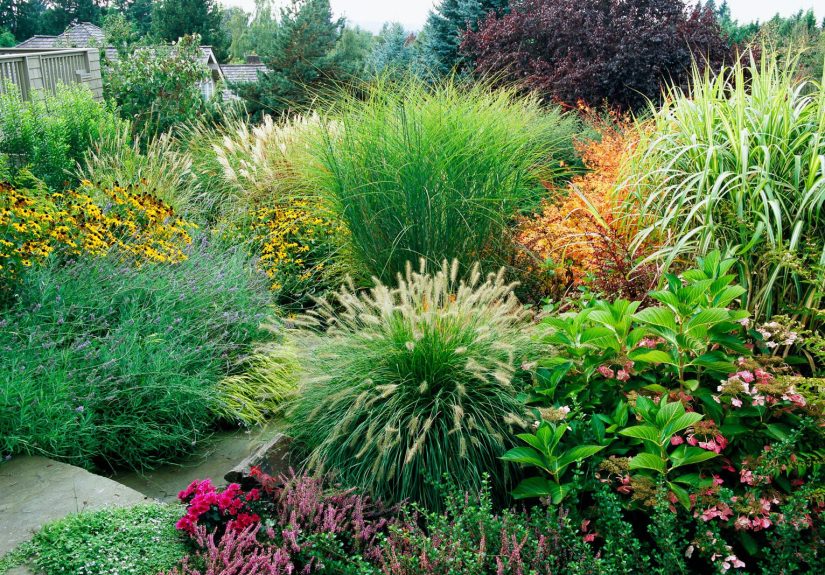
One of the easiest ways to use ornamental grasses is as a backdrop behind coneflowers, black-eyed Susans, salvias, asters, or sedums. Upright grasses such as feather reed grass or switchgrass bring height without looking heavy, while looser grasses add a gentle, hazy effect behind colorful blooms. This makes the border feel fuller and more layered instead of looking like a row of plants lined up for school picture day.
2. Build a Privacy Screen That Still Feels Graceful
Tall ornamental grasses are perfect when you want privacy without the visual weight of a hedge or fence. Varieties such as miscanthus, switchgrass, or certain large fountain grasses can screen patios, mark property lines, or hide utility areas. The beauty is that a grass screen feels more relaxed and less fortress-like. It gives you enclosure, but with movement and softness, which is especially useful in smaller suburban gardens.
3. Line Walkways With Low, Tidy Grass for Instant Polish
Path edges can look harsh if they are planted with nothing but rigid mounds or bare mulch. Low-growing grasses like blue fescue or sedges make wonderful edging plants because they keep the line of a walkway crisp while still looking natural. Their fine blades soften pavers, gravel, or brick, and they help transition from hardscape to planting bed in a way that feels intentional rather than abrupt.
4. Soften Hardscape Around Patios, Steps, and Stone Walls
Stone, concrete, and brick can make a garden feel grounded, but they can also make it feel a little too stiff. Ornamental grasses are the design fix. Plant them near retaining walls, stair edges, patios, or fence lines to blur hard corners and add movement. Their fountain-like forms are especially effective when you want a landscape to feel more inviting and less like a building materials catalog.
5. Use One Bold Grass as a Focal Point
You do not always need a huge planting to make an impact. Sometimes one beautiful grass in the right spot does the job. A strong specimen grass can anchor the corner of a border, frame an entry, or give a seating area a clear focal point. Choose a plant with distinct shape or colorsomething upright, arching, striped, or richly toned in autumnand give it enough space to show off. Think of it as the garden equivalent of a statement lamp.
6. Mass Plant Grasses for a Modern, Minimalist Look
If your style leans contemporary, repeated plantings of one or two grasses can look stunning. Large drifts of the same grass create rhythm, unity, and a calm visual field. This works especially well with upright grasses in geometric beds or along straight pathways. A repeated planting also looks expensive and intentional, even when the plant palette is simple. Designers love this trick because it makes a garden feel cohesive without looking busy.
7. Add Drama to Containers and Patio Pots
Ornamental grasses are brilliant in containers because they supply height, movement, and texture for months. In mixed pots, they often play the “thriller” role, rising above flowering annuals and spilling companions. In a single large container, one grass can be enough all by itself. This is especially useful on decks, porches, balconies, and near front doors where you want something architectural but not fussy. Bonus: containers are also a smart way to enjoy grasses that might spread too eagerly in the ground.
8. Brighten Shade Gardens With Texture Instead of More Flowers
Shade gardens often lean heavily on broad-leaved plants like hostas, heucheras, and ferns. That can be beautiful, but it can also become a sea of the same texture. Shade-tolerant ornamental grasses and grass-like plants such as Japanese forest grass, bottlebrush grass, sedges, or northern sea oats break that pattern beautifully. Their finer texture makes shaded beds look livelier, and their movement helps darker corners feel less static.
9. Pair Them With Bold Foliage for High-Contrast Planting
Some of the most memorable combinations in a garden come from opposites. Fine grass blades next to broad, chunky leaves create instant contrast. Try grasses with hostas, cannas, dahlias, hydrangeas, elephant ears, or large sedums. The difference in form makes both plants look better. It is the same reason a crisp blazer looks sharper with a soft T-shirt underneathcontrast creates style.
10. Plant Them on Slopes and Tough Sunny Sites
Many ornamental grasses are excellent choices for difficult spaces, especially sunny banks and dry areas where fussier plants struggle. Clump-forming native grasses and prairie species can help stabilize slopes, reduce erosion, and provide a more natural look than a blanket of turf. They are also practical for places that bake in summer, such as hell strips, curbside beds, or the sunniest corner of the front yard that seems determined to roast every plant you try.
11. Design a Wildlife-Friendly Border With Native Grasses
If you want beauty and ecological value, native ornamental grasses are some of the best plants you can grow. Switchgrass, little bluestem, prairie dropseed, and other native selections provide shelter, seed, and seasonal cover for birds and beneficial insects. They also pair naturally with prairie perennials such as coneflower, liatris, goldenrod, and bee balm. The result is a garden that looks alive in every sense of the word.
12. Let Grasses Carry the Fall Garden
By late summer, many gardens start to lose momentum. This is exactly when ornamental grasses begin to show off. Plumes appear, foliage color deepens, and the whole planting gains that soft, golden, backlit magic everyone pretends happens naturally in their yard all the time. Mix grasses with late-season stars like asters, rudbeckia, and sedum, and suddenly your garden has a strong second act instead of limping toward frost.
13. Leave Them Standing for Winter Beauty
One of the best uses for ornamental grasses happens after the growing season ends. Seedheads, tawny blades, and upright forms catch frost, snow, and low winter light in a way that makes the garden feel intentional even in dormancy. Rather than cutting everything down in fall, leave many grasses standing until late winter or early spring. Your landscape will look better, and wildlife often benefits from the shelter and seed.
14. Use Them Around Water Features and Rain Gardens
Not all grasses want dry conditions. Some grasses, sedges, and rush-like plants thrive in moist soils and are ideal around ponds, stream edges, drainage swales, or rain gardens. Their vertical lines complement the reflective surface of water beautifully, and the movement of foliage adds an extra layer of calm. In a rain garden, they also help the space feel lush and deliberate instead of like a low spot that keeps stealing your mulch.
15. Blend Them Into Meadows, Lawn Alternatives, and Naturalistic Gardens
Ornamental grasses are a natural fit for looser, more relaxed landscapes. You can use them to transition from formal beds into a meadow planting, edge a no-mow area, or create a naturalistic border that feels inspired by prairie landscapes. In these designs, grasses become the connective tissue. They unify the planting, repeat color and texture, and make the whole space feel like it belongs to the site instead of being imposed on it.
Smart Design Tips Before You Plant
Know the mature size
A grass that looks cute in a nursery pot may eventually become enormous. Always plan for mature height and width, especially near paths, doors, and windows.
Match the grass to the conditions
Some ornamental grasses love heat and full sun. Others are happier in part shade or moist soil. The prettiest planting in the world will still fail if the grass hates where you put it.
Choose clumpers when you want control
If you want neat, predictable growth, clump-forming grasses are usually the safer choice. Running grasses have their uses, but they need more room and more supervision.
Check for invasive concerns
Some ornamental grasses are beautiful but problematic in certain regions. Before planting, check local guidance so your dreamy garden does not turn into a neighborhood apology tour.
Conclusion
Ornamental grasses are some of the hardest-working plants in the landscape. They can be structural or soft, dramatic or understated, wild-looking or polished. They fill design gaps that flowers alone cannot solve, and they keep earning their space long after the bloom-heavy stars have finished performing. Whether you want a modern patio, a pollinator-friendly border, a cozy screen, or simply a garden with more movement and soul, grasses can help you get there.
The secret is using them with purpose. Pick the right size, match the plant to the site, repeat shapes for rhythm, and pair fine grass textures with bolder companions. Do that, and your garden will feel richer, calmer, and far more beautiful in every season. Not bad for plants that basically win people over by being fabulous in the wind.
Real-World Experience: What Gardeners Learn After Living With Ornamental Grasses
Here is the thing people do not always tell beginners: ornamental grasses are easy, but they are not mindless. The first lesson most gardeners learn is spacing. A grass in a one-gallon pot can look harmless, almost shy. Fast-forward two seasons, and suddenly it is leaning into the walkway, swallowing its smaller neighbors, and acting like it pays the mortgage. The fix is simpleread the mature size and believe it. Grasses usually mean business.
The second lesson is that movement changes everything. A border can look perfectly nice on a still day, but once the wind picks up and the grasses start swaying, the whole garden feels alive. That is when people understand why designers love them so much. Flowers give color, shrubs give weight, but grasses give motion. And motion makes a garden memorable.
Another common experience is discovering that grasses are often at their best when other plants are fading. In midsummer, they may still be quietly developing. Then late summer and fall arrive, and suddenly plumes emerge, foliage colors shift, and the planting takes on depth and glow. Many gardeners who once planned every bed around spring blooms eventually realize grasses are what keep the garden from feeling tired in September and October.
There is also a practical lesson in maintenance. New gardeners sometimes overwater or overfeed ornamental grasses because that is what they do with everything else. The result can be floppy growth and disappointment. In many cases, grasses look better when they are not pampered too much. Once established, many prefer a lighter touch. They want decent soil, the right light, and room to grownot daily drama.
Winter is where the relationship usually becomes permanent. The first year a gardener leaves grasses standing and sees them lit by frost or dusted with snow, it changes the way they think about seasonal beauty. What looked like “dead plants” in theory turns out to be architecture, texture, and light in practice. Birds use them. Seedheads catch the morning sun. The garden keeps speaking even in the coldest months.
Finally, gardeners learn that ornamental grasses are incredibly good at making everything around them look more intentional. A simple bed of coneflowers feels more designed with prairie dropseed nearby. A modern porch pot looks more expensive with a dramatic grass in the center. A shady corner becomes more graceful with Japanese forest grass spilling over the edge. Once you have seen those transformations happen in real life, it is hard not to keep finding new excuses to plant one more grass. And then one more after that. Gardens, after all, are built on optimismand occasionally on a completely reasonable decision to buy another feather reed grass.