Table of Contents >> Show >> Hide
- Why Cats Need Nose Drops in the First Place
- Before You Start: Ask These Questions First
- Supplies to Set Up Before the Cat Notices
- How to Give a Cat Nose Drops: Step by Step
- Best Restraining Tips for Nose Drops
- How to Make Future Doses Easier
- Common Mistakes Owners Make
- When to Stop Home Treatment and Call the Vet
- Experience-Based Tips: What This Usually Looks Like in Real Life
- Conclusion
Giving a cat nose drops sounds simple until your sweet little loaf suddenly transforms into a furry escape artist with opinions. Strong opinions. The good news is that it can be done safely, calmly, and without turning your living room into a tiny wrestling arena.
If your veterinarian has told you to use nose drops for your cat, the real secret is not brute force. It is preparation, gentle handling, and knowing when to pause. Cats usually do better with low-stress restraint, short sessions, and a human who acts like this is a normal Tuesday instead of a medical ambush.
This guide explains how to give cat nose drops step by step, how to restrain a cat without making things worse, what mistakes to avoid, and when nasal congestion needs a veterinary recheck instead of another round of heroics at home.
Why Cats Need Nose Drops in the First Place
Cat nose drops are usually used to help with nasal congestion, dried secretions, or upper respiratory irritation. In some cases, a veterinarian may recommend simple saline drops to loosen crusty discharge and make breathing more comfortable. In other cases, the drops may be a prescription medication tailored to the cause of the problem.
That distinction matters. A stuffy nose in cats is not one-size-fits-all. Sometimes it is a mild upper respiratory infection. Sometimes it is chronic inflammation. Sometimes it is a polyp, a stubborn infection, or another condition that needs a different plan. So before you reach for anything that sounds vaguely “decongestant-ish,” make sure the product and directions came from your veterinarian.
Translation: this is not the moment for random human nasal spray from the medicine cabinet. Your cat is not a tiny bearded uncle with seasonal allergies.
Before You Start: Ask These Questions First
Before giving the first drop, confirm the following:
- What exactly is the product: saline, prescription medication, or another veterinary preparation?
- How many drops go in each nostril, and how often?
- Should the bottle be shaken first?
- Should it be room temperature before use?
- What should you do if your cat sneezes immediately after the drops?
- What signs mean the treatment is not working and your cat needs to be seen again?
If your cat is severely congested, painful, aggressive, or impossible to handle safely, ask whether your veterinarian recommends a second person, a demonstration appointment, or a calming medication plan. There is no trophy for getting scratched in the name of nasal hygiene.
Supplies to Set Up Before the Cat Notices
Get everything ready first. Cats have a sixth sense for “medical nonsense is about to happen,” so the less fumbling you do, the better.
- The prescribed nose drops
- A large towel or light blanket
- Tissues or soft gauze for wiping discharge
- Treats, lickable puree, or a favorite reward
- A non-slip surface such as a mat, folded towel, or your lap
- A helper, if your cat does better with one person holding and one person dosing
Choose a quiet room with the door closed. Turn off sudden-noise machines, keep other pets away, and aim for an environment that says “mild inconvenience” instead of “spy thriller extraction scene.”
How to Give a Cat Nose Drops: Step by Step
Step 1: Read the label and prep the medication
Check the name, dose, and instructions every time. If the bottle needs mixing, do that first. If it is cold from storage, warm it gently in your hands for a minute or two. Cold liquid in a sore nose is not exactly a bonding exercise.
Step 2: Clean the outside of the nose if needed
If dried discharge is crusted around the nostrils, soften and wipe it away gently with a warm, damp cloth or tissue. Do not pick at hard crusts like you are restoring antique furniture. A gentle cleanup helps the drops reach the nostril entrance more easily and makes the experience less irritating for your cat.
Step 3: Position your cat
You can do this on your lap, on a table with a non-slip towel, or with the cat wrapped in a towel burrito. Many cats do best facing away from you, with your body close behind them. That position often feels less confrontational than coming at the face head-on.
Step 4: Stabilize the head gently
Use one hand to steady the head from above or behind the cheekbones. You want control, not a headlock. A slight upward tilt is usually enough. Do not crank the head backward or compress the neck.
Step 5: Place the drops at the nostril entrance
Hold the tip just at or slightly above the opening of the nostril. Avoid jamming the bottle into the nose. Add the prescribed number of drops, then release. Most cats will sniff, sneeze, or blink dramatically as if they have been wronged by the legal system. That is fairly normal.
Step 6: Let your cat recover
Give your cat a second to breathe, sniff, and swallow. If you need to treat both nostrils, do the second side calmly. Then reward immediately with praise, food, or a favorite lickable treat.
Step 7: End on a good note
Even if the session was not perfect, finish with something positive. Your goal is not cinematic perfection. Your goal is getting the medication in while preserving your cat’s trust enough to do it again later.
Best Restraining Tips for Nose Drops
The word restraining makes many cat owners picture a chaotic grappling match. It should not. Good restraint is really about gentle control, reduced fear, and making the procedure short and predictable.
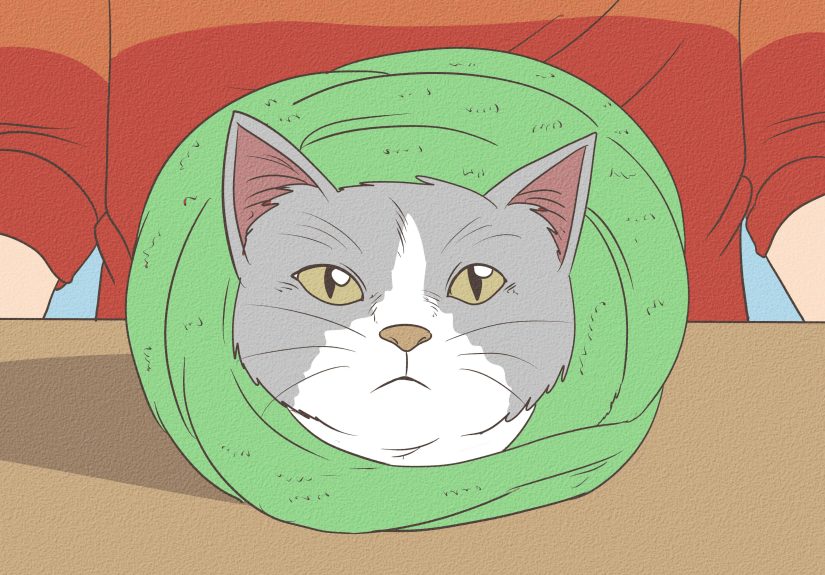
The towel burrito method
This is often the best choice for cats who swat, back up, or launch themselves sideways like furry soap bars.
- Spread a towel on a flat surface.
- Place your cat in the center facing away from you.
- Wrap one side snugly over the body.
- Wrap the other side over it, leaving only the head exposed.
- Keep the front legs tucked inside so claws stay off the guest list.
The towel should be snug enough to prevent flailing but not tight enough to interfere with breathing. Think secure burrito, not overstuffed luggage.
The lap method
Some calm cats do better in your lap than on a table. Sit with your cat between your thighs or against your body, facing away from you. One arm can gently stabilize the body while your hand steadies the head. This works best for cats who are annoyed by restraint but not actively trying to escape.
The two-person method
If your cat becomes squirrely the moment the bottle appears, a helper can make the process much smoother. One person handles the towel and body control, while the second person gives the drops. The holder should stay calm and avoid squeezing too hard. The drop-giver should move efficiently and not deliver a five-minute monologue to the nostril.
What not to do
- Do not scruff your cat as a default handling method.
- Do not pin your cat flat unless your veterinarian specifically taught you a safe technique.
- Do not chase a panicked cat around the house.
- Do not keep escalating if your cat is growling, open-mouth breathing, or becoming frantic.
Short, low-stress sessions are usually more successful than full-scale household drama.
How to Make Future Doses Easier
The best time to train your cat for handling is before you need to do anything medical, but even mid-treatment you can improve things.
- Practice brief face, cheek, and nose handling when no medication is involved.
- Reward immediately after every calm touch.
- Let your cat see the towel and receive treats around it.
- Keep sessions short, sometimes just a few seconds.
- Use high-value rewards your cat does not get all day long.
Many cats learn a routine surprisingly quickly. Towel appears, weird nose event happens, then delicious snack arrives. It may never become their favorite hobby, but it can become tolerable. For cat medicine, that counts as a standing ovation.
Common Mistakes Owners Make
Using the wrong product
Not every nasal product that is safe for people is safe for cats. Always use what your veterinarian recommended and nothing else.
Trying to wing it without prep
Looking for the bottle after you already picked up the cat is how you end up with one confused cat and zero completed mission objectives.
Going too fast or too forcefully
Fast is good once you are positioned. Rushed and rough is not. Cats remember stressful handling, and the next dose will often be harder.
Skipping rewards
Yes, your cat just acted like you ruined their life. Reward them anyway. Positive reinforcement is not optional fluff. It is a useful medical strategy.
Assuming congestion is “just a cold” forever
Persistent nasal discharge, noisy breathing, poor appetite, or recurrent symptoms deserve a veterinary follow-up. Cats can have chronic upper airway disease, polyps, dental-related issues, fungal disease, or other causes that need more than supportive care.
When to Stop Home Treatment and Call the Vet
Contact your veterinarian promptly if:
- Your cat is not eating well, seems depressed, or is becoming dehydrated
- The nasal discharge is thick, bloody, or getting worse
- Your cat seems painful when you touch the face or nose
- The symptoms are not improving
- You cannot medicate your cat safely at home
Seek urgent veterinary care right away if your cat is open-mouth breathing, struggling to get air, breathing heavily, turning blue or pale at the gums, or becoming weak and lethargic. Nose drops are not a substitute for emergency breathing care.
Experience-Based Tips: What This Usually Looks Like in Real Life
Here is the truth most cat owners discover after the first attempt: giving a cat nose drops is usually less about perfect technique and more about reading the room. Or, more accurately, reading the cat.
For example, many people assume the hardest part is placing the drop. It often is not. The hardest part is the ten seconds before the drop, when your cat senses unusual behavior and begins evaluating escape routes with the focus of a casino security team. That is why prep matters so much. When the bottle is uncapped, the towel is ready, the treat is open, and your body language is calm, the whole thing tends to go much better.
Owners also learn quickly that cats have preferences. One cat tolerates the lap method beautifully but loses all patience on a table. Another cat hates being held in arms yet melts into a towel wrap because it feels secure. Some cats do best when facing away from the handler. Others calm down if they can keep their paws on a stable surface. The “right” restraint method is usually the one that gets the job done with the least fear, the least force, and the fewest future grudges.
Another common experience is that the first session is often the messiest. Your cat sneezes. You question whether any of the drop actually went in. You apologize to the cat, the towel, and possibly the furniture. By the third or fourth session, however, most owners develop a rhythm. They stop over-handling. They position the cat better. They become more efficient. The cat, in turn, realizes that the event is brief and survivable, especially if it ends with chicken puree.
People are sometimes surprised that their own stress changes everything. If you approach the task with dread, cats often pick up on that tension instantly. Your shoulders tighten, your hands hesitate, and the entire procedure starts to feel suspicious. A calmer, matter-of-fact approach usually works better. Not cheerful in an over-the-top way. Just steady, organized, and boring. Cats may not appreciate your effort, but they do notice predictability.
One of the most useful real-world lessons is knowing when not to force it. If a cat is escalating from annoyed to frightened, the smartest move may be to stop, reset, and try again later or call the veterinary team for help. Owners sometimes think stopping means failure. It does not. It means you are protecting safety, preserving trust, and preventing the next dose from becoming even harder. That is smart handling, not giving up.
Many veterinary teams also hear the same success story: once owners start pairing handling with rewards outside medication time, future treatments get easier. A few seconds of gentle face touching followed by a treat can make a big difference over several days. The cat does not suddenly become thrilled about nose drops, but the overall experience becomes less dramatic. In cat medicine, moving from “absolutely not” to “fine, but I am filing a complaint” is real progress.
So if your first attempt is awkward, welcome to the club. Most owners do not nail this on take one. What matters is keeping it safe, keeping it gentle, and remembering that your cat is not being difficult for fun. Congested cats may feel miserable, unable to smell food well, and tired of being handled. A little patience goes a long way. And after the last drop is done, a warm blanket, a favorite snack, and a little dignity restoration are excellent follow-up care for everyone involved.
Conclusion
When you need to give a cat nose drops, the best approach is simple: use the exact product your veterinarian recommends, prepare everything in advance, keep restraint gentle and brief, and reward generously after each dose. A towel burrito, a steady hand, and a calm attitude can make the difference between a manageable routine and a full feline protest movement.
Most importantly, remember that nose drops help only when they match the real problem. If your cat has ongoing congestion, appetite loss, facial pain, or any breathing difficulty, it is time for veterinary guidance, not guesswork. Done correctly, home treatment can be helpful. Done thoughtfully, it can also preserve your cat’s comfort and your relationship with the tiny striped critic who lives in your house rent-free.