Table of Contents >> Show >> Hide
- Who Is Benjamin Hightower on AGT?
- What Happened in the Audition?
- Why “Pink Pony Club” Was Such a Brilliant Song Choice
- Why Simon Cowell Was Left Stunned
- Why Fans Keep Rewatching This Viral AGT Audition
- What This Audition Says About Benjamin Hightower’s Potential
- Why Auditions Like This Still Matter to Viewers
- Conclusion
It takes a lot to stun Simon Cowell. This is a man who has spent decades watching singers, magicians, dancers, danger acts, dog acts, and at least a few performers who probably should have stayed in the group chat instead of going on national television. So when America’s Got Talent viewers saw Simon go unusually quiet during Benjamin Hightower’s audition, the moment landed with the force of a confetti cannon.
That is exactly why this AGT audition keeps getting replayed. Benjamin Hightower didn’t walk onstage with a gimmick, a sob story doing cartwheels, or a backing track trying to bully the audience into having emotions. He sat down at a keyboard and sang Chappell Roan’s “Pink Pony Club” in a way that felt both fresh and deeply personal. The result? Simon Cowell looked genuinely stunned, the crowd lit up, and fans immediately started treating the clip like required viewing for anyone who claims they “don’t really watch talent shows.” Sure, Jan.
If you are wondering what made this performance hit so hard, here is the short version: it was smart, soulful, current, and confident without trying too hard. That last part matters. A lot. Benjamin didn’t perform like someone begging for approval. He performed like someone who had finally decided that this was his lane and he was done apologizing for taking it.
Who Is Benjamin Hightower on AGT?
Benjamin Hightower arrived on AGT season 20 with more life experience than the average audition hopeful. He was introduced as a military veteran and former Air Force servicemember who had spent years in uniform before stepping back toward music full-time. That backstory gave his audition extra weight, not because the show needed another emotional setup, but because it framed the performance as a real pivot point. This wasn’t a hobby dressed up as a dream. It was a dream getting another shot.
He also was not a total stranger to the larger AGT universe. For fans who follow the franchise closely, Benjamin had roots in performance long before this solo moment. That history makes his season 20 appearance feel even richer. He didn’t just wake up one morning and decide to sing on television because the lighting looked flattering. He came in with stage instincts, musical chops, and the kind of perspective that only comes from living a little before stepping into the spotlight.
That combination matters in a competition like this. America’s Got Talent has always loved a surprise, but the contestants who linger in viewers’ minds are usually the ones who feel fully formed. Benjamin had that. He seemed grounded. Warm. Calm. He looked like a guy who knew exactly why he was there, which made the audition easier to trust from the very first note.
What Happened in the Audition?
The setup was simple: Benjamin Hightower at a keyboard, ready to sing “Pink Pony Club.” On paper, it might not sound like the most obvious song choice for an AGT audition. That is part of why it worked. Talent-show auditions often lean on giant power ballads, ultra-safe classics, or songs that have been squeezed so dry by reality TV they should come with a warning label. Benjamin went another way.
Instead of choosing something predictable, he picked a song with pop-culture momentum, emotional color, and enough room for reinvention. He then delivered it with a tone that felt less like karaoke and more like interpretation. That is a huge difference. Karaoke says, “Look, I know the words.” Interpretation says, “Let me show you why this song matters to me.” Benjamin absolutely lived in the second category.
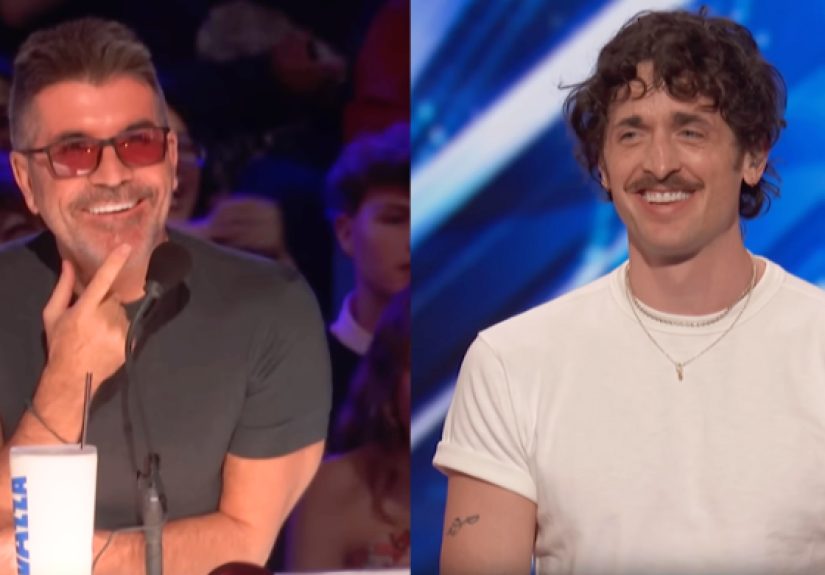
As he sang, the room shifted. The audience got louder. The judges leaned in. And Simon Cowell, who is rarely accused of being subtle, reportedly watched with a stunned smile and a head shake that said more than a paragraph of TV-judge commentary ever could. Sometimes the loudest reaction is silence, especially from a guy known for having an opinion before the commercial break.
By the time the performance ended, the feeling was obvious: Benjamin hadn’t just survived an audition. He had created a moment. He earned four yeses and moved on, but the real win was bigger than the vote. He made viewers remember his name.
Why “Pink Pony Club” Was Such a Brilliant Song Choice
Let’s talk about the song, because it did a lot of heavy lifting without ever feeling heavy-handed. Chappell Roan’s “Pink Pony Club” had already become a major pop conversation piece by 2025, and that matters in this story. The song carries theatricality, liberation, longing, rebellion, and joy all at once. In other words, it is not beige. It is very much not beige.
That gave Benjamin plenty to work with. He could lean into the melody, the drama, and the emotional arc without getting trapped inside someone else’s identity as a performer. His version reportedly surprised Simon in part because it transformed the song into something distinctly his own. That is one of the hardest things a singer can do on America’s Got Talent. Cover a familiar song too closely, and you vanish into comparison. Change it too much, and you risk confusing everyone in the room. Benjamin found the sweet spot.
The choice also made him look current, not calculated. There is a difference. A trendy song can feel desperate in the wrong hands. Here, it felt lived-in. It felt organic. It felt like Benjamin understood not just how the song sounded, but why it connected with audiences in the first place.
That gave the audition an extra layer of relevance. It was not just a “wow, nice voice” performance. It was a performance that sounded connected to the cultural moment while still feeling personal. That is a powerful mix online, where clips spread fastest when they feel both familiar and fresh.
Why Simon Cowell Was Left Stunned
Simon Cowell’s reaction is the headline hook, and honestly, the headline earned its paycheck. The reason Simon seemed so impressed was not simply that Benjamin could sing. Plenty of contestants can sing. What stood out was the gap between expectation and delivery.
By all accounts, Simon was not expecting much from the setup. A singer at a keyboard can easily read as “safe audition, incoming.” Instead, Benjamin delivered something inventive and emotionally textured. He took a modern pop song, kept its spirit, and reintroduced it through his own voice. That kind of musical intelligence gets Simon’s attention because it suggests more than raw talent. It suggests artistic instinct.
And artistic instinct is gold on a show like AGT. Simon has spent years looking for performers who are not just talented, but memorable. He wants people who can cut through the talent-show sameness and actually build a career. Benjamin’s audition hinted at exactly that. It suggested he was not merely a strong vocalist. He might also be the kind of artist who understands arrangement, mood, and how to make a crowded field feel smaller by owning the moment.
That is why the stunned reaction mattered. It was not just Simon being polite for television. It felt like the rare case of a judge seeing a contestant outperform the category he had mentally put them in. And when that happens on America’s Got Talent, people notice.
Why Fans Keep Rewatching This Viral AGT Audition
Some auditions go viral because they are outrageous. Some spread because they are weird. Some explode because the internet collectively decides it would like to cry before lunch. Benjamin Hightower’s audition hit a sweeter spot: it was genuinely good and easy to replay.
The clip has the ingredients that make talent-show moments stick. First, there is the reveal. The audition begins with one expectation and ends with another. Second, there is the judge reaction. People love seeing Simon Cowell surprised because his default setting is usually “skeptical with excellent posture.” Third, there is the song itself, which already had enough pop familiarity to pull casual viewers in. And finally, there is Benjamin. He comes across as likable, focused, and unforced, which means the performance feels even better on repeat.
That replay value matters more than ever. In the social-media era, the most successful reality TV moments are the ones that work both in context and out of context. You do not need to know every rule of AGT season 20 to enjoy this clip. You do not even need to know the whole episode. You just need two minutes, ears that function, and maybe a tiny willingness to admit Simon Cowell looked impressed. Miracles happen.
It also helped that Benjamin’s audition fit neatly into the broader identity of season 20. This milestone season leaned into both nostalgia and discovery, with Mel B returning to the panel and the show emphasizing fresh behind-the-scenes energy. Benjamin’s performance felt like a perfect example of why the format still works after all these years: once in a while, someone walks onstage and reminds everyone that surprise is still possible.
What This Audition Says About Benjamin Hightower’s Potential
The best thing about Benjamin Hightower’s audition is that it did not feel like a one-note miracle. It felt like the introduction to a larger story. He later returned to the competition during the quarterfinal round, which reinforces the idea that the judges and producers saw real staying power in him. That matters because AGT is not just about having one good night. It is about convincing viewers you have more in the tank.
Benjamin’s appeal is also unusually balanced. He has vocal ability, sure, but he also has taste. That is what separates a promising contestant from a potentially marketable artist. His audition suggested he knows how to choose material, shape a mood, and connect without overselling. In a media landscape where too many performers mistake volume for personality, that restraint is refreshing.
Could he build a career beyond the show? Based on this audition, absolutely. He has the kind of style that can work across live performance, social clips, and recorded music. He also has the all-important “people want to root for him” factor, which no vocal coach can manufacture. You either have it or you do not. Benjamin appears to have it.
Why Auditions Like This Still Matter to Viewers
Here is the thing about a standout America’s Got Talent audition: people do not just watch it. They project themselves onto it. That is part of the reason Benjamin Hightower’s performance lands so well. On the surface, it is a strong musical moment. Underneath that, it feels like something many viewers understand on a personal level. It is about stepping into a version of yourself that may have been waiting in the wings for years.
Watching a performer like Benjamin can stir up all kinds of feelings. For some people, it is the thrill of seeing calm confidence beat flashy chaos. For others, it is the emotional hit of seeing someone choose passion after a long detour. Maybe you never served in the military. Maybe you have never touched a keyboard. Maybe your closest brush with show business was singing too loudly in traffic. It does not matter. The emotional math still works.
That is because auditions like this tap into a very human fantasy: what if the thing you almost let go of still had time to become the thing that defines you? Benjamin’s story makes that question feel less like a greeting-card slogan and more like a real possibility. He walked onstage looking composed, but there was clearly something bigger happening beneath the performance. You could feel that he was not just trying to impress judges. He was proving something to himself.
And viewers pick up on that immediately. We are all weirdly good at sensing when someone means it. In fact, sincerity may be the most underrated ingredient in a viral performance. Technique gets attention. Authenticity gets attachment. That is why people replay auditions like this one over and over. They are not just admiring the notes. They are revisiting the feeling.
There is also something uniquely satisfying about watching Simon Cowell get caught off guard. He has become a reality-TV institution, almost like a human lie detector with better tailoring. When somebody truly surprises him, it reassures the audience that the magic is real. It tells viewers, “No, this wasn’t just editing. This person really broke through.” That adds a layer of credibility to the moment and makes the clip even more fun to share.
For longtime AGT fans, Benjamin’s audition also scratches another itch: it recalls the older, purer pleasure of discovery. Not every memorable performance needs fireworks, acrobatics, or a giant prop shaped like destiny. Sometimes all you need is a performer, a smart song choice, and the confidence to let the room come to you. That kind of simplicity can feel radical on television now, which may be why it reads as so refreshing.
In the end, the experience of watching this audition is not only about Benjamin Hightower. It is about the little jolt of hope that great performances can still deliver. You watch someone bet on themselves in public, and for a few minutes, you get to believe that reinvention is not just possible. It can be loud, moving, stylish, and maybe even a little pink. That is a pretty good deal for one audition clip.
Conclusion
If you have not watched Benjamin Hightower’s AGT audition yet, now is the time. It is the kind of performance that reminds viewers why America’s Got Talent still works after 20 seasons. Yes, the show loves spectacle. Yes, it loves big reactions. But at its best, it still knows how to spotlight a performer who can walk onstage with nothing more than a keyboard, a smart song pick, and enough conviction to make Simon Cowell stop in his tracks.
Benjamin’s take on “Pink Pony Club” did not just leave Simon stunned. It gave fans a genuinely memorable audition, the kind that sparks conversation because it feels both surprising and earned. In a sea of reality-TV noise, that is no small feat. It is the difference between being watched and being remembered.