Table of Contents >> Show >> Hide
- What Is Gua Sha, Exactly?
- What Gua Sha Can Actually Do
- What Gua Sha Cannot Do
- What You Need Before You Start
- How to Use Gua Sha on Your Face: Step by Step
- How Often Should You Do Gua Sha?
- Common Gua Sha Mistakes to Avoid
- When You Should Not Use Gua Sha
- When Puffiness Is Not Just Puffiness
- How Gua Sha Usually Feels: Real-World Experiences and What People Commonly Notice
- Final Thoughts
Gua sha has had quite the glow-up. What started as an ancient technique is now parked on bathroom counters everywhere, usually beside a serum, a candle, and a level of optimism usually reserved for New Year’s resolutions. But unlike some beauty fads that promise the moon and deliver a mildly damp washcloth, facial gua sha can actually be useful when you use it correctly.
The keyword there is correctly. Gua sha is not about scraping your face like you are trying to remove wallpaper. It is a gentle, gliding massage technique that may help ease facial tension, temporarily reduce puffiness, and support the movement of fluid so your face looks less “I ate ramen at midnight” and more “I drink water and answer emails calmly.”
If you want a practical guide that separates helpful from hype, you are in the right place. Below, you will learn what gua sha can realistically do, how to use it safely, which mistakes to avoid, and how to make it part of a skin-care routine without annoying your face.
What Is Gua Sha, Exactly?
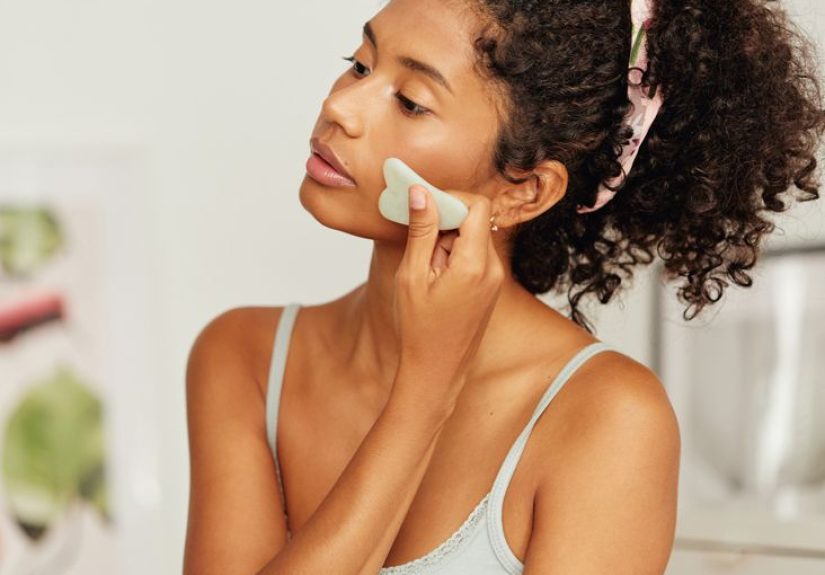
Facial gua sha is a form of massage that uses a smooth-edged tool to glide over the skin with light pressure. On the body, traditional gua sha can be much firmer and may leave temporary red or purple marks. On the face, though, the approach is much gentler. The goal is not bruising. The goal is a soothing, controlled massage that helps release tension and reduce the look of fluid-related puffiness.
Most facial tools are made from jade, rose quartz, stainless steel, or another smooth material. The material matters less than people think. The real stars are a smooth edge, a comfortable shape, and a clean, unchipped surface. In other words, your tool does not need mystical powers. It just needs decent manners.
What Gua Sha Can Actually Do
1. Help ease facial and jaw tension
If you clench your jaw, knit your brows, or carry stress in your temples like it is a part-time job, gua sha may help. The light sweeping motion can relax tight areas around the jawline, cheeks, temples, and forehead. For many people, that means less stiffness and a generally softer, less “permanently mid-meeting” expression.
This is especially useful if you spend all day at a computer, grind your teeth, or wake up with tension headaches that make your forehead feel like it is wearing a belt that is one notch too tight. Gua sha will not cure the root cause of stress, unfortunately. Your inbox still exists. But it can be a calming ritual that helps your muscles stop acting like they are preparing for battle.
2. Temporarily reduce puffiness
This is where gua sha shines the brightest. If your face looks a little swollen in the morning, especially around the under-eyes, cheeks, or jawline, a few minutes of gentle massage may help move excess fluid along. The result is usually temporary, but noticeable. Think de-puffed, not new bone structure.
That temporary nature matters. Facial gua sha does not permanently sculpt your features, melt fat, or turn your jaw into a geometry lesson. What it can do is make you look a bit more refreshed in the short term by encouraging fluid movement and improving circulation.
3. Support lymphatic drainage
The lymphatic system helps move fluid through the body. When fluid lingers, you can look puffy or feel a bit congested. Because lymphatic vessels sit close to the surface of the skin, they respond best to light pressure, not a forceful face attack.
That is why a proper gua sha routine feels gentle and controlled. In that sense, facial gua sha acts a bit like a light lymphatic-style massage. It may support drainage and temporarily improve the look of facial swelling. But it is not the same thing as medically supervised manual lymph drainage used for conditions like lymphedema. If you have persistent swelling or a medical condition affecting your lymphatic system, your bathroom ritual should not be your entire treatment plan.
What Gua Sha Cannot Do
Let’s save you from unrealistic expectations and one unfortunate online shopping spree. Gua sha cannot:
- Permanently change your face shape
- Erase wrinkles overnight
- Detox your face in some dramatic, cinematic way
- Treat sudden or severe swelling caused by illness, allergy, or infection
- Replace medical treatment for jaw pain, sinus issues, skin disease, or lymphedema
It is best viewed as a supportive tool. Helpful? Yes. Magical? No. The dragons remain un-slayed.
What You Need Before You Start
Your gua sha tool
Choose one that feels comfortable in your hand and has at least one broad, smooth curve for the cheeks and jawline. Fancy material is optional. Cleanliness is not.
A slippery product
Use a facial oil, serum, or moisturizer with enough slip that the tool glides easily. This step is non-negotiable. Dry gua sha can tug the skin and leave it irritated, which is the exact opposite of relaxing.
Clean skin
Start with a freshly cleansed face and clean hands. Then wash the tool before and after use with mild soap and warm water. Your skin does not need a side quest involving bacteria.
How to Use Gua Sha on Your Face: Step by Step
For best results, keep the tool almost flat against the skin at roughly a 15- to 30-degree angle. Use slow, steady strokes in one direction. No sawing. No scrubbing. No aggressive back-and-forth drama.
Step 1: Prep your skin
Cleanse your face and neck, then apply a thin layer of oil, serum, or moisturizer. You want the tool to glide, not drag. If you feel pulling, stop and add more slip.
Step 2: Start with the chest and neck
If your goal is de-puffing, begin lower down rather than jumping straight to the cheeks. Lightly sweep from the center of the chest outward, then move to the sides of the neck. Keep the pressure featherlight. The idea is to encourage fluid to move downward, not bully it into submission.
Then place the tool at the upper neck and glide gently downward toward the collar area. Repeat three to five times on each side. If you tend to wake up puffy, this section is worth its weight in gold.
Step 3: Move to the jawline
Place the tool at the center of your chin and glide outward along the jaw toward the ear. Repeat three to five times per side. If you clench your jaw, slow down here and keep the pressure light but intentional. You are trying to calm the area, not punish it for your stress.
Step 4: Sweep across the cheeks
Start near the side of the nose and glide outward across the cheek toward the ear. Repeat three to five times on each side. This area often holds fluid, especially in the morning, so the cheek sweep is one of the most satisfying parts of the routine.
Step 5: Be extra gentle under the eyes
The under-eye area is delicate. Use the lightest pressure of your entire routine. Starting at the inner corner under the eye, gently glide outward toward the temple. Repeat two to three times. If you are pressing hard enough to feel strong friction, that is too much.
Under-eye puffiness often responds well to light massage, but if the area is irritated, painfully swollen, or red, skip it.
Step 6: Brow bone and forehead
Glide from the inner brow outward toward the temple. Then move from the brows upward toward the hairline. These strokes can feel especially good if you hold stress in your forehead or spend too much time making the “why is this spreadsheet broken?” face.
Step 7: Finish lightly and stop while your skin is happy
A full routine does not need to last long. About three to five minutes is enough for most people. Your skin may look a little pink afterward, but it should not feel sore, raw, or bruised. If it does, the pressure was too much.
How Often Should You Do Gua Sha?
If you are new to it, start two to three times a week. That gives your skin a chance to tell you whether it loves the ritual or would prefer you calm down. If your skin tolerates it well, you can use it daily, especially in the morning when puffiness is most noticeable.
Morning gua sha is great for de-puffing. Evening gua sha is great for tension relief. If you do both, congratulations on having a more organized life than most people.
Common Gua Sha Mistakes to Avoid
Using too much pressure
This is the biggest one. Facial gua sha is not a deep-tissue massage. If you are trying to “feel it more” by pressing harder, you are missing the point. Lymphatic-style massage works best with a light touch because the vessels sit close to the skin.
Skipping slip
No oil or moisturizer means more drag, more irritation, and a much higher chance that your relaxing ritual becomes a cautionary tale.
Rubbing back and forth
Keep strokes smooth and single-direction. Random zigzags do not improve your results. They just make your skin wonder what it did wrong.
Using a dirty tool
Unwashed tools can spread bacteria, leftover product, and general chaos. Wash it after every use.
Expecting permanent sculpting
Gua sha can give a temporary refreshed look. It is not a substitute for sleep, hydration, allergy management, or actual medical care.
When You Should Not Use Gua Sha
Skip gua sha if you have:
- Sunburn, rashes, cuts, or open wounds
- Active acne that is painful or inflamed in the area you want to treat
- Skin irritation, eczema flares, or psoriasis flares on the face
- An active infection, including cellulitis or a sinus infection that is still flaring
- A tendency to bruise easily, a bleeding disorder, or you take blood thinners
- Very reactive skin or rosacea that flares with friction
If you have diabetes, circulation issues, are pregnant, are undergoing chemotherapy, or have a diagnosed lymphatic disorder, check with a healthcare professional before making gua sha your new favorite hobby.
When Puffiness Is Not Just Puffiness
Here is the serious part. If your facial swelling is sudden, painful, severe, worsening, or comes with redness, fever, tenderness, rash, or trouble breathing, do not try to “massage it out.” That kind of swelling needs medical attention. Gua sha is a wellness tool, not emergency care in a pretty shape.
The same goes for facial swelling linked to dental problems, allergic reactions, or suspected infection. Put the stone down and call a professional.
How Gua Sha Usually Feels: Real-World Experiences and What People Commonly Notice
One reason gua sha keeps showing up on vanities and social feeds is simple: when done gently, it feels good. And that matters. A skin-care practice you actually enjoy is one you are more likely to keep doing.
Many beginners say the first surprise is how little pressure is needed. People often expect the tool to work like a mini rolling pin for the face, only to realize the best results come from barely-there pressure. Once they ease up, the routine tends to feel much more relaxing. The neck strokes often create that first “oh, I get it now” moment. Tension starts melting, breathing slows down, and the whole thing feels less like beauty maintenance and more like a strategic peace treaty with your nervous system.
Another common experience is noticing morning puffiness improve faster than expected. Someone may start a routine because their under-eyes look swollen or their cheeks feel heavy after a salty dinner, a rough night of sleep, allergies, or crying through a TV finale that had no business being that emotional. After a few minutes of light strokes, the face can look fresher, particularly around the jawline and under-eyes. Not transformed. Just less puffy and more awake. That subtle difference is often enough to make people keep coming back.
People who clench their jaw often describe gua sha as unexpectedly helpful. They may not notice a visual change first. Instead, they notice their face feels softer. The jaw does not seem so locked. The temples stop throbbing. Their eyebrows stop auditioning for the role of “permanently concerned.” That is one of the more underrated benefits of gua sha. The mirror might show a small change, but your muscles may feel a much bigger one.
There is also a learning curve. A lot of people overdo it at first. They use too much pressure, skip oil, rush through the routine, or try to follow ten different internet tutorials in one sitting like they are cramming for a facial massage final exam. The result is often mild redness, irritation, or no benefit at all. Once technique gets simpler, outcomes usually improve. The most successful routines are boring in the best way: clean skin, clean tool, enough slip, light pressure, one direction, a few minutes, done.
Some people also report that the ritual changes how they relate to their face. Instead of poking at perceived flaws, they spend a few minutes caring for their skin and noticing where stress lives. That alone can make the practice feel worthwhile. Gua sha will not solve every skin concern, but it can create a useful pause in the day, especially if your face tends to show every ounce of stress before the rest of you catches up.
And yes, there are people who try it once, shrug, and move on. That is normal too. Like any wellness habit, it is not a universal love story. But for many, gua sha becomes a quick, calming routine that helps with facial tension, temporary puffiness, and the general feeling that your face would appreciate a little less chaos.
Final Thoughts
Gua sha works best when you treat it like a gentle tool, not a miracle weapon. With a clean stone, a slippery serum or moisturizer, and a light hand, it may help ease tension, temporarily reduce puffiness, and support lymphatic-style drainage in a way that feels both practical and calming.
The secret is keeping your expectations realistic and your pressure very low. Done right, gua sha is less about dramatic transformation and more about subtle improvement. Your face may look a bit fresher. Your jaw may unclench a little. Your morning puffiness may pack its bags faster. And honestly, in the world of skin care, that is already a pretty good deal.