Table of Contents >> Show >> Hide
- 1. Lothair II Tried to Replace His Queen with His Mistress
- 2. Pope John XII Made the Papal Court Look Like a Public Relations Disaster
- 3. Benedict IX Turned Papal Scandal into a Full-Blown Farce
- 4. Philip I of France Ran Off with Another Man’s Wife
- 5. Abelard and Heloise Proved That a Love Affair Could Shake Intellectual Paris
- 6. Eleanor of Aquitaine and the Rumors at Antioch
- 7. Philip II Married Ingeborg of Denmark and Rejected Her Almost Immediately
- 8. The Tour de Nesle Affair Turned the French Royal Family into a National Spectacle
- 9. Edward II’s Relationships with His Favorites Became a Political Obsession
- 10. Isabella of France and Roger Mortimer Took Royal Scandal into Open Revolution
- Why These Scandals Mattered More Than Gossip
- Experiences Related to These Scandals: What Living Through Them Might Have Felt Like
- Conclusion
- SEO Tags
Medieval Europe liked to present itself as a world of saints, crowns, relics, and solemn vows. It was also a world where marriages were political treaties, heirs were national emergencies, and bedroom gossip could topple kings faster than a bad harvest. In other words, medieval scandal was never just scandal. It was policy with a pulse.
That is what makes these stories so fascinating. A secret marriage could trigger church courts. A suspected affair could wreck a dynasty. A king’s favorite could become a national obsession. A pope’s private life could become a public catastrophe. And because medieval chroniclers loved moral drama almost as much as modern tabloids do, these cases were recorded with plenty of outrage, judgment, and enough side-eye to power a cathedral.
Still, good history requires a small caution sign. Not every medieval “sex scandal” was proven fact. Some were genuine affairs. Some were political smears dressed in holy language. Some were private relationships inflated into public crises because the people involved wore crowns or miters. That, frankly, is part of the point: in medieval Europe, what people believed about intimacy often mattered as much as what actually happened.
1. Lothair II Tried to Replace His Queen with His Mistress
One of the earliest great medieval marital scandals came from the court of Lothair II, king of Lotharingia in the ninth century. He had been forced into marriage with Theutberga, but he preferred his longtime partner Waldrada, with whom he had children. That alone was awkward. What turned awkward into explosive was his attempt to push aside his lawful wife and legitimize the mistress.
Lothair’s strategy was not subtle. He accused Theutberga of sexual misconduct so the marriage could be dissolved. The dispute dragged in bishops, nobles, and eventually the papacy. What might have stayed a dynastic headache became an international church-and-state showdown over marriage law, royal authority, and whether a king could simply rewrite the rules because his heart, or ego, had wandered elsewhere. Medieval Europe learned an early lesson: a royal breakup could become geopolitical theater.
2. Pope John XII Made the Papal Court Look Like a Public Relations Disaster
Pope John XII took office in the tenth century while still very young, and his reputation quickly became infamous. Medieval writers accused him of turning the papal court into a place of open vice, favoritism, and moral chaos. Modern historians treat some of the most colorful accusations with caution, because hostile sources often sharpened their quills for political reasons. Even so, John’s image as the scandal pope of his day stuck hard.
What made this so shocking was not merely personal misbehavior. The pope was supposed to embody moral authority for Latin Christendom. When the man wearing the tiara was portrayed as reckless and worldly, the scandal hit the church’s credibility itself. This was not a case of “messy celebrity energy.” It was a credibility crisis at the top of medieval Europe’s most powerful spiritual institution.
3. Benedict IX Turned Papal Scandal into a Full-Blown Farce
If John XII made the papacy look bad, Benedict IX made it look like it needed adult supervision. Elected as a very young man from a powerful Roman family, Benedict became notorious for scandalous conduct, factional warfare, and sheer instability. His career was so chaotic that he held the papacy three separate times. That is already not ideal.
Then came the part that sounds invented by a novelist who had too much coffee: Benedict is widely remembered for effectively selling the papacy to his godfather. Even by medieval standards, this was a spectacular collapse of dignity. His reign exposed how deeply aristocratic family power could distort church leadership. It also showed that scandal in medieval Europe was not always about romance in the narrow sense. Sometimes it was about sex, ambition, money, and sacred office colliding in one terrible package.
4. Philip I of France Ran Off with Another Man’s Wife
King Philip I of France took royal scandal and gave it a dramatic Capetian flourish. In 1092, he became involved with Bertrade of Montfort, who was already married to Fulk IV of Anjou. Philip did not exactly treat that detail as a deal-breaker. He carried her off and entered into what many contemporaries viewed as an illegal, scandalous union.
The reaction was fierce. Philip faced repeated excommunication, and the affair poisoned relations with the papacy. This mattered because medieval monarchy depended on sacred legitimacy. A king who ignored church teaching on marriage did not just annoy bishops; he undercut the holy image of kingship itself. Philip and Bertrade became proof that private desire at the top could turn into a public constitutional mess. Medieval France, it turns out, had no shortage of drama before Versailles was even a blueprint.
5. Abelard and Heloise Proved That a Love Affair Could Shake Intellectual Paris
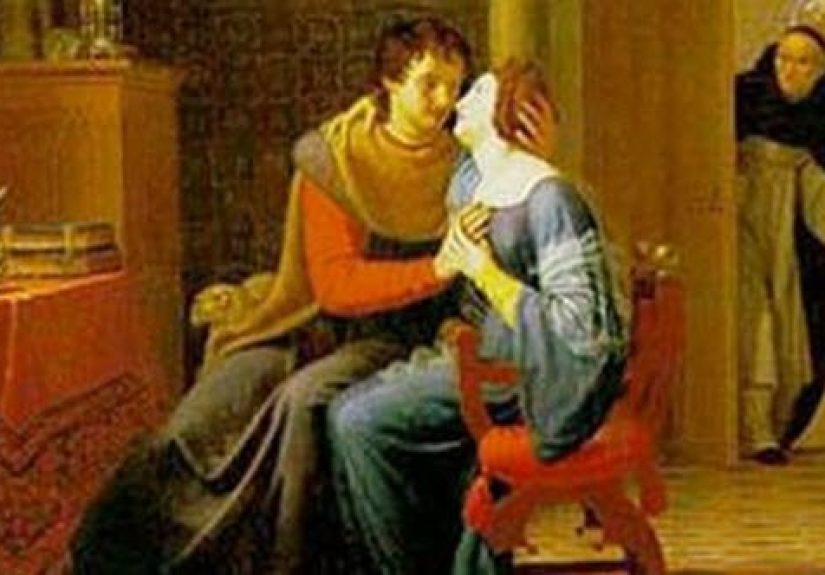
Peter Abelard and Heloise remain one of medieval Europe’s most famous couples, but their story was scandal before it was legend. Abelard, a brilliant scholar, became tutor to Heloise, a gifted young woman under the guardianship of her uncle Fulbert. The relationship turned romantic, Heloise became pregnant, and the two married in secret.
What followed was not romantic-comedy material. The secrecy, the imbalance of power, the damage to reputations, and the fury of Fulbert turned the affair into public catastrophe. Abelard was violently punished, and both eventually entered religious life. Their later letters gave the relationship an afterlife that has fascinated readers for centuries, but in their own day the case was a moral scandal wrapped inside an academic scandal wrapped inside a family disaster. Medieval Paris may have loved philosophy, but it clearly preferred its scholars less combustible.
6. Eleanor of Aquitaine and the Rumors at Antioch
Eleanor of Aquitaine was one of the most formidable women of the Middle Ages, which practically guaranteed that rumor would follow her around like a badly behaved court musician. During the Second Crusade, her closeness to her uncle Raymond of Poitiers at Antioch sparked scandalous gossip and King Louis VII’s jealousy. Contemporary rumor-mongers suggested an improper relationship, though historians have long warned that the charges were likely exaggerated or politically motivated.
Even so, the damage was real. The episode deepened the rift between Eleanor and Louis, and their marriage was later annulled. Soon afterward Eleanor married Henry Plantagenet, the future Henry II of England, a move that transformed the political map of Western Europe. That is what makes this “scandal” so important: even if the most salacious accusations were unfair, the gossip itself helped shape the fate of kingdoms. In medieval politics, rumor was not a side effect. It was a weapon.
7. Philip II Married Ingeborg of Denmark and Rejected Her Almost Immediately
Some scandals are loud. Others are cold enough to make the room feel haunted. Philip II of France married Ingeborg of Denmark in 1193 and then, almost immediately, decided he wanted out. He sought an annulment with astonishing speed, claiming the marriage could not stand. Ingeborg refused to give way and insisted that she was the lawful queen.
The result was a long, ugly struggle involving bishops, popes, rival claims, and years of humiliation for Ingeborg, who was effectively kept in confinement while Philip pursued another relationship. Medieval observers were stunned not only by the king’s behavior but by the sheer bluntness of it. Kings had mistresses. Kings maneuvered. But to reject a queen so abruptly, then wage an extended campaign to erase her marriage, created a scandal that blended sexual politics with dynastic cruelty. Ingeborg’s stubborn resistance is one reason the story still lingers in historical memory.
8. The Tour de Nesle Affair Turned the French Royal Family into a National Spectacle
Few medieval scandals have a title as dramatic as the Tour de Nesle Affair, and frankly, it earned it. In 1314, the wives of Philip IV’s sons were accused of adultery with Norman knights. Whether every charge was true remains debated, but the scandal exploded at court and quickly became a dynastic emergency.
Why such panic? Because adultery in a royal household was not viewed as a private sin. It threatened paternity, succession, and therefore the legitimacy of the monarchy itself. If the wives of princes were unfaithful, then the bloodline could be questioned, and when bloodlines are questioned in medieval Europe, people eventually start sharpening legal arguments and swords. The affair wrecked reputations, destabilized the Capetian line, and helped intensify later succession disputes that fed into the Hundred Years’ War. One alleged affair ended up echoing across a century of conflict. That is not gossip. That is historical shrapnel.
9. Edward II’s Relationships with His Favorites Became a Political Obsession
Edward II of England inspired one of medieval Europe’s most discussed royal controversies because of his intense attachment to favorites such as Piers Gaveston and later Hugh Despenser the Younger. Contemporary and later writers often portrayed these men as possible lovers, though historians still debate the exact nature of the relationships. What is beyond doubt is that Edward’s visible favoritism enraged the nobility and became central to the political crisis of his reign.
The scandal here was not simply who Edward may or may not have loved. It was the belief that personal attachment was overruling public duty. Gaveston was showered with honors. The Despensers accumulated influence and enemies at a dangerous rate. Nobles saw access, patronage, and power flowing through intimate favoritism, and resentment exploded. Medieval politics had no patience for a king who appeared to choose companions over consensus. The rumors about Edward’s private life became inseparable from arguments about whether he was fit to rule.
10. Isabella of France and Roger Mortimer Took Royal Scandal into Open Revolution
Edward II’s wife, Isabella of France, eventually created a scandal so large it swallowed the king’s reign. While in France in 1325, she allied herself with the exiled baron Roger Mortimer and became his mistress. The relationship was scandalous enough on its own: a queen openly estranged from her husband and attached to one of his enemies. But Isabella did not stop at scandal. She and Mortimer invaded England in 1326.
Their campaign toppled the Despensers and led to Edward II’s deposition. For a time, Isabella and Mortimer effectively ruled in the name of the young Edward III. This was medieval scandal with executive power. It horrified contemporaries because it fused adultery, rebellion, regime change, and humiliation of a king into one unforgettable episode. Later legend would turn Isabella into the “she-wolf of France,” a label that says as much about gendered fear as it does about her conduct. But stripped of the melodrama, the basic fact remains astonishing: one of the most notorious affairs of the Middle Ages helped overthrow a monarchy.
Why These Scandals Mattered More Than Gossip
What ties these cases together is not just sex. It is power. Medieval Europe treated intimacy as a public matter whenever elites were involved. Marriages made alliances. Mistresses created factions. Questions of fidelity raised questions of inheritance. Clerical misconduct threatened spiritual authority. Rumor could become political evidence even when proof was thin.
That is also why medieval scandal feels both distant and strangely modern. People still obsess over whether leaders can separate private conduct from public responsibility. People still argue over whether scandal reveals character or merely provides ammunition to enemies. The difference is that in medieval Europe, the consequences were often sharper. A whispered accusation might not just trend for a week; it could redraw the map.
Experiences Related to These Scandals: What Living Through Them Might Have Felt Like
To understand why these scandals hit so hard, it helps to imagine the medieval experience around them. Not the glamorous version with velvet, falcons, and dramatic candlelight, but the real social atmosphere: crowded halls, nervous servants, suspicious bishops, and chroniclers practically vibrating with judgment. When a scandal broke at the top, ordinary people did not receive a neat press release. They heard fragments. A court clerk whispered that the king had taken a dangerous favorite. A merchant repeated that the queen refused to return to her husband. A monk copied a letter that hinted at disgrace. By the time the story reached the town square, it had grown horns.
For women at court, especially queens and noble brides, the experience could be brutal. Their bodies were treated as containers of legitimacy. If a queen was accused of infidelity, the question was never only moral. It was dynastic. Was the heir “real”? Was the alliance secure? Could rival families use the scandal to destroy her children’s claim? Even when accusations were weak, the social damage could be immediate. Reputation in medieval Europe was not a soft, decorative thing. It was currency, armor, and sometimes the only defense a woman had.
For churchmen, these scandals created a different kind of panic. Medieval clergy were supposed to defend Christian marriage, discipline, and moral order. So when kings ignored sacramental rules or popes themselves became associated with misconduct, the effect was deeply destabilizing. A bishop forced to judge a king’s marriage was not just making a pastoral decision. He was stepping into a minefield where theology, politics, and personal survival all met at once. It is hard to look serene while standing on a constitutional grenade.
For nobles, scandal often meant opportunity mixed with terror. A royal favorite might rise quickly, but that rise threatened everyone else’s place in line. A disgraced queen could become the center of a faction. A king’s affair could signal weakness, distraction, or a chance to bargain harder. Medieval elites were always calculating. They did not simply gasp at scandal; they weaponized it. Behind every tale of improper love stood a row of ambitious people asking the same practical question: can this be used?
And for chroniclers, scandal was irresistible. Medieval writers claimed to be defending morality, but many of them also understood the narrative power of a juicy downfall. A ruler who sinned could be turned into a warning. A queen accused of desire could be framed as dangerous. A pope under suspicion could become proof that corruption invited divine judgment. Those writers helped shape the memory we inherit today. So when modern readers encounter these famous scandals, they are not just reading events. They are reading medieval storytelling at full volume, complete with outrage, symbolism, and a very old human pleasure in watching the mighty wobble.
Conclusion
The great sex scandals of medieval Europe were never just about romance gone wrong. They were flashpoints where private desire collided with public duty, where rumor became a political instrument, and where legitimacy could rise or fall on what happened, or was believed to have happened, behind closed doors. Kings, queens, scholars, and popes all discovered the same unpleasant truth: in the Middle Ages, the bedroom was never safely separate from the throne room.
That is why these scandals still grip readers now. They reveal a medieval world that was more human, more anxious, and far less tidy than the stone monuments suggest. Beneath the crowns and incense stood real people making reckless choices, defending fragile reputations, and discovering that history has a long memory for public embarrassment. Medieval Europe may be famous for castles, crusades, and cathedrals, but it also knew exactly how to produce a spectacular scandal.