Table of Contents >> Show >> Hide
Let’s get one thing out of the way before anybody starts sketching little green tourists in Hawaiian shirts: if we find alien life anytime soon, it will probably be tiny, weird, and extremely unimpressed by our movies. The real search for extraterrestrial life is less about flying saucers and more about chemistry, liquid water, energy sources, and the kinds of environments that can stay stable long enough for biology to get started.
That is why the best places to look for aliens are not necessarily the most famous places. Some are icy moons with hidden oceans. Some are exoplanets circling dim stars. One may even be hiding clues in clouds that look like a science experiment gone slightly off the rails. The smartest modern search combines two questions: Where could life exist? and Where could we realistically detect it?
In this ranking, accessibility matters almost as much as habitability. A buried ocean is exciting, but a buried ocean that sprays material into space is practically an engraved invitation. A planet in the habitable zone sounds wonderful, but if its star blasts it with radiation, the welcome committee may have been vaporized long ago. With that in mind, here are the top 10 likely places we could find aliens first.
What Makes a World a Good Alien-Hunting Target?
A promising world usually checks a few boxes. It needs some form of liquid, usually water. It benefits from chemistry rich in carbon, hydrogen, nitrogen, oxygen, sulfur, or phosphorus. It also helps if there is an energy source, such as sunlight, hydrothermal activity, or chemical reactions between rock and water. Finally, scientists need a way to test the place without waiting 300 years and a miracle.
That last part is crucial. In astrobiology, “most likely” does not just mean “best place for life in theory.” It also means “best chance of finding convincing evidence.” That is why this list mixes nearby worlds in our solar system with distant exoplanets that are scientifically irresistible, even if they remain frustratingly out of reach.
The Countdown: Top 10 Likely Places We Could Find Aliens
10. Ganymede
Jupiter’s largest moon is not as flashy as Europa, which is probably why Ganymede sometimes feels like the sensible sibling who never gets the movie deal. But it deserves attention. Scientists have strong evidence that Ganymede hides a saltwater ocean beneath its icy shell, and the moon even has its own magnetic field, which makes it unique among moons in our solar system.
The catch is that Ganymede’s ocean may be buried beneath multiple layers of ice, which could limit how much the water interacts with rock below. That matters because rock-water chemistry is one of the best engines for life. So Ganymede lands on the list, but not near the top. It is a serious candidate, just not the easiest one to interrogate.
9. Ceres
Ceres is the dark horse of alien real estate. It is a dwarf planet in the asteroid belt, not a glamorous ocean moon in the outer solar system. But missions and modeling have suggested that Ceres once had, and may still retain, briny reservoirs, organic material, and signs of geologic activity. That combination makes it far more interesting than “big space rock” would suggest.
No one is claiming Ceres is a biological paradise. Today it seems colder, drier, and less hospitable than it was in the past. Still, if life ever gained a foothold in salty subsurface pockets, Ceres could preserve chemical traces of it. Think of it as the cosmic equivalent of a freezer drawer full of ancient leftovers that scientists are very eager to inspect.
8. Proxima Centauri b
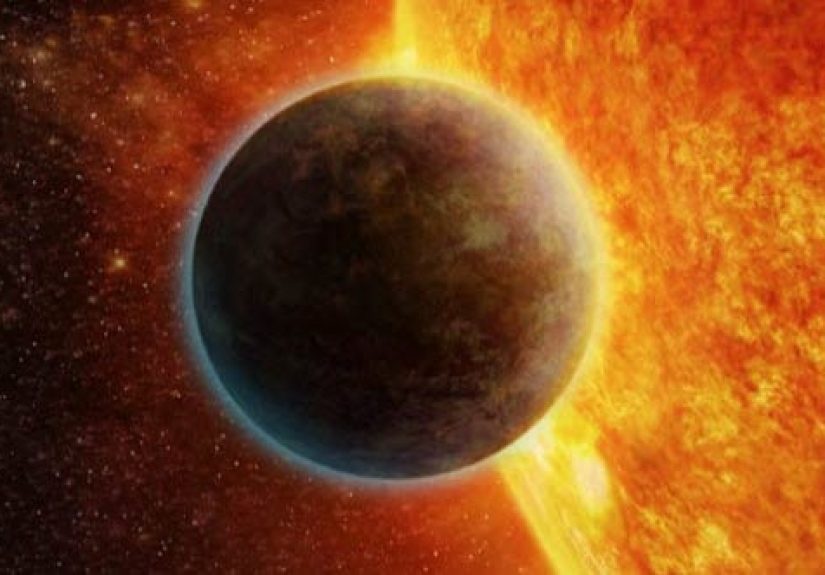
If location, location, location matters in real estate, Proxima Centauri b has excellent marketing. It is the closest known exoplanet neighbor to Earth, orbiting the star nearest the Sun. It also sits in the star’s habitable zone, which instantly makes astronomers sit up straighter.
But Proxima b comes with a warning label. Red dwarf stars can be violent, and Proxima Centauri is known for powerful bursts of radiation. Models suggest that an Earth-like atmosphere might struggle to survive there. So while Proxima b is one of the most tempting places to look beyond the solar system, it is also a reminder that “habitable zone” does not automatically mean “pleasant vacation for microbes.”
7. TRAPPIST-1e
TRAPPIST-1 is the celebrity system of exoplanet science, and for good reason. It packs seven Earth-sized rocky planets around one small star, with several worlds in or near the habitable zone. If astronomers were casting a streaming drama called Maybe We’re Not Alone, TRAPPIST-1 would absolutely get a full season.
Among the system’s planets, TRAPPIST-1e often stands out as one of the strongest candidates for temperate surface conditions under the right atmosphere. The system’s tightly packed planets also give scientists repeated opportunities to study them as they pass in front of their star. That makes TRAPPIST-1e a fantastic laboratory for the future search for alien atmospheres, even if no one should start printing “Welcome to TRAPPIST” postcards yet.
6. The Clouds of Venus
Venus is the plot twist on this list. Its surface is brutally hostile, hot enough to melt lead and wrapped in a thick atmosphere that makes pressure a serious mood killer. For decades, that seemed to rule it out. Then scientists started paying attention to the more temperate cloud layers high above the surface, where temperature and pressure are less absurd.
That led to speculation about airborne microbial life, plus a long-running scientific argument over possible phosphine detections. The case is far from settled, and the most honest word here is uncertain. Still, Venus remains one of the most intriguing “unlikely but not impossible” locations in the solar system. If life can survive there, it would rewrite biology textbooks with a permanent marker.
5. K2-18 b
K2-18 b is the exoplanet that keeps making scientists excited, cautious, excited again, and then cautious with even better graphics. It lies in its star’s habitable zone and has drawn attention because observations suggest a hydrogen-rich atmosphere and possibly water-related chemistry. Some researchers have even proposed it could be a “Hycean” world, meaning an ocean-covered planet with a hydrogen atmosphere.
That alone would make it interesting. What pushed K2-18 b into the spotlight were reports of possible sulfur-bearing molecules that, on Earth, are closely associated with life. Here is the important part: this is not a confirmed alien discovery. It is a tantalizing, debated signal that needs much more testing. Still, if you are building a list of places where future telescopes might first catch a real biosignature, K2-18 b belongs on it.
4. Titan
Saturn’s moon Titan is gloriously weird. It has a thick atmosphere, rivers, lakes, weather, dunes, and complex organic chemistry. It is the only moon in the solar system with a dense atmosphere and the only world besides Earth known to have stable liquid on its surface. The liquid is methane and ethane rather than water, because Titan simply does not believe in doing things the easy way.
Why is Titan so high on the list? Because it may preserve chemistry similar to what happened on early Earth, and it may also hide liquid water beneath the surface. That means Titan could help answer two questions at once: how life starts, and how strange life might become in an alien environment. NASA’s Dragonfly mission is one reason Titan feels especially important right now. It will explore whether this smoggy moon has the ingredients and chemical pathways needed for biology to emerge.
3. Mars
Mars has been the gateway drug to astrobiology for generations. It is close, dramatic, and just familiar enough to make us wonder what happened there. We now know ancient Mars had lakes, rivers, and conditions that could have supported life. Rovers have found organics, water-shaped minerals, and ever more compelling evidence that the red planet was once less “dead desert” and more “cold but potentially livable neighborhood.”
The problem is that modern Mars is harsh. Radiation, cold temperatures, and a thin atmosphere make the surface a bad place for life as we know it. That is why the best bets are underground, in protected briny niches, or preserved in ancient rocks. Mars ranks this high because it offers an unbeatable combination of habitability in the past, strong evidence preserved in geology, and actual robots already doing fieldwork. If we find fossil life first, Mars may steal the trophy.
2. Europa
Europa is one of the crown jewels of astrobiology. Beneath its icy crust likely lies a global salty ocean, and there is strong reason to think that ocean may interact with a rocky seafloor. That is exactly the kind of environment that gets scientists talking about hydrothermal systems, chemical gradients, and all the lovely ingredients microbes might enjoy when nobody is looking.
Europa’s appeal is not just that it may be habitable. It is that we now have powerful tools designed specifically to study it. Europa Clipper is focused on understanding the moon’s ice shell, ocean, chemistry, and whether the environment could support life. If Europa has plumes or accessible surface chemistry tied to the ocean below, scientists may be able to study an alien ocean without drilling through miles of ice like a stressed-out contractor on Jupiter’s payroll.
1. Enceladus
If this list were based on scientific drama alone, Enceladus would still win. Saturn’s icy moon has a global ocean beneath its crust, and unlike most other hidden-ocean worlds, it shoots samples of that ocean into space through giant plumes near its south pole. That is the astrobiology equivalent of a suspect mailing the detectives a labeled box of evidence.
Those plumes contain water vapor, organic molecules, salts, silica grains linked to hydrothermal activity, and evidence involving phosphorus and chemical energy sources useful for life. In other words, Enceladus has liquid water, important building blocks, and a relatively convenient way to sample the material. That makes it the most practical and compelling place in the solar system to search for alien microbes. If humanity finds convincing evidence of life beyond Earth in the next few decades, Enceladus has a very strong case for being the place where it happens.
So Where Will We Probably Find Aliens First?
The smart money is still on microbial life, not space philosophers with interstellar podcasts. And the smartest near-term targets are probably ocean worlds in our own solar system, especially Enceladus and Europa, with Mars close behind because we can actually drive around there and collect evidence the old-fashioned robot way.
Exoplanets remain thrilling because they force us to think bigger. Worlds like TRAPPIST-1e, Proxima Centauri b, and K2-18 b help scientists test how common habitable environments might be across the galaxy. But if you ask which place offers the best combination of habitability, accessibility, and realistic detection, Enceladus currently wears the crown. Europa is close behind, and Mars remains the veteran contender that refuses to leave the ring.
Either way, the search is no longer science fiction fluff. It is mission planning, spectroscopy, chemistry, and patient detective work on a cosmic scale. Which is fitting, really. The universe was never going to hand over its secrets just because we asked nicely.
What the Search for Aliens Feels Like: 500 More Words on the Human Experience
One of the most fascinating parts of the search for alien life is that it is not just a scientific project. It is also a human emotional experience. Every promising plume, every unusual molecule, and every suspicious atmospheric signal creates the same strange mix of feelings: excitement, caution, doubt, hope, and the deep suspicion that the universe enjoys cliffhangers.
For scientists, the experience is often less like shouting “Eureka!” and more like spending years assembling a puzzle while half the pieces are frozen, buried, or orbiting another star. A rover drills into a rock on Mars, and the world gets a few headlines. But behind that moment are decades of engineering, failed ideas, revised hypotheses, and teams of people arguing productively over whether a signal is biological, geological, or just chemistry being annoyingly creative again.
There is also something wonderfully humbling about the places on this list. Enceladus is tiny, bright, and easy to underestimate, yet it may host one of the most promising alien oceans we know. Europa looks like a cracked ice ball from afar, but it may hide more water than Earth. Titan appears smothered in orange haze, and underneath that haze may be a chemical laboratory unlike anything on our planet. Even Mars, which many people treat like old news, keeps reminding us that dead worlds can still tell living stories.
For the public, the experience of following this science is often a lesson in patience. People understandably want answers. Did we find life? Yes or no? Scientists, meanwhile, keep offering the frustrating but correct reply: not yet, but this is getting interesting. That tension is part of what makes astrobiology so compelling. It is a field powered by wonder, but disciplined by evidence. The best researchers are dreamers with lab notebooks.
There is also a quiet psychological shift that happens when you spend time thinking about likely places for aliens. The universe starts to feel less empty and more unfinished, as if we are living in the middle chapters of a very long story. Every ocean world suggests that life may not be rare. Every harsh exoplanet reminds us that habitability is fragile. Every disputed biosignature teaches us how careful we have to be when the stakes are enormous. Nobody wants the scientific equivalent of mistaking lint for a lion.
And perhaps that is the most powerful experience of all: the search changes how we see Earth. Looking for aliens forces us to define what makes our own world special, resilient, and vulnerable. We study toxic clouds on Venus, buried seas on Europa, methane weather on Titan, and ancient lakebeds on Mars, and in the process we sharpen our understanding of biology here at home. The hunt for alien life is really a mirror as much as a telescope.
So yes, the topic is fun. It invites wild imagination, dramatic artwork, and the occasional terrible movie. But it also carries a serious emotional charge. The day we finally find convincing evidence of life elsewhere, even if it is just a microbe floating in a salty alien sea, it will not merely be a discovery. It will feel like an expansion of home.