Table of Contents >> Show >> Hide
- Why Employers Keep Bringing AI Into Hiring
- The Legal Risk Is Real, Not Theoretical
- Where Employers Get Into Trouble
- What Safe AI Use in Hiring Actually Looks Like
- The Human Element Still Matters
- So, Can Employers Safely Use AI in Hiring?
- Experiences Employers and Candidates Are Having With AI in Hiring
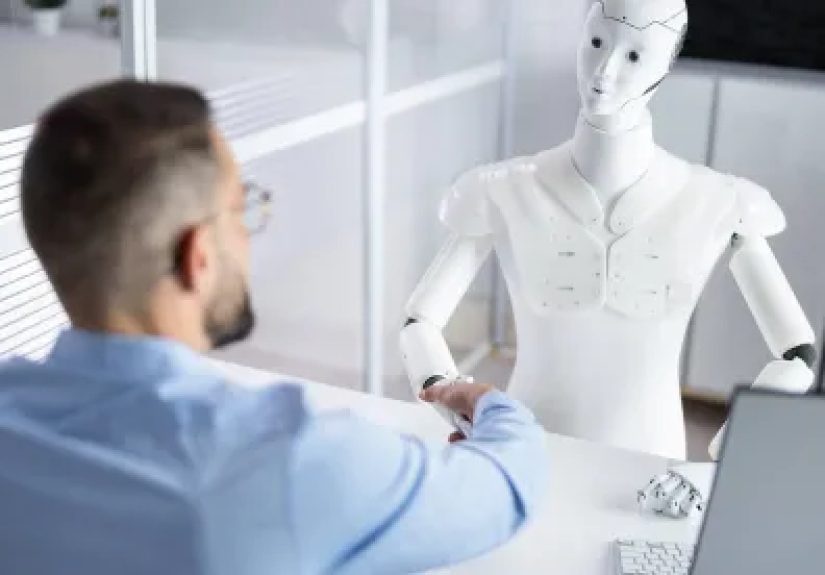
Artificial intelligence has officially barged into hiring like an overconfident intern with a color-coded spreadsheet and a strong opinion about everyone’s résumé. Employers use AI to source candidates, scan applications, rank skills, schedule interviews, analyze video interviews, and sometimes even decide who gets pushed forward or quietly filtered out. The promise is obvious: faster hiring, lower costs, less admin work, and maybe fewer hours spent reading cover letters that begin with, “I am passionate about synergistic excellence.”
But here is the catch: AI can help employers hire smarter, yet it can also help them make mistakes faster, at scale, and with a shiny dashboard attached. That is why the real question is not whether employers can use AI in hiring. They absolutely can. The better question is whether they can use it safely, legally, and without turning their recruitment team into the opening scene of a lawsuit.
The short answer is yes, employers can use AI in the hiring process safely. The longer answer is yes, but only if they treat AI like a tool that needs rules, oversight, testing, documentation, and human judgment. In other words, AI is not a magical hiring crystal ball. It is more like a chainsaw: useful, efficient, and a terrible thing to wave around carelessly.
Why Employers Keep Bringing AI Into Hiring
There are practical reasons employers are leaning into AI. Hiring teams often face hundreds or even thousands of applications for a single role. AI tools can help sort applicants, flag required credentials, identify scheduling availability, standardize screening questions, and speed up recruiter workflows. In a labor market where time-to-hire matters, automation looks very attractive.
Some employers also believe AI can reduce bias by applying the same criteria to every applicant. On paper, that sounds fair. If a machine evaluates each résumé using consistent inputs, perhaps it avoids the mood swings, gut reactions, and coffee-deprived judgment calls that humans sometimes bring to hiring. That is the sales pitch, anyway.
And to be fair, AI can improve consistency. It can help structure screening, reduce repetitive tasks, and support hiring teams that are stretched thin. Used carefully, it can make the early stages of hiring more organized and efficient. Used recklessly, it can automate old bias, introduce new bias, and make employers look very surprised when regulators come knocking.
The Legal Risk Is Real, Not Theoretical
Employers sometimes talk about AI hiring risk as if it is a future problem, right up there with robot uprisings and self-aware office printers. It is not. The legal scrutiny is already here.
Federal agencies have made it clear that existing employment and consumer protection laws still apply when AI is involved. If an employer uses software that screens out candidates in ways that disadvantage people based on race, sex, age, disability, or another protected characteristic, the presence of “advanced technology” does not create a legal force field. A bad decision made by a machine can still be an unlawful employment decision.
That is especially important because many employers rely on third-party vendors. Some companies seem to assume that if the vendor built the tool, the vendor owns the risk. That is a comforting thought, but not a reliable one. Courts and agencies have signaled that employers do not get to outsource accountability just because the questionable judgment arrived with a software subscription.
One closely watched example involves litigation against Workday over allegations that AI-powered hiring tools facilitated discrimination against applicants. That case helped sharpen the debate around whether vendors and employers can face liability when automated tools perform traditional screening functions. Another lawsuit against AI vendor Eightfold has raised separate concerns about secret scoring and compliance with other laws tied to applicant evaluation. These cases matter because they show that AI hiring is no longer just a policy conversation. It is now a litigation conversation too.
Where Employers Get Into Trouble
1. Biased Training Data
AI models learn from data. If the historical data reflects biased hiring patterns, the tool may learn those patterns and repeat them. For example, if past hiring favored one gender, age group, school type, or career path, the system may start treating those traits as signals of “success” even when they are not actually related to job performance.
That is how a tool can become consistently unfair while still looking mathematically impressive in a product demo. The dashboard says “optimized.” The lawsuit says “disparate impact.” Those are not the same thing.
2. Disability Discrimination Risks
AI tools can create serious problems for applicants with disabilities. A screening system might penalize gaps in eye contact during a video interview, reject speech patterns that differ from a model’s assumptions, or make it harder for applicants who use assistive technologies to complete assessments. If the hiring process does not allow reasonable accommodation, the employer may have a problem under the Americans with Disabilities Act.
This is one of the clearest warning areas in federal guidance. Employers must think about whether the tool measures actual job-related ability or merely measures how well someone performs inside the software’s narrow idea of “normal.” Those are not the same thing, and confusing them is expensive.
3. Over-Reliance on Vendor Promises
Many AI hiring platforms are sold with glowing claims about efficiency, fairness, objectivity, and bias reduction. Employers should enjoy those claims the way they enjoy restaurant menu photos: with interest, not blind faith. A vendor saying “our AI reduces bias” is not the same as demonstrating it with sound validation, documentation, and ongoing testing.
Safe use requires due diligence. Employers need to understand what the tool actually does, what data it uses, how results are generated, how often it is tested, and whether the vendor can explain the system in plain English rather than mystical software poetry.
4. Lack of Notice and Transparency
Applicants increasingly want to know when AI is being used in the hiring process. They especially want to know when it influences ranking, interviews, or decisions about who advances. Transparency is not just a trust issue. In some jurisdictions, it is a compliance issue.
New York City’s automated employment decision tool law requires a bias audit, public availability of certain audit information, and required notices before covered tools are used. Illinois has rules around AI analysis in video interviews, and California has moved forward with regulations clarifying how existing anti-discrimination law applies to automated decision systems in employment. In short, employers should not assume the legal map is simple just because the vendor calls the product “streamlined.”
What Safe AI Use in Hiring Actually Looks Like
Use AI to Assist, Not to Hide
The safest approach is to use AI as decision support, not decision camouflage. That means the tool can help organize information, standardize workflows, and identify possible matches, but a trained human should remain responsible for important judgments. Employers should be able to explain why a person moved forward or did not. “The algorithm said so” is not a strategy. It is a shrug wearing business casual.
Validate for Job Relevance
Every screening tool should connect to actual job requirements. Employers should ask whether the AI is measuring skills, qualifications, or competencies that are genuinely related to success in the role. If a model rewards traits that are only loosely correlated with performance, or worse, not correlated at all, the organization is inviting trouble.
This is especially important for résumé screening, assessments, and video analysis tools. Employers need evidence that the criteria being used are job-related and consistent with business necessity. Fancy software does not eliminate that obligation.
Audit for Bias Regularly
Bias testing should happen before deployment and continue after deployment. An employer should review whether the tool’s outputs disproportionately disadvantage candidates in protected groups. That review cannot be a one-time ceremonial PDF that gets admired and forgotten. AI systems drift. Data changes. Job requirements shift. Risk evolves.
Regular audits, adverse impact analysis, and documentation are part of safe use. If an employer finds a problem, that is not the end of the world. Ignoring a problem after finding it is the part that tends to become Exhibit A.
Build a Real Governance Process
Safe use also requires internal governance. Someone must own the process. Legal, HR, IT, security, procurement, and talent leaders should know who approved the tool, what standards were used, how complaints are handled, and when re-evaluations occur. NIST’s AI Risk Management Framework is useful here because it emphasizes governance, mapping risks, measuring impact, and managing those risks over the lifecycle of the system.
A company that cannot answer basic questions about its hiring AI does not have an AI strategy. It has an AI hobby.
Protect Candidate Data
Hiring AI often processes sensitive information, including résumés, assessments, video recordings, voice data, and behavioral patterns. Employers must think carefully about privacy, retention, access controls, cybersecurity, and vendor data practices. The more intrusive the tool, the stronger the justification and controls need to be.
Applicants may forgive a clunky interview portal. They are much less enthusiastic about having biometric-style data floating around because someone in procurement got dazzled by a sales deck.
Create an Accommodation Path
If an applicant cannot fairly participate in an AI-driven assessment because of a disability, there needs to be an accessible alternative. That means employers should clearly explain how candidates can request accommodation and make sure recruiters know how to respond. A safe hiring system is not one that claims to be neutral. It is one that works fairly for real people with different needs.
The Human Element Still Matters
Public trust in AI hiring is still shaky. Many Americans remain uncomfortable with AI making final hiring decisions, and workers are more worried than hopeful about the future impact of AI in the workplace. That does not mean employers should avoid AI completely. It means employers should avoid building a hiring process that feels cold, secretive, or impossible to challenge.
Candidate experience matters. Recent reporting suggests some employers are already experimenting with AI interviewers, while many candidates still are not told in advance that AI is conducting the interaction. That is a recipe for confusion. At minimum, employers should communicate clearly, explain the role of automation, and preserve a visible human path in the process.
The best hiring systems will likely be hybrid: humans supported by technology, not replaced by it. AI is excellent at speed, pattern recognition, and administrative consistency. Humans are better at context, empathy, nuance, judgment, and spotting the kind of potential that does not always fit neatly into a checklist. Hiring requires both science and common sense. One without the other gets weird fast.
So, Can Employers Safely Use AI in Hiring?
Yes, but safe use is not automatic. Employers can use artificial intelligence in hiring safely when they treat it as a regulated, high-impact business tool rather than a magic shortcut. That means choosing tools carefully, validating them for job relevance, auditing them for bias, protecting candidate data, providing accommodations, documenting decisions, and keeping humans meaningfully involved.
AI can absolutely help employers hire better. It can reduce administrative drag, improve consistency, and support overwhelmed recruiting teams. But it cannot replace legal compliance, ethical judgment, or human accountability. A smart employer does not ask, “How much hiring can we automate?” A smart employer asks, “Where can automation help without creating unfairness, opacity, or preventable risk?”
That is the line between using AI as a competitive advantage and using it as a very expensive way to discover what regulators, judges, and unhappy applicants already know: speed is not the same thing as wisdom.
Experiences Employers and Candidates Are Having With AI in Hiring
One of the most revealing things about AI in hiring is that the experience often depends on where you sit. For employers, AI can feel like relief. For candidates, it can feel like mystery. For recruiters, it can feel like both at once.
Many employers say the first experience with hiring AI is simple: relief from volume. A recruiter opens a role, applications flood in, and the software helps sort, rank, schedule, summarize, and nudge the process along. Suddenly, the team is not drowning in admin tasks. That part is genuinely useful. Recruiters can spend more time interviewing and less time playing calendar Tetris. Hiring managers get cleaner candidate slates. Operations feel smoother. Everyone briefly believes technology has finally arrived to save humanity from email.
Then the second experience arrives: doubt. The team starts asking harder questions. Why did this candidate score lower? Why did another one disappear from the shortlist? Why does the tool favor certain wording, schools, job titles, or speech patterns? Why did a strong applicant with a nontraditional background get filtered out? This is usually the moment when employers realize that efficiency without explainability is not comfort. It is suspense.
Candidates have their own version of this experience. Some appreciate faster scheduling, quicker updates, and more structured screening. Others feel like they are auditioning for a machine that has confused “communication skills” with “behaves like the training data.” When candidates are not told AI is involved, the process can feel impersonal or even deceptive. An applicant may leave an interview thinking, “That was odd,” without realizing the odd part was an automated interviewer reading from a script with the emotional range of a microwave.
There is also a trust issue. People are often willing to accept some automation if they believe a human still reviews the process. They are far less comfortable when AI appears to be making final calls or evaluating subtle traits like personality, attitude, or “cultural fit.” Candidates want to know there is still room for context, clarification, and plain old human judgment. They want a hiring process, not a scavenger hunt through invisible scoring rules.
Employers who report the best outcomes with AI tend to have a few habits in common. They tell candidates what technology is being used. They keep humans involved at key decision points. They give recruiters permission to override the tool when appropriate. They test the system, document their reasoning, and review outcomes over time. In other words, they use AI like a co-pilot, not like a mysterious executive making decisions from behind smoked glass.
The experience lesson is simple: AI can make hiring feel faster and more orderly, but safety comes from how employers design the process around it. When people understand the rules, trust the oversight, and can still reach an actual human, AI feels like support. When the process becomes opaque, rigid, or overly automated, AI starts to feel less like innovation and more like a polite rejection machine with premium software pricing.
Note: This article is for general informational purposes only and should not be treated as legal advice. Employers should review applicable federal, state, and local requirements before deploying AI tools in recruiting, screening, interviewing, or hiring decisions.