Table of Contents >> Show >> Hide
- Why a Backcountry Mug Cake Actually Works
- The Best Backcountry Mug Cake Formula
- How to Make the Mug Cake at Camp
- Flavor Upgrades That Make It Feel Fancy
- Common Mistakes That Can Ruin a Camping Dessert
- Why This Camping Dessert Earns a Spot in Your Kit
- Smart Camp-Cooking Tips That Make Dessert Better
- Experience: Why This Dessert Feels So Good in the Wild
- Conclusion
Camping desserts tend to fall into two categories: the legendary and the alarmingly sticky. S’mores are iconic, sure, but they also leave you with chocolate on your fingers, marshmallow on your sleeve, and that one graham cracker shard that somehow sneaks into your sleeping bag. Enter the backcountry mug cake: a warm, soft, chocolatey little miracle that feels wildly luxurious when you’re sitting on a camp chair in a fleece jacket, watching the sky go purple over the trees.
This is the kind of camping dessert that punches way above its weight. It’s compact, easy to pack, and simple enough to make after a long hike, but it still delivers the emotional drama of “Wait, we made cake out here?” And honestly, that sentence alone is worth carrying a few tablespoons of cocoa powder into the woods.
What makes this idea especially brilliant is that it borrows the best parts of classic mug cake recipes and adapts them for camp life. At home, mug cakes thrive because they are fast, single-serving, and low-commitment. In the backcountry, those same qualities matter even more. You want dessert that doesn’t require a Dutch oven, a stand mixer, or a personality change. You want one mug, one pot, a few pantry staples, and a reward at the end of the day that tastes like you absolutely have your life together.
Why a Backcountry Mug Cake Actually Works
The magic is in the format. A mug cake is naturally small, which means it cooks faster than a full-size cake and needs far less fuel. It also fits neatly into the rhythm of camp cooking. You can mix dry ingredients at home, stash them in a zip-top bag, then combine everything in a metal mug at camp. That means fewer tools, fewer dishes, and fewer opportunities to lose a measuring spoon in the dirt and pretend it “belongs to nature now.”
The real secret is steam, not direct heat
Backcountry baking sounds complicated until you realize you are not really baking in the traditional sense. You are gently steaming the cake in a mug set inside a pot with hot water. This water-bath method keeps the batter from scorching and gives you a soft, tender texture instead of a charred hockey puck with ambitions. It is one of the smartest dessert tricks you can bring outdoors because it works with the gear many campers already carry: a stove, a pot, a lid, and a metal mug.
That matters because camp stoves can be a little dramatic. Tiny burners and lightweight cookware are wonderful for boiling water, but they are not always known for even heat. The mug-in-pot method smooths that out. Instead of blasting the batter directly, hot water and steam cook it more gently. Translation: fewer burnt edges, a fluffier crumb, and a much smaller chance that dessert becomes a cautionary tale.
The Best Backcountry Mug Cake Formula
The smartest version of this recipe is built around shelf-friendly ingredients. Fresh eggs and milk can be great for car camping, but for a practical camping dessert or backpacking dessert, water and oil are the real MVPs. They travel better, simplify prep, and still create a rich, satisfying cake when paired with flour, cocoa, sugar, and baking powder.
Pack at home
- 1/4 cup all-purpose flour
- 2 tablespoons granulated sugar or brown sugar
- 1 tablespoon unsweetened cocoa powder
- 1/4 teaspoon baking powder
- 1 small pinch of salt
- 1 tablespoon mini chocolate chips
- 1 tablespoon crushed graham crackers, optional
- 1 tablespoon mini marshmallows, optional
Add at camp
- 2 tablespoons water
- 1 tablespoon neutral oil
- 1/4 teaspoon vanilla extract, optional but delightful
Gear you need
- 1 single-wall metal mug
- 1 pot large enough to hold the mug
- A lid or foil cover
- Camp stove
- Spoon or spork for stirring and eating
- Small flat rocks or a metal trivet, if available
This recipe is intentionally flexible. Want it more like a hot cocoa mug cake? Add extra marshmallows. Want it more like a campfire brownie? Use a little less flour and a few more chocolate chips. Want the camping trip version that makes your friends suspiciously loyal to you? Stir in a spoonful of peanut butter or tuck a square of chocolate into the center.
How to Make the Mug Cake at Camp
- Build the batter. Add the dry ingredients to your mug and stir well so the cocoa and baking powder are evenly distributed. Add the water, oil, and vanilla, then stir until smooth. The batter should be thick but spoonable, not dry and not soupy.
- Create a buffer. Place a few small flat rocks in the bottom of your pot, or use a trivet if you have one. Set the mug on top. This keeps the mug from sitting directly on the hottest part of the pot.
- Add water to the pot. Pour water into the pot until it comes up to just below the level of the batter in the mug. If the mug floats, you have gone too far. Nobody wants a cake that begins its life as a tiny dessert pontoon boat.
- Cover and cook gently. Put the lid on loosely and bring the water to a gentle simmer, not a wild boil worthy of an action movie. Let the cake cook for about 10 to 15 minutes.
- Check for doneness. Remove the lid carefully. Steam is sneaky. The top should look set and spring back lightly when touched. If needed, cook for another 2 to 3 minutes.
- Finish with flair. Add mini marshmallows, crushed graham crackers, more chocolate chips, or a drizzle of nut butter. Let it rest a minute or two, then dig in while it is still warm.
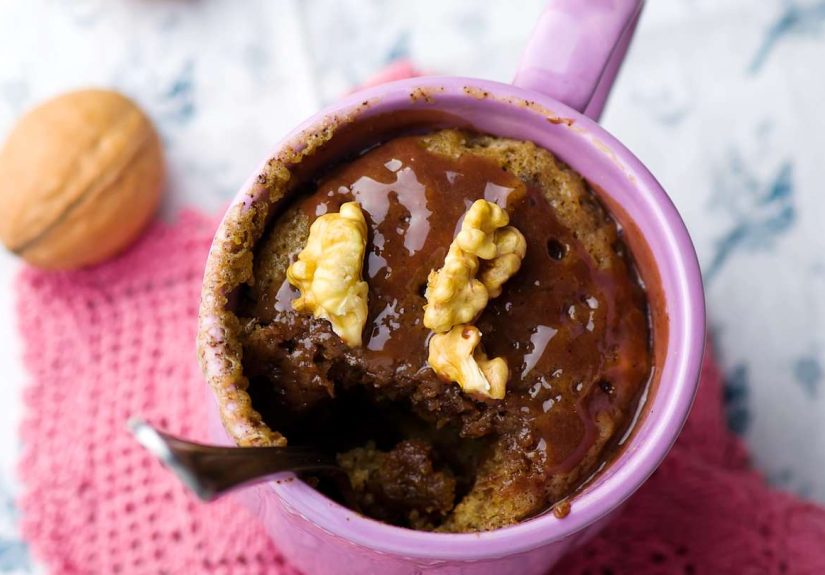
The result is somewhere between a classic chocolate cake and a warm brownie cup. It is soft, comforting, and exactly the kind of thing that makes a chilly evening feel less rugged and more ridiculously civilized.
Flavor Upgrades That Make It Feel Fancy
One of the best things about a camping mug cake is how easily it can be customized without turning your pack into a portable bakery aisle. A few small add-ins go a long way.
S’mores style
Mix crushed graham crackers into the batter or scatter them on top, then add mini marshmallows during the last couple minutes of cooking. It is basically campfire nostalgia in spoon form.
Mocha trail version
Add a pinch of instant coffee or espresso powder. Chocolate and coffee are famously good together, and the flavor makes the cake taste a little more grown-up, even if you are eating it in a puffy jacket while arguing about tent stakes.
Peanut butter chocolate
Swirl in a teaspoon of peanut butter from a squeeze packet. It adds richness, boosts the dessert’s staying power, and tastes absurdly good with cocoa.
Berry camp cake
If you are car camping and have fresh fruit in the cooler, a spoonful of raspberries or chopped strawberries can wake up the entire cake. If you are backpacking, chopped dried fruit works too, especially cherries.
Hot cocoa comfort cake
Use part hot cocoa mix in place of some sugar and cocoa, then top with marshmallows. It feels like dessert and campsite coziness got married and invited your spoon.
Common Mistakes That Can Ruin a Camping Dessert
Even a simple mug cake recipe has a few trap doors.
Using the wrong mug: Double-wall insulated mugs are great for sipping coffee and terrible for direct camp cooking. Use a single-wall metal mug for a true backcountry mug cake.
Cooking over aggressive heat: A hard boil can make the batter cook unevenly or turn rubbery. Gentle simmering is the sweet spot.
Making the batter too thin: If it pours like chocolate soup, it probably needs a touch more flour. Thick, spoonable batter gives you a better crumb.
Overpacking toppings: Yes, extra chocolate sounds noble. But too many add-ins can weigh down a small cake. Think “enhance,” not “bury.”
Skipping prep: Portioning ingredients at home is the difference between an elegant camp dessert and you trying to eyeball cocoa powder by headlamp like a dessert outlaw.
Why This Camping Dessert Earns a Spot in Your Kit
A great camping dessert is not just about sugar. It is about morale. It is about closing out a rainy evening on a high note, celebrating a summit day, or adding one tiny bit of luxury to a trip that otherwise involves damp socks and mystery trail dust. A single-serving cake in a mug does that beautifully because it feels personal. It is not mass-produced. It is not pulled from a crinkly wrapper. It is warm, fresh, and made right there, where your boots are drying and your water is boiling.
It also solves a very real camp cooking problem: dessert often feels like too much effort. Cobbler is wonderful, but not when you are tired. Cookies are great, but not when cleanup is a chore. This backcountry mug cake hits the sweet spot between effort and reward. It is easy enough for a casual weeknight campground dinner and charming enough for a more ambitious backpacking trip.
Smart Camp-Cooking Tips That Make Dessert Better
Repackage before you go
Pre-measure the dry mix into a small bag and label it. This reduces bulk, cuts waste, and speeds up camp prep. It also keeps you from dragging an entire bag of flour into the woods just to make one heroic little cake.
Store food like a responsible dessert lover
Chocolate, sugar, crumbs, wrappers, and anything scented should be treated like real food because they are. Store them properly in bear-resistant storage where required, and never leave leftovers or sticky dishes sitting around camp. Wildlife does not need to discover your baking phase.
Pack out every crumb
If your mug cake is a hit, excellent. If there are leftovers, pack them out. Do the same with wrappers, spilled sugar, chocolate bits, and strained dishwater solids. A good camping trip should leave behind memories, not frosting evidence.
Expect altitude to have opinions
If you camp high in the mountains, cooking can change. Water boils differently, cakes can behave a little strangely, and times may need adjusting. The fix is usually patience, lower drama, and an extra minute or two of gentle cooking rather than blasting the stove and hoping for dessert justice.
Experience: Why This Dessert Feels So Good in the Wild
There is something deeply funny and strangely moving about eating warm cake in a place where you spent the last hour filtering water and arguing about whether that rustling noise was wind or a squirrel with main-character energy. In regular life, cake is easy to find. You can buy it at a grocery store, order it at a restaurant, or forget about it entirely because there are fifteen other desserts within a short drive. In the outdoors, cake becomes an event.
That is why this backcountry mug cake works on a level beyond flavor. Yes, it is sweet. Yes, it is soft and chocolatey and comforting. But the real charm is the contrast. You spend the day doing outdoor things that make you feel rugged and competent. You hike. You set up camp. You boil water. You maybe say things like “weather window” or “trail conditions” as if you host your own wilderness documentary. Then, suddenly, you are eating dessert with a spoon out of a steaming mug like you just opened a tiny bakery beside a pine tree.
I have seen simple camp desserts lift the mood of an entire campsite. The difference between “We should probably go to bed early” and “Okay, this trip is officially amazing” can be one warm, chocolate-scented bite. After a long day outside, your senses are wide open. The smell of cocoa seems bigger. The warmth feels warmer. Even the texture lands differently. A mug cake after hiking does not taste like a shortcut dessert. It tastes like a reward you genuinely earned.
It also invites a slower kind of camping moment. Nobody speed-eats mug cake and immediately starts folding tarps. This is a sit-down dessert. A stare-at-the-fire dessert. A “remember when the tent almost blew away at lunch?” dessert. It creates a natural pause in the evening, and that pause is often the part of a camping trip people remember most. Not just the miles or the gear or the scenic overlook, but the weirdly perfect moment when everyone was quiet for ten seconds because the cake was that good.
And unlike elaborate camp baking projects, this one does not ask you to become a frontier pastry chef. It is forgiving. It is modest. It understands that you are outdoors, not auditioning for a competitive baking show judged by raccoons. That is part of the joy. The dessert feels special without feeling stressful.
For families, it can become a tradition. For couples, it is a surprisingly charming little ritual. For solo campers, it is one of those small luxuries that turns a good trip into a memorable one. There is a unique satisfaction in making something warm and sweet just for yourself in the middle of nowhere. It says, very clearly, “I may be covered in camp smoke, but I still have standards.”
So if your next camping trip could use a little more joy and a little less granola-bar repetition, bring the ingredients for a mug cake. Not because dessert is necessary in some practical sense, but because it transforms the mood of camp. It is comfort food with a headlamp on. It is a tiny celebration in a metal cup. And after one spoonful, there is a decent chance this becomes the camping dessert everyone starts requesting before the tents are even zipped.
Conclusion
This backcountry mug cake is the rare camping dessert that feels both clever and indulgent. It is lightweight, adaptable, easy to prep, and wildly satisfying after a day outside. Whether you are car camping with a cooler full of toppings or packing light with just a few pantry staples, this simple mug cake recipe proves that camp food does not have to be plain to be practical. Sometimes the best thing you can bring to the woods is not more gear. Sometimes it is chocolate.