Table of Contents >> Show >> Hide
- Why Resistance Band Exercises Are Great for Adults Over 50
- Before You Start: Safety Tips for Resistance Band Training
- The Best Resistance Band Exercises for Seniors and Adults Over 50
- 1. Seated Resistance Band Row
- 2. Resistance Band Chest Press
- 3. Seated Band Leg Press
- 4. Banded Sit-to-Stand
- 5. Standing Band Hip Abduction
- 6. Resistance Band Biceps Curl
- 7. Resistance Band Triceps Press-Down
- 8. Band Pull-Apart
- 9. Seated Band March
- 10. Resistance Band Lateral Walk
- 11. Resistance Band Dead Bug Press
- 12. Standing Band Calf Press
- A Simple Weekly Resistance Band Workout Plan
- How Many Reps and Sets Should Seniors Do?
- Common Mistakes to Avoid
- Best Resistance Band Exercises by Goal
- Experience-Based Advice: What Actually Helps Adults Over 50 Stick With Resistance Bands
- Conclusion
- SEO Tags
Resistance bands may look like oversized rubber bands, but do not let their simple appearance fool you. For seniors and adults over 50, these stretchy little tools can build strength, support balance, improve mobility, and make everyday tasks feel less like a surprise fitness test. Carrying groceries, climbing stairs, opening a heavy door, getting up from a chair, and reaching for that mysteriously high kitchen shelf all depend on muscle strength. Resistance bands help train those muscles without requiring a gym membership, complicated machines, or a personal trainer shouting “one more rep” like you are auditioning for an action movie.
The best resistance band exercises for seniors are safe, joint-friendly, practical, and easy to adjust. You can use a lighter band when you are just starting out, shorten the band to increase tension, or switch to a stronger band as your body adapts. That flexibility makes resistance band workouts especially useful for adults over 50 who want to stay active, maintain independence, and build confidence in movement.
This guide covers the benefits of resistance band training, safety tips, the best exercises for older adults, a beginner-friendly weekly routine, and real-life experience-based advice to help you stay consistent. The goal is not to become a bodybuilder by Tuesday. The goal is to feel stronger, steadier, and more capable in daily life.
Why Resistance Band Exercises Are Great for Adults Over 50
As people age, muscle mass and strength naturally decline. This process can affect balance, walking speed, posture, joint stability, and the ability to perform daily activities. The good news is that strength training can slow this decline and, in many cases, help older adults rebuild strength. Resistance bands are one of the easiest ways to begin because they offer smooth, controlled tension through the movement.
Unlike heavy weights, bands do not rely only on gravity. They create resistance as they stretch, which allows you to train muscles from many angles. That is helpful for shoulders, hips, legs, back muscles, and the core. Bands are also lightweight, inexpensive, portable, and easy to store. You can keep one in a drawer, suitcase, or beside your favorite chair. No giant machine. No intimidating weight rack. No waiting for someone to finish taking gym selfies.
Key Benefits of Resistance Band Workouts for Seniors
- Improved muscle strength: Stronger legs, hips, arms, shoulders, and back muscles help with walking, lifting, carrying, and standing.
- Better balance and stability: Strengthening the hips, glutes, legs, and core may help support steadier movement.
- Joint-friendly training: Bands allow controlled movement and can be easier to manage than heavy dumbbells.
- More independence: Strength training supports everyday activities such as getting out of a chair, climbing steps, and carrying laundry.
- Convenience: Resistance bands can be used at home, in a hotel room, outdoors, or during a short break in the day.
- Adjustable difficulty: You can progress slowly by changing band thickness, hand position, range of motion, or repetitions.
Before You Start: Safety Tips for Resistance Band Training
Resistance band exercises are generally beginner-friendly, but smart setup matters. If you have osteoporosis, arthritis, balance problems, uncontrolled blood pressure, recent surgery, a heart condition, or ongoing pain, talk with a healthcare professional or physical therapist before starting a new exercise routine. This is especially important if you have not exercised in a while.
Choose a band that lets you complete each movement with control. The last few repetitions should feel challenging, but not like you are wrestling a garden hose. Avoid holding your breath. Move slowly. Keep your joints aligned. Stop if you feel sharp pain, dizziness, chest discomfort, or unusual shortness of breath.
How to Pick the Right Resistance Band
Most bands come in different resistance levels, often shown by color. Color systems vary by brand, so read the label instead of assuming yellow always means easy or blue always means “prepare for battle.” Beginners often do well with a light or medium band. Tube bands with handles are useful for rows, presses, and curls. Flat therapy bands are excellent for seated exercises, shoulder work, and gentle rehabilitation-style movements. Loop bands work well for hip and leg exercises.
Simple Warm-Up for Older Adults
Before exercising, warm up for five to eight minutes. March in place, walk around the room, roll your shoulders, gently circle your ankles, open and close your hands, and do a few slow sit-to-stands from a sturdy chair. A warm body moves better than a cold one, and your joints will appreciate the polite warning.
The Best Resistance Band Exercises for Seniors and Adults Over 50
The following exercises target major muscle groups used in daily life. Start with one set of 8 to 12 repetitions for each movement. If that feels comfortable, work up to two sets. Rest for 30 to 60 seconds between exercises. Focus on form first, resistance second, and looking impressive third.
1. Seated Resistance Band Row
Best for: upper back, posture, shoulders, and pulling strength.
Sit tall on a sturdy chair with your feet flat on the floor. Loop the band around the arches of both feet and hold one end in each hand. Keep your chest lifted and shoulders relaxed. Pull your elbows back as if you are gently squeezing a pencil between your shoulder blades. Pause, then slowly return to the starting position.
Why it helps: The seated row strengthens the upper back muscles that support posture. It can make daily tasks like pulling open doors, carrying bags, and sitting upright feel easier.
2. Resistance Band Chest Press
Best for: chest, shoulders, triceps, and pushing strength.
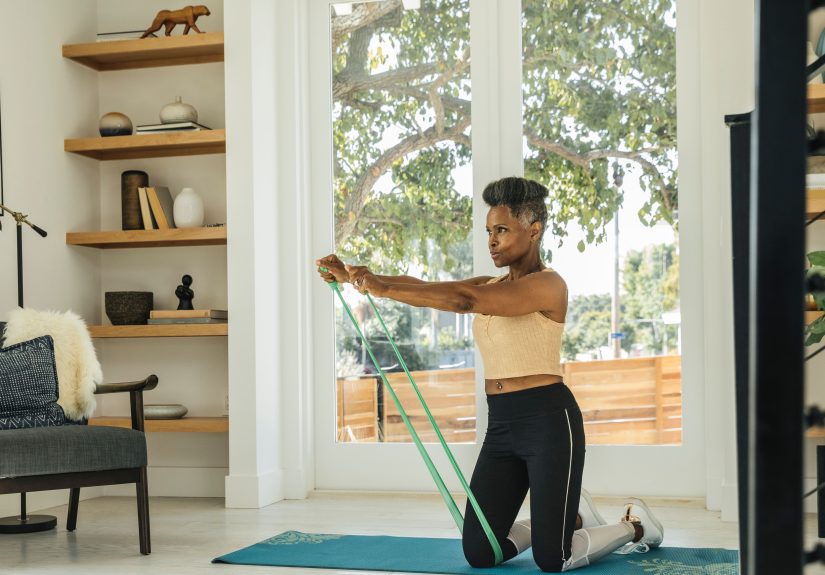
Sit or stand tall. Wrap the band behind your upper back, holding one end in each hand near your chest. Press your hands forward until your arms are almost straight, but do not lock your elbows. Slowly return your hands to your chest.
Why it helps: Pushing strength matters for getting up from the floor, pushing a shopping cart, opening heavy doors, and supporting yourself with your arms when needed.
3. Seated Band Leg Press
Best for: thighs, hips, glutes, and knee-supporting muscles.
Sit in a sturdy chair. Loop the middle of the band around one foot and hold both ends securely. Keep your knee bent at first, then press your foot forward until your leg is almost straight. Slowly bend the knee and return to the starting position. Repeat on the other side.
Why it helps: This exercise strengthens the quadriceps and glutes, which are important for walking, climbing stairs, and getting out of a chair. Because it is seated, it is also useful for beginners who are working on balance.
4. Banded Sit-to-Stand
Best for: legs, glutes, hips, and functional strength.
Place a loop band above your knees. Sit near the front of a sturdy chair with your feet hip-width apart. Keep gentle outward pressure on the band so your knees do not collapse inward. Stand up slowly, pause, then sit back down with control.
Why it helps: Sit-to-stand is one of the most practical exercises for adults over 50 because it directly trains a movement used every day. If the band feels too difficult, do the movement without it first.
5. Standing Band Hip Abduction
Best for: outer hips, glutes, and balance support.
Place a loop band around your ankles or above your knees. Stand behind a sturdy chair and hold the back of it for support. Shift your weight onto one leg and move the other leg out to the side without leaning your body. Return slowly. Repeat on the other side.
Why it helps: Strong hip muscles support walking, side-stepping, and balance. This move is especially useful for improving stability during everyday movement.
6. Resistance Band Biceps Curl
Best for: arms and lifting strength.
Stand or sit tall. Place the band under your feet and hold one end in each hand. Keep your elbows close to your sides. Bend your elbows and bring your hands toward your shoulders. Lower slowly.
Why it helps: Biceps curls support everyday lifting, such as picking up grocery bags, carrying a purse, or lifting a pot from the stove. Functional? Yes. Glamorous? Also yes, if you flex at the toaster.
7. Resistance Band Triceps Press-Down
Best for: back of the arms and pushing support.
Anchor the band safely above chest height, such as in a secure door anchor. Hold the ends with your elbows bent and close to your body. Press your hands downward until your arms are nearly straight. Slowly return.
Why it helps: Strong triceps help with pushing movements, using armrests to stand, and supporting the upper body during daily tasks.
8. Band Pull-Apart
Best for: shoulders, upper back, posture, and shoulder stability.
Hold a flat band in both hands at chest height with your arms straight but not locked. Pull the band apart by moving your hands away from each other. Keep your shoulders down, not shrugged. Slowly return.
Why it helps: Band pull-aparts strengthen muscles that help keep the shoulders stable and the upper back engaged. This is especially helpful for people who spend time sitting, reading, driving, or looking down at a phone.
9. Seated Band March
Best for: hip flexors, core, and beginner-friendly leg strength.
Sit tall in a sturdy chair. Place a loop band around your thighs, just above the knees. Lift one knee a few inches, lower it, then lift the other knee. Keep your torso upright and move slowly.
Why it helps: This exercise strengthens the muscles involved in walking and stepping over small obstacles. It is a gentle option for people who want a seated movement that still feels useful.
10. Resistance Band Lateral Walk
Best for: hips, glutes, thighs, and side-to-side stability.
Place a loop band above your knees. Stand with your feet hip-width apart and knees slightly bent. Step to the side with one foot, then bring the other foot in. Take several small steps in one direction, then return. Hold a wall or counter if needed.
Why it helps: Many falls happen during turning, reaching, or side-stepping. Lateral walks train the hips and legs to handle movement in more than one direction.
11. Resistance Band Dead Bug Press
Best for: core stability and controlled movement.
Lie on your back with knees bent and feet flat. Hold a light band between both hands above your chest and gently pull it apart to create tension. Tighten your abdominal muscles as if bracing before a cough. Slowly lift one foot a few inches, lower it, then switch sides. Keep the band steady.
Why it helps: Core strength supports posture, balance, and lower-back comfort. This gentle movement teaches the body to stay stable while the legs move.
12. Standing Band Calf Press
Best for: calves, ankles, walking strength, and circulation support.
Sit in a chair and loop a band around the ball of one foot, holding both ends. Point your toes forward like you are pressing a gas pedal, then slowly return. You can also perform standing calf raises without the band while holding a chair for support.
Why it helps: Calf strength supports walking, stair climbing, and ankle stability. This is a small movement with big daily-life value.
A Simple Weekly Resistance Band Workout Plan
For most beginners over 50, two to three resistance band sessions per week is a practical starting point. Leave a rest day between strength sessions when possible. You can walk, stretch, or do balance exercises on other days.
| Day | Workout Focus | Suggested Exercises |
|---|---|---|
| Monday | Full-body strength | Seated row, chest press, sit-to-stand, biceps curl, hip abduction |
| Wednesday | Balance and lower body | Seated leg press, lateral walk, seated march, calf press, band pull-apart |
| Friday | Full-body repeat | Choose 6 to 8 favorite moves and perform 1 to 2 controlled sets |
On non-strength days, aim for light movement such as walking, gardening, gentle cycling, water aerobics, or mobility exercises. A balanced routine for older adults includes aerobic activity, strength training, balance work, and flexibility. Think of it like a good soup: one ingredient is nice, but the combination is where the magic happens.
How Many Reps and Sets Should Seniors Do?
A safe beginner target is 1 set of 8 to 12 repetitions per exercise. As you improve, you may build to 2 or 3 sets. Older adults who prefer lighter resistance may perform 10 to 15 repetitions. The band should create enough tension that the final few reps feel challenging while still allowing good form.
Progress slowly. You can make an exercise harder by using a stronger band, shortening the band, adding a second set, slowing the lowering phase, or increasing the range of motion. Do not change everything at once. Your muscles enjoy a challenge; your joints prefer a negotiation.
Common Mistakes to Avoid
Using Too Much Resistance Too Soon
A band that is too heavy can cause poor form, shoulder strain, or jerky movement. Start lighter than you think you need. You should control the band, not get launched by it.
Moving Too Fast
Fast repetitions reduce control and increase injury risk. Use a slow rhythm: pull or press for about two seconds, pause briefly, then return for two to three seconds.
Ignoring Pain
Muscle effort is normal. Sharp pain is not. If an exercise hurts a joint, reduce the range of motion, use a lighter band, try a seated version, or ask a physical therapist for guidance.
Skipping Balance Support
If you are doing standing exercises, keep a chair, wall, or counter nearby. Confidence improves when you know support is within reach.
Best Resistance Band Exercises by Goal
For Better Balance
Focus on standing hip abduction, lateral walks, seated marches, calf presses, and sit-to-stands. These exercises strengthen the hips, thighs, calves, and core muscles that help stabilize the body.
For Stronger Legs
Try seated leg presses, banded sit-to-stands, lateral walks, calf presses, and gentle banded glute bridges if you are comfortable getting down to the floor.
For Better Posture
Use seated rows, band pull-aparts, shoulder external rotations, and chest-opening stretches. These movements train the upper back and shoulder muscles that help you stand and sit taller.
For Arm Strength
Choose biceps curls, triceps press-downs, chest presses, and seated rows. These support daily tasks such as carrying bags, lifting household items, and pushing yourself up from a chair.
Experience-Based Advice: What Actually Helps Adults Over 50 Stick With Resistance Bands
One of the biggest lessons from resistance band training is that the best workout is not always the fanciest one. It is the one you repeat. Many adults over 50 start with big motivation, buy a pack of bands, do a heroic first workout, feel sore for three days, and quietly relocate the bands to the “mystery drawer” beside old batteries and takeout menus. A better approach is to start almost laughably small.
For example, begin with five minutes after breakfast. Do one seated row, one chest press, one sit-to-stand, and one biceps curl. That might not sound dramatic, but it builds the habit. After two weeks, five minutes can become ten. Ten can become twenty. Consistency grows when the routine feels doable instead of exhausting.
Another useful experience: keep the band visible. A resistance band stored in a closet is basically retired. Place it near your walking shoes, favorite chair, or television remote. Some people do one set during commercial breaks or after the evening news. Others pair band exercises with coffee brewing, laundry cycles, or phone calls. When exercise attaches to an existing habit, it becomes easier to remember.
Comfort also matters. Adults over 50 often do better with exercises that feel connected to real life. The sit-to-stand is not just a leg exercise; it is practice for standing up from a restaurant chair without making sound effects. The seated row is not just a back exercise; it helps with posture and pulling movements. The leg press is not just for thighs; it supports stairs, walking, and getting in and out of cars. When people understand the purpose, motivation improves.
Progress should feel encouraging, not punishing. A helpful method is to use a simple notebook. Write the date, exercises, band color or resistance level, and repetitions. After a few weeks, you may notice that 8 repetitions became 12, or one set became two. These small wins are powerful. They show that the body can still adapt, even if it complains about weather changes and prefers earlier dinner reservations.
It is also normal for one side of the body to feel stronger than the other. Many people notice that one hip, shoulder, or arm works harder. That does not mean failure. It means you have information. Move slowly, use lighter resistance, and let the weaker side set the pace. Balanced training is more important than rushing.
For people with arthritis or sensitive hands, flat bands can be easier than gripping dumbbells. You can wrap the band around the hand, use handles, or choose loop bands that do not require much gripping. For shoulder discomfort, keep movements lower and smaller at first. For balance concerns, seated exercises are not “lesser” exercises. They are smart exercises. Strength built in a chair still counts.
The most successful resistance band routines usually include a mix of structure and flexibility. Have a plan, but do not turn it into a legal contract. If your energy is low, do a shorter version. If your knees feel stiff, focus on upper body and seated moves. If you feel great, add a second set. The long-term goal is not perfection; it is participation.
Finally, make it enjoyable. Play music. Exercise with a friend. Join a senior fitness class. Celebrate small improvements, such as feeling steadier on stairs or carrying groceries with less effort. Resistance band training works best when it becomes part of life rather than another chore on the list. And unlike many fitness tools, resistance bands do not judge, beep, or demand a software update. They just wait patiently until you are ready to stretch, strengthen, and keep moving forward.
Conclusion
The best resistance band exercises for seniors and adults over 50 are simple, practical, and easy to modify. Seated rows, chest presses, leg presses, sit-to-stands, hip abductions, band pull-aparts, biceps curls, and lateral walks can help build strength where it matters most: in the muscles used for daily movement. With a light band, a sturdy chair, and a few focused minutes, older adults can create a strength routine that supports independence, balance, posture, and confidence.
Start gently, move with control, and progress one step at a time. You do not need a perfect workout plan to get stronger. You need a safe plan, a little patience, and the willingness to keep showing up. Resistance bands may be small, but for adults over 50, they can be a big step toward aging with more strength, stability, and freedom.