Table of Contents >> Show >> Hide
- Why Noah Schnapp Became the Center of the Backlash
- The Cast Acting Debate Goes Far Beyond One Performance
- Why Final-Season Expectations Made the Reaction Harsher
- Was the Criticism Fair? Sort Of. Also, Not Entirely.
- What This Debate Means for the Show’s Legacy
- The Experience of Watching a Beloved Young Cast Grow Up Under a Spotlight
- Conclusion
When a show has been part of the internet’s personality for nearly a decade, its final season is never going to arrive quietly. It is going to stomp in wearing monster goo, emotional baggage, a backpack full of nostalgia, and at least one opinionated Reddit thread. That is exactly what happened with Stranger Things as fans picked apart the final season and, in particular, zeroed in on one cast member’s performance with the kind of intensity usually reserved for playoff referees and cold fries.
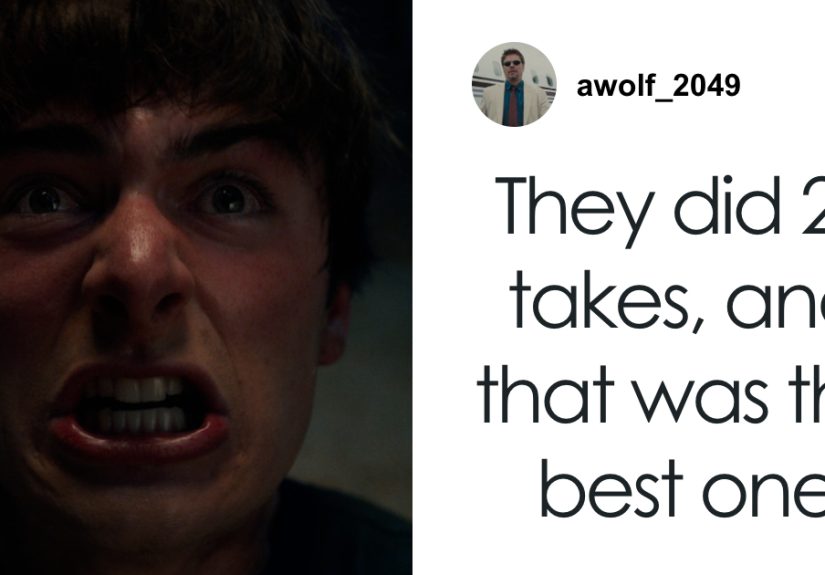
The loudest criticism centered on Noah Schnapp, whose portrayal of Will Byers became a flashpoint online. Some viewers argued that his delivery felt too stiff, too muted, or too visibly “performed.” Others fired right back, saying that this reading missed the point of Will entirely: he is traumatized, guarded, awkward, and carrying enough emotional weight to bend a bike wheel. In other words, the debate was not just about whether one actor was “good” or “bad.” It became a bigger argument about how audiences judge young stars who grew up in public, how fandom confuses writing with performance, and why beloved ensembles suddenly get graded like they are all in separate final exams.
Why Noah Schnapp Became the Center of the Backlash
If you had to place a pin on the map of this controversy, it would land squarely on Will Byers. That makes a certain amount of sense. Will has always been one of the show’s most delicate characters: sensitive, haunted, frequently sidelined, and often tasked with communicating pain in a very internal way. He is not the wisecracking engine of the group. He is not the swagger machine. He is the kid who absorbs tension like a sponge in a thunderstorm.
In the final season, that inward quality became even more visible. Will was given more narrative importance, bigger emotional beats, and scenes that demanded quiet vulnerability rather than crowd-pleasing fireworks. That works beautifully for some viewers. For others, it reads as flat. And once social media latches onto “flat,” the internet does what it does best: repeats the same adjective until it sounds like a legally binding fact.
The criticism aimed at Schnapp often framed his acting as wooden or awkward. But awkward is also part of the character design. Will is not written as a smooth talker or a born showman. He has always been the emotional receiver in a friend group full of louder personalities. That distinction matters. Sometimes viewers are reacting to a performance. Sometimes they are reacting to a character they wish had a different rhythm, more confidence, or fewer silences. Those are not the same complaint, even if they end up wearing the same internet costume.
The “Bad Acting” Claim Is Often a Writing Complaint in Disguise
One reason this debate got so heated is that audiences love to use “bad acting” as an umbrella term for everything that bothers them. Slow pacing? Bad acting. Dialogue that feels too on-the-nose? Bad acting. A character arc you do not enjoy? Congratulations, the actor is now apparently guilty by association.
Stranger Things gave fans a lot to argue about in its final run: the pacing, the expanded mythology, the split-release strategy, the emotional overload, the lingering teen drama, and the challenge of paying off years of expectations without collapsing under the weight of all that nostalgia. When viewers feel overwhelmed by a season, they often translate that frustration into judgments about faces, voices, and line readings. It is easier to say “he was bad” than to say “this scene needed sharper dialogue, tighter direction, and five fewer minutes.”
That is a big reason Schnapp became such an easy target. Will’s arc lives in the emotional, talk-heavy, deeply exposed corners of the season. Those are exactly the scenes where writing, editing, tone, and performance all get tangled together like Christmas lights in a storage bin.
The Cast Acting Debate Goes Far Beyond One Performance
What makes this controversy more interesting than a simple pile-on is that fans were not united at all. While some viewers dragged Schnapp, many praised the wider cast and even defended him specifically. Others argued the real issue was inconsistency: not that the ensemble forgot how to act, but that the season gave some performers stronger material than others.
That is where the conversation becomes more useful. Because when people debated the Stranger Things cast’s acting prowess, they were really debating range, chemistry, maturity, and whether the show still knew how to showcase its actors. Some names came up again and again as standouts. Sadie Sink earned praise for the emotional force she brings to Max. Caleb McLaughlin was frequently highlighted for grounding Lucas with warmth and believable pain. Jamie Campbell Bower kept getting flowers for his chilling theatricality as Vecna, because when your villain looks like he stepped out of a nightmare and a Shakespeare audition at the same time, people tend to notice.
Winona Ryder, meanwhile, continues to do what Winona Ryder does: make panic, love, and maternal ferocity feel like the same bloodstream. Millie Bobby Brown still commands attention whenever Eleven enters the room, and Joe Keery remains one of the show’s secret weapons because he can pivot from comedy to earnest heroism without looking like he pulled a hamstring.
Why Some Performances Landed Better Than Others
It often came down to material. Actors with cleaner emotional lanes tended to fare better with audiences. A heartfelt reunion, a devastating bedside scene, a deliciously creepy villain moment, or a sharply defined friendship dynamic gives a performer room to shine. By contrast, actors stuck in exposition-heavy scenes, awkward romantic leftovers, or lore-dump conversations were more likely to be called weak, even when the deeper problem was the script handing them a plate of dry toast and asking for a gourmet meal.
This is especially true in ensemble TV. The audience rarely judges acting in a vacuum. They judge it through momentum. If a scene crackles, the actor gets applause. If a scene drags, the actor becomes the human face of the drag. It is not fair, but it is extremely online.
Why Final-Season Expectations Made the Reaction Harsher
Final seasons are brutal. They are not judged like normal television. They are judged like emotional inheritances. Fans do not merely want closure; they want vindication. They want their favorite characters honored, their theories rewarded, their ships validated, their tears earned, and their time respected. Easy enough. Just solve fandom.
That impossible standard makes every performance feel bigger. A scene that might have been accepted in season two gets dissected in season five because now it is not just a scene. It is part of the legacy. It is part of the farewell. It is part of the giant memory box people have been building since 2016.
The cast also faces an unusual challenge: they are no longer unknown kids growing into characters. They are recognizable stars carrying years of audience expectation, public scrutiny, and off-screen fame. Viewers do not just watch Mike, Eleven, Lucas, Dustin, and Will anymore. They also watch Finn Wolfhard, Millie Bobby Brown, Caleb McLaughlin, Gaten Matarazzo, and Noah Schnapp. That split perception changes everything.
Growing Up on Camera Changes the Way Audiences Judge You
One uncomfortable truth behind this whole debate is that audiences are much more forgiving of child actors than adult ones. When the cast was younger, their performances were filtered through the charm of discovery. Now that they are older, they are measured with far less generosity. The same traits once read as authentic awkwardness can suddenly be recast as limited range. The same emotional restraint once praised as subtle can suddenly be called blank. That is not always because the actor got worse. Sometimes it is because the audience changed the test.
And yes, there is also the visual challenge. The older the cast got, the more the illusion of adolescence depended on performance, styling, and audience goodwill. When that illusion wobbles, viewers become hyperaware of every line reading and every expression. They start watching the performance with a magnifying glass instead of a heart. That rarely ends well.
Was the Criticism Fair? Sort Of. Also, Not Entirely.
Here is the balanced answer that nobody on social media wants because it does not fit on a meme: some of the criticism was fair, and some of it was deeply lazy. There were moments in the final season where performances felt uneven. There were line deliveries that did not quite sing. There were scenes that seemed engineered for impact rather than lived-in emotion. It is completely reasonable for viewers to notice that.
But the internet’s favorite hobby is turning “I did not love that scene” into “this person cannot act.” That leap is where criticism stops being useful and starts becoming performance art. Schnapp was not the only actor in the season with tough material, but he became the lightning rod because Will’s arc was intimate, vulnerable, and impossible to play in a way that would satisfy every corner of the fandom.
In fact, one of the strongest defenses of his work is built into the role itself. Will is someone who has spent years suppressing himself, second-guessing his place, and moving through the world with a kind of emotional flinch. If that performance makes some viewers uncomfortable, that may be because Will is uncomfortable. Not every good performance arrives with charisma, volume, or a neon sign screaming “award clip.”
The Difference Between Subtle and Stiff
This is the tiny, maddening border where the whole conversation lives. Subtle acting asks the viewer to lean in. Stiff acting leaves the viewer outside. The trouble is that different viewers draw that line in different places. One person sees internalized pain. Another sees limited expressiveness. One person sees character accuracy. Another sees a missed opportunity.
That difference in interpretation is exactly why this became such a fan war. Not because one side is perfectly correct, but because performance is one of the messiest, most subjective parts of television discourse. Add a beloved franchise, a final season, a massive online audience, and a character as emotionally loaded as Will Byers, and you have a recipe for digital chaos with extra seasoning.
What This Debate Means for the Show’s Legacy
Oddly enough, the very existence of this debate proves how much people still care about Stranger Things. If the show had truly lost its grip, viewers would not be writing essays, posting rants, defending actors, ranking performances, or arguing over whether the problem was direction, dialogue, editing, or delivery. They would shrug and move on to another algorithm-approved apocalypse.
Instead, people are still invested enough to argue about who carried scenes, who stumbled, who deserved better writing, and which relationships still had electricity. That kind of passion can be exhausting, but it also signals something real: the show still matters. Maybe not always gracefully. Maybe not always evenly. But it matters.
And in the end, that is the true upside-down magic trick of Stranger Things. It turned a group of kids on bikes into a long-running cultural obsession. The acting debate, however messy, is part of that legacy too. Not because it proves the cast failed, but because it proves audiences expected a lot from them. Maybe too much. Definitely too loudly. Very internet.
The Experience of Watching a Beloved Young Cast Grow Up Under a Spotlight
For many viewers, the strangest part of this whole conversation is not the backlash itself. It is the feeling of watching a cast you basically met in childhood get discussed as if they are stock prices. That is part of the emotional weirdness around Stranger Things. Fans did not just watch these actors perform. They watched them grow up. They watched their voices change, their faces mature, their careers branch out, and their off-screen identities become part of the surrounding conversation. So when people critique the cast now, it does not feel like ordinary TV chatter. It feels personal, nostalgic, and just a little existential.
That experience changes the viewing process. You are no longer just following a story about kids fighting monsters in Hawkins. You are comparing who they were in season one to who they are now, both as characters and as public figures. Every scene carries memory with it. Every performance gets measured against earlier seasons that live in fan memory with a warm, blurry glow. And as anyone who has ever revisited an old favorite knows, nostalgia is not exactly a fair referee.
There is also the social media factor, which acts like a giant emotional amplifier. A mildly negative reaction that once would have stayed on a couch now becomes a viral post, then a quote-tweet pile-on, then a “hot take” article, then a discourse cyclone with no emergency exit. That creates a strange fan experience where people are not just watching a show; they are also watching the reaction to the reaction to the reaction. By the time you finish an episode, the internet has already assigned blame, chosen favorites, mocked someone’s line delivery, and declared either the death or triumph of cinema. Casual!
For longtime fans, that can be exhausting. It can also make the show feel smaller than it really is. Instead of sitting with a performance and letting it breathe, people race to verdicts. Instead of asking what a scene is trying to do emotionally, they ask whether it will survive as a clip in the group chat. That kind of viewing encourages snap judgments, and snap judgments are rarely kind to quiet performances, awkward characters, or emotionally complicated scenes.
At the same time, that intensity is part of what made Stranger Things such a phenomenon in the first place. Fans care enough to argue because they have lived with these characters for years. They remember Will disappearing. They remember Eleven flipping vans. They remember Max floating. They remember Steve’s hair having its own heroic arc. So when the final season asks them to say goodbye, they do not respond like detached critics. They respond like people leaving a chapter of their own lives behind.
That is why the acting debate around the cast feels so charged. It is not just about technical performance. It is about memory, identity, expectation, disappointment, affection, and the weird ache of realizing that the kids from Hawkins are not kids anymore. Neither, honestly, are the fans. In that sense, the experience surrounding this controversy says as much about the audience as it does about the actors. People are not just judging the show. They are wrestling with what it means for something they loved to change, mature, wobble, and end. Which, now that you think about it, is a pretty Stranger Things problem to have.
Conclusion
The backlash against one Stranger Things star was real, loud, and impossible to miss, but the bigger story is more complicated than “good actor” versus “bad actor.” Noah Schnapp became the face of a broader fandom argument about subtlety, awkwardness, writing quality, online pile-ons, and the impossible burden placed on final seasons. Meanwhile, the rest of the cast reminded viewers why the series became a phenomenon in the first place: strong chemistry, emotional history, and enough character investment to make every flaw feel like a family dispute.
So, was the cast’s acting prowess really up for debate? Sure. Every final season invites that. But the more interesting takeaway is this: when audiences care this much, they are often reacting not just to performance quality, but to years of emotional investment colliding with sky-high expectations. In the Upside Down of internet fandom, those two things can look exactly the same.