Table of Contents >> Show >> Hide
- What Happened (Based on Reporting and Police Statements)
- Why a “Small Spill” Can Become a Big Blowup in a Big Crowd
- Venue Security and Crowd Control: What “Good” Looks Like
- Legal Fallout in California: The Basics of Assault, Battery, and Liability
- Safety Tips for Concertgoers: Practical, Not Paranoid
- Sharing Viral Fight Videos Responsibly
- What This Incident Reveals About Concert Culture Right Now
- Experiences From the Stands: What People Remember After a Night Like This (About )
- Conclusion
A packed stadium. A favorite song warming up the crowd. A plastic cup of something overpriced and fizzy. Thenbecause life is nothing if not committed to
chaosa small drink spill sets off a chain reaction that ends in a viral video, a police investigation, an arrest, and a bigger conversation about safety at
major concerts.
The clip that spread across social media in August 2025 didn’t just shock people because it captured a violent moment. It shocked people because the trigger
was so ordinary. We’ve all bumped elbows in tight rows. We’ve all been splashed by a stray drink in a crowd. Most of the time, it’s a quick “My bad,” a shrug,
and everyone gets back to dancing. This time, it became a cautionary taleabout temper, crowd control, and how fast “minor” can turn into “medical tent.”
What Happened (Based on Reporting and Police Statements)
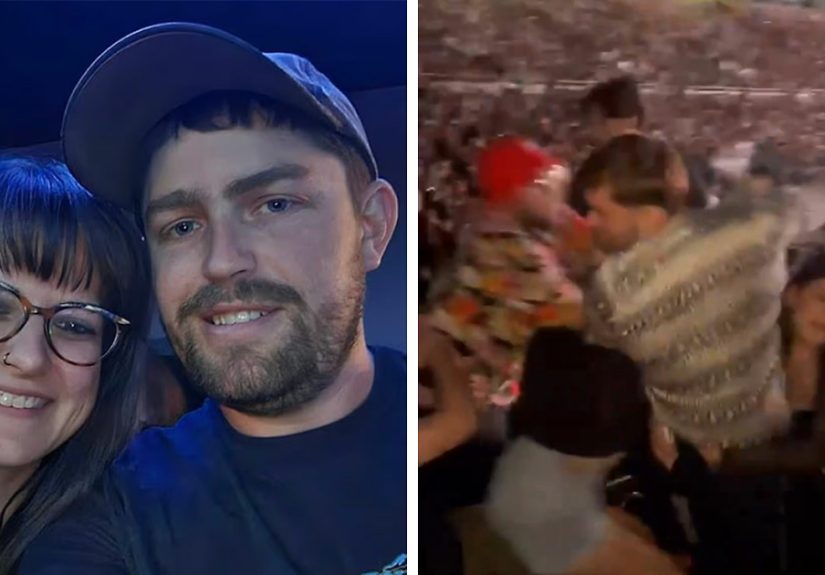
The incident occurred during a sold-out Rüfüs Du Sol concert at the Rose Bowl in Pasadena, California, on August 16, 2025. Multiple outlets reported that the
conflict began after a drink was accidentally spilled on a man in the stands. According to accounts later shared publiclyand echoed in law enforcement
descriptionsthe group involved apologized, but the man remained angry and walked away.
The part that still makes people’s eyebrows launch into orbit: reports say he returned roughly 30 minutes later. What followed was a confrontation that escalated
quickly and violently. A womanidentified in later coverage as Shelby Lynn Elston, an Arizona motherwas struck and lost consciousness. Two other people were
also injured in the altercation, according to Pasadena police.
In the days after the video went viral, investigators said tips and footage helped them identify a suspect. On August 21, 2025, Pasadena police arrested Julio
Cesar Lopez Zavala of Hawthorne in connection with the alleged assault. Subsequent reporting described a court appearance, release conditions (including an ankle
monitor in at least one report), and a legal process that continued into the fall.
Later developments added another layer: in early October 2025, Elston and her fiancé (identified in reporting as Cain Thomas Stephens Webb) filed a lawsuit
alleging inadequate security contributed to the harm. By late November 2025, reports said the couple dismissed the case without prejudicemeaning it could
potentially be refiledwhile the criminal case remained its own track.
Why a “Small Spill” Can Become a Big Blowup in a Big Crowd
It’s tempting to treat incidents like this as a one-off: “That guy was unhinged,” end of story. And yesindividual responsibility matters. But public safety
experts also look at environments, because certain environments multiply risk the way a microphone multiplies sound.
1) Crowds reduce spaceand patience
In a stadium, personal space becomes a rumor. When you’re shoulder-to-shoulder, every bump feels personal even when it’s physics. Add narrow aisles, steep steps,
and people trying to pass through rows mid-song, and “accidental contact” is basically part of the ticket price.
2) Alcohol (and other substances) can lower the “pause button”
Many venues sell alcohol, and many attendees drink. Alcohol doesn’t create aggression out of thin air, but it can reduce inhibition and shorten the distance
between irritation and action. The worst part? The crowd often can’t tell who is impaired until it’s too late.
3) Social “proof” can work for goodor for chaos
Sometimes a crowd calms a situation: strangers step between people, friends pull someone back, security arrives quickly. Other times, a crowd becomes an audience,
and the mere presence of an audience can push an aggressive person to “perform.” Phones come out. Shouting grows. The energy spikes. Nobody wants that kind of
spotlightbut it exists.
4) The delay between “warning signs” and “intervention” is everything
A key theme in coverage of the Rose Bowl incident was the question of response timehow long a conflict continued before being effectively stopped. In high-density
venues, seconds matter. Not because security can prevent every bad decision, but because early intervention can keep a bad decision from turning into multiple
injuries.
Venue Security and Crowd Control: What “Good” Looks Like
When people hear “concert security,” they often picture bag checks and wristbands. But the most important security work happens inside the venue: monitoring
behavior, keeping aisles clear, spotting escalation early, and responding fastespecially in packed seating sections where people can’t simply “walk away” without
squeezing past 19 knees and a nacho tray.
Crowd-safety guidance commonly emphasizes planning, staffing, and trained personnel whose job is specifically to manage people flow and escalating situations.
Fire-safety and crowd-management frameworks also discuss trained crowd managers and clear responsibilitiesbecause emergencies don’t wait for someone to decide
whose shift it is.
The three layers that reduce risk at major events
- Prevention: clear policies (no fighting, removal for threats), visible staff presence in seating areas, and layouts that keep walkways open.
- Early detection: staff trained to notice “pre-fight” signalsposturing, repeated arguments, someone leaving and returning angry, a circle forming.
-
Rapid response: a fast route to reach a seat section, coordinated radio communication, and a practiced process for separating people and escorting
aggressors out before the situation spreads.
You can’t bubble-wrap a concert. But you can reduce the odds that a dispute becomes a pileup. And when thousands of people are packed into one place, reducing odds
is the whole game.
Legal Fallout in California: The Basics of Assault, Battery, and Liability
If you’re reading this because you saw the clip and wondered, “How is that handled legally?” here’s the high-level picture (not legal advice, just a roadmap).
Criminal side: charges can vary with facts and injuries
In everyday language, people say “assault” to mean “attack.” In California law, “battery” is often the charge tied to unlawful physical force or violence on another
person, while “assault” is generally connected to an unlawful attempt (with present ability) to commit violent injury. Prosecutors decide charges based on evidence,
severity, intent, self-defense claims, and whether multiple victims were involved.
Civil side: lawsuits focus on negligence and preventability
Separate from the criminal case, injured parties sometimes file civil lawsuits. These can target the alleged attacker anddepending on circumstancesthe venue or
operators, arguing inadequate security, poor crowd control, or failures to respond contributed to harm. In the Rose Bowl case, reporting described a lawsuit filed
in early October 2025 and later dismissed without prejudice in late November 2025.
The broader point: viral clips feel like “internet moments,” but the consequences land in very offline placespolice reports, courtrooms, medical bills, missed work,
and long-term stress.
Safety Tips for Concertgoers: Practical, Not Paranoid
Nobody wants to attend a show with the mindset of a security consultant. You want to sing, dance, and maybe cry during the encore like a normal person. Still,
a few habits can lower riskwithout turning your night into a tactical operation.
If a drink spills (yours or theirs)
- Apologize once, clearly, and calmly. A simple “I’m sorrytotal accident” is enough. Don’t argue about intent.
- Create space immediately. If the other person is heated, moving seats (even temporarily) is not “losing.” It’s choosing safety.
- Loop in staff early. If someone is threatening, screaming, or following you, flag an usher or security right away.
If you see a conflict building
- Don’t play referee in a packed row. Intervening can put you at risk and can escalate the aggressor.
- Get help, get eyes, get distance. Alert staff, point out the exact location, and encourage others to do the same.
- Remember exits and medical stations. Knowing the nearest aisle or tunnel is useful even for non-violent issues like dehydration.
If you’re with family (or you are the “mom at the concert”)
- Pick a meet-up spot. Phones die. Networks jam. A simple “If we get separated, we meet at Gate X” helps.
- Protect your perimeter. In tight crowds, standing on the aisle side can reduce jostling for someone shorter or with kids.
- Trust your instincts. If a section feels chaotic, it’s okay to relocate, even if it’s not the “perfect view.”
A small, slightly ridiculous truth: the best defense against a crowd problem is often the earliest, smallest moveswitch seats, step into the aisle, tell staff.
The goal is to avoid becoming the main character in somebody else’s terrible decision.
Sharing Viral Fight Videos Responsibly
The internet loves “caught on camera,” but real people live inside these clips. If you’re going to share footage of an incident at a concert, consider the
difference between helping and harming.
- Send evidence to the right place first. If a crime occurred, law enforcement and venue security should get the clearest version of the video.
- Avoid doxxing. Misidentifying someone online can cause serious collateral damageand can complicate investigations.
- Don’t narrate as fact what you didn’t witness. “Here’s what I saw” is different from “Here’s what happened.”
- Respect victims’ privacy. People deserve dignity, especially when they didn’t choose to be content.
The Rose Bowl case also showed a more constructive side of the internet: when tips and footage are routed appropriately, they can help identify suspects.
The key is treating the video like evidencenot entertainment.
What This Incident Reveals About Concert Culture Right Now
Concerts have always carried risksbig emotions, big crowds, and the occasional person who confuses “VIP” with “Very Important Problem.” But the post-pandemic era
has added new friction points: larger tours, higher ticket prices, more packed venues, and a general sense that everyone is already overstimulated before the
opening act hits the stage.
When fans reported feeling unsafe or overwhelmed, they weren’t just complaining about long lines. They were describing an environment where small disruptions can
cascade: crowding makes it harder to exit, harder for staff to reach a scene, and harder for bystanders to help safely.
The best venues don’t rely on luck. They rely on staffing, training, and clear, practiced responsebecause “one-off” is what every major incident looks like
right up until it isn’t.
Experiences From the Stands: What People Remember After a Night Like This (About )
If you ask concertgoers what they remember most from a scary incident, they rarely start with the headline moment. They start with the lead-upthe little signals
that felt “off,” but not off enough to leave. Someone squeezing past too aggressively. A heated exchange that seemed like it would burn out. A person storming away,
then reappearing later with a completely different energy.
Many people describe the same confusing emotional cocktail: you’re surrounded by music and celebration, but your body flips into alert mode. You’re trying to decide,
in real time, whether you’re witnessing a minor argument or the start of something dangerous. That uncertainty is exhausting. And in a tight seating section, it’s
even worse because you can’t simply step back the way you can in an open floor crowd.
Parents and caregivers often describe an extra layer of calculation. If you’re at a show with your teen, your partner, or friends who are smaller or less steady on
stairs, you’re mentally mapping the environment the whole time: where the nearest aisle is, how quickly you could move, which tunnel looks less congested. It’s not
paranoiait’s the same instinct that makes you automatically scan for exits at a movie theater. You hope you won’t need it, but you feel better knowing it’s there.
Another common theme is the aftershockthe part that doesn’t go viral. People talk about how strange it is to go from “I’m here for my favorite band” to “I’m
talking to staff, looking for help, checking if someone is okay.” Even if you weren’t directly harmed, seeing violence at a show can stick in your mind for weeks.
Some describe feeling jumpy in crowds afterward, or replaying the “What if I had…” questions: What if I had moved sooner? What if I had grabbed an usher earlier?
What if I had insisted we relocate?
And yet, concerts also produce moments of surprising kindnessoften from complete strangers. People offer water. Someone gives up a seat near an aisle. A bystander
points the fastest route to a medical station. Friends lock arms to form a buffer so others can move away. It’s the side of crowd behavior that doesn’t trend,
but it matters: communities can protect each other when the environment supports it and when staff respond quickly.
A lot of fans say their biggest takeaway is simple: embarrassment is temporary; safety is not. If someone is angry over a spill, you don’t need to “win” the social
moment by standing your ground. You can apologize, move, and get staff. You can choose to miss two minutes of a song rather than risk becoming part of a disaster.
The concert will still be there. Your healthand your family’s peace of mindshould be, too.
Conclusion
The viral Rose Bowl incident hit a nerve because it smashed two realities together: the ordinary (a spilled drink) and the unthinkable (a sudden, severe assault).
The lesson isn’t that concerts are unsafe by default. It’s that safety is an active processone that involves personal responsibility, smart venue planning,
trained staff, and faster intervention when warning signs appear.
If you’re heading to a big show, don’t let fear steal the fun. Just bring a little awareness with your wristband. Be quick to create space, quicker to call in
staff, and stubbornly committed to the idea that no spilled drink is worth a life-altering moment.