Table of Contents >> Show >> Hide
- Molly Humphreys and the art of seeing what the system overlooks
- The women holding up health care, often without the spotlight
- The paradox of progress for women in medicine
- What Humphreys captures that metrics cannot
- Why the “unseen women” of health care deserve a larger frame
- Experiences from the margins of the hospital floor
- Conclusion
Hospitals are often photographed like movie sets. The heroic doctor strides down a hallway. The dramatic monitor beeps on cue. The lighting says, “Please hand me an Emmy.” Real health care, of course, is messier, quieter, and much more human than that. It runs on care plans and call buttons, yes, but also on reception desks, hospice visits, paperwork, transport, housekeeping, grief management, patience, and the miracle of someone remembering where the extra blankets are.
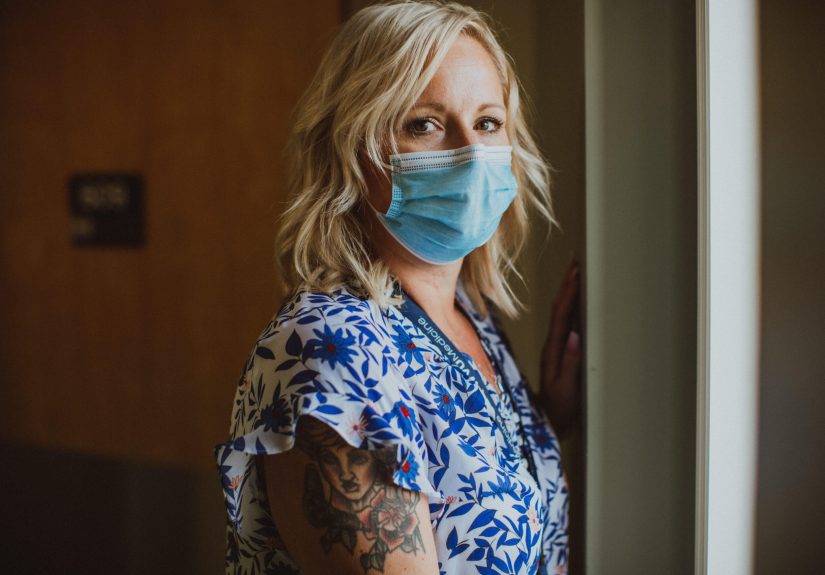
That is why the work of portrait photographer Molly Humphreys lands with such force. Her images do not treat health care as a slick machine or a PR slogan. They slow the eye down. They make you look at the people who keep the system alive, especially women whose work is everywhere and yet too often invisible. In Humphreys’ portraits, women in health care are not background texture. They are the story.
The result is bigger than a set of beautiful photographs. It is a corrective. It is a reminder that strength in health care does not always wear a title with a corner office attached. Sometimes it wears scrubs. Sometimes it wears a badge and stands at a unit desk. Sometimes it drives to a patient’s home, wipes down a room, answers a frightened family member, or keeps showing up when the shift has already taken everything except the need to keep going.
Molly Humphreys and the art of seeing what the system overlooks
Molly Humphreys emerged in this conversation through Healthcare is Human, a West Virginia-based storytelling project launched during the early months of the COVID-19 pandemic. Working with physician Ryan McCarthy, Humphreys began photographing workers in and around Berkeley Medical Center in Martinsburg, West Virginia. What started in spring 2020 as a response to crisis grew into something more durable: a portrait archive of the people who make health care possible.
That origin matters. Plenty of pandemic-era images were about chaos, masks, and emergency. Humphreys’ work makes room for something more intimate. Her portraits invite dignity instead of spectacle. They let workers appear as themselves, not as symbols flattened into one big category called “frontline heroes.” That may sound subtle, but in health care storytelling, subtlety is practically a rebellious act.
Her collaboration with McCarthy also helped build a wider narrative medicine project. Healthcare is Human has been featured in exhibitions in West Virginia, including Wild, Wonderful & Brave and a yearlong Healthcare is Human exhibit at West Virginia University. The project has also been recognized in humanism and medical-education spaces, which makes sense: the images do what good narrative medicine should do. They restore complexity. They insist that the caregiver is a human being before the job title gets a chance to swallow the person whole.
Why portraits matter in health care
A portrait can do what a statistic cannot. Data can tell us that women make up a huge share of the health care workforce. A portrait can show us what it looks like to carry that fact in a body, in a face, in a pair of tired but steady eyes. Data explains scale. Portraiture explains cost.
That is where Humphreys’ work becomes more than visual documentation. It becomes interpretation. Her images challenge the usual hierarchy of who gets seen as essential. In one frame, a unit clerk can carry the same gravity that a glossy magazine usually reserves for a surgeon. In another, a hospice worker’s tenderness becomes the emotional center of the story. That shift is not cosmetic. It is political, cultural, and deeply necessary.
The women holding up health care, often without the spotlight
If Humphreys’ portraits feel revelatory, it is partly because the underlying numbers are so stark. Women account for roughly three-quarters of full-time, year-round health care workers in the United States. In health care and social assistance more broadly, women represented 77.6% of the workforce in 2021. In other words, if American health care were a stage production, women would be doing most of the acting, lighting, props, sound, ticketing, and probably fixing the curtain during intermission.
But that broad majority hides a more complicated truth. Women are heavily represented in caring roles, support roles, and operational roles that are indispensable and undervalued at the same time. The U.S. Census Bureau has shown major earnings gaps across occupations within health care. Registered nurses, one of the most common occupations for women, earn far more than aides and assistants, yet even nursing remains chronically stretched. Meanwhile, home health aides and personal care aides, occupations that keep older adults and people with disabilities safe and supported, are overwhelmingly female. In 2023, women made up 87% of home health aides and nearly 80% of personal care aides.
Those are not just workforce facts. They are clues to what society chooses to reward. The closer a job gets to intimate, repetitive, hands-on care, the more likely it is to be feminized, underpaid, and treated as “just helping.” Anyone who has ever helped a loved one bathe, eat, dress, remember medications, or hold onto a sliver of dignity knows that “just helping” is one of the funniest lies in the English language.
The invisible architecture of care
One of the strongest ideas running through Humphreys’ work is that health care depends on people we do not habitually celebrate. West Virginia University’s description of Healthcare is Human makes this explicit: the project elevates not only physicians and nurses, but also security guards, administrative staff, cafeteria workers, janitors, and others whose labor forms the hidden architecture of care.
That framing is crucial because women’s labor in health care is often split across two kinds of invisibility. First, it is professionally overlooked when the public imagination narrows health care down to doctors and a few dramatic interventions. Second, it is culturally minimized because so much of women’s work is expected to feel “natural.” If a woman comforts a patient, calms a family member, notices emotional distress, catches a small workflow problem before it becomes a disaster, or remembers the practical details that make treatment actually function, the labor can disappear into the myth that caring simply happens on its own.
It does not. Someone does it. Usually under time pressure. Often while also doing six other things. Frequently with not enough pay, not enough sleep, and not enough recognition.
The paradox of progress for women in medicine
There is real progress worth noting. Women are now the majority of applicants and graduates at U.S. medical schools, and women’s representation among academic medicine faculty has grown over the past decade. That is a meaningful shift, not a decorative one.
Still, the elevator to leadership seems to move a little slower once women get on it. AAMC data shows that women remain underrepresented in top academic positions. In 2023, women accounted for 27% of medical school deans and 25% of department chairs. Those numbers are better than they were a decade ago, but “better” is not the same thing as equal. In plenty of institutions, women are carrying the mission while men still hold too much of the map.
Compensation tells a similar story. The Commonwealth Fund has highlighted a physician pay gap in which women physicians earn about 74 cents for every dollar earned by men. That is not a rounding error. That is structural inequality wearing a lab coat. And while compensation patterns vary by specialty, system, and practice type, the broader message is clear: women’s growing presence in medicine has not automatically delivered proportional power, pay, or influence.
Burnout is not gender-neutral
The strain is measurable as well as visible. KFF’s frontline worker survey during the pandemic captured the enormous mental and physical toll on health care workers, including people doing direct patient care, administrative work, and support tasks such as bathing, cleaning, and housekeeping. More recently, AMA reporting showed that while physician burnout has declined from pandemic peaks, women physicians still report higher burnout rates and lower feelings of being valued than men.
That gap does not appear out of thin air. It grows from workload, emotional labor, caregiving expectations at home, unequal advancement, documentation burden, and a long history of asking women to absorb more friction with less complaint. Health care likes to call this “resilience.” Sometimes resilience is real. Sometimes it is a polite word for “the system assumes you will keep enduring this.”
What Humphreys captures that metrics cannot
Humphreys’ portraits are powerful because they refuse to separate skill from personhood. A worker is not reduced to a role. She is allowed style, mood, complexity, fatigue, tenderness, confidence, and ambiguity. That matters when the broader culture still tends to sort women in health care into two neat but misleading boxes: angel or employee. Humphreys offers neither cliché. She offers presence.
That is especially important in Appalachia, where stereotypes about work, poverty, rural life, and health have long distorted public narratives. Ryan McCarthy has written that Humphreys’ photographs counter recycled negative stereotypes about who lives and works in Appalachia. Instead of flattening the region into pathology, the portraits show intelligence, beauty, professionalism, and grit without denying hardship. The effect is not sentimental. It is clarifying.
A portrait of a unit clerk, hospice nurse, or public health nurse can quietly rewrite the hierarchy of attention. It tells viewers that the woman handling paperwork or navigating grief or working in addiction care is not peripheral to medicine. She is medicine as patients actually experience it. Not abstract medicine. Not conference-panel medicine. Not brochure medicine. Real medicine, where care has to survive contact with real life.
Why the “unseen women” of health care deserve a larger frame
The phrase “unseen women of health care” is not only about visibility in photographs. It is about who gets counted when we define expertise, leadership, and value. Women dominate many of the occupations that are closest to daily human need. They staff home care, bedside care, hospice, clinics, support services, and community-facing roles that make the system humane. Yet the closer a job sits to the body and the everyday work of keeping someone safe, the easier it is for institutions to underpay it, underestimate it, and build policy around it as if it were endlessly renewable.
It is not endlessly renewable. The direct-care workforce faces shortages fueled by low wages, high turnover, and recruitment problems. Home health and personal care aide roles are projected to grow rapidly in the next decade, which means the country will depend even more on labor it has historically treated as cheap and emotionally infinite. That is not a sustainable business model. It is wishful thinking with a staffing crisis attached.
Humphreys’ work does not solve those structural problems. Art is not payroll reform. A portrait will not fix understaffing by itself. But art can do something that policy papers often struggle to do: it can create moral attention. It can remind us that systems are built from people, and people are not interchangeable parts. When we see the women of health care clearly, it becomes harder to talk about labor shortages as if they were weather.
Experiences from the margins of the hospital floor
To understand why this topic matters, it helps to sit with the experiences that projects like Healthcare is Human have surfaced. These stories do not sound like abstract debates about workforce capacity. They sound like lives being carried in real time.
Take Angie Gray, the West Virginia nurse whose work on the frontlines of addiction care reflects the wider burdens many women in health care shoulder. Her story is not just about clinical skill. It is about witnessing a public health crisis up close, recognizing the web of poverty, pain, and limited treatment access around it, and still returning to the emergency department to do the work anyway. That kind of labor is part medical, part emotional, part civic. It asks a caregiver to manage the immediate emergency while also feeling the weight of everything that produced it.
Then there is the hospice perspective highlighted through worker stories associated with Humphreys’ photography. Hospice work is one of the clearest examples of invisible strength in health care. It requires precision, tenderness, flexibility, and emotional steadiness, often all before lunch. A hospice worker does not simply complete tasks. She helps preserve dignity in moments when families are scared, exhausted, and not ready to say goodbye. The work asks for composure without coldness and compassion without collapse. That is not soft skill fluff. That is high-order professional labor.
Even roles that outsiders casually label “support staff” carry extraordinary interpersonal weight. A unit clerk can become the calm center of a chaotic floor. An administrative worker may be the first person who recognizes fear in a patient’s voice. A housekeeper can make a room feel safe again after one of the worst days of a person’s life. A security guard may be the steady presence who prevents a tense moment from becoming a dangerous one. None of this is decorative. These jobs help determine whether health care feels cold, fractured, and mechanical, or whether it still feels recognizably human.
Women often occupy these positions while also managing caregiving expectations outside work. That means some are moving between emotional labor at the hospital and emotional labor at home with barely enough time to microwave leftovers, let alone recover. During and after the pandemic, research and reporting repeatedly showed that women in health care faced intense pressure not only from workplace strain, but from childcare, household responsibilities, and the expectation that they would keep everything functioning everywhere all at once. It is a brutal talent show no one signed up for.
What Humphreys’ portraits do so beautifully is refuse to let these women blur into the background. They do not appear as generic representatives of “the workforce.” They appear as individuals with style, history, discipline, and presence. That matters because invisibility is rarely total. More often, it works by making essential people seem ordinary enough to ignore. A portrait interrupts that habit. It says: look again. Look longer. This person is not supporting the story. She is the story.
Conclusion
Molly Humphreys’ portraits matter because they tell the truth about health care without shouting. They reveal that the system’s strength is not only found in authority, credentials, or headline-grabbing specialties. It is found in women whose labor is skilled, intimate, logistical, emotional, and too often overlooked. They are nurses, aides, clerks, hospice workers, public health workers, administrators, and countless others who keep care moving when the institution itself starts to wobble.
In that sense, these are not just portraits of women. They are portraits of the moral infrastructure of medicine. They ask a sharp question: if women are carrying so much of health care, why are so many still underpaid, under-credited, and under-seen? Until that question is answered with more than applause, Humphreys’ images will keep doing essential work. They will keep insisting that the unseen be seen.