Table of Contents >> Show >> Hide
- The 46-Second Fight That Lit the Fuse
- So Why Was a Losing Boxer Offered $50,000?
- Why the IBA Being “Banned” Matters
- The Eligibility Dispute Behind the Headlines
- Why the Money Offer Looked Political, Not Compassionate
- Angela Carini’s Position Was More Complicated Than the Internet Wanted
- What This Episode Says About Women’s Boxing
- Experiences Around the Story: What It Felt Like From the Inside and the Outside
- Conclusion
Sometimes the biggest Olympic story is not a gold medal, a world record, or a tearful anthem moment. Sometimes it is 46 chaotic seconds, one stunned boxer, one lightning-rod opponent, and a governing body that no longer runs Olympic boxing trying to elbow its way back into the spotlight. That is exactly what happened when Italian boxer Angela Carini stopped her Paris bout against Algeria’s Imane Khelif almost as soon as it started, then found herself at the center of a storm involving athlete safety, eligibility rules, sports politics, and a surprise offer of prize money from the International Boxing Association, or IBA.
The headline-grabbing twist was almost too strange for fiction: Carini, who did not win, could still receive a $50,000 payout from the IBA, the organization that had already been pushed out of Olympic boxing. In the modern sports media machine, that was catnip. Add in the controversy around Khelif’s eligibility, the IOC’s sharply different position, and the emotional aftermath of the fight, and this became much more than a story about one boxer quitting early. It became a story about who gets to define fairness, who controls the message, and how fast an athlete can become a symbol for a much larger argument she never asked to represent.
The 46-Second Fight That Lit the Fuse
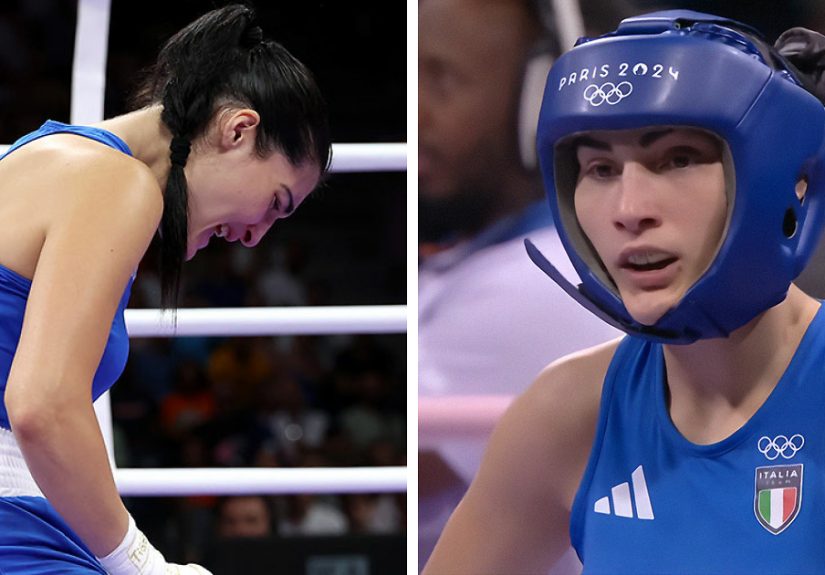
Angela Carini’s Olympic campaign in Paris ended before most viewers had settled into their seats. Facing Imane Khelif in the women’s 66-kilogram bout, Carini absorbed a couple of heavy shots and decided to stop the contest after just 46 seconds. The visual was dramatic: tears, frustration, disbelief, and a tournament dream evaporating at almost cartoon speed. Only this was not cartoon speed. It was the Olympics, where athletes build four-year plans around moments that sometimes vanish faster than a microwave countdown.
Carini’s exit triggered immediate reactions because it was so abrupt and because Khelif had already become a flashpoint in a broader eligibility dispute. In the instant-comment era, a short fight does not stay a short fight. It becomes a long argument. Carini’s decision was read by some as a statement about safety, by others as a statement about fairness, and by still others as a very human response to pain and disappointment. Later, Carini tried to cool things down. She made clear she did not want the episode used as a political weapon and expressed regret over how the moment with Khelif was interpreted.
That part matters. The internet loves a clean morality play, but real athletes usually live in the messier version. Carini was hurt, emotional, and crushed that her Olympics ended so quickly. That does not automatically make her a crusader, a villain, or a mascot for whichever side happened to grab the loudest microphone first.
So Why Was a Losing Boxer Offered $50,000?
This is where the story veers from dramatic to downright bizarre. After the fight, IBA president Umar Kremlev announced that Carini should receive $50,000, with an additional $25,000 earmarked for her coach and $25,000 for her federation. In other words, a total payout package of $100,000 was floated around a boxer who had exited the ring in the opening minute. That is the kind of sports plot twist that makes even seasoned fans blink twice.
The IBA had already announced prize money for Paris medalists despite not controlling Olympic boxing. Under its public structure, gold medal payouts were worth $100,000 in total, with $50,000 going to the athlete and the rest split between coach and federation. Silver and bronze payouts were set at lower levels. So Carini’s proposed award was not just generous. Symbolically, it looked like champion-style treatment for a boxer who did not make it out of the opening round.
That is why the offer landed with such a thud. It did not read like a routine athlete support payment. It read like a message. The message seemed to be that the IBA wanted to frame Carini not as a defeated boxer, but as a wronged one. In other words, the money was not just money. It was narrative with dollar signs attached.
Why the IBA Being “Banned” Matters
Calling the IBA “banned” is a shortcut, but it points to a real and important fact: the organization was no longer recognized by the International Olympic Committee as boxing’s governing body for the Olympic movement. The IOC suspended the IBA years before Paris, then withdrew recognition entirely in 2023 after a long-running conflict over governance, finances, integrity, and reform. In 2024, the Court of Arbitration for Sport rejected the IBA’s appeal, effectively reinforcing the IOC’s position.
That meant the IBA had no official role in running Olympic boxing in Paris. The IOC handled the tournament itself. So when the IBA announced Paris prize money and then inserted itself into the Carini controversy, the move looked less like normal federation business and more like an outsider banging on the front door while insisting it still owned the house keys.
And there was another layer to this. Olympic boxing itself was in an awkward transition. The sport’s place in the Los Angeles 2028 Games had been uncertain until a new body, World Boxing, gained provisional IOC recognition and boxing was ultimately restored to the LA28 program. That broader fight over who runs amateur boxing internationally gave the Carini prize-money offer an even more political edge. The IBA was not just talking about one boxer. It was also fighting for relevance.
The Eligibility Dispute Behind the Headlines
Much of the public frenzy centered on Imane Khelif, and this is where careful language matters. The IBA had previously disqualified Khelif and Taiwan’s Lin Yu-ting at the 2023 world championships under its own eligibility rules. But the IOC took the opposite view for Paris. Olympic officials said both athletes met the eligibility and entry rules for the Games and were cleared to compete. The IOC later blasted the IBA’s handling of the matter, describing the tests and process in deeply unflattering terms and arguing they lacked credibility.
That clash created the perfect recipe for confusion. One body said in effect, “These athletes should not be here.” Another said, “They absolutely can compete.” For casual fans, it looked like elite sports had misplaced the instruction manual. For the athletes involved, it was worse: they were asked to box under a cloud of public suspicion generated by institutions that could not even agree on what standard applied.
Khelif, meanwhile, became the subject of intense misinformation and social-media abuse. The debate quickly spilled beyond boxing into a global culture-war spectacle. That is one of the uglier features of modern sports coverage: a bout can end, but the tagging, clipping, posting, and outrage recycling can keep swinging long after the final bell.
Why the Money Offer Looked Political, Not Compassionate
Supporters of the payout could argue that the IBA was simply backing an athlete who had a traumatic Olympic experience. That is the charitable reading. The harder-nosed reading is that the offer was strategic theater. By rewarding Carini after she quit against Khelif, the IBA could reinforce its own claims about women’s boxing, safety, and eligibility without winning the underlying governance battle against the IOC.
It was also a shrewd media move. A payout of this size is easy to understand, easy to debate, and easy to turn into a headline. Governance reform reports rarely go viral. A surprise $50,000 check absolutely can.
Then came the next twist: Italy’s boxing federation said it would not accept any IBA prize money. That response punctured the clean symbolism the IBA may have wanted. It showed that even within Italy, the offer was not automatically embraced as some kind of noble gesture. Reports left open whether Carini personally or her coach might have acted differently, but institutionally, the federation slammed the door.
Angela Carini’s Position Was More Complicated Than the Internet Wanted
One reason this story kept spiraling is that people rushed to draft Carini into roles she did not seem eager to play. To one camp, she was proof that Olympic boxing had become unsafe and unfair. To another, she was being weaponized by people with political agendas. The truth was more uncomfortable and more human: she looked like an athlete who had a miserable moment on the biggest stage of her life and then had to watch the whole world argue over what that moment “meant.”
Carini later apologized for not shaking hands with Khelif and tried to separate her personal disappointment from the public firestorm. That apology was easy to miss because apologies rarely trend as well as outrage. Still, it mattered. It suggested that the athlete at the center of the spectacle was trying to reclaim her own voice from everyone else’s megaphone.
In a healthier sports ecosystem, that would have calmed things down. In the real one, it became just another data point in a sprawling online argument with no off switch.
What This Episode Says About Women’s Boxing
The Carini story exposed a problem that goes beyond one Olympic match. Women’s boxing is still forced to fight for attention, legitimacy, and resources, yet when it finally gets a giant global spotlight, that spotlight often arrives through controversy. Instead of talking about technique, preparation, national programs, or tactical styles, the conversation veered into governance warfare and ideological trench combat.
That is a loss for everyone. It is a loss for Carini, whose Olympic moment became a shorthand meme. It is a loss for Khelif, who boxed under a pile of scrutiny that no athlete should have to carry into the ring. It is a loss for fans, who deserved clarity from governing bodies and mostly got public contradiction instead. And it is a loss for the sport, because the actual boxing kept getting overshadowed by the politics orbiting around it like very loud satellites.
Experiences Around the Story: What It Felt Like From the Inside and the Outside
To understand why this story hit so hard, it helps to think beyond the headline and imagine the layered experiences wrapped around it. For Carini, the experience was likely brutally simple at first: pain, shock, and the awful realization that years of training had just dissolved in under a minute. Olympic athletes do not merely “lose.” They carry a loss home through sponsorship talks, interviews, national expectations, family hopes, and their own private replay machine that runs all night. A 46-second exit is not just a stat line. It is the kind of thing that follows an athlete into every room for months.
For Khelif, the experience was different but no less intense. She won the bout, yet the conversation around her was not the usual celebration of a dominant Olympic performance. Instead, she had to compete while her identity, eligibility, and legitimacy were debated in public by strangers, politicians, celebrities, and social-media accounts with all the empathy of a brick wall. Winning while being treated as a controversy instead of a competitor has to feel like stepping onto the podium while someone keeps trying to pull the floor away.
Then there were the coaches, teams, and federations. Their experience was one of damage control. Every statement mattered. Every silence was interpreted. Every word had to balance athlete welfare, institutional loyalty, and public reaction. In a normal sporting controversy, a camp might clarify an injury, address a tactical issue, and move on. Here, everyone was forced into a geopolitical and governance maze wearing boxing gloves.
Fans had their own odd experience too. Many people first encountered the story through clips, partial quotes, and algorithm-driven outrage. That means they did not really experience the event itself; they experienced the internet’s version of the event, which is like trying to understand a thunderstorm through a group chat. By the time fuller reporting emerged, many opinions had already hardened. That is one reason this episode became so polarizing so quickly. The emotional verdict often arrived before the factual file did.
And for women’s sports more broadly, the experience was frustratingly familiar. A major women’s event finally commands giant attention, and then the attention comes packaged with suspicion, governance confusion, and culture-war shouting. Instead of asking, “What a performance,” too many people asked, “How can I use this to prove my side right?” That shift is corrosive. It turns athletes into arguments and turns sport into a hostage negotiation between institutions, ideologies, and headlines.
In that sense, the Carini-IBA story was never only about a boxer who could receive $50,000. It was about what modern sports feel like when the ring is surrounded not just by ropes, coaches, and judges, but by politics, platform algorithms, and institutions still fighting over who gets to define reality.
Conclusion
Angela Carini’s 46-second Olympic exit was shocking on its own. The IBA’s decision to offer her $50,000 made it stranger. The political undertow around eligibility, the IOC’s fight with the IBA, and the later refusal by Italy’s federation to accept IBA prize money turned it into something bigger still: a case study in how a single bout can become a battlefield for the future of a sport.
The clearest takeaway is not that money solves anything. It does not. The clearest takeaway is that boxing needed cleaner governance, clearer rules, and a lot more humility from the institutions claiming to protect athletes. Carini deserved compassion. Khelif deserved fairness and dignity. Fans deserved transparency. Instead, the story became a reminder that in international boxing, the punches are not always thrown inside the ring.