Table of Contents >> Show >> Hide
- Our North Star: What “Good CBD” Must Prove
- Step 1: Regulatory Reality Check (Yes, It’s Complicated)
- Step 2: Ingredient Vetting (The “What Else Is In Here?” Test)
- Step 3: Third-Party Lab Testing (The Non-Negotiable Core)
- Step 4: Potency & Label Accuracy (Because Math Shouldn’t Be Optional)
- Step 5: How We Read a COA Without Pretending We’re Robots
- Step 6: Product Type Integrity (Full-Spectrum vs Broad-Spectrum vs Isolate)
- Step 7: Safety Notes We Build Into Every Review
- Step 8: Usability Testing (A.K.A. “Will a Human Actually Use This?”)
- Step 9: Value Scoring (Price per mg, Not Price per Hype)
- Step 10: Customer Trust Signals (Support, Shipping, Returns, and Honesty)
- Automatic Disqualifiers (Our “Thanks, But No Thanks” List)
- FAQ: The Questions Everyone Asks (Usually at 11:47 PM)
- Conclusion: Our Review Process, In One Sentence
- Real-World Review Notes: of Lessons We Learned the Hard Way
CBD shopping shouldn’t feel like speed-dating a chemistry textbook. But here we are: thousands of “miracle” tinctures, gummies, topicals, vapes, and beveragesmany with labels that sound confident enough to run for office. Our job is to cut through the hype (and the occasional nonsense) and answer one simple question:
Is this CBD product safe, accurately labeled, and worth your money?
This is our full, transparent, slightly opinionated process for reviewing CBD. It’s designed for real humanspeople who want calm, sleep, or sore-muscle relief, not a surprise drug test fail or a mystery ingredient scavenger hunt. We focus on what matters most for consumers and what credible science and regulators keep emphasizing: quality, safety, and honest labeling.
Our North Star: What “Good CBD” Must Prove
We don’t start with vibes. We start with evidence. A CBD product earns a real recommendation only if it can show:
- Identity: It contains what it claims (CBD type and amount).
- Purity: It’s screened for common contaminants (heavy metals, pesticides, microbes, residual solvents, and more).
- Legality signals: Hemp-derived, clear cannabinoid profile, and transparent batch documentation.
- Honest marketing: No “treats cancer in 7 minutes” energy.
- Usability: Sensible serving sizes, clear directions, and sane pricing.
In other words: we reward brands that act like adults in a messy market.
Step 1: Regulatory Reality Check (Yes, It’s Complicated)
CBD sits in a weird regulatory neighborhood. Hemp is federally defined by its THC threshold, but consumer CBD products live in a patchwork of rules and enforcement priorities. Our first pass asks:
1) Are they implying medical treatment?
If a brand claims its CBD “cures Alzheimer’s,” “reverses diabetes,” or “treats cancer,” we’re done. Those claims can trigger regulatory action because they position the product like an unapproved drug. Even if the label looks pretty, the marketing tells you how seriously the company takes consumer safety and truth-in-advertising.
2) Are they honest about what category they’re in?
CBD shows up in oils, gummies, capsules, creams, bath bombs, and beverages. Each format brings different risks:
- Edibles & oils: Highest concern for dosing and drug interactions.
- Vapes: Additional safety questions around inhalation and additives.
- Topicals: Lower systemic exposure for many users, but still requires labeling accuracy and contaminant screening.
We don’t pretend these categories are identical. We score them differently.
Step 2: Ingredient Vetting (The “What Else Is In Here?” Test)
CBD rarely travels alone. It shows up with carrier oils, sweeteners, flavors, preservatives, emulsifiers, botanicals, and occasionally… things that don’t belong in a wellness product.
We check the basics:
- Hemp source transparency: Where is the hemp grown? Is there any farming detail beyond “from the earth”?
- Extraction method: CO2 extraction and food-grade ethanol extraction can both be done well; both can also be done poorly. If a brand won’t say how the extract is made, that’s a trust problem.
- Carrier oils: MCT, hemp seed oil, olive oilfine. We look for allergen clarity and stability.
- Additives: Especially in gummies and vapes. We flag questionable thickening agents and vague “proprietary blends” that hide actual amounts.
Rule of thumb: If you can’t explain the ingredient list to a smart tenth-grader, the brand should rewrite it.
Step 3: Third-Party Lab Testing (The Non-Negotiable Core)
If CBD is the “Wild West,” third-party lab testing is the sheriffimperfect, sometimes underfunded, but the best tool we’ve got. We prioritize products with batch-specific Certificates of Analysis (COAs) from labs that demonstrate competence, ideally through ISO/IEC 17025 accreditation.
What we require in a COA
- Batch/lot number match: The COA must match the exact product batch sold.
- Recent date: Not a three-year-old PDF that has clearly seen some things.
- Full cannabinoid potency panel: CBD per serving and per package, plus THC (and ideally minor cannabinoids).
- Contaminant screening: Appropriate for the product type.
- Lab identification: Name, contact info, methods, and report integrity (no “trust me bro” formatting).
The contaminant checklist we look for
Hemp is a bioaccumulator, meaning it can pull stuff from soil and environment. That’s great when you’re cleaning up a polluted site; less great when you’re making gummies. Depending on format, we look for testing on:
- Heavy metals: lead, arsenic, cadmium, mercury
- Pesticides: broad panel appropriate to hemp/cannabis testing
- Residual solvents: especially for ethanol or hydrocarbon extraction products
- Microbials: yeast/mold, pathogenic bacteria (format dependent)
- Mycotoxins: because mold can leave behind nasty souvenirs
- Foreign matter: less common on COAs, but we note it when present
If a brand only tests potency (CBD and THC) but ignores contaminants, we treat that like a restaurant bragging it “checks temperatures” but never washes hands.
Step 4: Potency & Label Accuracy (Because Math Shouldn’t Be Optional)
CBD mislabeling is not a hypothetical. Multiple independent studies have found that many products deviate meaningfully from what the label claimssometimes under, sometimes over, sometimes with unexpected THC. That matters for:
- Effectiveness: You can’t dial in a dose if the product plays hide-and-seek with numbers.
- Safety: Over-labeled potency can increase side effects and drug interaction risk.
- Drug testing: Unexpected THC is a real concern for many users.
How we score potency accuracy
We compare label claims to COA results and look for:
- Per-serving CBD: e.g., “25 mg CBD per gummy” should be close to true.
- Total CBD per container: especially for oils where droppers vary.
- THC reporting: clear delta-9 THC and “total THC” context when available.
Concrete example: If a gummy is labeled 25 mg CBD and the COA shows an average of 18–19 mg per piece, we mark it down hard. If it’s 24–26 mg, that’s what we like to see. And if THC is higher than expected, we treat that as a major risk, not a “fun surprise.”
Step 5: How We Read a COA Without Pretending We’re Robots
A COA is basically a lab report translated into a document consumers can (sometimes) read. Here’s how we decode it:
1) Confirm identity and batch match
Lot number, product name, and sample ID should align. If the COA is genericno batch info, no sample detailsit’s marketing, not verification.
2) Check cannabinoid panel details
We look for CBD content (mg/g or mg/mL), serving size math, and THC reporting. We also note if a product claims “full-spectrum” but the profile looks suspiciously like an isolate with a fancy résumé.
3) Watch for LOQ/LOD and “ND”
“ND” means “not detected,” but detection depends on lab methods and limits. A good COA shows method details and reporting limits so you can interpret ND correctly.
4) Contaminants: pass/fail plus actual numbers
We prefer reports that show values (even when passing), not just a wall of “PASS” stamps. Transparency beats vibes.
Step 6: Product Type Integrity (Full-Spectrum vs Broad-Spectrum vs Isolate)
These terms matter because they affect experience and THC risk:
- CBD isolate: mostly CBD, minimal other cannabinoids/terpenes
- Broad-spectrum: multiple cannabinoids/terpenes, typically marketed as THC-free (but definitions vary)
- Full-spectrum: includes a wider range of cannabinoids and usually trace THC
We check whether the COA matches the marketing. If a product claims “THC-free broad-spectrum” but shows measurable THC, that’s a trust and consumer-risk issue. If it claims full-spectrum but has no supporting minor cannabinoid profile, we ask: where’s the “spectrum” exactly?
Step 7: Safety Notes We Build Into Every Review
We include a safety section because CBD isn’t candyno matter how many brands print cartoon fruit on the label.
Commonly reported side effects
CBD can cause side effects like drowsiness, GI upset (including diarrhea), appetite changes, and mood shifts for some users. Higher doses can increase risk, and there are documented concerns about liver enzyme elevations in certain contexts.
Drug interaction risk
CBD may interact with medications, including those with grapefruit-style warnings, because of how it can affect liver enzymes involved in drug metabolism. If someone is taking prescription meds (blood thinners, seizure meds, sedatives, and more), we urge them to talk with a clinician before using CBD regularly.
Our editorial rule: We don’t make medical promises. We describe what the evidence supports, what it doesn’t, and what consumers should watch for.
Step 8: Usability Testing (A.K.A. “Will a Human Actually Use This?”)
After the documentation checks, we evaluate user experience. Not as a replacement for lab testingneverbut as the layer that answers practical questions:
- Dosing clarity: Is it easy to measure a serving? Are droppers marked?
- Taste & texture: Edibles that are unbearable don’t get bonus points for “natural.”
- Onset expectations: Oils and capsules can take longer; inhalables act faster but carry different risk considerations.
- Consistency: Do users report similar experiences across purchases?
We also look for red flags like “proprietary blend” dosing that prevents meaningful comparisons. If a brand won’t tell you how much CBD is in a serving, we can’t review it seriously.
Step 9: Value Scoring (Price per mg, Not Price per Hype)
CBD pricing is chaotic. Some excellent products are fairly priced; some mediocre products are priced like they come with a personal wellness butler.
Our basic value math
We calculate approximate cost per mg of CBD and compare across similar product types. Then we adjust for:
- Testing completeness (potency-only vs full safety panels)
- Ingredient quality and formulation (simple and effective beats overcomplicated)
- Brand transparency (clear COAs, clear sourcing, clear policies)
We don’t automatically crown the cheapest product. We crown the product that earns its price with documentation and integrity.
Step 10: Customer Trust Signals (Support, Shipping, Returns, and Honesty)
CBD companies aren’t just selling oilthey’re selling trust. We assess:
- Return policy: Fair, clear, not written in invisible ink
- Customer support: Can you reach a human? Do they answer direct questions about COAs and batches?
- Consistency: Same product, same label, same COA availability over time
- Marketing tone: Education-focused beats fear-based or miracle-heavy copy
We also check whether a company has a pattern of regulatory trouble related to unapproved medical claims. A single mistake can happen; a philosophy of “rules don’t apply to us” is a no.
Automatic Disqualifiers (Our “Thanks, But No Thanks” List)
- No batch-specific COA (or COA that doesn’t match the product)
- Only potency testing, no contaminants
- Wild medical claims or disease-treatment promises
- Unclear serving sizes or hidden CBD amounts
- THC surprises without clear labeling
- Suspiciously vague sourcing and manufacturing info
FAQ: The Questions Everyone Asks (Usually at 11:47 PM)
Will CBD show up on a drug test?
Drug tests typically look for THC metabolites, not CBD. But some CBD productsespecially full-spectrumcan contain trace THC, and mislabeling happens. If drug testing is a concern, we recommend products with clear THC reporting and strong documentation, and even then there’s no zero-risk guarantee.
How much CBD should I take?
We don’t prescribe doses. We explain serving sizes and encourage a “start low, go slow” approach. People vary widely, and safety mattersespecially with medications or higher daily amounts.
Is “more mg” always better?
No. Better is accurate, consistent, and appropriate. A properly tested 20 mg serving can be more useful than a mislabeled “50 mg” serving that actually contains 30 mg (or comes with unwanted THC).
Does full-spectrum work better?
Some consumers prefer full-spectrum because it contains multiple cannabinoids and terpenes. Others prefer isolate or broad-spectrum to minimize THC exposure. We score based on accuracy, safety, and transparencynot on one “best” type for everyone.
Conclusion: Our Review Process, In One Sentence
We review CBD like it’s going into our own cabinet: verify the lab work, decode the COA, check for contaminants, question the marketing, and only then judge taste, price, and real-world usability.
Because the best CBD brands don’t ask for blind trustthey earn it with documentation. And if a product can’t clear those basic hurdles, we don’t care how many gold-leaf badges are on the website.
Real-World Review Notes: of Lessons We Learned the Hard Way
Let’s talk about the part of CBD reviewing that never shows up in glossy “About Our Standards” pages: the messy, human stuff. The days when you’re five COAs deep, your browser has 37 tabs open, and one of them is definitely a PDF that looks like it was faxed in 1998.
Lesson #1: A COA can be technically real and still not helpful. We’ve seen legitimate lab reports that list cannabinoid potency but leave out serving-size math. An oil might show “CBD: 33 mg/mL,” but the bottle claims “1000 mg CBD.” If the bottle is 30 mL, that math checks out (33 x 30 = 990 mg, close enough). But if it’s 60 mL, suddenly the label is doing interpretive dance. The fix is simple: we do the math ourselves, and we reward brands that make the math obvious.
Lesson #2: “Full-spectrum” is sometimes a costume. Every now and then, a product claims full-spectrum but the COA shows basically CBD plus a whisper of something elselike a band reunion tour with only the drummer showing up. Real full-spectrum typically has a more diverse cannabinoid profile (even if minor cannabinoids are small). When the profile looks too clean, we ask whether it’s actually an isolate with marketing glitter.
Lesson #3: Customer support reveals character fast. The best brands answer uncomfortable questions calmly: “Yes, here’s the batch COA,” “Here’s our ISO-accredited lab,” “Here’s how we test pesticides.” The worst brands respond like you asked to borrow money: vague answers, defensive tone, or the dreaded “Our lab results are proprietary.” (Translation: please stop asking.) In our scoring, responsiveness and transparency aren’t “nice to have.” They’re part of safety.
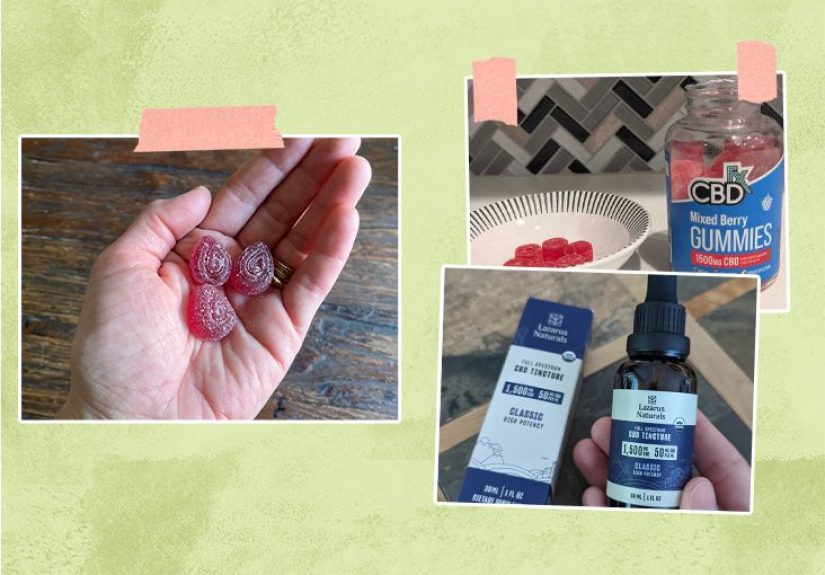
Lesson #4: Gummies are deceptively tricky. People assume gummies are simple: eat, chill, repeat. But gummies introduce variabilityuneven cannabinoid distribution, heat sensitivity, and flavor systems that can mask off-notes (and sometimes mask quality issues). We pay extra attention to batch consistency, serving accuracy, and whether the company provides meaningful stability or shelf-life guidance.
Lesson #5: Sometimes the best “review” is telling people what we don’t know. CBD research is still evolving, and product regulation is inconsistent. When the evidence is limited, we say that. When safety questions exist (like higher daily intakes, liver enzyme concerns in certain contexts, or medication interactions), we put it in plain English. The goal isn’t to scare peopleit’s to prevent the “I thought it was harmless because it’s natural” trap.
After reviewing enough products, you start to see a pattern: the brands worth buying don’t rely on hype. They rely on boring, beautiful fundamentalstesting, documentation, accuracy, and respect for consumers. And honestly? In a market this loud, boring is kind of a flex.