Table of Contents >> Show >> Hide
- What Is the 1-3-5 Rule?
- Why the 1-3-5 Rule Works So Well for Home Organization
- How to Start Using the 1-3-5 Rule at Home
- A Simple 1-3-5 Example for Different Rooms
- The Best Way to Use the Rule for Big Messes
- Common Mistakes to Avoid
- How to Make the 1-3-5 Rule a Weekly Habit
- Why This Method Is Better Than “Cleaning All Day”
- Final Thoughts
- Real-Life Experiences With the 1-3-5 Rule at Home
If your house feels like it’s running a side hustle as a storage unit, the 1-3-5 rule might be the reset button you need. It’s simple, flexible, and blessedly free of the “just wake up at 4:17 a.m. and become a new person” energy. Instead of trying to organize your entire home in one dramatic weekend that ends with you sitting on the floor eating crackers next to a donation pile, the 1-3-5 rule helps you make real progress in smaller, smarter chunks.
The idea is straightforward: pick one big task, three medium tasks, and five small tasks for the day. That’s it. No endless checklist. No fantasy-level productivity. No pretending you can reorganize the garage, deep-clean the fridge, sort baby clothes, color-code the pantry, and still have emotional stability left by dinner.
When you apply the 1-3-5 rule to home organization, it becomes a practical way to declutter, create better routines, and finally stop moving the same random charger from room to room like it’s part of the family. Here’s how to use it well, how to avoid the common mistakes, and how to turn it into a system that actually works in real homes with real people and real junk drawers.
What Is the 1-3-5 Rule?
The 1-3-5 rule started as a daily prioritization method. You choose one large task that matters most, three medium tasks that move life along, and five small tasks that are quick wins. In work life, that might mean finishing a report, answering client emails, and knocking out a few admin tasks. At home, it translates beautifully to organizing because home projects naturally come in different sizes.
A big task might be reorganizing the pantry. A medium task could be sorting the mail, clearing expired products from the bathroom, or setting up an entryway drop zone. A small task might be tossing old receipts, putting away clean towels, or clearing the dish rack. Suddenly, “organize the house” stops sounding like a punishment invented by a cruel time-management wizard.
The real power of the rule is that it forces you to prioritize realistically. You stop making a 47-item list and calling it a plan. You start choosing what truly matters today.
Why the 1-3-5 Rule Works So Well for Home Organization
Most organizing failures have the same villain: overwhelm. People don’t usually quit because they hate the idea of a tidy home. They quit because they start too big, make too many decisions at once, or pull everything out of a space without a clear plan to put it back. The 1-3-5 rule helps because it brings structure to the chaos.
First, it breaks a large goal into manageable layers. Instead of saying, “Today I will fix my entire life,” you say, “Today I’ll handle one meaningful project, a few supporting jobs, and a handful of easy resets.” That’s doable.
Second, it helps you match tasks to your energy level. Big tasks go first, when your brain still has some optimism left. Medium tasks keep the momentum going. Small tasks are perfect for later, when you’re willing to fold towels but not make life-changing decisions about storage bins.
Third, it encourages consistency. Home organization is rarely about one heroic purge. It’s usually about repeated, boring, effective actions: putting things away, editing what you own, and giving every item a proper home. Glamorous? No. Effective? Extremely.
How to Start Using the 1-3-5 Rule at Home
1. Define What Counts as Big, Medium, and Small
This is where people get tripped up. A “big” task is not “organize the entire second floor.” A big task is one substantial, focused project that may take one to three hours. Think: clean out the pantry, sort one closet, organize the linen cabinet, or tackle half the garage.
Medium tasks usually take 15 to 30 minutes. Good examples include sorting a stack of mail, decluttering a bathroom drawer, setting up a donation bin in one closet, or relocating items that have been squatting in the wrong room since 2024.
Small tasks are the tiny but mighty chores that keep your house from looking like it lost a bet. These include throwing away expired coupons, wiping down a shelf, clearing a countertop corner, putting shoes back where they belong, or sorting one pile of kid stuff.
Your list should reflect your home, your pace, and your season of life. If you have toddlers, pets, a tiny apartment, or a job that drains the soul by 3 p.m., adjust accordingly. One person’s medium task is another person’s “absolutely not today.”
2. Pick One Zone Before You Pick Tasks
The easiest way to make the 1-3-5 rule useful is to choose a target area first. Kitchen. Entryway. Bedroom. Bathroom. Hall closet. Start there, then build your 1-3-5 list around that space and the nearby tasks it affects.
Why? Because jumping from the pantry to the linen closet to the laundry room to your nightstand is how organizing sessions become chaotic little side quests. A one-room or one-zone focus keeps you from wandering through the house carrying three batteries, a mug, and one sock while wondering what happened to your afternoon.
3. Use Three Sorting Categories
When you start decluttering a space, keep it simple: keep, donate, and trash or recycle. Some people add a relocate pile for items that belong elsewhere, which is also helpful. The goal is to make decisions quickly instead of holding a ceremony for every expired spice jar.
Once you’ve edited the space, organize what remains by category. Group like with like. Snacks with snacks. Batteries with batteries. Hair products with hair products. Towels with towels. Your future self should be able to find things without going on an archaeological dig.
4. Give Everything a Home
Organization is not just making things look neat for one afternoon. It’s assigning every item a place where it lives full-time. If something doesn’t have a home, it will drift. And drifting items are how countertops become museums of unfinished intentions.
Use bins, baskets, trays, drawer dividers, and labels where they genuinely help. Labels are especially useful in shared spaces like pantries, bathrooms, mudrooms, and family closets. The more obvious the system, the more likely people are to follow it.
5. Finish the Full Task Cycle
This part matters more than people think. Don’t just collect clutter into a bag and leave the bag by the stairs until it becomes a permanent resident. If your task is “sort mail,” finish it by recycling junk, filing what matters, and acting on what needs action. If your task is “fill donation bin,” follow through by putting it in the car or scheduling the drop-off.
Half-finished organizing creates fake progress. The house looks better for six minutes, then the clutter reappears wearing a mustache.
A Simple 1-3-5 Example for Different Rooms
Kitchen
1 big task: Reorganize the pantry.
3 medium tasks: Toss expired food from the fridge, sort the junk drawer, create a breakfast zone.
5 small tasks: Wipe the microwave shelf, match food-storage lids, clear the counter by the coffee maker, recycle takeout menus, put away clean dishes.
Bedroom
1 big task: Declutter the closet.
3 medium tasks: Set up a donation bag, sort the nightstand, organize dresser top essentials.
5 small tasks: Put stray clothes in the hamper, pair socks, clear receipts from your bag, return jewelry to its tray, fold the blanket chair is currently “holding.”
Bathroom
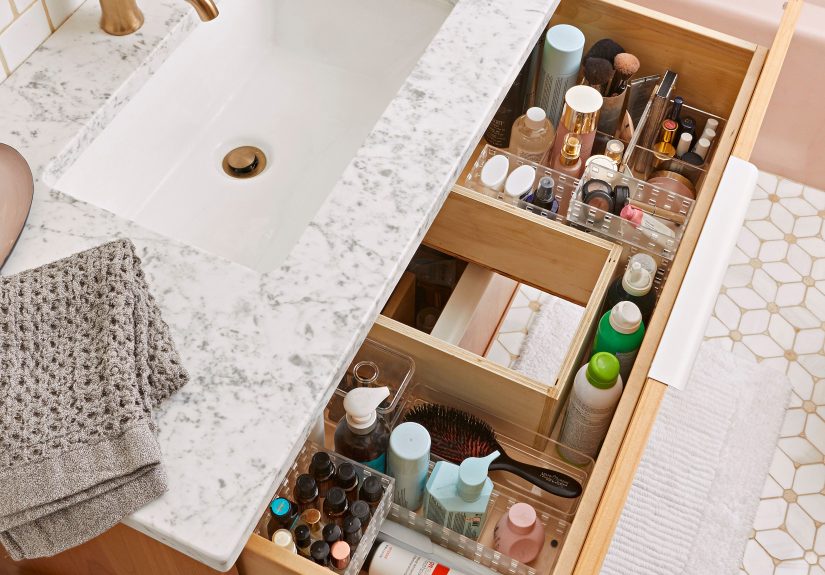
1 big task: Edit and organize the vanity or under-sink cabinet.
3 medium tasks: Toss expired beauty products, group daily items in one caddy, clear medicine cabinet clutter.
5 small tasks: Wipe one drawer, discard empty bottles, put cotton swabs in a labeled bin, replace old razors, clear the counter.
Entryway
1 big task: Create a landing zone for daily essentials.
3 medium tasks: Sort shoes, add a mail tray, assign hooks or baskets for family members.
5 small tasks: toss store flyers, hang coats, relocate random items, empty reusable bags, sweep the floor.
The Best Way to Use the Rule for Big Messes
If a space is truly chaotic, don’t force a full transformation into one day. Use the 1-3-5 rule across several days. A garage, basement, attic, or overstuffed storage closet may need multiple rounds. That’s normal. In fact, that’s smart.
Let’s say your garage is the problem child. Day one’s big task might be emptying and sorting one wall. Day two’s big task could be reviewing sports gear and tools. Day three might focus on holiday storage. The medium and small tasks each day support the main project: sweeping, labeling bins, loading donations, or wiping shelves.
This approach keeps the space functional while still making visible progress. It also lowers the odds that you’ll create a disaster scene and then abandon it because life happened and somebody needed dinner.
Common Mistakes to Avoid
Making the big task too big
If your big task would reasonably require a team, pizza, and a therapist, it is not one task. Break it down further.
Choosing nine hard tasks
The magic of 1-3-5 is the mix. One big task, not nine soul crushers. Your small tasks should be quick and satisfying.
Buying organizers before decluttering
Containers are not a personality. They are tools. Do not buy bins for things you may not even keep.
Ignoring maintenance habits
Organizing works best when paired with tiny routines: sort the mail immediately, put shoes away, keep a donation bin handy, and do short surface resets before clutter snowballs.
Keeping too much “just in case” stuff
Sometimes the neatest home isn’t the one with the best baskets. It’s the one with less stuff in it. Harsh, but helpful.
How to Make the 1-3-5 Rule a Weekly Habit
You don’t need to use the method every single day to benefit from it. For most people, three or four times a week is enough to create real change. Try assigning themes to certain days:
Monday: kitchen and paper clutter
Wednesday: bedroom and closet reset
Friday: bathroom and laundry-related tasks
Sunday: entryway, living room, and donation drop-off
You can also use a mini version on busy days: one medium task and three small tasks. That still counts. Home organization is not ruined because you didn’t alphabetize your spices while also becoming a better person.
Why This Method Is Better Than “Cleaning All Day”
All-day cleaning marathons sound productive, but they often mix too many goals together. You tidy a little, deep-clean a little, get distracted by old photos, start a random drawer, and then end the day tired without feeling finished. The 1-3-5 rule gives your effort a clean shape.
It also creates a satisfying rhythm: one meaningful win, several supporting wins, and a handful of easy wins. That rhythm matters because motivation usually shows up after progress, not before it. Once you finish the big task, the rest of the list feels less annoying. Well, maybe not fun. But less annoying.
Final Thoughts
The 1-3-5 rule works because it respects reality. Homes get messy in layers, so they often need to be organized in layers too. One big project gives you momentum. Three medium tasks keep the system practical. Five small tasks handle the visual clutter that quietly makes a home feel chaotic.
Used consistently, this method can help you organize your home without burning out, overbuying storage gear, or pretending that one Saturday will solve everything forever. Start with one space. Keep your list realistic. Finish what you start. And remember: a functional home does not have to look like a showroom. It just has to work for the people living in it.
Real-Life Experiences With the 1-3-5 Rule at Home
One of the most relatable experiences people have with the 1-3-5 rule is the shock of realizing how much calmer a home can feel after doing just a few targeted tasks. Not twenty-five. Not a full-house overhaul. Just a few. Someone might spend a Saturday morning with one big task like organizing the pantry, then add three medium tasks such as clearing the mail pile, cleaning out the medicine cabinet, and setting up a small tray for keys and sunglasses by the front door. The five small tasks may be almost laughably simple: putting away towels, tossing expired coupons, clearing one kitchen counter, matching storage-container lids, and picking shoes up off the floor. And yet, by the end of the day, the house feels lighter. Not perfect. Just noticeably less chaotic.
Another common experience is that the rule reveals where clutter really comes from. A lot of people assume the problem is “too much mess everywhere,” but once they start using 1-3-5 lists, patterns pop up fast. Maybe the entryway keeps exploding because there’s no real drop zone. Maybe the bedroom always looks messy because clean laundry never gets folded right away. Maybe the bathroom cabinets are stuffed because no one ever throws out half-used products. The method doesn’t just help you tidy; it helps you diagnose the mess.
There’s also something strangely satisfying about the small tasks. In theory, everyone talks about the big transformation. In practice, the tiny jobs often create the biggest mood boost. Clearing the dish rack. Emptying the trash from your purse. Returning a hair dryer to the cabinet. Tossing broken pens. These are not glamorous moments. No one is writing a movie montage about them. But they stack up fast, and they make your space feel maintained instead of merely rescued.
For families, the 1-3-5 rule can become a surprisingly useful shared language. Instead of saying, “We need to clean this house,” which sounds like a threat, one person can say, “Let’s each pick one medium task and two small ones.” Suddenly the job feels specific. Kids can handle small tasks like toy pickup, shoe sorting, or putting books back. Teens can own medium tasks like clearing a bathroom drawer or folding a basket of laundry. Adults can take the big task and keep the whole thing moving. It feels less like chaos and more like a plan.
People also tend to notice that the method reduces procrastination because it lowers the emotional barrier to starting. “Organize the house” is vague and exhausting. “Do one big task, three medium tasks, and five small tasks” is concrete. You can begin. And once you begin, you usually keep going. The hardest part is often choosing the first task, not doing it.
Maybe the best experience of all is this: the 1-3-5 rule makes organization feel repeatable. It stops being a once-a-season panic event and starts becoming a rhythm. Your home doesn’t have to be spotless to feel good. It just needs enough systems, enough follow-through, and enough little resets that clutter never fully takes over the kingdom again.