Table of Contents >> Show >> Hide
- What Exactly Is 9-1-1: Nashville?
- When Did the Spinoff Premiere?
- Who’s in the Cast?
- What’s the Main Story So Far?
- Why Nashville Was the Right Choice
- Did It Connect to the Original 9-1-1?
- How Is the Show Performing?
- What Do We Know About Season 2?
- What We Still Don’t Know
- The Viewing Experience: Why This Spinoff Feels Different in the Best Way
- Final Thoughts
If the 9-1-1 franchise were a firehouse chili cook-off, 9-1-1: Nashville would be the batch that shows up wearing cowboy boots, carrying emotional baggage, and somehow still stealing the trophy. What started as “the new spinoff set in Music City” has turned into a full-on franchise event with tornadoes, family secrets, crossover chaos, and enough Southern soap to keep a whole season delightfully combustible.
And here’s the big update for anyone still asking whether this show is really happening: not only did 9-1-1: Nashville happen, it premiered, built a distinct identity, staged a crossover with the flagship series, and already locked in a Season 2 renewal. So, yes, this spinoff is very real, very dramatic, and very fond of throwing emotional gasoline on every possible spark.
As of now, the show sits in an interesting sweet spot. It is still recognizably part of the larger 9-1-1 world, but it also feels different enough to avoid becoming a copycat with a country soundtrack. It leans harder into family saga, power dynamics, old Southern money, and romantic messiness, while still delivering the franchise’s signature giant, chaotic emergencies. In other words, it knows exactly what fans came for: heart, spectacle, and a healthy amount of “well, that escalated quickly.”
What Exactly Is 9-1-1: Nashville?
9-1-1: Nashville is the latest expansion of the 9-1-1 universe, following the original series and the now-finished 9-1-1: Lone Star. Officially, the series is described as a high-octane procedural centered on heroic first responders and a family saga involving power and glamour in one of America’s most dynamic cities. In less polished language, it is a rescue drama with sirens, secrets, and enough interpersonal tension to make a Thanksgiving dinner feel serene.
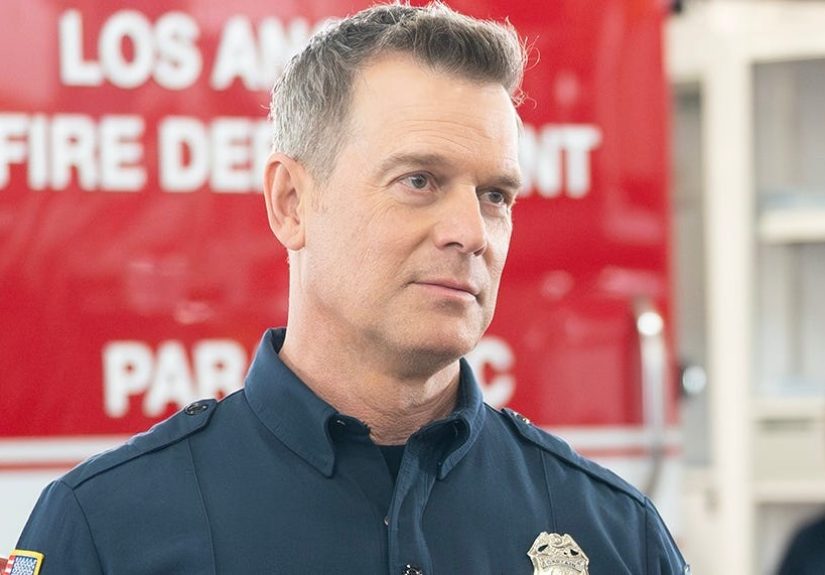
The show is set around Station 113, where Captain Don Hart leads a crew that is constantly putting out fires, handling disasters, and trying not to implode from their own personal complications. That last part does not always go smoothly. This is still the 9-1-1 franchise, after all, where a calm day is often just the opening scene before a tractor-trailer, hot-air balloon, bridge, storm system, or emotionally unstable ex changes everything.
What separates Nashville from the earlier entries is tone. The series clearly wants to keep the franchise’s adrenaline rush, but it adds a more openly soapy flavor. That means bigger family revelations, richer social friction, sharper romantic sparks, and a sense that the personal drama is not just seasoning. It is part of the main course.
When Did the Spinoff Premiere?
ABC launched 9-1-1: Nashville on October 9, 2025, slotting it into a powerful Thursday lineup between 9-1-1 at 8/7c and Grey’s Anatomy at 10/9c. That placement was not subtle. ABC basically looked at Thursday night and said, “What if we made everyone emotionally exhausted by 11 p.m.?”
The scheduling choice made sense immediately. The new series could benefit from the audience already showing up for the flagship drama, while also presenting itself as a natural next chapter for viewers who wanted more first-responder spectacle after Lone Star. It gave the spinoff a built-in runway, but the show still had to prove it could justify the assignment.
By all signs so far, it has done exactly that. The series has gained traction not just as a franchise extension, but as a show with its own hooks, its own ensemble chemistry, and its own very particular brand of Nashville-flavored chaos.
Who’s in the Cast?
The cast is one of the biggest reasons this show landed with viewers so quickly. ABC’s official lineup includes Chris O’Donnell, Jessica Capshaw, Kimberly Williams-Paisley, LeAnn Rimes, Hailey Kilgore, Michael Provost, Juani Feliz, and Hunter McVey. That is a cast built to do two things at once: sell high-stakes emergencies and make even the quiet scenes feel loaded.
Chris O’Donnell as Don Hart
O’Donnell leads the series as Captain Don Hart, the head of Station 113. Don is built like a classic franchise anchor: competent, commanding, and carrying more secrets than a locked glove compartment in a TV pilot. He is a rugged captain, a family man, and one of the main engines behind the show’s central emotional tension.
Jessica Capshaw as Blythe Hart
Capshaw plays Blythe Hart, Don’s wife, and she is not written as background wallpaper. Blythe comes from a powerful family and brings status, strategy, and a cool steeliness to the series. She helps push 9-1-1: Nashville into its more glamorous and high-conflict lane.
LeAnn Rimes as Dixie Bennings
LeAnn Rimes made her series-regular debut as Dixie Bennings, and the show absolutely understands the assignment there. Dixie is messy in the best TV sense: charismatic, disruptive, emotionally loaded, and almost guaranteed to make any room more interesting and less peaceful.
Kimberly Williams-Paisley as Cammie Raleigh
Williams-Paisley plays dispatcher Cammie Raleigh, who connects the emergency-response machinery to the show’s broader family network. She adds warmth, grief, and groundedness, which is useful when everyone else is one bad conversation away from detonating.
The Next Generation of Station 113
Then there is the younger firehouse energy: Michael Provost as Ryan Hart, Hailey Kilgore as Taylor Thompson, Juani Feliz as Roxie Alba, and Hunter McVey as Blue Bennings. Together, they give the series its momentum, its edge, and a lot of its future storyline potential. Blue, in particular, is central to the family reveal that fuels much of the show’s early drama.
What’s the Main Story So Far?
The simplest version is this: Station 113 is packed with first responders who are brave at work and considerably less organized in their personal lives. The more specific version is where the fun begins.
At the center of the show is Don Hart’s family situation, which turns out to be a lot more complicated than the neat public version. One of the major early hooks is the arrival of Blue Bennings, Don’s son from a previous relationship. That revelation does not merely create awkward brunch energy. It lands inside the firehouse, inside Don’s marriage, and inside his relationship with Ryan, the son he has raised openly.
That setup gives the series its most distinctive angle. 9-1-1: Nashville is not just about emergency calls. It is about inheritance, legitimacy, rivalry, old wounds, and the question of whether family is something you build, something you hide, or something that eventually shows up at work and wrecks your whole shift.
Meanwhile, the series keeps the franchise formula intact by balancing those internal conflicts with oversized emergencies. The premiere made that clear by staging a Kane Brown concert disaster involving a tornado, which was the show’s way of saying, “Hello, welcome to Nashville, please secure all loose objects and emotions.” Since then, the series has continued to embrace the absurd-but-effective franchise model: every emergency should feel dangerous, a little outrageous, and memorable enough to dominate fan conversation the next morning.
Why Nashville Was the Right Choice
The city is not just a backdrop. It is one of the show’s best creative choices. According to pre-premiere reporting, the franchise team saw Nashville as a city with a distinct personality, a stronger Southern identity than Austin, and built-in connections to the country music business. That matters, because 9-1-1: Nashville is not trying to be Lone Star 2.0. It wants to be glossier, moodier, and more rooted in a place where image, legacy, family name, and public performance all matter.
That gives the show more than local flavor. It gives it thematic material. Nashville is a city where public persona and private fracture can coexist beautifully, which makes it ideal for a series about polished families, hidden histories, and people trying to hold it all together while literal disasters unfold nearby.
The city’s music identity also allows the show to pull in performers and set pieces that feel organic rather than gimmicky. In many TV spinoffs, setting can feel like a label slapped on the box. Here, Nashville shapes the atmosphere. It changes the energy. It gives the series its own drawl, its own shine, and its own beautifully dramatic weather problems.
Did It Connect to the Original 9-1-1?
Yes, and in a meaningful way. One of the biggest early questions around the spinoff was whether ABC would actually pull off a proper crossover with the flagship series. The answer arrived on March 5, 2026, when 9-1-1 and 9-1-1: Nashville staged a two-hour crossover event.
Instead of throwing both casts into a giant catastrophe right away, the crossover used the national Firefighter Games as its main setup. That gave viewers Buck and Eddie from the original series meeting the Station 113 crew in a way that felt playful, competitive, and character-driven. It also allowed the two shows to collide without making the entire event feel like a continuity headache wearing a cowboy hat.
The crossover mattered for more than fan service. It was ABC’s clearest statement that Nashville belongs in the franchise’s front row, not the side table. Once Buck and Eddie stepped into the show’s orbit, the spinoff stopped feeling like “the new one” and started feeling like a fully integrated branch of the 9-1-1 brand.
How Is the Show Performing?
Pretty well, especially for a rookie network drama. By early March 2026, ABC had already renewed 9-1-1: Nashville for Season 2. That alone says a lot. Networks do not hand out renewals because a title looks nice on a schedule grid.
The ratings story has also been encouraging. Industry coverage described the show as TV’s No. 1 new drama in the adults 18–49 demo at the time of renewal, and later reporting highlighted that the January 29 episode delivered the series’ biggest multiplatform audience since its debut. In plain English: viewers showed up, and a lot of them did not just sample the pilot and wander off to scroll on their phones.
That momentum matters because spinoffs often face an identity trap. They get attention at launch, then spend the rest of their first season trying to prove they can stand without leaning too hard on the parent series. 9-1-1: Nashville seems to have avoided that trap by keeping the recognizable franchise engine while building its own tone and fan intrigue.
What Do We Know About Season 2?
The biggest confirmed news is simple: Season 2 is happening. ABC renewed the show on March 5, 2026, the same day it renewed the flagship 9-1-1. That means the network is not treating Nashville as a one-season experiment. It is part of the plan.
What ABC has not publicly confirmed yet is an exact Season 2 premiere date. Still, the renewal timing and the current Thursday strategy make it reasonable to expect the series to remain an important part of ABC’s fall lineup. Until the network announces specifics, though, that remains expectation rather than official schedule ink.
As for story direction, the remaining episodes of Season 1 are clearly setting up more emotional fallout. Reporting ahead of the finale has teased escalating conflict between Dixie and Blythe, growing romance inside the firehouse, and what the creative team is framing as a cataclysmic finish. The Season 1 finale, titled “Intrusive Thoughts,” is set to air on May 7, 2026, following the April 30 penultimate episode after a short hiatus. That means the show is not exactly easing into the offseason with chamomile tea and mature restraint.
What We Still Don’t Know
Even with a lot now confirmed, there are still a few unanswered questions hanging over the series. We do not yet have a formal Season 2 premiere date. We do not know the full roster of returning or guest cast for next season. And while the first crossover worked, ABC has not laid out a public long-term roadmap for how often the two active 9-1-1 shows will intersect.
There is also the larger franchise question: how much soap can the show absorb before it risks tipping too far away from rescue drama? Right now, the balance is working. But that balance is one of the most important things to watch as the show grows.
Still, that uncertainty is part of the appeal. A franchise series stays fun when it gives viewers enough to trust the direction, while keeping enough in reserve that fans can argue online like unpaid board members of ABC’s emergency-response division.
The Viewing Experience: Why This Spinoff Feels Different in the Best Way
Watching 9-1-1: Nashville so far has felt a bit like walking into a honky-tonk where a string band is playing, someone is crying in the corner, and a storm warning just lit up every phone in the building. It is familiar, but the vibe is unmistakably its own. The original 9-1-1 tends to play like a polished urban pressure cooker. Lone Star had its Texas swagger. Nashville, though, feels silkier, sneakier, and more openly interested in the ways family can be both a comfort and a weapon.
That is part of what makes the show easy to stick with. Even when an episode opens with a giant emergency, there is usually another ticking device under the surface: an unresolved betrayal, a romantic complication, a parent-child fracture, a half-spoken grudge. The result is a series that does not simply ask, “How will they survive this rescue?” It also asks, “What happens when everybody gets home afterward?” That second question gives the show its sting.
There is also a particular pleasure in seeing the franchise lean into Nashville without turning the city into a theme-park postcard. Yes, the country-music flavor is there. Yes, the boots, horses, and Southern polish are part of the package. But the show works best when it uses those elements to sharpen character rather than decorate the set. Blythe feels more formidable because this world values lineage and influence. Dixie feels more explosive because image and charisma carry special weight here. Don feels more torn because public authority and private secrets do not mix cleanly in a city built on performance and reputation.
For longtime 9-1-1 fans, the experience is also satisfying because the spinoff does not reject what came before. It respects the franchise grammar: large-scale emergencies, fast-moving rescues, emotional sincerity, and the occasional plot development that makes you pause and mutter, “Well, that is absolutely ridiculous.” But it translates that grammar into a new dialect. It is a little glossier. A little more romantic. A little more willing to let side-eye do heavy dramatic lifting.
The crossover only deepened that feeling. Seeing Buck and Eddie drop into this world made it obvious how different the tonal chemistry is. The original crew brings a certain established rhythm. Station 113 answers with intensity, family tension, and a level of Southern competitive pride that could probably power a small town. It made the spinoff feel not smaller than the original, but refreshingly adjacent to it.
Most of all, 9-1-1: Nashville has been enjoyable because it understands what viewers want from this franchise in 2026: not prestige-drama minimalism, not self-serious gloom, but emotionally committed entertainment. Big rescues. Big feelings. Big reveals. A cast that can handle sincerity without embarrassment. And just enough chaos to make every Thursday feel like an event instead of a habit.
If the show keeps that balance, it has room to be more than a successful spinoff. It could become the branch of the franchise that viewers turn to when they want their emergencies with extra family drama, their romance with extra sparks, and their procedural television served with a little glitter on the boots.
Final Thoughts
So, everything we know so far points in one direction: 9-1-1: Nashville is no longer a “wait and see” franchise experiment. It is a real part of ABC’s scripted lineup, a renewed series with a distinctive identity, and a show that has already proven it can mix emergency spectacle with a juicier family-drama backbone.
It has a strong ensemble, an effective setting, a successful crossover, a second season on the books, and enough continuing story to keep viewers circling back. The smartest thing it has done is refuse to be modest. It is not trying to quietly fill the hole left by 9-1-1: Lone Star. It is trying to stomp onto the stage, grab the mic, and sing its own note in the franchise choir.
And so far? That note is loud, dramatic, slightly chaotic, and surprisingly catchy.