Table of Contents >> Show >> Hide
- Why Potatoes and Onions Can’t Go Together
- How to Store Potatoes the Right Way
- How to Store Onions the Right Way
- The Best Pantry Setup for Potatoes and Onions
- Common Potato and Onion Storage Mistakes
- How Long Do Potatoes and Onions Last?
- Signs Your Potatoes Have Gone Bad
- Signs Your Onions Have Gone Bad
- Can Potatoes and Onions Ever Be Near Each Other?
- Small-Kitchen Storage Ideas That Actually Work
- Frequently Asked Questions
- Real-Life Storage Experiences: What Actually Happens in the Kitchen
- Conclusion: Give Potatoes and Onions Some Personal Space
Potatoes and onions are the reliable roommates of the American kitchen. They are cheap, useful, sturdy, and always ready to rescue dinner when the refrigerator looks like a sad museum exhibit. Toss potatoes into a soup, roast onions with chicken, mash, fry, sauté, caramelizethese humble staples do a shocking amount of culinary heavy lifting.
But here is the pantry plot twist: potatoes and onions should not live together. They may look like natural neighbors because both prefer dark, cool, ventilated storage, but putting them in the same basket is like seating two chatty guests at a quiet library table. One gives off moisture and odors, the other reacts badly to the wrong environment, and before long you have sprouted potatoes, soft onions, mysterious smells, and a dinner plan that suddenly requires takeout.
Learning how to store potatoes and onions correctly is not complicated. You do not need a farmhouse root cellar, a climate-controlled pantry, or a degree in vegetable psychology. You only need to understand what each one wants, what each one dislikes, and why “close enough” storage can shorten shelf life. This guide explains the science, the practical setup, the common mistakes, and the real-life storage tricks that help potatoes stay firm and onions stay dry.
Why Potatoes and Onions Can’t Go Together
The simplest rule is this: store potatoes and onions separately because they create different storage problems for each other. Potatoes release moisture as they sit, and onions need a dry, well-ventilated environment. Too much moisture around onions can encourage soft spots, mold, and decay. Onions, meanwhile, are often blamed for speeding potato sprouting through gases and close-contact storage conditions. Even when the exact cause depends on temperature, humidity, airflow, and produce variety, the practical answer is the same: together, they spoil faster than they should.
Think of potatoes as cool, dark, slightly humidity-loving introverts. They want darkness, steady air movement, and a place away from heat. Onions are dry-air extroverts. They also like darkness and coolness, but they absolutely do not want dampness or a sealed bag. Place the two in one cramped bin, and their shared microclimate becomes a tiny produce sauna. That is where trouble begins.
The Moisture Problem
Potatoes contain a lot of water. Even when they look dry, they continue to respire and release moisture slowly. Onions, especially dry bulb onions, store best when their papery skins stay dry and air can move around them. Moisture trapped near onions can soften the outer layers, invite mold, and shorten their storage life.
This is why plastic grocery bags are bad news for both vegetables. A closed plastic bag traps humidity, blocks airflow, and turns your pantry into a miniature greenhouse. Unfortunately, potatoes and onions are not trying to grow basil in there. They are trying to stay usable.
The Sprouting Problem
Potatoes are living tubers. When they receive the right signalswarmth, time, light, moisture, and certain nearby produce conditionsthey begin to sprout. A sprouted potato is basically saying, “I have decided to become a plant now,” which is charming in a garden and annoying when you were planning mashed potatoes.
Small sprouts on a firm potato can usually be removed before cooking, but heavy sprouting, softness, shriveling, greening, or bitterness are warning signs. Potatoes that have turned green or developed extensive sprouts may contain higher levels of natural glycoalkaloids, including solanine and chaconine. When in doubt, throw them out. No side dish is worth a stomachache.
The Odor Problem
Onions are delicious because they are bold. They are also bold in storage. Their sulfur compounds can travel, especially in a closed cabinet or bag. Potatoes can absorb nearby odors, and onions can pick up off smells from surrounding produce. Good airflow helps, but distance helps even more.
How to Store Potatoes the Right Way
The best potato storage setup is cool, dark, and ventilated. For most home kitchens, that means a pantry shelf, cabinet, basement corner, garage area that does not freeze, or a covered bin away from appliances. Potatoes should not sit on top of the refrigerator, beside the oven, near the dishwasher, or in direct sunlight. Those places are warmer than they look, and potatoes do not appreciate surprise spa treatments.
Choose the Right Container
Use a paper bag, cardboard box, open basket, mesh sack, or perforated storage bin. The goal is airflow plus darkness. If your potatoes came in a plastic bag, remove them when you get home unless the bag is perforated and breathable. If condensation forms inside the bag, that is your potato storage alarm bell.
A good container does three things: it lets air move, blocks excess light, and keeps potatoes from being bruised. Bruised potatoes deteriorate faster, so avoid tossing them into a hard bin like bowling balls. Handle them gently, even if they look sturdy enough to survive a medieval siege.
Keep Potatoes Away from Light
Light exposure can cause potatoes to turn green. The green color itself comes from chlorophyll, but it can appear alongside increased glycoalkaloids. Small green patches may be cut away if the potato is otherwise firm, but potatoes that are heavily green, bitter, soft, or badly sprouted should be discarded.
If your kitchen has bright under-cabinet lighting, do not store potatoes in an open bowl beneath it. Potatoes are not decorative fruit. They are dinner ingredients with a strong preference for privacy.
Do Not Refrigerate Raw Potatoes for Everyday Storage
Many people assume the refrigerator is the magic kingdom of freshness, but raw potatoes are a major exception. Cold refrigerator temperatures can change potato starches into sugars, affecting flavor, texture, and browning during cooking. For short-term home storage, a cool pantry is usually better than the fridge.
Cooked potatoes are different. Once potatoes are cooked, refrigerate leftovers in a sealed container within two hours. Raw and cooked potatoes follow different rules because cooking changes their food-safety risk.
Do Not Wash Potatoes Before Storage
Washing potatoes before storage adds moisture, and moisture can lead to rot. Brush off loose dirt if needed, but save the full wash for right before cooking. This one habit alone can make a noticeable difference, especially if you buy potatoes in bulk.
How to Store Onions the Right Way
Whole dry bulb onions want a cool, dark, dry, well-ventilated place. The word “dry” is the star of the onion storage show. If potatoes are the quiet basement type, onions are the crisp-paper-skin type. Keep their skins dry and intact, and they will reward you with weeks of reliable flavor.
Use Mesh, Baskets, or Open Crates
Onions should not be wrapped tightly in plastic or sealed in airtight containers while whole and unpeeled. A mesh bag, wire basket, slatted crate, or open paper bag works better. Air circulation helps prevent trapped moisture and keeps the papery outer layers from getting clammy.
If you buy onions in a plastic bag, check whether the bag is breathable. Many onion bags are mesh or vented, which is fine. A solid plastic grocery bag tied at the top is not fine. That is less “storage solution” and more “future compost experiment.”
Separate Dry Onions from Sweet Onions and Green Onions
Not all onions store the same way. Storage onions, such as many yellow, white, and red onions, last longer in a dry pantry environment. Sweet onions and mild onions have higher water content and a shorter shelf life, so they often do better in the refrigerator. Green onions and scallions should also be refrigerated because they are fresh, tender, and far more perishable.
Refrigerate Cut Onions
Once an onion is peeled, sliced, diced, or otherwise opened up, pantry rules no longer apply. Store cut onions in an airtight container in the refrigerator and use them within several days. This keeps odors contained and supports food safety. Your leftover onion should not perfume the entire fridge like a dramatic candle.
The Best Pantry Setup for Potatoes and Onions
You do not need a huge kitchen to store potatoes and onions correctly. You simply need separation, airflow, darkness, and common sense. A few feet of distance is helpful. A separate shelf is better. A separate cabinet or bin is best.
Option 1: One Pantry, Two Zones
If you have one pantry, place potatoes on a lower shelf in a cardboard box or breathable basket. Put onions higher up in a mesh bag or open bin. Keep them apart, and avoid stacking the onion bag directly over the potato box where moisture or loose skins can fall in.
Option 2: Cabinet for Potatoes, Counter Basket for Onions
If your pantry is small, store potatoes in a dark cabinet away from heat and store onions in a ventilated basket on the counter, away from sunlight. This works especially well if you cook with onions often and buy only a few at a time.
Option 3: Basement or Garage Storage
A cool basement can be excellent for potatoes and onions, but only if it stays dry, does not freeze, and has decent airflow. Use separate containers and check them weekly. Garages can work in mild weather, but extreme heat, freezing temperatures, car fumes, and pests can make them risky.
Common Potato and Onion Storage Mistakes
Mistake 1: Keeping Them in the Same Bag
This is the classic mistake. The store display may place potatoes and onions near each other, but your pantry should not. Retail displays are temporary. Your kitchen storage may last weeks.
Mistake 2: Storing Them Near Heat
Warmth encourages sprouting and spoilage. Avoid the top of the refrigerator, the cabinet next to the oven, the space under a sunny window, or any area near heating vents. Potatoes and onions like cozy food, not cozy storage.
Mistake 3: Using Airtight Containers for Whole Produce
Airtight containers are great for leftovers, flour, and suspiciously open bags of chocolate chips. They are not ideal for whole potatoes or whole onions. These vegetables need airflow.
Mistake 4: Buying Too Much at Once
Bulk bags look like a bargain until half the potatoes sprout and three onions collapse into onion pudding. Buy what you can use within a reasonable time. For many households, five pounds of potatoes and two to three onions are easier to manage than a warehouse-size sack.
Mistake 5: Ignoring the Weekly Check
One spoiled potato can affect the whole container. One moldy onion can do the same. Once a week, inspect your storage bins. Remove anything soft, wet, moldy, heavily sprouted, or smelly. This takes less than a minute and saves money.
How Long Do Potatoes and Onions Last?
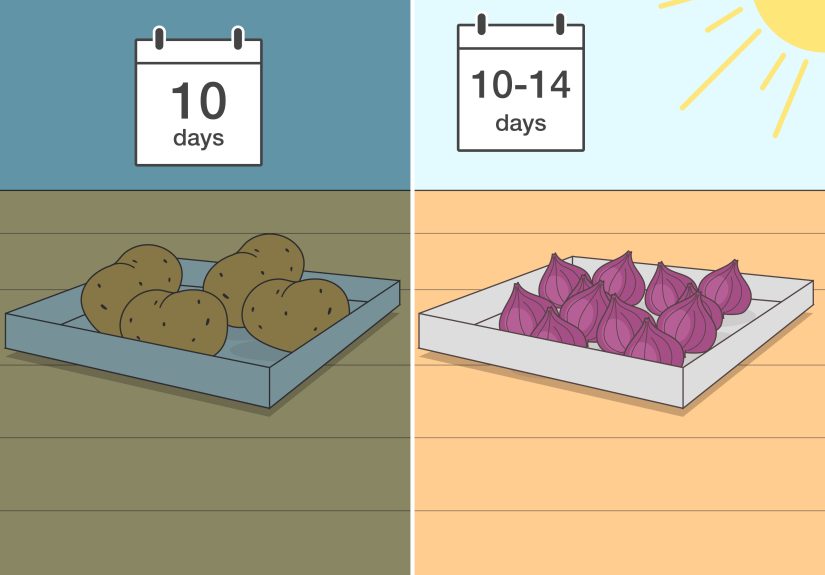
Storage life depends on freshness at purchase, variety, temperature, humidity, and airflow. In a normal pantry, potatoes may last a few weeks to a couple of months. In better cool, dark conditions, they may last longer. Whole dry onions often keep for several weeks, and under ideal cool, dry, ventilated conditions, storage onions can last for months.
Sweet onions, green onions, and cut onions have shorter timelines. Use sweet onions first, refrigerate green onions, and treat cut onions like fresh refrigerated food. The big lesson is simple: storage varieties last longer than fresh or high-moisture varieties.
Signs Your Potatoes Have Gone Bad
- Soft or mushy texture
- Strong musty or rotten smell
- Large sprouts or heavy sprouting
- Extensive green color
- Shriveled skin with loss of firmness
- Wet spots, mold, or leaking
A firm potato with one or two tiny sprouts may still be usable after removing the sprouts. A soft, green, bitter, or heavily sprouted potato should go into the trash or compost, depending on your local composting setup.
Signs Your Onions Have Gone Bad
- Soft spots or a collapsing center
- Visible mold, especially black or gray patches
- Wet, slimy, or leaking layers
- Strong rotten smell instead of normal onion sharpness
- Excessive sprouting with soft flesh
An onion with a small green sprout is not automatically ruined if the bulb is firm. You can remove the sprout and use the good parts soon. But if the onion is soft, moldy, or wet, let it go. There will be other onions. Probably too many, if you shop like most of us.
Can Potatoes and Onions Ever Be Near Each Other?
They can be in the same kitchen. They can even be in the same pantry if you separate them properly. What you want to avoid is close contact: the same bag, same closed bin, same cramped basket, or same unventilated cabinet corner. Distance and airflow reduce the problems caused by moisture, odors, and sprouting conditions.
A practical rule: if you can smell onions strongly when you open the potato container, they are too close. If your onions feel damp because the potato bin is crowded nearby, they are too close. If both vegetables are in a sealed dark cabinet with no airflow, they are too close and possibly plotting against your grocery budget.
Small-Kitchen Storage Ideas That Actually Work
Small kitchens require strategy. Use vertical space, breathable containers, and smaller shopping habits. Hang onions in a mesh produce bag from a pantry hook. Place potatoes in a covered cardboard box at the bottom of a cabinet. Use a labeled basket system: “Potatoes: dark and cool” and “Onions: dry and airy.” Labels may sound excessive, but they prevent helpful family members from creating a potato-onion reunion tour.
If you have no pantry, choose the coolest cabinet away from appliances. Avoid under-sink storage because moisture and cleaning products do not belong near food. Avoid sunny countertops. For apartments, a dark closet shelf can work if it is dry and food-safe. Just do not forget the potatoes are there, unless you enjoy discovering accidental science projects in July.
Frequently Asked Questions
Can I store garlic with onions?
Yes, whole garlic and dry onions often store well in similar conditions: cool, dry, dark, and ventilated. Keep both away from potatoes. Garlic also dislikes moisture and sealed plastic bags.
Should potatoes be stored in the refrigerator?
Raw potatoes are usually better stored in a cool, dark pantry or basement, not the refrigerator. Refrigeration can affect flavor and cooking quality. Cooked potatoes, however, should be refrigerated.
Should onions be stored in the refrigerator?
Whole dry storage onions usually prefer a cool, dry, ventilated pantry. Sweet onions, green onions, peeled onions, and cut onions should be refrigerated.
Can I freeze onions?
Yes. Peel and chop onions, then freeze them in a sealed freezer-safe bag or container. Frozen onions are best for cooked dishes like soups, stews, casseroles, and sauces because they lose crispness after thawing.
Can I freeze potatoes?
Raw potatoes do not freeze well because their texture changes. Cooked or blanched potatoes freeze better. For example, mashed potatoes, roasted potatoes, and prepared fries can be frozen with better results than raw chunks.
Real-Life Storage Experiences: What Actually Happens in the Kitchen
In real kitchens, potato and onion storage rarely begins with a perfect plan. It begins with unloading groceries while answering a text, moving a coffee mug, and wondering why grocery bags multiply like rabbits. The potatoes go in the pantry. The onions go right next to them because, honestly, they look like they belong together. Two weeks later, the potatoes have little white sprouts waving hello, and the onions feel suspiciously soft. That is usually the moment people learn this rule forever.
One practical experience many home cooks share is that potatoes stored near onions seem to “wake up” faster. The potatoes may sprout sooner, especially if the pantry is warm or the bin is crowded. This often happens in kitchens where potatoes are kept in a closed plastic bag on the floor of a cabinet. The bag traps moisture, the cabinet traps heat, and the onions add their own storage drama. The fix is surprisingly simple: move the onions to a hanging mesh bag and place the potatoes in a cardboard box with holes or an open paper bag. The difference can be noticeable within the next grocery cycle.
Another common lesson comes from bulk buying. A ten-pound bag of potatoes seems like a smart purchase until a small household realizes it eats potatoes twice a week, not twice a day. The bottom potatoes in the bag get bruised, the plastic holds moisture, and the forgotten ones begin to soften. Smaller bags, stored correctly, often save more money than giant bags stored poorly. The cheapest potato is the one you actually use.
Onions bring their own experience-based wisdom. A bowl of onions on the counter looks rustic and charming, but if that bowl sits in sunlight, near the stove, or beside a fruit basket, the onions may sprout or soften faster. A mesh bag in a shaded, airy spot usually performs better than a decorative bowl. The same goes for sweet onions. Many people treat all onions the same, then wonder why sweet onions spoil faster than yellow storage onions. Sweet onions contain more moisture, so they need quicker use or refrigeration.
Small apartments teach the most creative solutions. A pantry door hook can hold onions in a breathable bag. A shoebox-sized cardboard box can become a potato bin if it stays dark, dry, and ventilated. A kitchen drawer can work for potatoes if it is not beside the oven and if the drawer is opened often enough for air exchange. The key is not perfection; it is avoiding the big problems: heat, light, moisture, plastic, and potato-onion togetherness.
The best experience-based habit is the weekly check. Before making a grocery list, look at the potato box and onion bag. Use the oldest ones first. Pull out anything soft or sprouted. Plan one meal around what needs attention: potato soup, onion gravy, home fries, roasted vegetables, breakfast hash, or a sheet-pan dinner. Good storage is not only about where food sits. It is also about remembering what you already bought.
Conclusion: Give Potatoes and Onions Some Personal Space
Potatoes and onions are pantry essentials, but they are not ideal storage partners. Potatoes need a cool, dark, ventilated place that protects them from light and excess warmth. Onions need a cool, dark, dry, ventilated place that keeps their skins crisp and their moisture low. Put them together in a cramped container, and you increase the chance of sprouting, softening, odors, and waste.
The fix is wonderfully low-tech. Use breathable containers. Avoid sealed plastic bags. Keep potatoes in the dark. Keep onions dry. Refrigerate cut onions and cooked potatoes. Inspect both weekly. Most importantly, store potatoes and onions separately, even if they share the same pantry.
Once you set up the system, it becomes automatic. Your potatoes stay firm longer, your onions stay fresher, your kitchen smells better, and dinner remains safely on schedule. That is a lot of reward for moving one basket a few feet away.
Note: This article is written for general home food storage education and synthesizes guidance from reputable U.S. food safety, university extension, and produce industry resources. Always discard potatoes or onions that are moldy, rotten, heavily sprouted, unusually bitter, leaking, or unsafe in appearance.